
Venezuela: Control Claims, the Oil Valve, and the Stablecoin Rail
Trump and Washington are signaling U.S. “control” after Maduro’s detention, while Venezuelan institutions rally behind continuity under Delcy Rodríguez. Pattern Nexus breaks down the real control layers: oil export permission, sanctions plumbing, and stablecoin settlement rails.
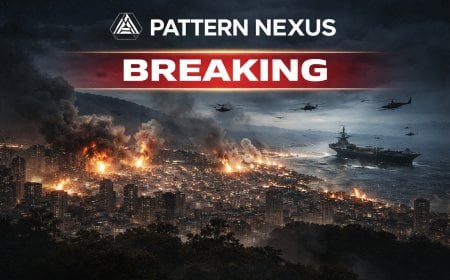
![[HERO_IMAGE_ALT]](https://patternnexus.com/uploads/images/202601/image_870x_695b04aa9cb57.jpg)

“Control” is being used in two meanings: internal administration inside Venezuela versus external monetization control (exports, shipping/insurance, payment clearance, and sanctions toggles).
Risk: people overreact to speeches. The real tell is enforcement tempo: licenses, designations, tanker/insurer constraints, trader risk appetite, and whether proceeds can clear without seizure.
Stablecoins are not a side plot. They are the fastest “private dollar corridor” and the next enforcement surface: issuers, exchanges, and off-ramps become the choke points instead of banks.
What’s Actually Happening and Why the Coverage Conflicts
If you have read five different pieces in two hours and feel like your brain is shorting out, you are not missing something. You are seeing a control contest in real time, and control contests are designed to look contradictory on purpose. Each side must project inevitability to force elite behavior: military loyalty, bureaucratic compliance, business alignment, foreign recognition, and payment corridor behavior.
Here is the core contradiction that is making people dizzy: U.S. leadership is signaling external dominance after Maduro is in U.S. custody, while Venezuelan institutions are signaling internal continuity by elevating Delcy Rodríguez and framing Maduro’s detention as an illegal seizure rather than an internal succession event.
Those two signals do not cancel each other out because they are not competing on the same axis.
“We’re in charge” is not a claim about policing Caracas street-by-street. It is a claim about controlling the external systems that determine whether Venezuela can monetize oil, insure shipping, clear payments, access reserves, and regain international legitimacy.
When Trump says the U.S. will “run” Venezuela, he is compressing multiple mechanisms into one sentence: recognition, sanctions authority, legal custody, operational pressure, and the implied redesign of the oil monetization corridor. That messaging is aimed at forcing immediate recalculation by domestic Venezuelan elites, international oil intermediaries, and foreign governments deciding whether to treat Caracas as sovereign, constrained, or transitional.
When Venezuelan institutions say the “regime is united behind Maduro,” they are also not speaking in the literal sense that Maduro is physically directing the state. They are issuing a continuity pledge. That pledge matters because continuity is the one thing that prevents immediate fragmentation: if the military chain of command stays intact and the administrative state keeps paying salaries and enforcing orders, you can keep the system coherent long enough to fight the external layer.
This is why your information feed looks like chaos. It is not one story. It is three stories stacked on top of each other: the custody story, the continuity story, and the monetization story. Most reporting collapses them into one, which produces contradictions that aren’t real.
There is also a timing problem. Early reports emphasize kinetic events (strikes, blackouts, arrests, statements). But the real resolution mechanism is slower and more bureaucratic: court orders, interim structures, ministry compliance, military posture, international recognition, sanctions guidance, and the behavior of intermediaries who touch Venezuelan oil.
Put differently: the first 24 hours are about shock and headlines. The next 7–14 days are about whether the pipes stay open, who holds the keys, and who can credibly promise safety to the actors required to move money through the system.
The Control Stack: Custody, Continuity, Recognition, Enforcement
Pattern Nexus framing: what you are watching is a four-layer control stack, and each layer can be “won” by a different actor at the same time.
Layer 1: Custody (the person). The U.S. has custody of Maduro and is treating the event as a legal and security operation with downstream political consequences. Custody is a leverage engine: it creates bargaining power, it creates narrative gravity (“he is finished”), and it forces internal factions to decide whether to pivot or resist.
Layer 2: Continuity (the state). Venezuela’s institutions moved to assert continuity through constitutional and judicial mechanisms, swearing in Delcy Rodríguez and maintaining the public line that the state remains unified behind Maduro. This matters because continuity keeps the machine coherent: payroll, policing, border control, ports, ministries, and the military chain of command.
Layer 3: Recognition (the world). External legitimacy is not a moral concept. It is a functional gate. Recognition determines whether foreign governments treat Caracas as sovereign, transitional, illegitimate, or occupiable. It also determines whether companies, banks, insurers, and traders treat Venezuelan transactions as survivable or radioactive.
Layer 4: Enforcement (the pipes). Enforcement is where “control” becomes real. Who can issue licenses. Who can revoke them. Who can designate traders and tankers. Who can pressure insurers. Who can chill banking access. Who can make proceeds unspendable.
Trump’s “we run it” language is a shock doctrine signal designed to force immediate elite realignment. Rubio’s emphasis on conditions and alignment is the administrative layer preparing the enforcement and recognition plumbing. One is pressure messaging. The other is corridor management.
This stack is also why “occupation” is the wrong mental model. Modern coercion rarely requires running ministries. It requires controlling the monetization corridors that keep ministries loyal. If you can constrict the oil monetization corridor and simultaneously offer a conditional path to reopen it, you can reshape internal politics without deploying a bureaucratic occupation force.
That is the strategic essence of the competing claims. Venezuela is saying, “We still operate the internal machine.” The U.S. is saying, “We control whether that machine can fund itself externally.”
International reactions and legal debates are not side noise here. They are part of Layer 3 (recognition). If major regional actors and Security Council members frame the event as an illegal incursion, that raises the cost of external consolidation. If they quietly accept a transition narrative, that lowers it. This is why UN channels matter even when they don’t “decide” anything. They shape the consent environment for the pipes.
The practical takeaway for readers: stop looking for a single headline that “solves” the story. This resolves when Layer 4 stabilizes: which corridors are open, for whom, under what conditions, with what enforcement tempo.
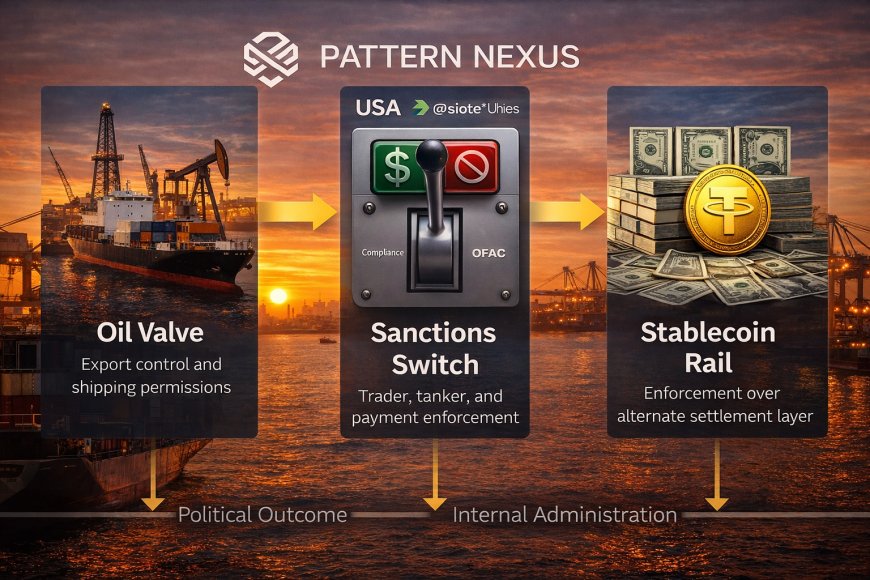
The Oil Valve, the Sanctions Switch, and the Stablecoin Rail
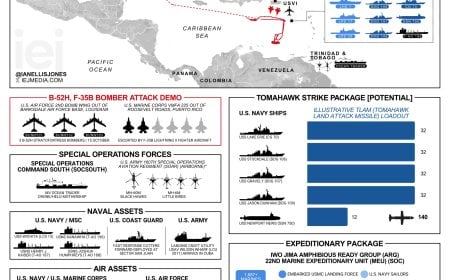
![[IMAGE_1_ALT]](https://patternnexus.com/uploads/images/202601/image_870x_695b0294c4e32.jpg)
Oil is not the entire story, but it is the engine room. Venezuela’s state capacity is oil-linked as a mechanism, not a talking point. The regime’s ability to pay elites, fund imports, stabilize internal patronage, and maintain security loyalty depends on whether oil can be sold, shipped, insured, and monetized without seizure risk and without crippling discounts.
That is why oil sits directly underneath the legitimacy contest. You can have internal continuity and still lose functional control if you cannot monetize. You can have external recognition efforts and still fail if you cannot stabilize internal administration. The oil corridor is the bridge between those layers.
The U.S. already signaled its posture here days before the capture narrative peaked: Treasury targeted oil traders and associated tankers tied to sanctions evasion. That matters because enforcement rarely begins with “stop the country.” It begins with the intermediaries who make the country bankable: traders, shippers, tanker ownership webs, insurance, and payment channels.
Think of it as a valve-and-switch system.
- The oil valve: can barrels move at scale without becoming toxic to buyers, ports, insurers, and shipping intermediaries?
- The sanctions switch: does enforcement expand or narrow the permissible set of actors (companies, traders, tankers, insurers, banks, and logistics nodes)?
- The clearing choke: can proceeds touch USD rails, correspondent banking, or any compliant corridor without being frozen, seized, or blocked?
When U.S. leadership references American oil companies and Venezuelan resources, that is not a literal blueprint. It is a signal to markets and elites that the monetization corridor will be redesigned. In a sanctions-first world, “who governs” often follows “who clears.”
Now add the settlement layer.
The crypto angle here is not “people using crypto.” States do not care about retail novelty. States care about settlement at scale. In sanctioned economies, the hard problem is not finding a buyer. The hard problem is clearing payment, preserving value, and moving proceeds through a chain that does not get seized.
That pressure produces three behaviors:
- non-bank settlement structures that reduce exposure to correspondent banking choke points
- intermediary routing through third jurisdictions and complex trade finance layering
- increasing use of dollar-pegged stablecoins as a functional “cash rail” when banking clearance is restricted
Stablecoins matter for one reason: they behave like dollars operationally while bypassing parts of the traditional banking stack. That makes them attractive in high-friction jurisdictions, and it also makes them an obvious enforcement surface.
When stablecoins become a meaningful settlement rail, enforcement shifts from “banks” to “issuers, exchanges, and off-ramps.” The state either crushes the rail or absorbs it into a permissioned corridor with surveillance and compliance gates.
This is the strategic bridge between the headline politics and the “pipes.” If oil monetization is contested and bank clearance is the choke point, then a stablecoin corridor becomes a pressure valve. Whether that valve stays open depends on whether it is controllable.
Pattern Nexus inference: post-crisis Venezuela is a perfect test arena for a “private dollar corridor” approach. Not because policymakers love crypto, but because stablecoin rails can replicate dollarization effects while remaining enforceable at chokepoints outside Venezuelan domestic institutions.
So if you want to know what is happening, stop asking “who said they’re in charge?” and start tracking operational tells:
- Which barrels can move without seizure risk and without catastrophic discounts?
- Which traders, tankers, and intermediaries are being designated or warned?
- What happens to insurance access and port acceptance for Venezuelan-linked cargos?
- Which settlement rails are tolerated, pressured, or quietly formalized into compliance corridors?
- Does the enforcement tempo speed up or slow down over the next week?
Pattern Nexus Lens
This is not a single coup story. This is a control-systems story. You are watching a state get pulled through competing control layers: internal continuity mechanisms versus external monetization enforcement.
The U.S. does not have to administer Venezuela to exert decisive control. It has to control what matters to state capacity: exports, clearing, and legitimacy gates. Venezuela does not have to win a PR battle to survive in the short run. It has to keep the internal machine coherent long enough to negotiate or resist changes to the external corridor.
The reason the headlines feel schizophrenic is because they are describing different layers of the same system:
- Continuity layer: courts, ministries, military command, internal legitimacy signaling
- Recognition layer: foreign governments, international legal framing, consent environment
- Monetization layer: oil export permissions, shipping/insurance acceptance, trader networks
- Settlement layer: banking clearance versus alternative rails (stablecoins) and their enforcement choke points
Politics will look chaotic until the export and settlement corridors stabilize. When the corridors stabilize, the politics will “snap” into place quickly because elite alignment follows money flow reliability, not speeches.
Watch the pipes. The pipes will tell you who is actually in charge.
FAQ
Is the U.S. actually “running” Venezuela right now?
“Running” is rhetoric. The operational reality is whether the U.S. can control the external monetization stack: sanctions posture, licenses, oil corridor intermediaries, shipping/insurance acceptance, and payment clearance. That can be decisive without day-to-day administration.
How can Venezuela claim unity behind Maduro if Maduro is detained?
Because continuity signaling is about keeping the internal machine coherent. Institutions can rally publicly behind Maduro while operationally transferring administrative execution to an acting president. They are signaling legitimacy and resisting the external narrative that the regime has already collapsed.
Does Delcy Rodríguez taking the interim role mean she is “pro-U.S.” now?
Not necessarily. Acting authority inside the continuity layer does not automatically imply alignment with the external enforcement layer. The key is whether she can secure a monetization corridor that keeps the state functioning, and under what conditions.
Where does oil actually fit into the power contest?
Oil is the state-capacity engine. Whoever controls the ability to move, insure, sell, and clear oil revenues controls the pace and shape of any political transition. That is why oil language appears immediately in U.S. messaging and why Treasury enforcement focuses on intermediaries.
Why do stablecoins matter here?
Stablecoins are the high-speed settlement rail that emerges when banking clearance becomes the choke point. The strategic question is whether that rail is suppressed or converted into a permissioned corridor controlled at issuers, exchanges, and off-ramps.
What should I watch over the next 24–72 hours?
Enforcement tempo and corridor signals: any new designations, license updates, warnings to intermediaries, changes in insurer posture, port acceptance behavior, and any public signals about settlement channels. Those will tell you more than speeches.
Sources
Primary reporting and official U.S. sanctions material supporting the custody/continuity claims, interim leadership development, international reaction/legal framing, and oil-sanctions enforcement posture.
- Reuters (Jan 4, 2026): Maduro in U.S. custody, Trump “run Venezuela” claim, and Venezuelan unity messaging
- Reuters (Jan 4, 2026): Supreme Court order elevating Delcy Rodríguez as interim president
- Reuters (Jan 4, 2026): Legality and UN Security Council focus
- Reuters (Jan 3–4, 2026): Strikes/blackouts context and “temporary control” framing
- U.S. Treasury (Dec 31, 2025): OFAC targets oil traders and associated tankers tied to sanctions evasion
- OFAC: Venezuela-related sanctions program overview
- AP (Jan 4, 2026): Delcy Rodríguez emergence and internal alignment context
- PBS NewsHour / PolitiFact (Jan 4, 2026): Fact-check on claims and sequence of events
Каква е вашата реакция?
 Харесай
0
Харесай
0
 Не ми харесва
0
Не ми харесва
0
 Любов
0
Любов
0
 Смешно
0
Смешно
0
 Уау
0
Уау
0
 Тъжен
0
Тъжен
0
 Ядосан
0
Ядосан
0

Founder of Pattern Nexus. I research markets, macro, geopolitics, AI, history, ancient systems, and the patterns most people overlook. I’m also building Market Radar, a trading scanner designed to read pressure, risk, confirmation, and setup quality before chasing a move. Pattern Nexus is where I connect the dots between data, history, technology, and the bigger system playing out around us.








Коментари (0)