
The New Monroe Doctrine: How the 2025 National Security Strategy Confirms the Western Hemisphere Pivot, Digital Dollar Realignment, and the Coming Global Reordering
The 2025 National Security Strategy marks the most dramatic U.S. strategic pivot in decades—re-centering the Western Hemisphere, reviving a modern Monroe Doctrine, accelerating digital-dollar rails, and redefining global power competition around AI, liquidity systems, and stablecoin-backed economic dominance. This Pattern Nexus master-framework integrates geopolitics, macro liquidity, digital assets, and statecraft into a unified thesis.
The New Monroe Doctrine: How the 2025 National Security Strategy Locks In a Western Hemisphere Pivot, Digital Dollar Rails, and a New Phase of Great Power Competition
Overview: What Just Quietly Changed
The 2025 National Security Strategy (NSS) is not just another Washington PDF. It is a formal statement that the United States is done trying to manage every corner of the planet the same way. Instead, it openly narrows what counts as vital U.S. interests and reorders the map around three pillars:
If you zoom out, the NSS is essentially admitting that the old model of global policing is over. The new game is about defending a hemisphere, controlling the world’s core financial and digital pipes, and building an industrial and AI base that cannot be displaced.
This article takes that strategy and plugs it into a bigger pattern: a revived Monroe Doctrine, a Western Hemisphere pivot, the rise of a digital-dollar financial order, the containment of China through systems rather than slogans, and a looming AI–energy–industrial supercycle. By the time you reach the end, you should be able to look at any headline – Venezuela, Taiwan, Europe, stablecoins, Navy shipbuilding, QE versus QT – and see how it fits into the same underlying structure.
From Global Firefighter to Hemispheric Power
For most of the post–World War II era, U.S. strategy was defined by a simple idea: prevent hostile powers from dominating Europe, the Middle East, or East Asia. That logic turned the U.S. into a global firefighter with permanent deployments, bases, and commitments across multiple continents. The Pentagon’s map was the world.
The 2025 NSS marks a sharp turn away from that model. Rather than promising to underwrite stability everywhere, the document focuses on a smaller set of vital interests and quietly demotes some regions from “existential” to “important but secondary.” The Western Hemisphere, domestic resilience, and systemic power (finance, energy, AI, manufacturing) are pulled to the foreground.
Why? Because the old model is colliding with three hard constraints:
- Fiscal limits: The cost of perpetual global presence collides with rising debt, aging populations, and a more fragile political consensus at home.
- Industrial limits: Shipyards, munitions factories, and key supply chains cannot sustain multiple simultaneous conflicts while also supporting an AI-industrial boom.
- Systemic competition: Rivals are not simply building tanks; they are building alternative financial and digital systems that bypass traditional U.S. military reach.
The NSS is, in effect, an admission that the era of “being everywhere, all the time” is over. But it is not an isolationist document. It does not say “pull back and ignore the world.” Instead, it says “prioritize the hemisphere, weaponize systems, and force other regions to stand on their own feet.”
Monroe Doctrine 2.0: The Hemisphere as Strategic Firewall
To understand what is happening, you have to go back two centuries.
The original Monroe Doctrine (1823) was simple: European powers would not be allowed to recolonize or interfere in the affairs of the newly independent states of the Western Hemisphere. In return, the United States would avoid direct involvement in European wars. The Western Hemisphere was declared a separate strategic space.
Over time, that principle was stretched, abused, and distorted into interventions and regime changes. But the underlying logic – that the hemisphere is a special zone – never fully disappeared. It simply got buried under layers of Cold War globalism and post–Cold War hubris.
The 2025 NSS quietly digs that logic back up and updates it for the 21st century.
Monroe 2.0: No extra-hemispheric powers capturing critical economic, digital, military, or infrastructure footholds in the Americas.
In Monroe Doctrine 2.0, the objects of protection are no longer just governments and borders. They are:
- Critical ports, canals, and chokepoints (from the Panama Canal to Caribbean sea lanes)
- Energy and resource infrastructure (pipelines, LNG facilities, offshore fields)
- Digital infrastructure (data centers, undersea cables, satellite gateways)
- Financial infrastructure (dollar rails, banking systems, clearinghouses, stablecoin rails)
- Security corridors (from the U.S.–Mexico border to key migration and narcotics routes)
When you see U.S. attention converge on Venezuela, Cuban ports, Caribbean airspace, or Mexican border flows, you are not looking at “one-off” events. You are watching Monroe 2.0 in motion. The hemisphere is being treated as a firewall that must be hardened against penetration by rival powers and systemic threats.
That is why the Western Hemisphere is so central in the NSS. If the United States can secure its hemisphere and own the rails that connect the hemisphere to the world, it does not need to dominate every region militarily. It only needs to make sure no rival power can exploit the Americas as a launchpad or a wedge.
China Containment Without Saying “Containment”
One striking feature of the 2025 NSS is what it does not say explicitly. It does not lean on the language of “great power competition” or spell out a traditional containment strategy aimed at China by name on every page. Instead, it describes a world where rivals are trying to undermine U.S. interests by building alternative economic, technological, and informational systems – and then defines a response centered on American resilience and hemispheric consolidation.
In practice, this is a containment policy by other means:
- Hemispheric control: If no rival can establish key ports, bases, or infrastructure nodes in the Americas, their ability to project power into the hemisphere is sharply limited.
- Systemic dominance: If the U.S. owns the main financial, digital, and trade rails – especially those tied to the dollar and Treasuries – it can shape incentives for nearly every major economy, including those trying to balance between Washington and Beijing.
- Industrial edge: If the U.S. rebuilds its industrial and energy base, it cuts the leverage that comes from foreign supply chains and manufacturing dependence.
This approach recognizes a hard reality: you cannot “out-spend” China by simply piling up conventional ships and bases across Asia while your own industrial base and fiscal capacity erode. Instead, the U.S. strategy is to:
- Turn the Western Hemisphere into a secure, integrated economic and security zone.
- Anchor the global financial system around a new generation of digital dollar rails.
- Use that combined weight to constrain how far China can expand its own systems – especially in finance, technology, and critical infrastructure – outside of its immediate neighborhood.
That is China containment without the optics of a classic Cold War bloc confrontation. It is quieter, more structural, and more dependent on pipes (energy, money, data) than on slogans.
Borders, Migration, and Internal Stability as Strategy
Another major shift in the NSS is the way it frames migration, borders, and internal cohesion. These topics are not treated as purely social or humanitarian issues. They are explicitly linked to national security and strategic resilience.
In a hemispheric framework, uncontrolled migration routes, transnational crime networks, and narcotics flows are not “background noise.” They are pressure points that rival powers and non-state actors can manipulate. They are also direct drains on political stability and social cohesion inside the United States and key partner states.
By placing borders and internal order inside a national security document, the strategy signals that:
- Controlling who and what crosses U.S. borders is no longer just a domestic policy question; it is a strategic imperative.
- Building stronger state capacity in neighboring countries (from Mexico to Central America and the Caribbean) is not charity; it is hemispheric stabilization.
- Domestic unrest, polarization, or institutional decay are recognized as vulnerabilities that adversaries can exploit in the information and cyber domains.
In other words, “sovereignty” is being redefined. It is not only about territorial integrity; it is about system integrity. If the U.S. cannot control its own information space, financial rails, and physical borders, then even the strongest navy and air force will not offset those vulnerabilities.
The Digital Dollar, Stablecoins, and Treasury-Collateral Rails
Underneath the geographic and political language, the 2025 NSS sits on a deeper financial foundation. It leans heavily on themes of economic strength, technological leadership, secure financial infrastructure, and resilience against economic coercion. When you connect those dots, a clear picture emerges: the United States is preparing for a world where the dollar lives not just as paper and account entries, but as programmable, instant-settlement value moving across digital rails worldwide.
The foundations of that world are already visible:
- Dollar-denominated stablecoins settling massive volumes of cross-border payments and crypto-market flows.
- Tokenized Treasuries emerging as a new class of on-chain collateral and yield-bearing instruments.
- Institutional experiments with blockchain-based settlement for bonds, repo, and trade finance.
The strategic logic is straightforward:
A digital-dollar system built on stablecoins and Treasury-backed tokens has several advantages from a national security perspective:
- Speed and reach: Payments clear faster and reach more jurisdictions without relying on legacy correspondent networks.
- Transparency and monitoring: Properly designed rails allow for better visibility into flows and risk concentrations, even if some data is aggregated.
- Sanction and incentive tools: Access to these rails can be conditioned, shaping behavior without direct military coercion.
- Resilience: Redundant and distributed infrastructure is harder to disrupt through traditional means.
The NSS does not need to name specific stablecoins or platforms to make this direction clear. By emphasizing the resilience and centrality of the U.S. financial system and by linking economic strength directly to national security, it lays political groundwork for deeper integration between state priorities and private financial innovation in this domain.
For investors, policymakers, and analysts, the takeaway is simple: stablecoins and tokenized Treasuries are not just “crypto tools.” They are emerging instruments of statecraft. They sit at the intersection of macro, liquidity, and geopolitics. As regulation clarifies and infrastructure matures, they are likely to become core rails in the next phase of the dollar system.
AI Industrialization and the New War for Industrial Capacity
The NSS dedicates significant space to technology, supply chains, and industrial capacity. It treats advanced computing, AI, semiconductors, critical minerals, and energy as strategic assets that can decide the outcome of great power competition. That framing is not accidental. The world is entering a period where the ability to deploy AI at massive scale will be constrained by:
- Energy availability (especially firm, reliable power)
- Manufacturing capacity for chips, servers, and networking hardware
- Logistics and infrastructure to build and cool data centers
- Security and resilience of physical and digital networks
For the United States, the NSS effectively says: “We intend to win this race.” It calls for:
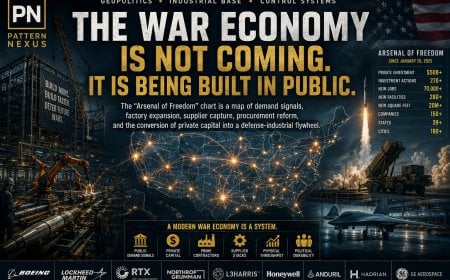
- Rebuilding the industrial base, especially in critical sectors like shipbuilding, aerospace, and munitions.
- Securing supply chains for semiconductors, rare earths, and other inputs.
- Investing in innovation ecosystems that keep high-value intellectual property and manufacturing closer to home.
- Expanding energy capacity, including advanced nuclear, to power both civilian and defense applications.
This AI-industrial push is not just about economic growth. It is about creating a hard-to-copy combination of:
If the U.S. can align those elements within the hemisphere – using Canadian resources, U.S. capital markets, Mexican and Latin American manufacturing, and Caribbean/Gulf logistics – then it can build an AI-enabled industrial bloc that is extraordinarily difficult for rivals to match in total.
That is why AI and industrial policy show up in a national security document. They are not add-ons. They are the new backbone of power.
Venezuela and the Caribbean: First Live Test of the New Doctrine
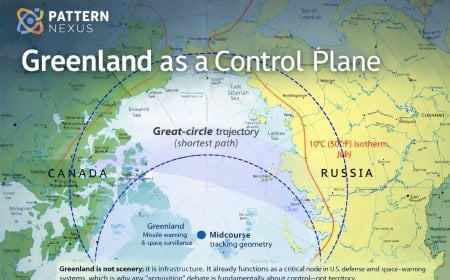
Strategy is only real when it touches specific places and decisions. In the case of Monroe Doctrine 2.0 and the hemispheric pivot, the earliest visible test case is the arc from the southern Caribbean up through the Gulf of Mexico( Or if you need to see America) – with Venezuela at the center.
Several features of this region make it ideal as an early proving ground:
- Energy reserves: Venezuela’s massive oil resources matter in a world where energy again becomes a strategic bottleneck.
- Geography: The Caribbean basin and Gulf form a crossroads for shipping, undersea cables, and air routes.
- External actors: Rival powers have historically tried to gain influence through energy deals, port access, and military cooperation with local regimes.
When you see tighter airspace control, heightened naval presence, intensified pressure on Caracas, and active shaping of regional diplomacy, you are seeing the NSS in action. The message is simple: the Western Hemisphere is not open for external powers to carve out durable strategic footholds, especially in critical energy and transit nodes.
How this confrontation plays out will tell you a lot about how far Monroe 2.0 will go. If the U.S. can combine economic leverage, diplomatic pressure, and selective use of hard power to reshape behavior in this region without spiraling into open war, it will validate the strategy’s underlying logic. If not, the doctrine will face its first stress fracture.
Europe: “Civilizational Erasure” and Managed Decline
The NSS generated particular controversy in Europe because of its language about demographic decline, cultural fragmentation, and “civilizational erasure.” It also made clear that while the U.S. remains committed to NATO and European security in a broad sense, Europe is no longer the central focus of U.S. strategic thinking.
From a Pattern Nexus perspective, this reflects a sober recognition of several trends:
- Europe’s demographic aging and shrinking workforces.
- Chronic underinvestment in defense industrial capacity.
- Internal political fragmentation and institutional fatigue.
- Limited appetite for painful structural reform.
For decades, Europe could rely on a combination of American security guarantees, cheap external energy, and globalized trade. That era is ending. The U.S. will still support European security, but it expects Europe to shoulder a far larger share of costs and responsibility. Meanwhile, the U.S. will prioritize the hemisphere and systemic competition with rivals over trying to engineer Europe’s internal evolution.
For investors and observers, this suggests a world where:
- Europe remains important but increasingly reactive rather than agenda-setting.
- A larger share of strategic growth, defense spending, and infrastructure buildout shifts to the Americas and Indo-Pacific.
- European assets and currencies may be more exposed to negative surprise if political and demographic pressures intensify.
Middle East, Africa, and Indo-Pacific in the New Hierarchy
The rest of the world does not disappear in this framework; it is reordered.
Indo-Pacific: Still crucial, especially for sea lanes, semiconductor supply, and alliances that shape China’s choices. But the U.S. approach leans more heavily on regional partners and technological edge, and less on trying to match every local deployment one-for-one.
Middle East: Remains important for energy, Israel’s security, and preventing hostile coalitions, but the appetite for large-scale ground interventions continues to decline. Instead, expect:
- Targeted strikes and special operations.
- Arms sales and air/naval presence.
- Selective diplomacy tied to energy, normalization deals, and corridor projects.
Africa: Increasingly seen through the lens of resource competition, influence operations by rivals, and the need to prevent large-scale instability from spilling into global supply chains and migration flows. The NSS hints at more economic tools and partnerships rather than heavy military footprints.
The common pattern is clear: more emphasis on systems and partnerships, less on direct occupation or large-scale interventions. The Western Hemisphere is where the U.S. wants deep, structural integration. Other regions are increasingly managed through a mix of selective engagement, economic tools, and alliance burden-sharing.
Implications for Markets, Liquidity, and Assets
A change in national security strategy eventually translates into flows of money, technology, and risk. Here are some of the key implications to watch as this doctrine is implemented.
1. Treasuries, Liquidity, and the QE–QT Cycle
A hemispheric industrial push, combined with increased defense and infrastructure spending, implies sustained demand for financing. That typically means:
- Periods of monetary tightening will be bounded by the need to maintain system liquidity and avoid destabilizing the industrial and defense buildup.
- Structural demand for Treasuries will be reinforced if tokenized forms and stablecoin-backed demand grow.
- Liquidity cycles may become more tightly linked to geopolitical stress points: crises in key regions can trigger rapid shifts between tightening and easing as authorities try to balance inflation, growth, and security priorities.
2. Energy and Commodities
Hemispheric energy security is a core pillar of the new doctrine. That includes oil and gas in the Gulf, offshore resources, Canadian supplies, and potential normalization or restructuring of flows from states like Venezuela. Expect:
- More investment in North American and regional energy production.
- Increased scrutiny of external actors in key energy projects.
- Greater integration between energy planning and AI/data center growth, especially around firm power sources.
For commodities linked to AI and advanced manufacturing – copper, rare earths, key battery metals – geopolitical risk premia are likely to rise as competition over sources and processing intensifies.
3. Digital Assets, Stablecoins, and Tokenized Collateral
If dollar-based stablecoins and tokenized Treasuries are treated as extensions of U.S. financial infrastructure, they are likely to:
- Face stricter regulatory frameworks but gain deeper legitimacy and integration.
- Become important tools for cross-border trade and settlement in regions where traditional banking is fragile.
- Pull liquidity toward instruments that combine yield, safety, and programmable settlement.
That has clear implications for:
- How banks and fintechs structure their offerings.
- How emerging markets manage their exposure to dollar flows.
- How investors think about the intersection between macro policy and digital asset markets.
4. Defense, AI, and Industrial Names
A strategy that ties national security to industrial and AI capacity is structurally bullish for key segments:
- Defense contractors linked to autonomous systems, naval modernization, and missile production.
- Semiconductor and hardware companies supplying AI and defense compute.
- Industrial firms involved in shipyards, aerospace, heavy machinery, and infrastructure builds.
- Energy companies positioned to supply firm power to data centers and industrial clusters.
The risk, of course, is that this buildout interacts with debt and inflation dynamics in complex ways. The strategy bets that the productivity gains and geopolitical advantages from these investments will outweigh the financial strain. That is not guaranteed – but it is the chosen path.
Three Strategic Scenarios for 2025–2035
To make this more concrete, imagine three broad paths over the next decade.
Scenario 1: Successful Hemispheric Consolidation
In this scenario:
- Venezuela and other regional flashpoints are brought to a managed equilibrium without major war.
- North American and regional energy infrastructure is expanded and hardened.
- Stablecoins and tokenized Treasuries become mainstream rails for trade and investment.
- AI-industrial buildout progresses, with key supply chains reshored or secured through trusted partners.
The result is a tighter Western Hemisphere bloc anchored by the U.S. financial and defense system, with significant leverage over global trade, finance, and technology.
Scenario 2: Hemispheric Friction and Systemic Strain
Here, attempts to assert hemispheric control run into serious resistance:
- Major crises in places like Venezuela, Mexico, or the Caribbean generate prolonged instability.
- External powers deepen their presence through covert or hybrid means.
- Domestic polarization in the U.S. undermines the political will to sustain long-term strategy.
- Financial and liquidity strains intensify as the system tries to fund both a strategic buildup and an increasingly expensive domestic landscape.
In this world, markets move from crisis to crisis, and the NSS vision becomes harder to execute consistently.
Scenario 3: Fragmentation and Multipolar Drift
In the most unstable scenario:
- The Western Hemisphere remains contested and fragmented.
- Alternative financial and digital rails led by rivals or coalitions gain critical mass.
- Europe, the Middle East, and other regions pursue divergent strategies, eroding the cohesion of the existing order.
- Technological diffusion makes it easier for smaller states and non-state actors to punch above their weight in military and cyber domains.
The NSS in this case becomes more of an aspiration than a stable framework. The world moves toward genuine multipolarity with higher volatility and less predictability.
The Pattern Nexus Lens: Cycles, Liquidity, and Power
Looking at the NSS through a Pattern Nexus lens, you can see it as part of a much longer arc of cycles:
- Long debt and liquidity cycles where central banks oscillate between tightening and easing as they attempt to stabilize financial systems that depend on leverage.
- Energy and industrial cycles where new technologies (steam, electricity, oil, nuclear, and now AI) reorder which states can convert energy and information into power.
- Geopolitical cycles where empires shift from global reach to more defensible cores, consolidating their immediate spheres while trying to preserve systemic advantages.
The 2025 NSS fits squarely at the inflection point of several of these cycles. It appears at the moment when:
- The previous era of hyper-globalization and cheap security guarantees has broken down.
- The costs of maintaining global presence have risen faster than political and fiscal capacity.
- The tools of power have shifted from bases and ships toward rails and code – financial rails, digital rails, AI, and supply chains.
In that context, the NSS is not just a policy memo. It is a signal that the United States is choosing a particular strategy for navigating these overlapping transitions: consolidate the hemisphere, harden the system, own the rails, and channel liquidity into an AI-enabled, industrial-capable bloc.
Whether that strategy succeeds will depend on execution – in Congress, in the Pentagon, in the private sector, and in the everyday decisions of voters, investors, and institutions. But the direction is now on paper. The map is drawn. The test begins.
FAQ: What This Means for You, Your Money, and the Next Decade
Does this mean the U.S. is becoming isolationist?
No. The strategy does not advocate retreating from the world. It advocates prioritizing the Western Hemisphere and systemic power over trying to police every region in the same way. Global engagement continues, but with more hierarchy and selectivity.
Is this really a new Monroe Doctrine?
It is not branded that way, but the underlying logic is similar: the Western Hemisphere is treated as a special strategic zone in which outside powers are not supposed to gain deep, durable footholds – especially in critical infrastructure, security, and financial rails. That is why you see such intense attention on regional flashpoints like Venezuela and the Caribbean.
How does this affect the role of the dollar?
The strategy leans into maintaining and upgrading dollar dominance. By tying national security directly to the strength and resilience of the U.S. financial system and by emphasizing economic tools and system resilience, it implicitly supports the development of digital-dollar rails – including regulated stablecoins and tokenized Treasuries – as pillars of future influence.
What does this mean for stablecoins and tokenized Treasuries?
Over time, these instruments are likely to be seen less as speculative novelties and more as critical infrastructure. They provide fast, programmable, and globally reachable ways to move dollar value and collateral. As regulation solidifies, expect more integration with traditional finance, greater scrutiny from national security stakeholders, and more explicit alignment with U.S. strategic interests.
How does this change the risk landscape for investors?
Geopolitics and macro cannot be cleanly separated in this world. Investors will need to pay closer attention to:
- Hemispheric flashpoints and their impact on energy, shipping, and liquidity.
- Policy signals related to digital-dollar infrastructure and financial regulation.
- AI and industrial policy decisions that could reshape entire sectors.
- Demographic and institutional trends in Europe and other regions that may reduce their systemic weight.
Is this good or bad for peace?
The answer is mixed. A clearer strategy can reduce certain kinds of risk by making red lines more obvious. But it can also increase friction where spheres of influence overlap. The hope behind the NSS is that economic and systemic tools can enforce boundaries without requiring continuous large-scale war. Whether that hope holds depends on how states respond to the constraints and incentives embedded in the new order.
What should ordinary people take away from this?
You do not need to memorize every phrase in the strategy. But you should understand the broad direction:
- The U.S. is refocusing on its own hemisphere and internal resilience.
- The tools of power are shifting from bombs and bases to rails and code – financial, digital, and energy systems.
- AI, industrial capacity, and supply chains are now national security issues, not just business topics.
- The global environment is likely to be more volatile, but also more structured around spheres of influence and competing systems.
If you pay attention to those currents, headlines start to make more sense – and you can position your life, your skills, and your investments more intelligently in response.
Sources
- 2025 National Security Strategy (Official PDF)
- Reuters coverage of 2025 U.S. National Security Strategy and international reactions
- Reuters reporting on Europe and “civilizational erasure” language
- Politico analysis of Western Hemisphere focus in the NSS
- Time Magazine overview of European backlash and NSS themes
Qual é a sua reação?
 Curtir
0
Curtir
0
 Não Gostar
0
Não Gostar
0
 Amor
0
Amor
0
 Engraçado
0
Engraçado
0
 Uau
0
Uau
0
 Triste
0
Triste
0
 Bravo
0
Bravo
0

Founder of Pattern Nexus. I research markets, macro, geopolitics, AI, history, ancient systems, and the patterns most people overlook. I’m also building Market Radar, a trading scanner designed to read pressure, risk, confirmation, and setup quality before chasing a move. Pattern Nexus is where I connect the dots between data, history, technology, and the bigger system playing out around us.













Comentários (0)