
The Day QT Died and QE Began: December 1, 2025 — The Quiet Restart of the Liquidity Engine
QT officially ended on December 1, 2025 — but the real story happened in the plumbing. With the RRP buffer nearly gone, SOFR volumes exploding, and the Standing Repo Facility pulling in Treasuries, agencies, and MBS, the Fed quietly shifted from balance-sheet tightening to balance-sheet backfilling. This was the moment the liquidity regime flipped.
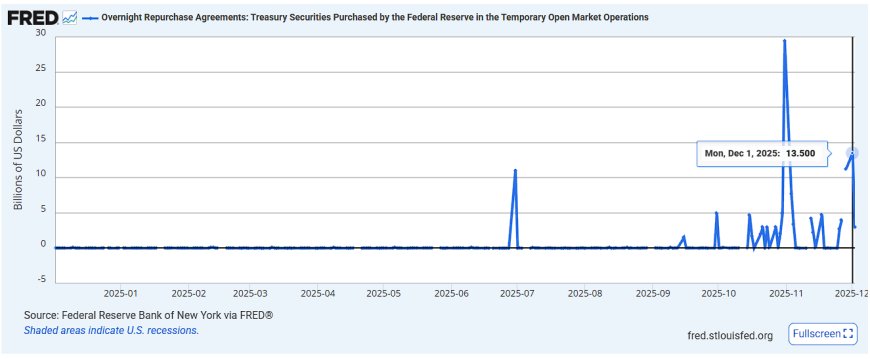
The Critical Pattern: QT Ends and the Fed Backfills the System
December 1, 2025 was the date the Fed had pre-announced as the formal end of quantitative tightening. Officially, the logic was simple: reserve balances were drifting toward the “ample” boundary and the Committee didn’t want to repeat 2019 by overshooting the floor. Unofficially, the pipes were already flashing yellow.
We can see it in the micro-data almost nobody looks at: repo windows, SOFR volumes, collateral mixes, and Standing Repo Facility usage. The system hit the reserve floor, and the Fed didn’t wait for a press conference. It moved inside the plumbing.
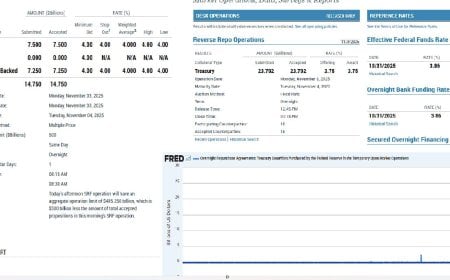
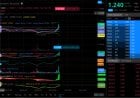
In the operations table, the story is obvious:
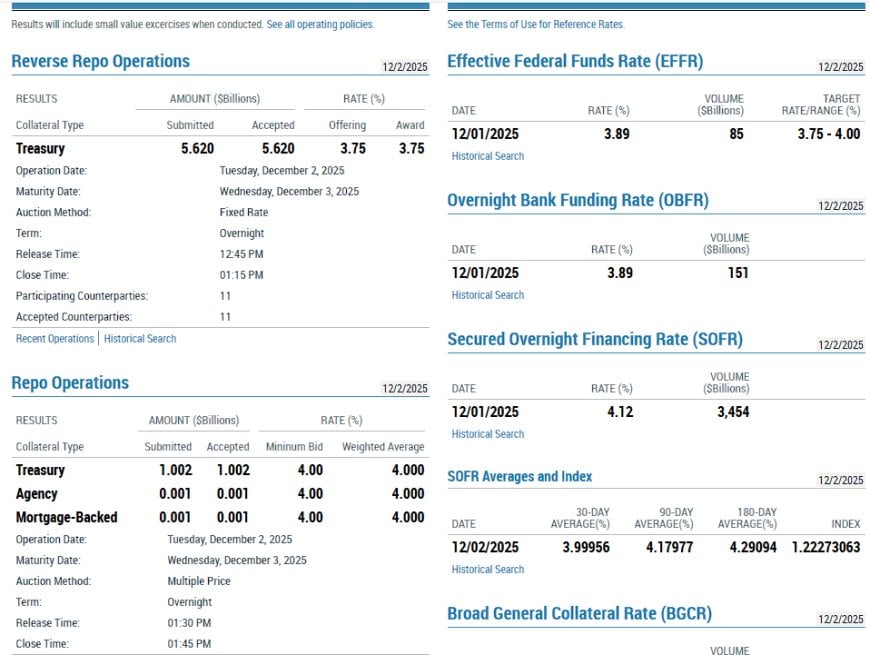
- Overnight repo operations show multiple intraday windows.
- Treasury, agency, and mortgage-backed collateral are all being taken.
- Fixed 4.00% award rate across the board — no stress premium, pure accommodation.
- Reverse repo balances tiny relative to the former $2.5T peak — the buffer is basically gone.
- SOFR printing around 4.12% with roughly $3.45 trillion in daily volume.
If the Fed weren’t smoothing conditions, SOFR wouldn’t sit there calmly while trillions churn through the pipes. It would spike. Instead, the rate is pinned, and the balance sheet is doing quiet, intraday work.
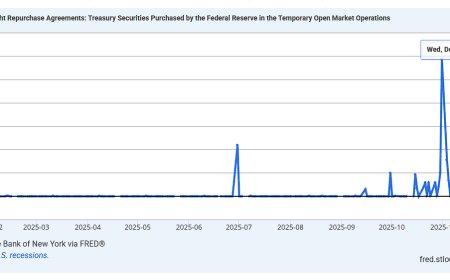
On the FRED chart above, the picture is even clearer: months of almost nothing in Fed overnight repos, then summer turbulence, autumn spikes, and finally the December blast — a visible lurch higher in usage just as QT officially stops. That is what a regime flip looks like when it’s mapped onto daily data.
None of this is branded as “quantitative easing,” but functionally the Fed is back to providing targeted, size-able liquidity against securities. It’s QE-lite embedded in the daily wiring.
Why the MBS Repo Prints Matter So Much
Treasuries in repo tell us about core funding conditions. MBS in repo tell us something deeper is broken in the collateral chain.
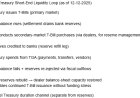
The Standing Repo Facility is designed to take Treasuries, agency debt, and agency mortgage-backed securities as collateral. That’s the rulebook. But in normal conditions, we don’t see chunky MBS usage show up. When it does, it’s a signal that:
- Dealer balance sheets are saturated.
- Convexity hedging and TBA chains are under pressure.
- Year-end or month-end constraints are biting.
- QT has squeezed reserves enough that the system can’t comfortably warehouse the risk.
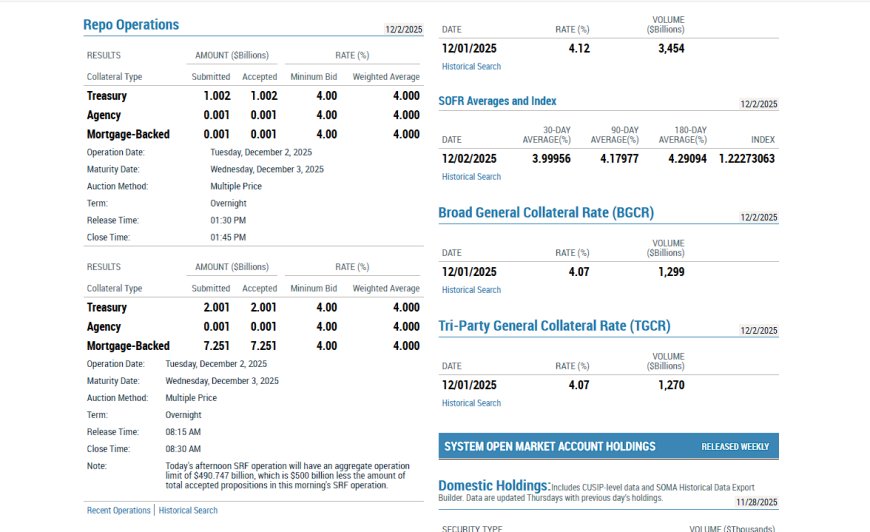
In the SRF operation snapshot, the afternoon window is doing exactly that: pulling in a notable slug of mortgage-backed collateral alongside Treasuries and agencies, all at the standing 4.00% rate. Technically this is a collateralized loan, not an outright purchase, but from the perspective of the funding system, the effect is similar: the Fed is sitting on MBS collateral and pushing cash back into the street.
If we want to know when the balance sheet is quietly re-engaging, we don’t wait for a Powell press conference. We watch for this: the day the Fed starts hoovering up MBS collateral through repo instead of just Treasuries.
What Actually Changed on December 1
On paper, December 1 was just the date QT stopped. In practice, it marked a shift from “shrinking the balance sheet” to “managing not to break funding markets.”
By the time we reached that point, the sequence looked like this:
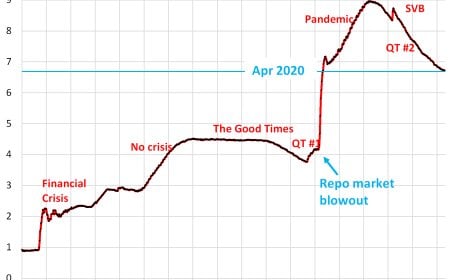
- The Fed let assets roll off for years, shrinking the balance sheet by roughly $2 trillion.
- The huge ON RRP cushion that once absorbed QT runoff drained toward zero.
- Funding markets began to show strain, with more frequent and larger SRF usage and end-of-month spikes in repo.
- Officials openly started talking about “emergent funding pressures” and the need to stop QT before reserves became scarce.
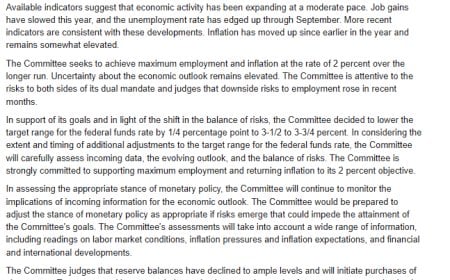
By early November, FOMC minutes and speeches were already teeing up a December stop date. When that date hit, the Fed couldn’t simply declare victory and walk away. With the RRP cushion basically gone and reserves flirting with the floor, it had to backfill — not in the headlines, but in the overnight windows.
That’s why December 1 feels like a pivot that can only be seen from below the surface: QT died at the exact moment the system hit its operational limit, and the replacement was not a billboard saying “QE is back” — it was a thick set of quiet repo operations that began to re-liquify the pipes.
December Collateral Hell: The Hidden Backdrop
None of this happens in a vacuum. The December window is always ugly:
- Year-end balance sheet constraints for large banks and dealers.
- Front-loaded Treasury issuance colliding with settlement calendars.
- Clusters of MBS settlements and hedge rebalancings.
- Foreign bank branches repositioning dollar funding.
- Money funds trying to park trillions at acceptable rates.
Under an ample-reserves regime with a full ON RRP buffer, the system can juggle that. Under late-stage QT with the RRP pool nearly drained, the same calendar turns into what we can fairly call collateral hell. Every constraint matters more. Every balance sheet is tighter. Every small mis-alignment shows up as a spike in the plumbing data.
That’s the backdrop for the screenshots in this article: SOFR volumes in the trillions, reverse repo usage minimal, repo operations pulling in MBS, and all of it landing on the same date QT officially stops. The system forced the Fed’s hand.
Pattern Nexus
QT didn’t end because everything was fine. It ended because the system had chewed through the RRP buffer and was starting to lean hard on the Fed’s emergency tools.
December 1, 2025 is the pivot point where:
- QT is officially over.
- The ON RRP cushion is basically gone.
- The Standing Repo Facility becomes a routine, not exotic, part of the daily toolkit.
- MBS collateral shows up in size, signaling deeper stress in the mortgage and dealer complex.
- The Fed quietly resumes acting as balance-sheet backstop through short-term operations.
Call it QE, call it reserve management, call it “technical operations” — the label doesn’t matter. The function is what counts. The Fed is back in the business of injecting liquidity when the system demands it, and the charts here capture the exact moment. Most observers will wait for the next FOMC press conference to understand what changed. But the plumbing told the story first: QT ended because the system hit its limits, and the Fed quietly pivoted from draining liquidity to supplying it through the operational backdoor. This was not a rhetorical policy shift — it was a structural one. And it began the moment the calendar flipped to December.
Deeper Lens: The 4–6 Month Funding Rhythm
There is a rhythm to funding stress in the modern dollar system — one that shows up repeatedly in repo markets, in collateral cycles, and in reserve scarcity episodes. It isn’t a rule and it isn’t predictive in a mechanical sense, but it has appeared often enough to treat as a macro signal rather than coincidence.
Historically, when the repo market begins to tighten, the system tends to move through a 4–6 month stress cycle. It happened in:
- 2019: Spring balance-sheet saturation → September repo blowout
- 2019–2020: September repo spike → March liquidity break
- 2023–2024: RRP collapse → spring/summer funding hardening
- 2025: June repo pressure → September tightening → December QT halt
Again, this pattern is not deterministic. Funding markets are nonlinear, and the Fed intervenes long before critical points. But the rhythm matters because it reflects how quickly balance-sheet constraints propagate through dealers, money funds, GSEs, and foreign banking branches.
In 2025, the pattern was visible: early-summer repo strain, renewed pressure in September, and the eventual policy inflection — QT’s end — in December. Not because the Fed chose the date arbitrarily, but because the system’s cycle moved to its natural endpoint.
Readers should treat this not as a forecast, but as a lens: when repo stress begins, the clock tends to run. And in December, it ran out.
FAQ: What This Means for Markets
Is this QE?
Not officially. The Fed is not buying assets outright. But functionally, by taking Treasuries, agencies, and MBS collateral through repo and pushing cash into the system, the effect resembles QE-lite inside the plumbing.
Why does MBS matter so much?
Because MBS is the first collateral to choke when balance sheets tighten. Its appearance in SRF operations signals deeper dealer stress than Treasuries alone would indicate.
Does this mean a crisis is coming?
Not necessarily. Often, these interventions succeed in smoothing stress before anything breaks publicly. But it does mean the system was operating at the edge of its reserve floor.
Why did all of this happen right when QT ended?
Because the RRP buffer — the shock absorber that made QT possible — was effectively gone. December 1 wasn’t just a date on a calendar. It was the moment the system ran out of slack.
How should we interpret SOFR’s stability?
Stable SOFR at massive volume is usually a sign that the Fed is actively smoothing conditions. Without that support, we would have seen rate spikes.
What should readers watch next?
- SRF usage trends
- Collateral mix — especially MBS share
- Dealer balance-sheet constraints into quarter-end
- SOFR volume vs. rate spread
- Changes in Treasury issuance patterns
Sources
- Federal Reserve – Repurchase Agreement Operations (General Overview)
- Federal Reserve Bank of New York – Desk Operations & Daily Repo Results
- New York Fed – SOMA Holdings and Balance Sheet Composition
- FRED – Overnight Reverse Repo (ON RRP) Operations
- FRED – SOFR (Secured Overnight Financing Rate)
- FRED – Federal Reserve Total Assets (Balance Sheet)
- Federal Reserve – QT Overview and Policy Framework
- Federal Reserve – FOMC Statements, Minutes, and Policy Announcements
Qual é a sua reação?
 Curtir
0
Curtir
0
 Não Gostar
0
Não Gostar
0
 Amor
0
Amor
0
 Engraçado
0
Engraçado
0
 Uau
0
Uau
0
 Triste
0
Triste
0
 Bravo
0
Bravo
0

Founder of Pattern Nexus. I research markets, macro, geopolitics, AI, history, ancient systems, and the patterns most people overlook. I’m also building Market Radar, a trading scanner designed to read pressure, risk, confirmation, and setup quality before chasing a move. Pattern Nexus is where I connect the dots between data, history, technology, and the bigger system playing out around us.











Comentários (0)