

Brazilian Police Mega-Operation: Rio’s Deadliest Raid Leaves 60+ Dead | Pattern Nexus<
More than 2,500 Brazilian officers stormed Rio’s favelas in a massive raid against the Comando Vermelho gang — over 60 dead, 80 arrests, and drone-dropped explosives. Brazil’s largest police operation in decades exposed how urban warfare tactics are evolving ahead of major global events like COP30.
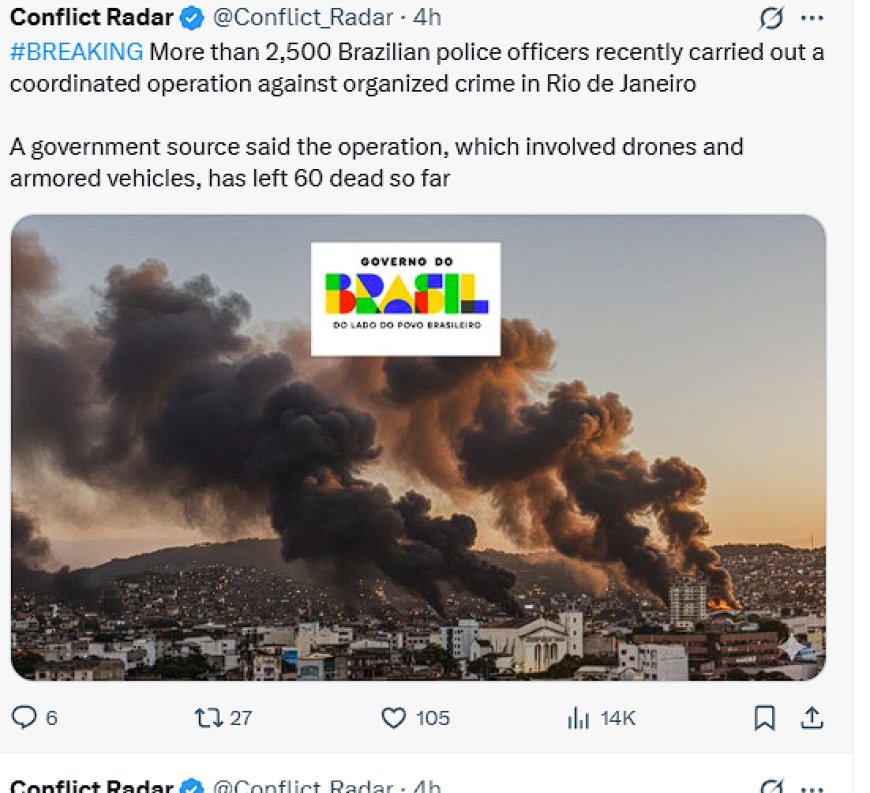
More than 2,500 Brazilian officers stormed Rio’s favelas in a massive raid against the Comando Vermelho gang — over 60 dead, 80 arrests, and drone-dropped explosives. Brazil’s largest police operation in decades exposed how urban warfare tactics are evolving ahead of major global events like COP30.
Jump to a section
Brazilian Police Mega-Operation: Summary
Overview of the Rio de Janeiro Operation (28 Oct 2025)
| Key detail | Evidence |
|---|---|
| Scale of force | Rio governor Claudio Castro said more than 2,500 security personnel (civil and military police and special-forces) and 32 armoured vehicles were deployed in the Alemão and Penha favela complexes near the international airport (reuters.com). El País reported that the operation included around 30 armoured vehicles, two helicopters, police drones and demolition vehicles (english.elpais.com). |
| Casualties and arrests | Reuters reported that at least 64 people were killed, including four police officers. A state official told Reuters that the toll could be about 60, more than double the early official figure of 22 dead (spokesman.com). El País, citing O Globo, said at least 60 people were dead (including four officers) and about 80 suspects were arrested (english.elpais.com). The Guardian wrote that by the afternoon at least 64 people had been killed, including four police officers (theguardian.com). The operation served about 250 arrest and search warrants and resulted in 81 arrests (reuters.com). |
| Target and tactics | The mega-operation, dubbed Operação Contenção, targeted the Comando Vermelho (Red Command), considered one of Brazil’s most powerful criminal groups (english.elpais.com). Traffickers set up barricades, burned cars and, for the first time, reportedly used weaponised drones to drop explosives on special-forces teams (theguardian.com). Police and gang members exchanged heavy gunfire; footage showed suspects fleeing into a forested area (reuters.com). |
| Context | The raid occurred days before Rio hosted the C40 global mayors’ summit and Prince William’s Earthshot Prize, both part of preparations for the COP30 climate conference (reuters.com). Large-scale police operations often take place in Rio ahead of major events (reuters.com). |
| Criticism and impact | Civil-society group Sou da Paz described the operation as a tragedy and argued that military-style raids do not attack the underlying drug supply chain (reuters.com). Residents reported ongoing gunfire and argued that such raids turn favelas into “war zones” (theguardian.com). About 50 health and education facilities were disrupted and bus routes had to be diverted (reuters.com). |
Rio Mega-Raid: What Happened
Scale: More than 2,500 civil/military police and special forces hit the Alemão and Penha favela complexes in a predawn sweep targeting Comando Vermelho (Red Command). Armored vehicles and helicopters were used; traffickers reportedly dropped explosives from drones. The Guardian
Toll & arrests: Reports range from 60–64 dead (including 4 police) and ~80–81 arrests; 75–93 rifles seized; ~250 warrants issued. Authorities called it Rio’s deadliest police operation. EL PAÍS English, Reuters
Timing / context: Took place just before high-profile events in Rio tied to COP30 / C40 / Earthshot, with schools and transit disrupted citywide. Reuters
Why It Matters
Capability jump by gangs: Use of weaponized drones marks an escalation in TTPs (tactics, techniques, procedures). Expect copycat adoption by other Brazilian factions and regional spillover into logistics hubs and airport corridors. The Guardian
State response pattern: Large, highly kinetic raids signal a push to visibly degrade command nodes before international events — effective for immediate disruption, but they rarely dismantle financing and supply chains on their own. The Guardian
Operational reality: The numbers (250+ warrants, 2,500 personnel) suggest months of pre-tasking and intel fusion across units. Sustainment requires follow-on financial, crypto, and arms-trafficking cases or the network reconstitutes. Reuters
Tie-In to U.S. Plans & Policy Tracks
Law-enforcement fusion with Brazil is already expanding. In April 2025, HSI (ICE) and Brazil’s Federal Police signed an MOU to share criminal-investigative intelligence and methodologies (human smuggling, firearms, child exploitation, cyber/financial networks). This is the lane where follow-on actions against Red Command money men and brokers will happen. U.S. Embassy Brazil
U.S. strategy documents emphasize this cooperation. Public U.S. materials and CRS notes highlight deepening joint work on crime and corruption, and debates over labeling criminal groups as terrorists — relevant if Brazil seeks stronger legal tools after raids like this. Congress.gov
Recent joint cases show the model. 2025 HSI–Brazil operations disrupted a transnational crypto-fraud ring — a template for hitting gang finances post-raid. Expect more TBML / crypto targets tied to CV’s revenue streams. U.S. Immigration and Customs Enforcement
Multilateral layer: Brasília has tightened ties with INTERPOL to coordinate on cross-border notices, fugitives, and arms flows feeding CV — complementing the U.S.–Brazil MOU. INTERPOL
Talking Points / Framing
“This wasn’t just a sweep; it’s the opening move.” Kinetic raids create a window; the real test is whether financial and procurement arteries get cut over the next 30–90 days (crypto rails, cash couriers, small-arms pipelines, corrupt brokers).
“Drone warfare has entered Brazil’s urban playbook.” Treat CV’s drone explosives as a capability threshold crossing — watch for counter-UAS deployments, EW kits on armored vehicles, and legal moves to criminalize drone munitions. The Guardian
“Follow the money.” After 80+ arrests and 250 warrants, the decisive next step is coordinated asset seizures, bank/fintech SAR pivots, and cross-border subpoenas — exactly where the HSI–PF intel-sharing MOU bites. U.S. Embassy Brazil
“Short-term calm vs. long-term control.” Without sustained pressure on arms sources and laundering networks, street-level gains will decay; watch for U.S.–Brazil press notes on joint designations, arrests abroad, or major forfeitures. Congress.gov
What's Your Reaction?
 Like
0
Like
0
 Dislike
0
Dislike
0
 Love
0
Love
0
 Funny
0
Funny
0
 Wow
0
Wow
0
 Sad
0
Sad
0
 Angry
0
Angry
0

Pattern
Related research
Imminent Escalation Watch: Venezuela — Markets, Signals, and the Playbook (Pattern Nexus Situation Update)
description" content="Pattern Nexus Situation Update: Carrier posture, bomber signaling, maritime strikes, and GPS interference point to el…
3 shared topics, same research avenue.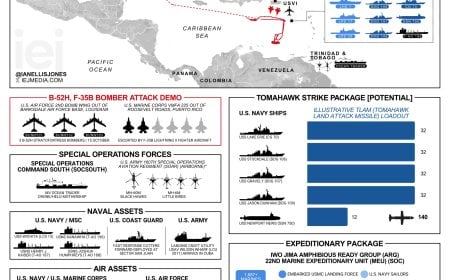
Caribbean Surge: From Sea-Strikes to Land Options — What the U.S. Is Building
As U.S. Southern Command ramps up its Caribbean deployment, amphibious ships, Tomahawk destroyers, and special operations units signal a sh…
3 shared topics, same research avenue.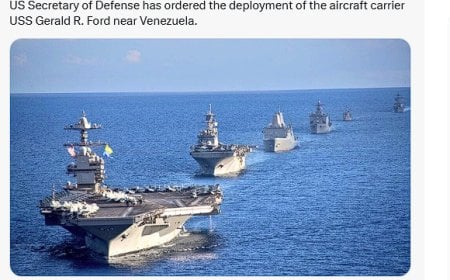
Signal in the System: USS Gerald R. Ford Deployment and the Next Phase of U.S. Power Consolidation
The U.S. Navy’s Gerald R. Ford carrier deployment near Venezuela isn’t about drug interdiction — it’s the next signal in a global realignme…
2 shared topics, same research avenue.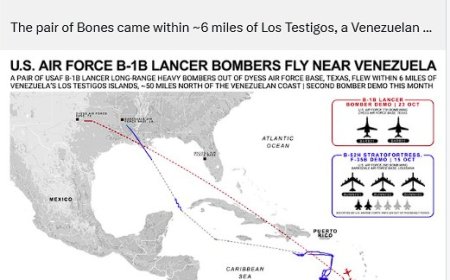
Second Bomber Demo Near Venezuela: The Signal, Not the Show
Two USAF B-1B Lancers staged a second bomber demonstration in the Caribbean, flying within ~6 miles of Venezuela’s Los Testigos. This isn’t…
2 shared topics, same research avenue.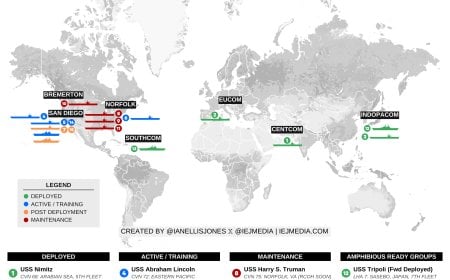
Consolidating Power: The Global Carrier Pattern and the Caribbean Surge
U.S. carrier strike groups are on the move — from the Ford in the Mediterranean to the Iwo Jima Amphibious Ready Group now under SOUTHCOM i…
2 shared topics, same research avenue.
Trump Signals Possible Military Strikes on Drug Cartels Beyond U.S. Borders
Trump says he will notify Congress before launching U.S. military strikes on foreign soil targeting drug traffickers — a move signaling a s…
2 shared topics, same research avenue.
The Regime Change Question: Has Washington Crossed the Line in Venezuela?
Despite a string of U.S. naval strikes and CIA authorizations inside Venezuela, no public confirmation has been made that the U.S. formally…
2 shared topics, same research avenue.
Comments (0)
Security Check
Please complete the captcha to verify you are human.