
Inflation at 3.0%: The Illusion of Stability and the Inevitable Liquidity Pivot
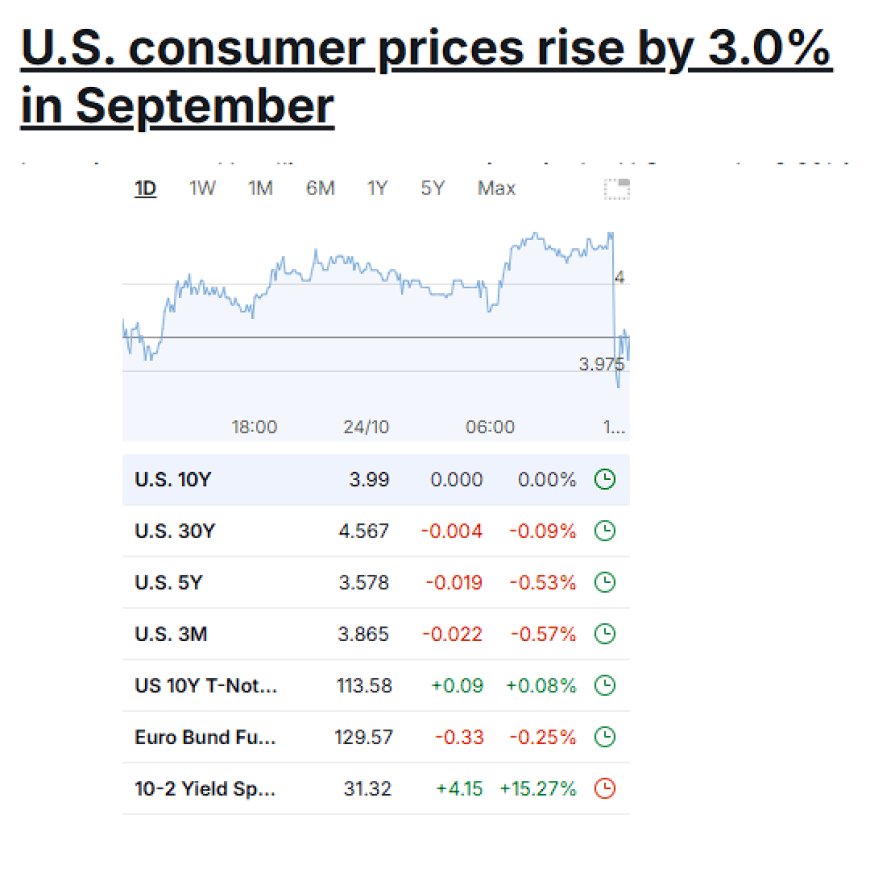
"3% CPI isn’t stability—it’s controlled volatility in a debt-saturated system, forcing the Fed toward rate cuts and stealth QE to keep credit flowing.

Inflation at 3.0%: The Illusion of Stability and the Inevitable Liquidity Pivot
Published: October 24, 2025 | By Pattern Nexus
My View: 3% Isn’t “Stable”—It’s Controlled Volatility
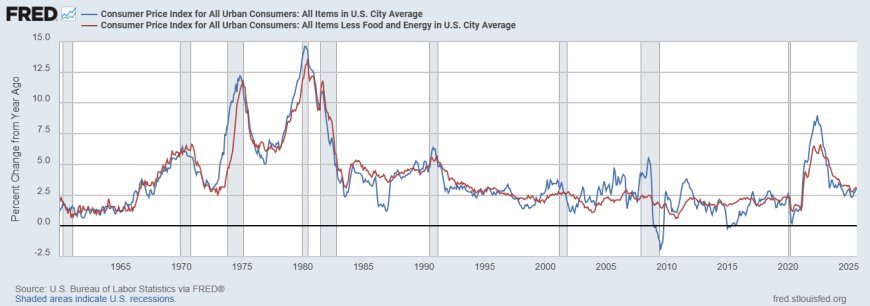
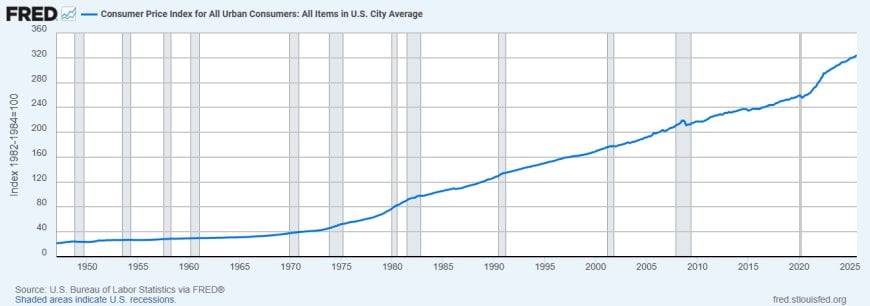
U.S. consumer prices at 3.0% are being framed as “progress.” That’s the headline. But zoom out: in a debt-saturated, maturity-mismatched system, 3% isn’t equilibrium—it’s the minimum pressure the system needs to keep debt claims from collapsing while avoiding outright panic. It’s a balancing act on a fraying rope.
This is why I call it controlled volatility. Prices don’t resolve toward true stability; they oscillate within a corridor that buys time. Meanwhile, real activity cools, cash flows thin, and refinancing windows shrink. The outcome is baked in: policy must pivot back to liquidity.
| All items | 3.0% |
|---|---|
| Food | 3.1% |
| Food at home | 2.7% |
| Cereals and bakery products | 1.6% |
| Meats, poultry, fish, and eggs | 5.2% |
| Dairy and related products | 0.7% |
| Fruits and vegetables | 1.3% |
| Nonalcoholic beverages and beverage materials | 5.3% |
| Other food at home | 1.9% |
| Food away from home | 3.7% |
| Full service meals and snacks | 4.2% |
| Limited service meals and snacks | 3.2% |
| Energy | 2.8% |
| Energy commodities | −0.4% |
| Fuel oil | 4.1% |
| Gasoline (all types) | −0.5% |
| Energy services | 6.4% |
| Electricity | 5.1% |
| Natural gas (piped) | 11.7% |
| All items less food and energy | 3.0% |
| Commodities less food & energy commodities | 1.5% |
| Apparel | −0.1% |
| New vehicles | 0.8% |
| Used cars and trucks | 5.1% |
| Medical care commodities | 0.7% |
| Alcoholic beverages | 2.0% |
| Tobacco and smoking products | 6.9% |
| Services less energy services | 3.5% |
| Shelter | 3.6% |
| Rent of primary residence | 3.4% |
| Owners’ equivalent rent | 3.8% |
| Medical care services | 3.9% |
| Physicians’ services | 2.4% |
| Hospital services | 5.5% |
| Transportation services | 2.5% |
| Motor vehicle maintenance & repair | 7.7% |
| Motor vehicle insurance | 3.1% |
| Airline fare | 3.2% |
Why 3% Forces the Pivot
- Debt Arithmetic: With public and private balance sheets stacked, growth can’t outrun interest expense for long. Hold rates high and you crush cash flows; cut them and you re-inflate the claims. Either way, you need liquidity to roll the pile.
- Collateral & Curve: As the curve jerks around and term premia wobble, collateral chains tighten. The fix is not a press conference; it’s balance-sheet plumbing: repos, bill supply tweaks, and eventually QE by another name.
- Optics vs. Mechanics: They won’t call it QE. It will be “reserve management,” “temporary operations,” or “market function support.” Different label, same medicine: add duration to the balance sheet, suppress term stress, extend the runway.
The Liquidity Playbook (What They Actually Do)
- Guidance softening: Talk down terminal rates, hint at “data dependency,” float cut windows.
- Operations ramp: Heavier use of repos and bills to smooth reserves and collateral availability.
- Curve engineering: Nudges that compress funding volatility and stabilize the front end.
- Balance-sheet shift: When stress persists, enlarge duration absorption—QE in practice if not in name.
The public hears “pivot.” The market hears “duration backstop.” The system hears “you’ve got time—roll your debt.”
Signals I’m Watching
- 10-Year yield behavior: Fades on “bad news is good news” days signal front-running of cuts/liquidity.
- Curve steepening from deeply inverted levels: A classic pre-pivot tell when growth slows and policy expectations ease.
- Funding spreads & collateral stress: If GC/repo premiums and basis blow out, operations will follow—fast.
- Credit rollover windows: Watch issuance mix and maturities. Tight windows = policy air cover for “temporary” facilities.
What This Means for the Real Economy
Rate cuts and stealth QE don’t solve structural problems; they sequence them. Liquidity buys time, but it also pushes price signals out of alignment. That’s why we see rising nominal asset values alongside flat or deteriorating purchasing power. It feels like relief, and it is—for a while. But the bill is always paid in currency quality.
Positioning Mindset
- Expect policy inertia toward easing: Cuts arrive first; balance-sheet support lingers under new branding.
- Liquidity beats narrative: Watch flows and operations calendars more than headlines.
- Real assets & quality cash flows: In a distortion regime, own what benefits from liquidity without relying on perfect growth.
Bottom Line
3% CPI is not stability—it’s a pressure reading. In a system built on rolling debt and collateral chains, there is no enduring “soft landing” without liquidity. The next act is the same as the last: rate reductions and QE-functions to keep the machine running. Different cycle, same physics.
Jaká je vaše reakce?
 Líbí se
0
Líbí se
0
 Nesouhlasím
0
Nesouhlasím
0
 Láska
0
Láska
0
 Vtipné
0
Vtipné
0
 Wow
0
Wow
0
 Sm sad
0
Sm sad
0
 Rozčílený
0
Rozčílený
0
















Komentáře (0)