
Gold Breaks, Yields Surge, Oil Climbs: The New Energy Shock and the Week Ahead
Gold breaks below $4,400, silver resets toward the 60s, oil keeps climbing, and long-end yields press toward 5% as the Middle East conflict moves deeper into infrastructure risk. A full Pattern Nexus breakdown of the setup and the week ahead.
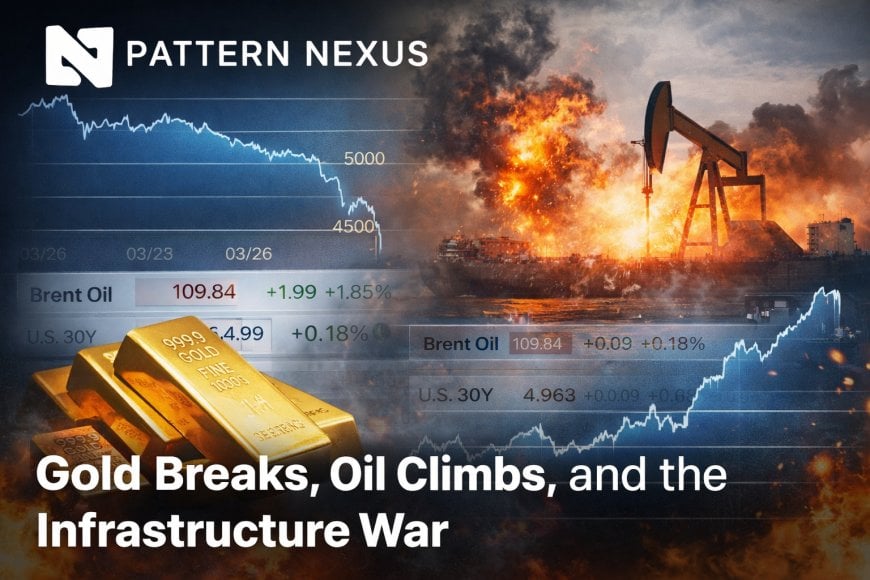

I said months ago that gold had room to break lower and silver had room to reset into the 60s, and a lot of people hated hearing it because they were still trapped inside the old “war equals metals moon” reflex. That is not the regime we are in. This is an inflationary infrastructure shock with a rising long end, a stronger dollar, tighter financing conditions, and a conflict that has now openly moved into power plants, desalination, shipping lanes, fertilizer flows, helium production, and regional utility risk. The U.S. 10-year and 30-year are the real stress transmitter here. Oil is the physical pulse. Asia is the first clean read of who has to pay for the marginal imported molecule. And the negative natural-gas setup in West Texas does not contradict the crisis at all. It proves the core Pattern Nexus point: local abundance is meaningless if delivery infrastructure, transport permissions, and conversion capacity are broken. This article is about that system, not just the price of one barrel or one metal.
Gold falling during war is the tell. The market is no longer trading abstract fear. It is trading hotter inflation, higher carry, stronger dollar pressure, and a bond market that is starting to price tighter-for-longer again.
If the 30-year gets through 5% and stays there, this stops being a scary tape and becomes a structural financing problem. That is when duration damage starts bleeding into housing, credit, refinancing, utilities, and everything levered to a low-rate assumption.
Negative Waha gas in Texas during a global energy emergency is not a contradiction. It is the perfect example of node pricing versus delivered-system pricing. A trapped molecule in the Permian is not the same thing as usable energy reaching Asia, Europe, or fertilizer plants.
Gold Broke Because This Is Not a Clean Fear Trade
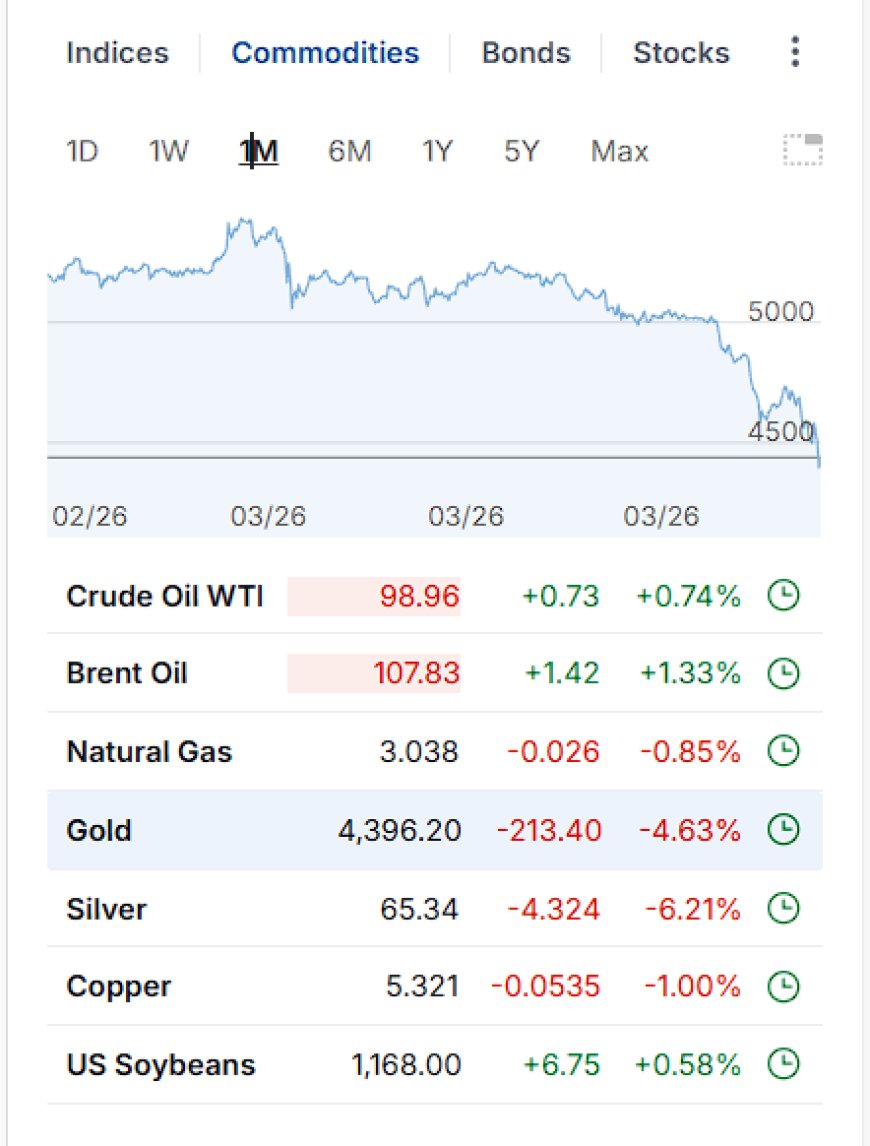
Gold breaking below $4,400 was my original downside target back in October. I said then that if the market transitioned from a simple liquidity fear trade into a higher-for-longer inflation regime, gold could absolutely fail people at the exact moment they expected it to save them. That is what is happening now.
The old mental shortcut says war equals safe haven equals gold straight up. That only works when the dominant market response is monetary easing, collapsing yields, and a clean flight to defense. What we have instead is oil above crisis thresholds, central banks leaning hawkish again, a stronger dollar, and a bond market that is openly starting to reprice rate-cut assumptions. Reuters reported spot gold around $4,372.86 on Monday, down roughly 2.5% on the day and extending a multi-session liquidation, while silver fell to roughly $65.61. More importantly, the market was pricing about a 27% chance of a Fed hike by December rather than the cuts people were fixated on before the war regime hardened. Gold does not love that setup. Neither does silver.
Silver is doing exactly what I expected it to do. People got emotional when I called for a move back into the 60s months ago, but silver is not just a precious metal. It is a higher-beta macro instrument tied to industry, liquidity, and crowd leverage. When you shift from “panic hedge” to “inflation plus financing stress plus growth risk,” silver tends to get hit harder and faster than gold. That is not failure of the thesis. That is the thesis.
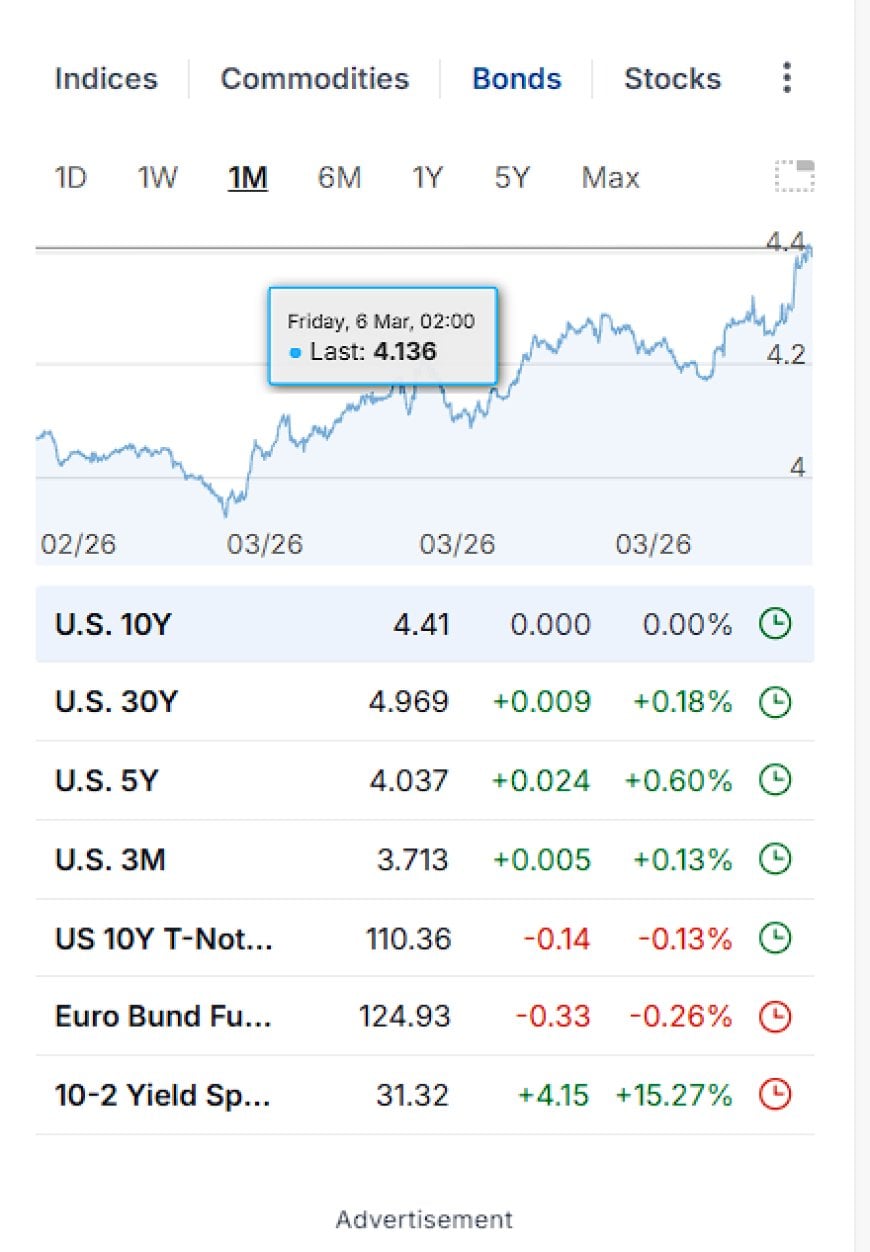
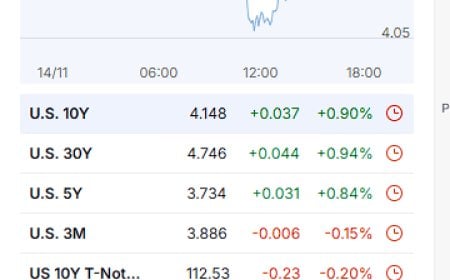
The real message is not just in the metals. It is in the metals versus yields. The U.S. Treasury’s own published curve for March 20 closed the 10-year at 4.39% and the 30-year at 4.96%. By Asia trade Monday, Reuters had the 10-year probing roughly 4.415%, an eight-month high. This is where the market’s language changes. Once the long end starts climbing at the same time oil is climbing, gold is no longer the simple answer. The entire discount-rate structure begins to reprice.
That is why I am saying this is terrifying if the move continues. Gold below $4,400 matters. If it loses its footing and the long end does not cool off, the next major downside area is not some tiny retrace. You can start arguing for something closer to $3,800. People do not want to hear that because they want war to be a clean directional trade. It is not. It is an inflationary fracture moving through multiple layers of the system at once.
Gold and silver are no longer trading mainly against geopolitical fear. They are trading against the combination of war-driven energy inflation, higher rate expectations, stronger dollar pressure, and cross-asset liquidation. That is why they can fall even while the world gets more dangerous.
Oil, Negative Gas, Helium, Fertilizer, and the Split Energy System
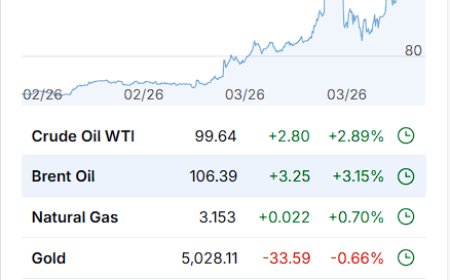
Oil seems like it wants to keep climbing because the market is no longer treating this as a temporary sentiment spike. It is treating it as a physical disruption layered on top of a transport disruption layered on top of infrastructure risk. Reuters reported Brent settled Friday at $112.19, the highest close since July 2022, and Asia reopened with Brent around $112.62 while WTI stayed near the upper-$90s. That is not just a scary chart. That is the physical price of a damaged system.
The escalation itself matters. Trump’s 48-hour ultimatum to Iran was not just rhetoric. It explicitly threatened Iranian power plants if Hormuz was not reopened. Tehran then warned it would respond by attacking Gulf energy and desalination infrastructure. That is the exact threshold I have been talking about. Once the war openly shifts toward electricity, water, shipping, and utility systems, we are no longer in an old-school commodity shock. We are in infrastructure war.
That matters because infrastructure warfare widens the attack surface far beyond crude. It hits gas processing, LNG trains, power generation, petrochemicals, insurance, marine routing, port handling, fertilizer feedstocks, and fresh water itself. Reuters also reported that Saudi Aramco cut supply to Asian buyers for a second month in April, keeping refineries tight even as the region is already carrying the import burden. In parallel, the Philippines temporarily allowed limited use of dirtier Euro-II fuel just to maintain supply continuity. That is what demand destruction looks like in real life: not just fewer barrels consumed, but lower quality standards, emergency substitutions, and economic triage.
This is also where I want to be very clear about something people keep missing. Natural gas going negative in Texas does not disprove the crisis. It proves the Pattern Nexus framework. Waha gas has been negative for weeks because pipeline constraints are trapping associated gas in the Permian even while producers keep chasing high oil economics. That is local oversupply inside a bottlenecked node. It does not mean the world has abundant delivered energy. It means the system is fractured. One part is drowning in trapped molecules. Another part is choking on scarcity. Price at the node is not price at civilization.
This is the same reason I have been hinting that some of what we are watching feels at minimum systemically tolerated, if not deliberately structured. I am not presenting that as a proven fact. I am presenting it as a Pattern Nexus lens. When a system repeatedly produces shortages where power concentrates, surpluses where access is blocked, and volatility that transfers wealth upward while locking in dependency, you have to ask whether this is accidental incompetence or something deeper. Either way, the outcome is the same: ordinary people pay more, industry gets squeezed, and the financing class gains more control over allocation.
Helium and fertilizer make that point brutally clear. Reuters reported that Qatar, which accounts for close to one-third of global helium supply, has lost enough natural-gas processing throughput that the market is effectively missing around 5.2 million cubic meters of helium per month. That matters for semiconductors, aerospace, medical imaging, and high-end industrial processes. On the fertilizer side, Reuters reported Malaysian producers are suspending new orders, while U.S. and Canadian farmers are already reporting serious spring shortages and price spikes. Another Reuters analysis said roughly a third of global fertilizer trade normally transits Hormuz and nitrogen prices are up 30% to 40% since the conflict began.
So no, this is not “just oil.” It is fuels, chemicals, LNG, fertilizer, helium, transport, and utility survival all wrapped into one. That is why jawboning the barrel lower on social media or trying to talk the market out of fear only goes so far. You cannot tweet a shipping lane open. You cannot post a refinery back into existence. You cannot talk a desalination plant out of being a target.
- WTI is a local barrel. Brent is the global transport-risk barrel.
- Negative Waha gas is trapped-node pricing, not delivered-system abundance.
- Helium, fertilizer, and desalination risk prove this is an infrastructure crisis, not just an oil story.
Trump’s 48-Hour Deadline, Asia’s First Vote, and the Week Ahead
I said if the United States started blowing up Iranian power plants and Iran started retaliating across Gulf infrastructure, then we had entered a new era. I also said I did not expect us to go there and did not expect it to go this long. Yet that is exactly where the rhetoric is now pointed. Trump gave a 48-hour deadline tied directly to Hormuz. Iran responded by threatening Gulf energy and water systems. Reuters also reported that Tehran said the strait would remain open only to non-enemy-linked ships, while warning that a direct attack on its grid could trigger a full closure. That is not the language of de-escalation. That is the language of transport permissions and infrastructure retaliation.
Asia is where the market first prices the reality of that threat. Asia is not just a geography in this setup. It is the first consumer of the marginal imported molecule. It is the first place where the shipping premium, the insurance premium, and the currency premium all collide. Reuters reported Japan’s Nikkei fell as much as 5% intraday and South Korea’s KOSPI dropped 5.2% as the week began. The rupee hit a record low near 93.7350 per dollar. The dollar itself rose as the market treated the U.S. both as the world’s main liquidity refuge and as a relatively advantaged net energy exporter compared with Europe and much of Asia.
That last point matters. U.S. relative strength here is not the same thing as U.S. safety. It just means the United States gets hit later and differently. The importer economies get hit first because they pay for the molecule, the route, and the currency hedge all at once. Asia’s weakness is not a side story. It is the first honest vote on what this conflict actually costs.
The long end is confirming that message. When 10s are around 4.4% and 30s are effectively at 5%, the market is no longer saying “we are scared.” It is saying “the inflation path may be hotter than expected and the cost of money may stay higher for longer than expected.” That is why the bond market now matters as much as the commodity tape. The financing layer is where every asset class eventually has to answer for the physical shock.
The week ahead
The real week ahead is not just a checklist of data releases. It is a test of whether the market starts treating this as a temporary scare or as a durable regime shift. Monday brings January construction spending. S&P Global’s week-ahead preview says flash PMI data across the major developed economies and India will be one of the main focal points, along with inflation-linked releases abroad and consumer confidence readings. Weekly jobless claims still matter, not because they will override war pricing, but because they will show whether the U.S. labor side is bending at the same time financing conditions tighten.
But the calendar is also thinner and more distorted than people may realize. The U.S. Census Bureau pushed February durable goods to April 7. The BEA schedule shows the GDP third estimate for fourth quarter 2025 on April 9. Census also moved the February new home sales release all the way to May 5. That means this week is unusually exposed to live geopolitical headlines, commodity moves, and bond repricing because some of the standard late-month hard-data anchors are simply not there.
So here is the real checklist for the week ahead. Does Brent stay above $110 and press higher? Does the 30-year finally clear 5% in a way the market cannot ignore? Does gold fail to stabilize and continue toward the next major downside zone? Does silver keep bleeding deeper into the 60s? Does Asia stay under pressure because the importer complex is telling the truth before U.S. equities fully price it? Do emergency policy responses widen, like more stockpile releases, more dirty-fuel exceptions, more rationing behavior, more state support for utilities, more refinery workarounds, and more jawboning?
And most importantly: does the war stay within headline escalation, or does it move deeper into the systems that keep modern civilization functioning? Because if it is the second one, the market has not fully priced it yet.
Pattern Nexus Lens
This is where my framework is different from the standard market take. I do not look at oil as a commodity in isolation. I look at civilization as a layered delivery machine. Extraction is only one layer. Then comes transport. Then insurance. Then port handling. Then refining or processing. Then electricity. Then desalination. Then fertilizer and chemicals. Then food. Then financing. Then political response. Most analysts still talk about the top layer as if it is the whole system. It is not.
What we are watching now is a shock moving across layers. The molecule is one problem. The route is another. The ability to insure the route is another. The ability to power the industry that uses the molecule is another. The ability to fund all of that at 5% long-end money is another. That is why the negative Waha story matters so much. It is the cleanest proof that energy is not one market. It is a permissioned network. A molecule without transport rights, pipeline capacity, export terminals, and conversion infrastructure is not economically equivalent to a delivered molecule inside an import-dependent industrial economy.
The same logic applies to gold. People think gold is reacting to war. It is reacting to the financing architecture that war is forcing the market to price. The same logic applies to Asia. People think Asia is just weak because of fear. No. Asia is weak because it is closer to the imported-energy penalty box. The same logic applies to fertilizer and helium. People think they are side stories. They are not side stories. They are proof that the war has crossed into the substrate of modern production.
From the Pattern Nexus perspective, the deeper question is whether this architecture is merely fragile or whether fragility itself has become a mechanism of control. I cannot prove intentionality in every case. But I can say this with confidence: the effect is the same either way. Scarcity becomes leverage. Bottlenecks become policy tools. Volatility becomes transfer. And the people who control routes, capital, utilities, and permissions gain power as everyone else pays the spread.
This is not a commodity move. It is a systems move. The real war is not just over barrels. It is over routes, utilities, finance, and the infrastructure layers that determine whether a civilization can still function at a tolerable cost.
FAQ
Why is gold falling during a war instead of acting like a classic safe haven?
Because this is not just a fear event. It is an inflation-and-rates event. Higher oil, higher shipping risk, higher yields, and stronger dollar pressure can overwhelm the usual safe-haven bid, especially when traders start reducing leverage and repricing the Fed path.
Why does negative Texas gas not contradict the global energy-crisis thesis?
Because energy is not one undifferentiated market. Waha reflects trapped gas inside a constrained basin. The world price reflects delivered, insured, processed, transportable energy. Those are different things. Local oversupply inside a bottleneck can coexist with global scarcity.
What matters most this week?
Brent above or below $110, whether the 30-year cleanly breaks 5%, whether gold stabilizes or keeps liquidating, whether Asia keeps signaling importer stress, and whether the war expands deeper into infrastructure targets. That is the real map, much more than any one isolated economic release.
Sources
These sources support the latest market pricing, escalation timeline, Asia open, rate backdrop, energy-system stress, and the week-ahead calendar distortions referenced in this article.
- Reuters — Oil prices to rise further on Monday as Mideast war escalates
- Reuters — Iran threatens to retaliate against Gulf energy and water after Trump ultimatum
- Reuters — Asia shares slide, yields climb as Gulf war rages
- Reuters — Dollar rises as escalating Middle East war spurs haven demand
- Reuters — Gold slides over 2% as Middle East tensions stoke inflation fears
- Reuters — Saudi Aramco cuts oil supply to Asia for second month in April
- Reuters — Iran war’s energy impact forces world to pay up, cut consumption
- Reuters — Malaysia fertiliser producers halt new orders as Iran war drives up prices
- Reuters — Iran war deprives U.S. farmers of affordable fertilizer as spring planting looms
- Reuters — Helium prices soar as Qatar LNG halt exposes fragile supply chain
- BOE Report / Reuters pickup — U.S. natgas prices at Waha Hub in Texas remain negative for record 25th day
- Reuters — IEA consulting with governments on further oil stock releases, chief Birol says
- IEA — Largest ever oil stock release amid market disruptions from Middle East conflict
- IEA — Update on IEA collective action decision of 11 March 2026
- U.S. Treasury — Daily Treasury Par Yield Curve CMT Rates
- Federal Reserve — March 18, 2026 FOMC statement
- Federal Reserve — Policy rate target range
- S&P Global — Week Ahead Economic Preview: Week of 23 March 2026
- U.S. Census Bureau — Construction Spending release schedule
- U.S. Census Bureau — Durable goods reschedule notice
- BEA — Release schedule
- U.S. Census Bureau — New Residential Sales reschedule notice
Mi a reakciód?
 Tetszik
0
Tetszik
0
 Nem tetszik
0
Nem tetszik
0
 Szeretet
0
Szeretet
0
 Vicces
0
Vicces
0
 Hűha
0
Hűha
0
 Szomorú
0
Szomorú
0
 Mérges
0
Mérges
0

Founder of Pattern Nexus. I research markets, macro, geopolitics, AI, history, ancient systems, and the patterns most people overlook. I’m also building Market Radar, a trading scanner designed to read pressure, risk, confirmation, and setup quality before chasing a move. Pattern Nexus is where I connect the dots between data, history, technology, and the bigger system playing out around us.















Hozzászólások (0)