
Market Wrap – January 16, 2025: CPI Relief Cools, Yields Slide, Oil Loses the Security Premium
U.S. stocks dipped after Wednesday’s CPI-fueled surge as investors parsed earnings and fresh data. Treasury yields eased after Waller comments, gold climbed, oil settled lower as Red Sea risk premium faded, and the dollar softened versus the yen ahead of the inauguration.

This wasn’t isolated to Friday. The week was dominated by three drivers that keep leaking into prices: (1) the Powell probe / Fed chair succession trade (Hassett vs Warsh), (2) Iran escalation signals and U.S. force-posture adjustments (public reporting only), and (3) Treasury actions under Bessent (FX volatility messaging + Iran/Houthi sanctions). The market is trading “governance + geopolitics + enforcement” as hard inputs now, not background noise.
Friday’s “flat index” hid a real repricing: 10Y/30Y yields jumped and metals took the hit. That is a rates impulse, not random noise.
The Powell probe + Fed chair succession trade is now a bond-market variable. When investors start pricing “independence risk,” long-end yields can move regardless of macro prints.
Iran risk was the week’s geopolitical overhang: personnel adjustments, shipping hesitation, and a publicly reported carrier strike group move — all before any “headline resolution.”
Week Driver Stack (Jan 12–16): What Moved Markets
If you only look at index points, this week looks like “nothing happened.” That’s the trap. The real drivers were political risk around the Fed, escalation signals around Iran, and a rapid run of Treasury actions under Bessent — all of which showed up more cleanly in yields, FX, and commodities than in the S&P.
S&P 500: -0.38% on the week
Nasdaq: -0.66% on the week
Dow: -0.29% on the week
A simple week timeline (what mattered and when)
- Mon (Jan 12): DOJ subpoenas tied to Powell’s Fed renovation testimony hit the tape. The dollar fell on “Fed independence risk,” and markets also stared at a Supreme Court tariff ruling window as a near-term volatility catalyst.
- Wed (Jan 14): “Hard assets” ripped to new highs on Iran headlines and a safety bid. Retail sales strength got overshadowed by geopolitics. Reuters explicitly framed the day as metals/oil up on Iran risk.
- Thu (Jan 15): Tech and big banks bounced the market after two down sessions on the back of TSMC and bank earnings. Oil broke its streak and dumped hard as Trump moderated the Iran message. Jobs/claims data helped push the dollar toward a 6-week high. Treasury rolled out Iran sanctions tied to the crackdown and shadow networks.
- Fri (Jan 16): The “Hassett vs Warsh” signal became the day’s macro catalyst. Trump suggested he might keep Hassett at the White House, which shifted market odds and pushed Treasury yields higher. Oil rose into the long weekend; gold cooled as some safe-haven demand faded. Treasury expanded sanctions pressure on Houthi funding/smuggling networks.
1) Fed independence shock + chair succession trade
The week’s macro center of gravity wasn’t an inflation print — it was the probe/subpoena dynamic around Fed Chair Jerome Powell and what it implies for central bank independence. Once “independence risk” becomes tradeable, term premium becomes political. That’s why yields can move on governance even when the index barely moves.
- Powell described DOJ subpoenas tied to the Fed renovation testimony as a “pretext” for influencing rates (as reported by Reuters).
- Fed Vice Chair Philip Jefferson publicly defended Powell’s integrity and emphasized central bank independence.
- Hassett downplayed the probe and argued for transparency, while also being discussed as a potential successor.
- Bond-market commentary all week: “independence risk” can mean higher long-term yields regardless of macro prints.
- Friday’s trigger: Trump suggested he may keep Hassett in his current role; markets read that as a shift toward Warsh, and yields moved higher.
Trump’s Hassett comments changed expectations for who gets the Fed chair seat. Reuters reported that Treasury yields rose after the remarks, and that betting markets moved odds toward Warsh. When the Fed chair path becomes uncertain, the bond market reprices first.
2) Iran escalation signals + force-posture adjustments (public reporting only)
Iran was the week’s geopolitical overhang. The pattern was: retaliation warnings, allied diplomacy to prevent escalation, personnel adjustments, and a publicly reported carrier strike group move. This wrap does not provide real-time operational detail — only what has been publicly reported by mainstream outlets and official channels.
- Reuters reported the U.S. withdrawing some personnel from key regional bases as a precaution amid heightened tensions.
- Reuters reported Iran warning of retaliation if Trump strikes, and that Tehran asked regional states to prevent a U.S. attack.
- By Friday, Reuters described protests broadly abating after a brutal crackdown, with immediate strike prospects receding, while still noting the situation remains fragile.
- ABC News reported the Pentagon eyeing a carrier strike group move toward the Middle East amid the Iran showdown.
3) Treasury/Bessent actions: FX volatility messaging + Iran/Houthi sanctions
Treasury was active all week. The through-line is pressure: FX volatility messaging in Asia, sanctions against Iran’s crackdown architects and shadow networks, and expanded sanctions pressure against Houthi smuggling/illicit revenue networks tied to Red Sea attacks.
- Bessent said the Korean won’s depreciation was not in line with fundamentals; Treasury readouts emphasized that excess FX volatility is undesirable.
- Treasury announced sanctions against “architects” of Iran’s crackdown and also targeted shadow banking networks laundering petroleum/petrochemical revenues.
- Treasury increased pressure on Houthi smuggling and illicit revenue networks (designations plus vessel identification), and Reuters summarized the funding-network focus.
4) The “earnings + AI” layer (why indexes stayed pinned)
The index stayed calm because the equity tape was bifurcated. Reuters flagged renewed enthusiasm for AI after strong TSMC results and noted that large bank earnings were strong even as political proposals (like a credit card interest rate cap) created sector-level pressure. That push-pull is how you get flat indexes with loud plumbing.
Equities chopped, but the real market priced (1) Fed-chair politics, (2) Iran escalation math, and (3) enforcement pressure — and those inputs landed hardest in yields, FX behavior, and metals volatility.
Scoreboard: Indexes, Volatility, Dollar
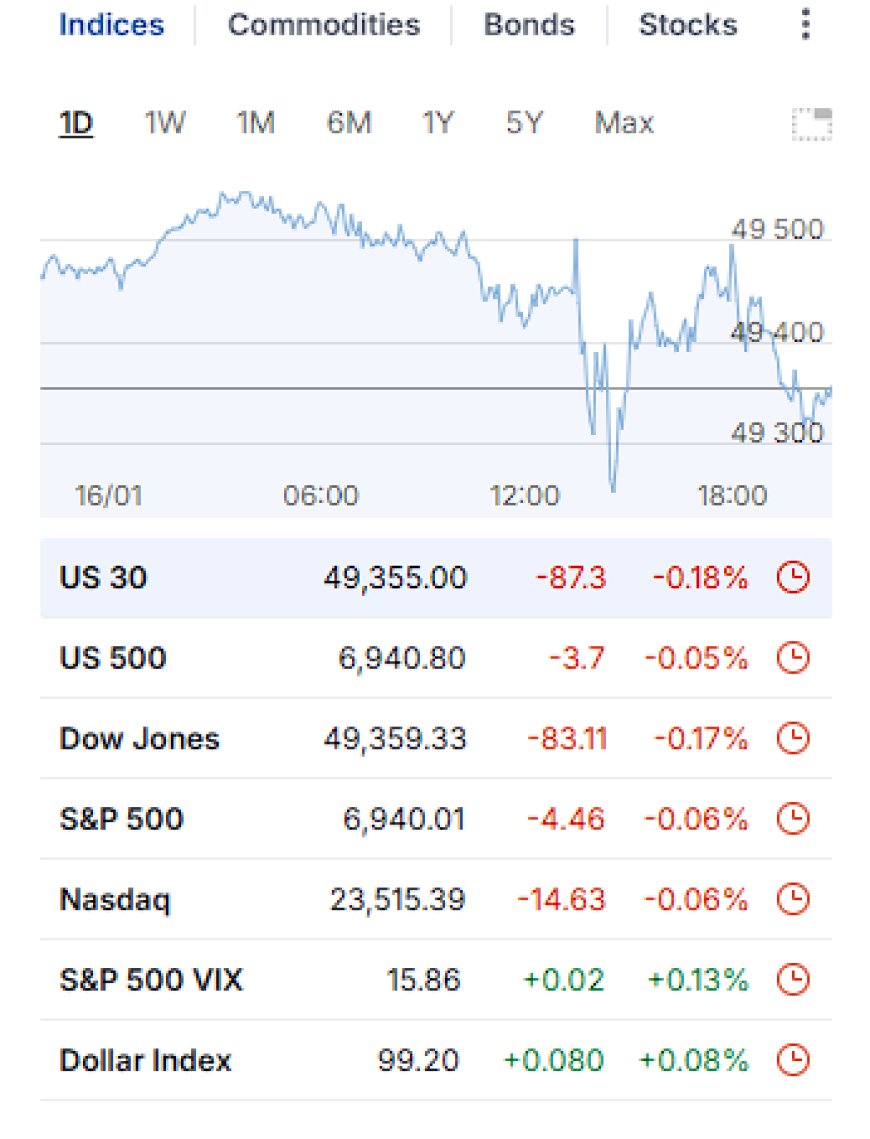
Here’s the tape in plain numbers:
S&P 500: 6,940.01 (-4.46, -0.06%)
Nasdaq: 23,515.39 (-14.63, -0.06%)
Dow Jones: 49,359.33 (-83.11, -0.17%)
VIX: 15.86 (+0.02, +0.13%)
Dollar Index (DXY): 99.20 (+0.080, +0.08%)
The index tape looks boring on purpose: small red across the board, basically flat volatility, and a slightly firmer dollar. That’s what makes the rest of today’s moves more important — because the real “pressure” did not show up in index points.
This was not a broad risk-off liquidation. It was a repricing day driven by governance expectations: yields rose after the Hassett/Warsh signal, while the index stayed pinned by mixed sector flows.
Cross-Asset: Commodities + Rates + FX + Crypto
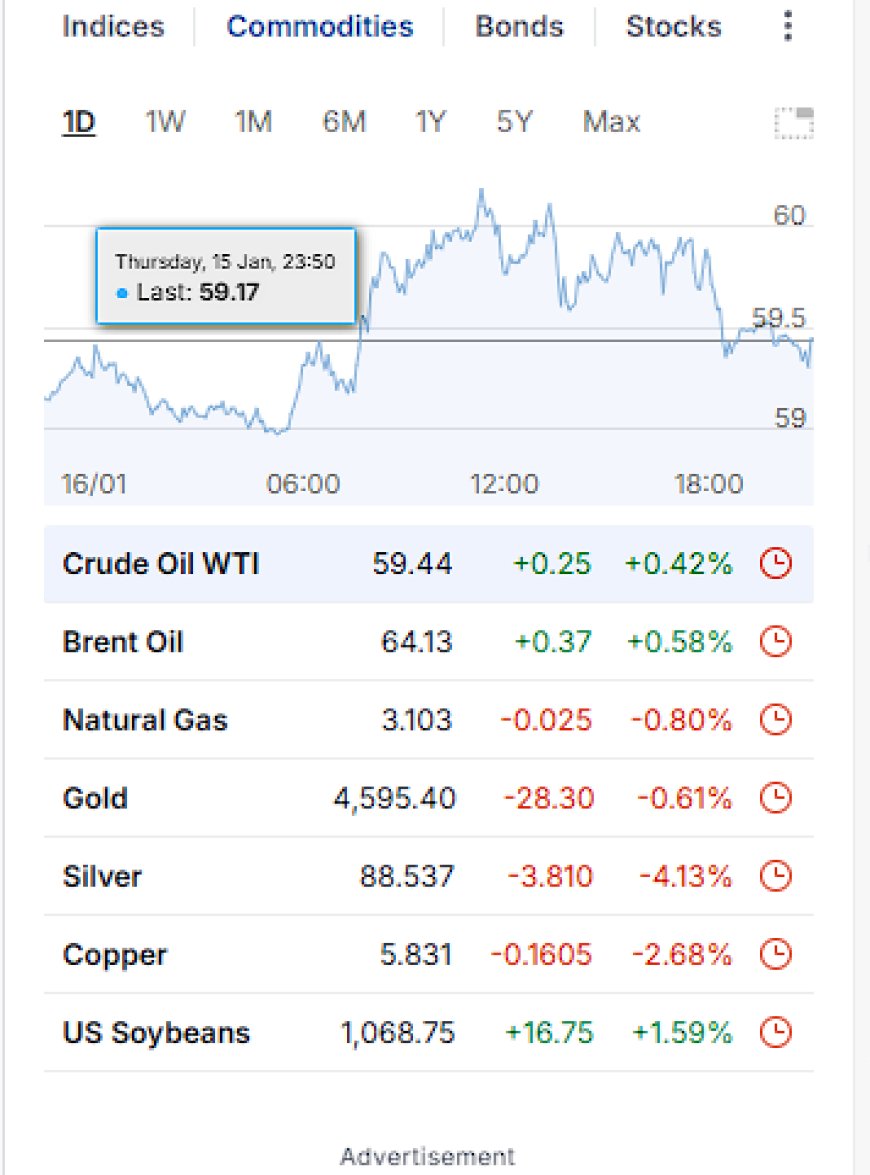
WTI: 59.44 (+0.25, +0.42%)
Brent: 64.13 (+0.37, +0.58%)
Gold: 4,595.40 (-28.30, -0.61%)
Silver: 88.537 (-3.810, -4.13%)
Copper: 5.831 (-0.1605, -2.68%)
Natural Gas: 3.103 (-0.80%)
Soybeans: 1,068.75 (+16.75, +1.59%)
Silver and copper were the story. That’s not “noise.” When the most liquidity-sensitive metal (silver) and the most growth-sensitive metal (copper) are both getting punched while crude is green, you’re looking at divergence between industrial demand expectations and supply/geo pricing.
This isn’t “metals are weak.” This is “metals are violent.” Reuters explicitly framed Jan 14 as new highs across gold, silver, and copper on Iran headlines, followed by profit-taking and a rates impulse later in the week. That whipsaw is the regime.
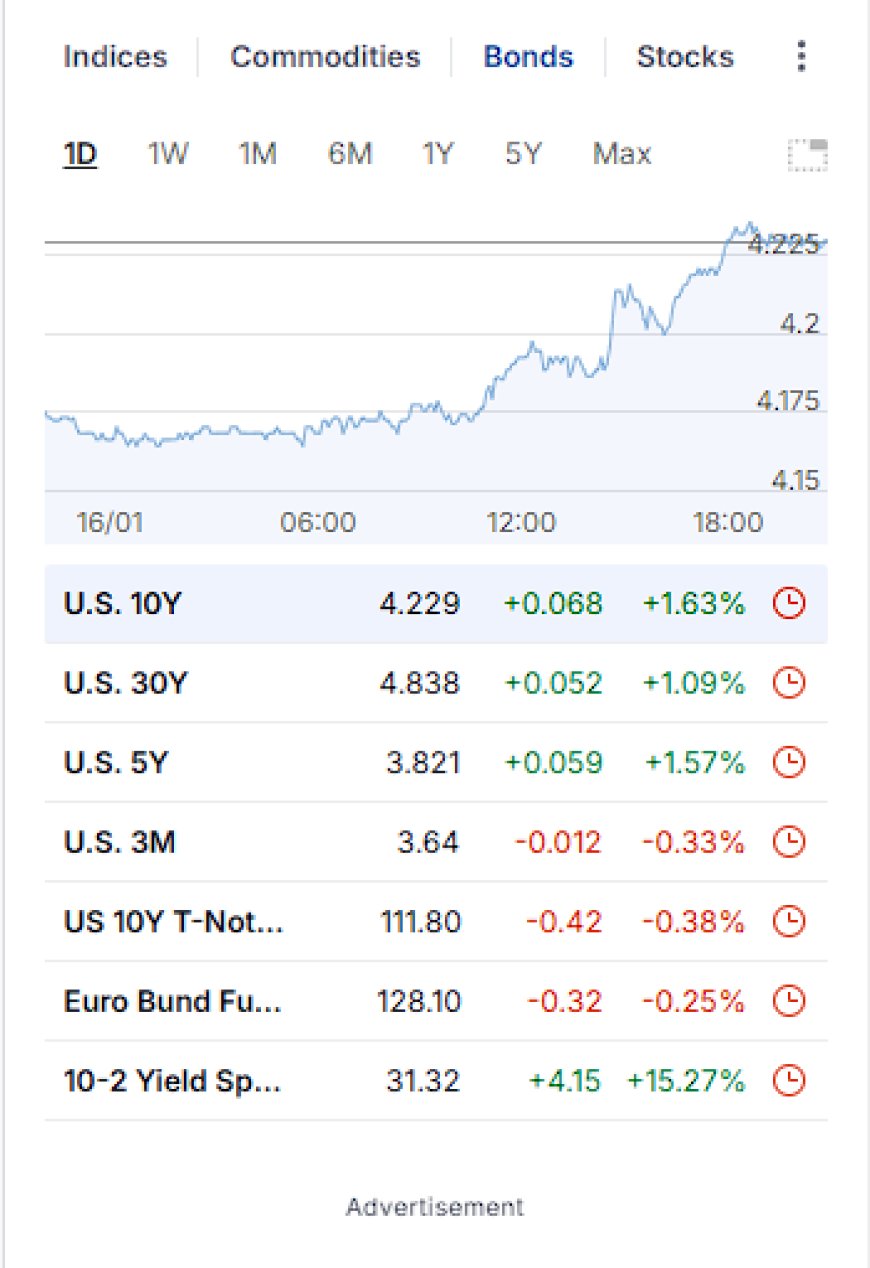
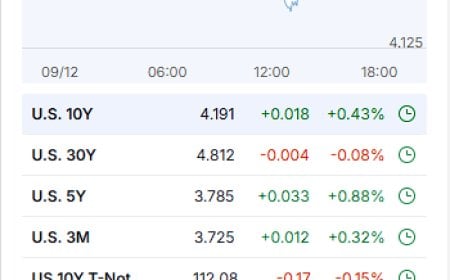
U.S. 10Y: 4.229 (+0.068, +1.63%)
U.S. 30Y: 4.838 (+0.052, +1.09%)
U.S. 5Y: 3.821 (+0.059, +1.57%)
U.S. 3M: 3.64 (-0.012, -0.33%)
Yields jumped. That’s the macro impulse that naturally pressures gold and can trigger leverage liquidation in silver. If you want the simplest causal chain for today: rates up → metals down.
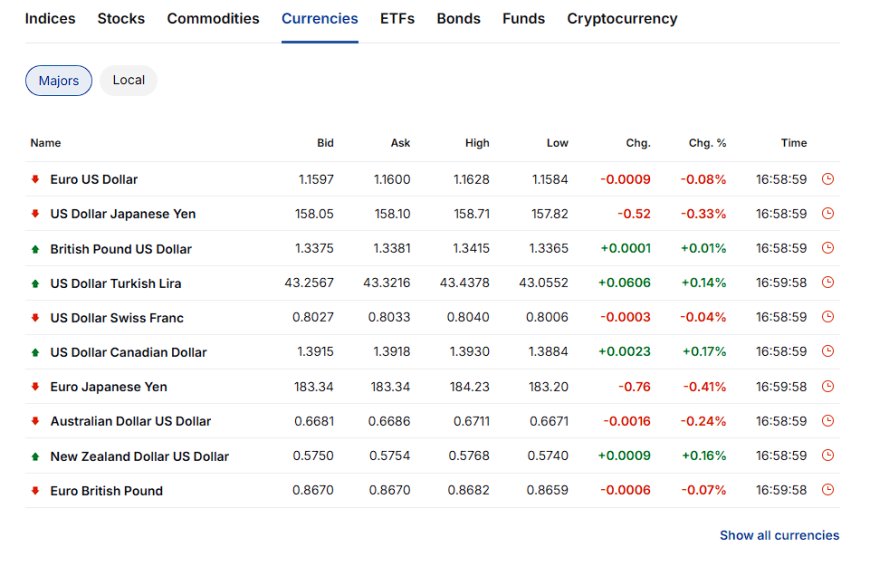
FX was contained. EURUSD slipped, USDJPY slipped, and DXY ticked higher. That’s consistent with a mild dollar bid overall and no obvious “panic FX” tell.
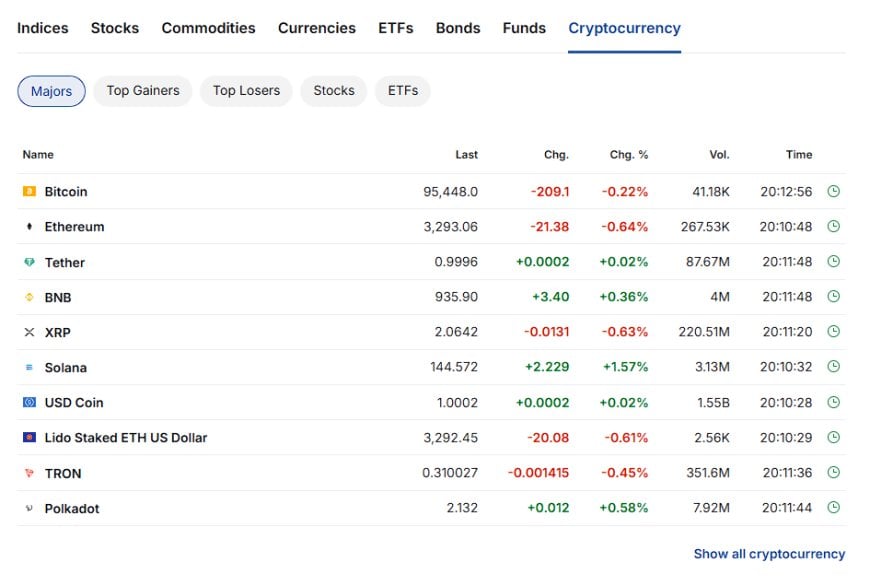
Bitcoin: 95,448.0 (-0.22%)
Ethereum: 3,293.06 (-0.64%)
Solana: +1.57%
XRP: -0.63%
Crypto drifted lower on the day, which fits the rate impulse. When yields jump, marginal liquidity rotates away from duration-like exposures and leveraged beta.
Under the Hood: Movers
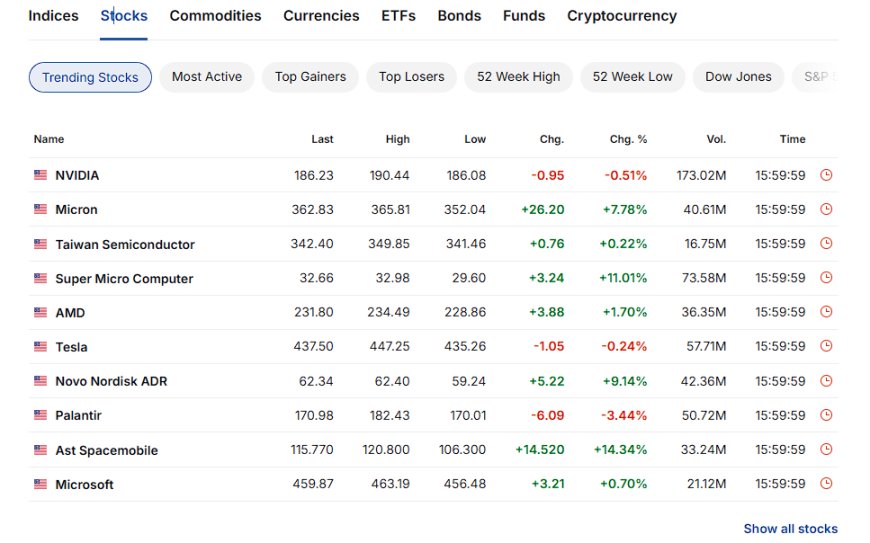
Micron +7.78%
Super Micro Computer +11.01%
AMD +1.70%
Microsoft +0.70%
NVIDIA -0.51%
Palantir -3.44%
Novo Nordisk ADR +9.14%
AST SpaceMobile +14.34%
This fits the overall day: indexes quiet, dispersion alive. Some AI/semi hardware names bid, some “story stocks” hit, while the broader index barely moves.
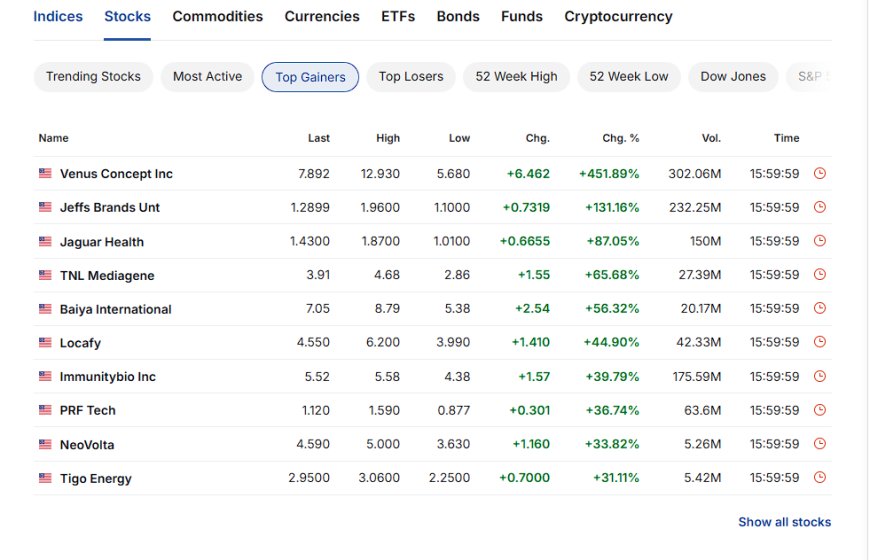
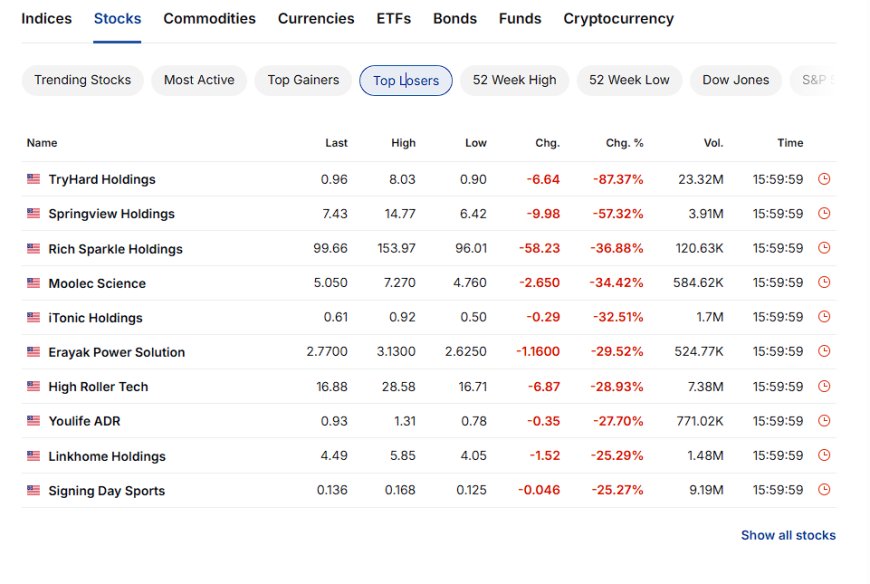
The extreme microcap prints on both sides are a reminder: “the market” is not one market. The long tail can be completely unstable even while the index looks calm.
Pattern Nexus Lens
This week is the cleanest example of why “macro” isn’t only CPI prints anymore. Governance risk (Fed independence), escalation math (Iran), and enforcement pressure (Treasury sanctions) are now direct inputs into yields, oil premia, and FX behavior. Friday’s setup — flat equity index, yields up, metals down — is what you get when the market reprices the cost of money while the headline index is pinned by mixed sector flows.
Don’t grade the week by S&P points. Grade it by the plumbing: independence risk showing up in yields, Iran risk showing up in force-posture/commodities behavior, and Treasury applying pressure across FX and sanctions. That’s the system.
What I’m Watching Next Week
- Fed chair decision path: any further signaling around Hassett vs Warsh and how markets reprice term premium on “independence risk.”
- Tariffs / Supreme Court window: the legal status of Trump’s tariff framework was flagged as a near-term volatility catalyst in Reuters market coverage this week.
- Iran weekend risk: the market’s “risk premium” can switch on/off fast; watch oil behavior and safe-haven flow patterns around any headlines.
- Treasury enforcement pressure: follow-through from the Iran sanctions and the Houthi funding/smuggling network designations.
- Earnings dispersion: Reuters flagged big names reporting next week (Netflix, J&J, Intel). Dispersion can keep the index pinned even when the macro layer is loud.
FAQ
Why did silver get hit so hard on a “flat” index day?
Silver is leverage-sensitive. When yields jump, real-rate pressure rises and margin/positioning tends to unwind quickly — especially after a fast run to record highs earlier in the week.
Why were indexes flat if yields moved that much?
Dispersion can net to flat. A handful of large names up and a handful down can cancel in the index even while the cross-asset message changes materially.
What’s the “Fed probe” connection to yields?
When markets start pricing threats to central bank independence, they demand a higher term premium. That can lift long-end yields even if near-term macro data is unchanged.
Are you tracking real-time carrier locations?
No. This wrap only references publicly reported force-posture changes and official/public reporting. It does not provide real-time operational detail.
Sources
Market levels are from our Investing.com screenshots. Weekly drivers are from official releases and mainstream reporting linked below.
- Investing.com — Market snapshots (indices/commodities/bonds/FX/crypto)
- Reuters (Jan 16) — Stocks notch weekly losses, dollar up on Hassett/Fed uncertainty
- Reuters (Jan 15) — Tech and banks bounce; oil breaks streak; jobs data boosts dollar
- Reuters (Jan 12) — Dollar drops on DOJ subpoenas tied to Powell; tariff ruling in focus
- Reuters (Jan 14) — Trading Day: Hard assets hit new highs on Iran risk
- Reuters (Jan 16) — Hassett plays down probe of Powell
- Reuters (Jan 15) — Trump says he has no plan to fire Powell (still “wait and see”)
- Reuters (Jan 14) — Iran retaliation warnings; U.S. withdraws some personnel as precaution
- Reuters (Jan 16) — Iran protests abate after crackdown; immediate strike prospect recedes
- ABC News (Jan 16) — Pentagon eyes surging carrier group toward Middle East
- U.S. Treasury (Jan 14) — Readout: meeting with Japan finance minister (FX volatility)
- Reuters (Jan 14) — Bessent: won depreciation not in line with fundamentals
- U.S. Treasury (Jan 15) — Sanctions: architects of Iran crackdown + shadow banking networks
- U.S. Treasury (Jan 16) — Pressure on Houthi smuggling and illicit revenue networks
- Reuters (Jan 16) — U.S. sanctions target Houthi funding networks
- U.S. State Department (Jan 16) — Targeting Houthi illicit revenue generation networks
あなたの反応は?
 いいね
0
いいね
0
 嫌い
0
嫌い
0
 愛
0
愛
0
 面白い
0
面白い
0
 ワオ
0
ワオ
0
 悲しい
0
悲しい
0
 怒っている
0
怒っている
0

Founder of Pattern Nexus. I research markets, macro, geopolitics, AI, history, ancient systems, and the patterns most people overlook. I’m also building Market Radar, a trading scanner designed to read pressure, risk, confirmation, and setup quality before chasing a move. Pattern Nexus is where I connect the dots between data, history, technology, and the bigger system playing out around us.













コメント (0)