
Silver Just Proved the Point: Vertical Moves Change Risk Fast
As of 2/4/2026, silver has already done the full cycle: vertical blow-off into the ~$115–$120 zone, then a fast reset into the mid-$70s. This piece explains the mechanics: leverage, margin, volatility, and narrative velocity — and what to watch next without confusing thesis with trade.
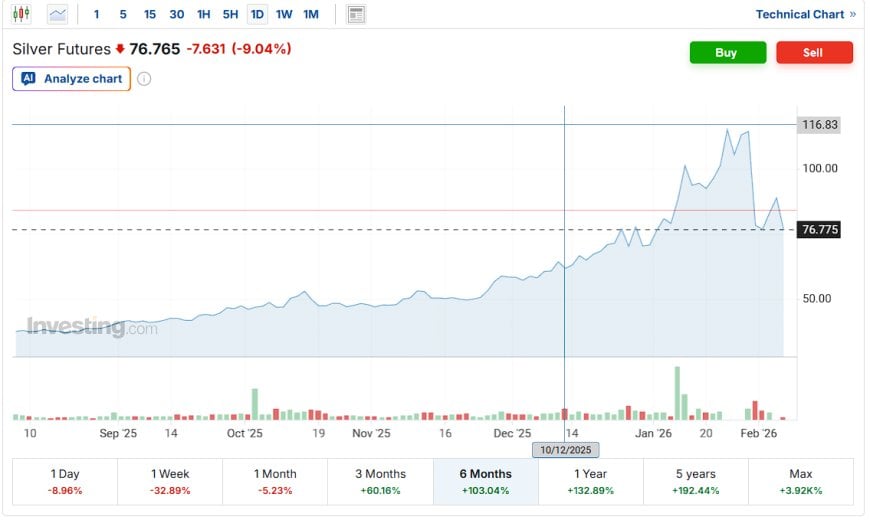

- Silver just completed a classic high-beta cycle: strong uptrend → blow-off top → forced reset.
- Vertical price action changes the risk surface because volatility rises, margin tightens, and leverage gets forced out.
- The crash is not proof the thesis was wrong. It’s proof the position stack was crowded.
- Industrial tailwinds are real, but short-term pricing is set by marginal leverage, not your end-use spreadsheet.
- The right frame now is: what’s a base, what’s a bounce, and what would confirm stabilization vs continued unwind.
What just happened (and why the framing matters)
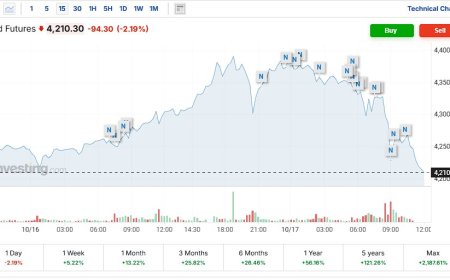
As of 2/4/2026, the silver tape is not hypothetical anymore. The chart already printed the whole story: a sustained uptrend, a blow-off into the ~$115–$120 area, and then a fast reset back into the mid-$70s.
So this article is not written as a pre-crash warning. It’s a post-break explanation of the mechanism. Because this is the part most people never learn: the trade changes category when the slope changes.
- Price on the screen: ~76.8
- One-day move shown: roughly -9%
- One-week move shown: roughly -33%
- Six-month move shown: still roughly +103%
- High zone visible on the chart: ~115–117 area
Translation: the long-term uptrend can still exist while the short-term tape is a liquidation machine.
The three-phase structure that shows up over and over
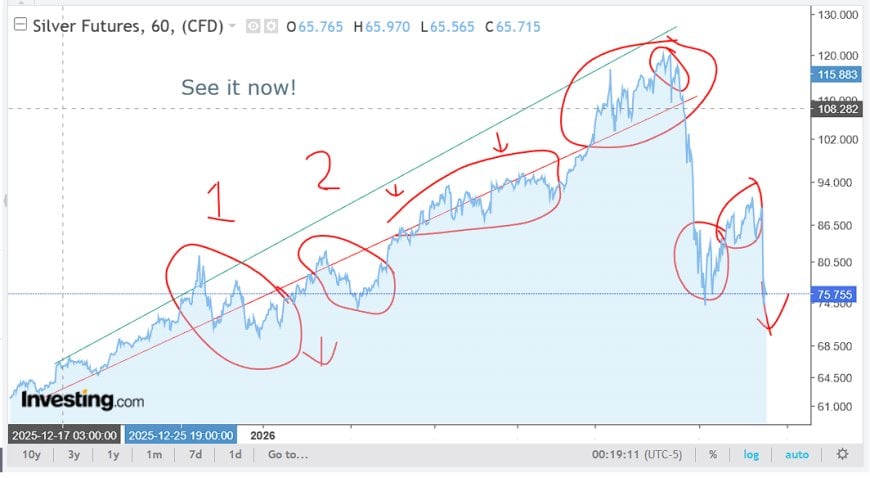
This annotated chart is the cleanest way to explain this because it shows the internal anatomy of the run: silver doesn’t go from “normal” to “moon” in one move. It stair-steps, builds a crowd, then breaks the crowd.
- Phase 1 (early climb): a legit uptrend forms, pullbacks are tolerated, positioning builds.
- Phase 2 (channel grind): higher highs keep coming, but the market starts to show “compression” and chop inside the trend.
- Phase 3 (blow-off / vertical): the slope steepens, volatility expands, leverage piles in, and the exit door gets narrow.
The key is Phase 3. That’s where the trade stops behaving like an investment and starts behaving like a crowd-control event.
Why “vertical” is a mechanical regime change
Most people interpret verticality as “strength.” The market interprets it as “risk.” Not because someone hates you, and not because the thesis suddenly died. Because vertical moves expand volatility, and volatility forces the control systems to tighten.
Silver is uniquely prone to this because it’s high beta. It’s both a monetary narrative asset and an industrial input. That makes it a magnet for momentum and leverage at the exact moment it becomes most fragile.
- Implied volatility rises because the tape becomes less predictable.
- Brokers and exchanges respond by raising required capital (margin rules tighten into volatility).
- Levered participants are forced to reduce exposure regardless of conviction.
- That forced selling creates the “elevator drop” behavior you see after blow-off tops.
The leverage loop: margin, liquidation, and air pockets
Here’s the uncomfortable truth: a lot of “strong hands” aren’t strong. They’re levered. And leverage turns time into a weapon.
When price breaks hard, the first wave is discretionary selling. The second wave is forced selling. See the bounce on your chart, then the rollover and second drop. That’s the signature of forced unwinds after a relief bounce.
- After the first liquidation flush, you often get a sharp rebound as shorts cover and dip-buyers step in.
- If the underlying position stack is still crowded, the rebound becomes an unloading window, not a new base.
- Then the market rolls, and the next drop is often faster because confidence is gone and margin pressure remains.
What to watch now (post-break): base vs dead-cat vs re-acceleration
After a move like this, the only question that matters is stabilization. Not your feelings. Not the comments section. Not who called what. Stabilization is a behavior, and the chart will show it if it’s real.
- Base behavior: lower volatility, tighter ranges, higher lows forming without vertical spikes.
- Distribution behavior: sharp rebounds that fail, then roll over into new lows.
- Re-acceleration behavior: stabilization first, then controlled trend resumption (not instant parabolic reclaim).
- Position stack: watch for signs that leverage has been flushed (less violent intraday whipsaw).
The fastest way to get wrecked here is to assume the first rebound is “the bottom” and size it like a guarantee.
If you’re here for the long thesis, fine. Keep a core. But don’t confuse “core conviction” with “I should lever this bounce.” This is the exact tape that punishes that mistake.
Pattern Nexus Lens
Silver is a control-systems asset in a human suit. Liquidity sets the broad regime, but the path is governed by leverage plumbing: futures, options, margin, dealer balance sheets, and narrative velocity.
The correct mental model is not “bullish or bearish.” It’s “what regime am I in?” Trend regimes reward patience. Vertical regimes punish leverage. Post-break regimes reward discipline.
FAQ
So are you bearish on silver now?
No. I’m bearish on confusing a crowded vertical trade with a safe long-term position. The move we just saw is exactly why those must be separated.
Does the crash mean the industrial thesis is fake?
No. Industrial demand can be real while the market still liquidates leverage. Short-term price is set by marginal positioning.
What’s the simplest lesson from this tape?
Verticality is a volatility event. Volatility triggers margin tightening. Margin tightening forces selling. That loop is why silver can move like a rocket and then like an elevator.
Sources
- CME Group Education: Futures margin basics
- CME Group: Silver futures product overview
- CFTC: Commitments of Traders (COT) reports
- Silver Institute: Market and demand research
- Pattern Nexus: Hard Assets Follow Liquidity, Not Inflation
Apa Reaksi Anda?
 Suka
0
Suka
0
 Tidak Suka
0
Tidak Suka
0
 Cinta
0
Cinta
0
 Lucu
0
Lucu
0
 Wow
0
Wow
0
 Sedih
0
Sedih
0
 Marah
0
Marah
0

Founder of Pattern Nexus. I research markets, macro, geopolitics, AI, history, ancient systems, and the patterns most people overlook. I’m also building Market Radar, a trading scanner designed to read pressure, risk, confirmation, and setup quality before chasing a move. Pattern Nexus is where I connect the dots between data, history, technology, and the bigger system playing out around us.
















Komen-komen (0)