

Port Alpha vs the Shipyard Graveyard: How a Three-Year-Old Startup Is Trying to Rebuild the U.S. Navy With Autonomous Warships
The U.S. Navy is collapsing under delays, cost overruns, and a shrinking shipbuilding workforce. Programs slip years, budgets balloon, and the fleet flatlines while China’s shipyards pump out steel like an industrial firehose. Into that mess steps Saronic, a 2022 startup backed by hundreds of millions in venture…
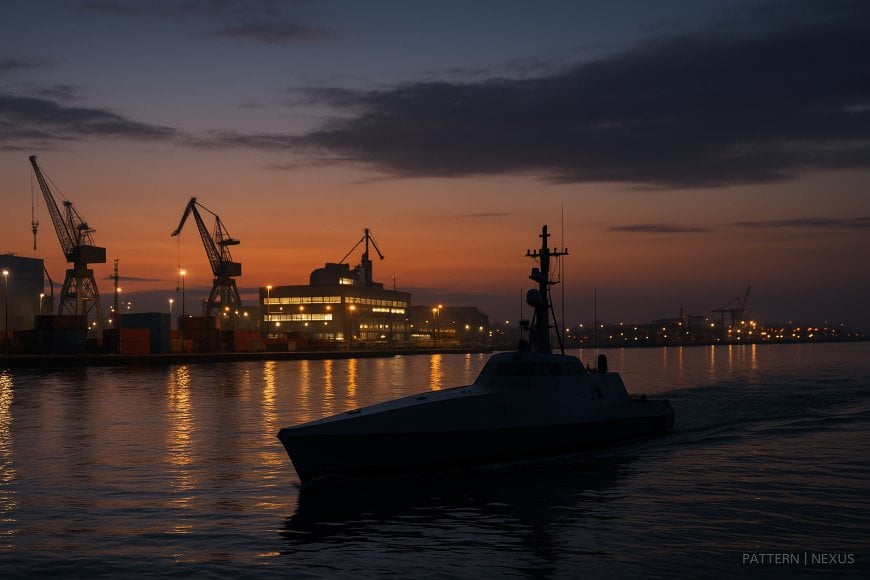
The U.S. Navy is collapsing under delays, cost overruns, and a shrinking shipbuilding workforce. Programs slip years, budgets balloon, and the fleet flatlines while China’s shipyards pump out steel like an industrial firehose. Into that mess steps Saronic, a 2022 startup backed by hundreds of millions in venture…
Jump to a section
The Shipyard Crisis Beneath the Surface
On paper, the U.S. still fields the most powerful navy on Earth. In reality, the production engine behind that navy is seizing up. Warships are arriving late, submarines are behind schedule, shipyards are short on welders and pipefitters, and the fleet is stuck just under 300 ships while strategic planners talk about 380+ vessels and a hybrid swarm of unmanned platforms.
The uncomfortable truth: It’s not just that “we need more ships.” The industrial backbone that’s supposed to build them has been quietly hollowed out over decades. The crisis isn’t theoretical. It’s already baked into schedules, budgets, and the shrinking number of workers who still know how to lay steel in a yard.
At the same time, China has built the world’s largest navy by hull count and turned its commercial shipyards into a dual-use machine that can push naval hulls into the water at a tempo the U.S. hasn’t seen since World War II. America is trying to answer that with a handful of nuclear submarines, a couple of big-deck ships, and decades-old yards that are struggling to hire enough people to keep up with maintenance, never mind expansion.
That’s the backdrop for Saronic: a three-year-old company claiming it can build a spectrum of autonomous warships, from six-foot scouts to 150-foot unmanned vessels, in a vertically integrated, software-driven “Port Alpha” that behaves more like a tech factory than a legacy yard.
Inside the Industrial Breakdown
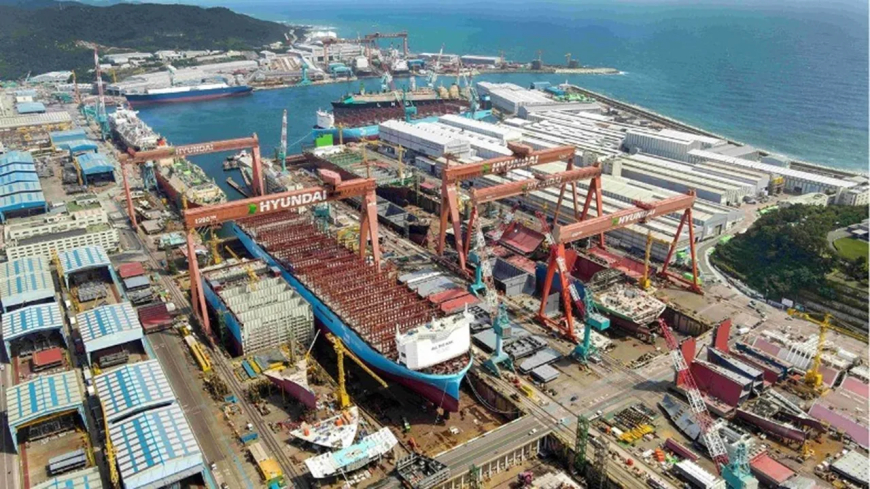
To understand why Port Alpha matters, you have to look at the numbers that rarely make the front page. U.S. naval shipbuilding budgets have risen sharply over the past two decades, but delivered fleet size has not kept pace. Almost every major new class of ship is behind schedule or over budget. The submarines that matter most for deterrence are late. The surface fleet is aging faster than it’s being replaced.
And beneath those program charts is an older story: a workforce that was allowed to wither after the Cold War. Skilled shipyard workers retired or left. Young people were told to chase degrees, not welders’ torches. Now the same yards are scrambling to rehire, retrain, and reconstitute skills that take years to build and minutes to lose.
The Navy doesn’t just have a “ship problem.” It has a time constant problem. You can’t spin up experienced welders, pipefitters, nuclear-qualified engineers, and drydock crews on a two-year election cycle. The industrial base runs on decade clocks, not polling cycles.
The result is a weird paradox: the U.S. is spending more money on shipbuilding and shipyard modernization than at any point in recent history, while the number of ships delivered, and the speed at which they arrive, feel like something from a much poorer, much smaller country. The per-unit cost of capability keeps drifting upward. The calendar keeps slipping to the right.
China’s Shipyard Firehose vs America’s Trickle
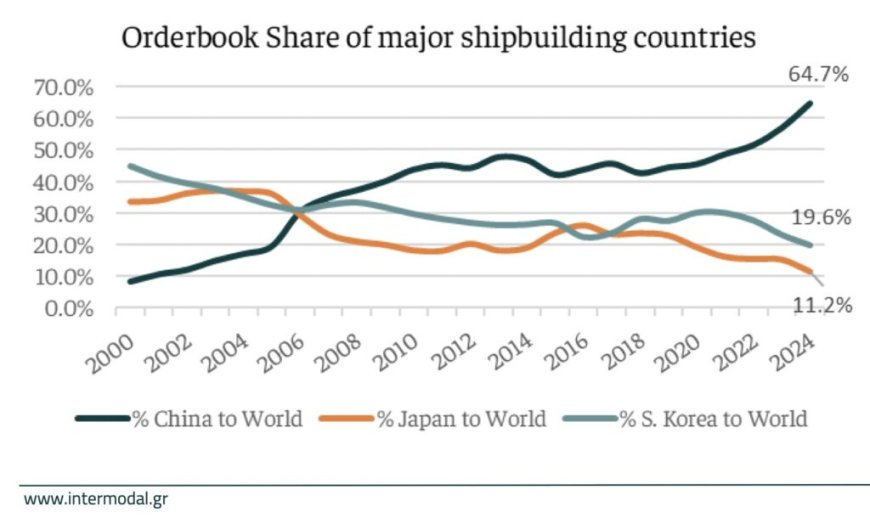
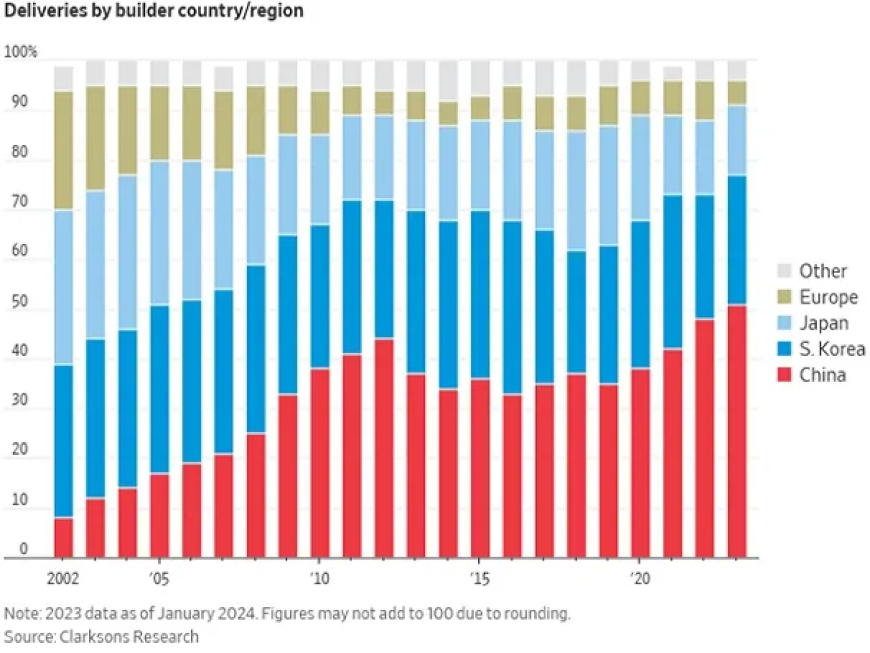
While U.S. yards fight to get a handful of submarines and surface combatants out the door, China has turned shipbuilding into an industrial firehose. Its commercial yards dominate global tonnage. Its naval yards are feeding the People’s Liberation Army Navy with a continuous stream of destroyers, frigates, amphibious ships, and auxiliaries.
The important part isn’t just ship count. It’s industrial leverage. When your commercial yards are building hundreds of hulls per year, you can surge naval production by repurposing capacity, tooling, and labor. When your commercial base is small and your naval capacity is concentrated in a few aging yards, your surge options are limited.
China built a shipbuilding ecosystem. The U.S. built a narrow, specialized corridor of exquisite yards tied to specific programs and budget lines. One is a mesh network. The other is a pair of old mainframes humming along in the background.
The obvious response would be to rebuild U.S. shipbuilding at scale. But rebuilding the entire industrial base the old way would take decades America doesn’t have. So the system has drifted toward a different answer: instead of matching hull for hull, build cheaper, smarter, more autonomous platforms that swarm, sense, and strike from every direction.
Enter Saronic: The Startup Shipyard
This is where Saronic shows up: not as a contractor bolting autopilots onto someone else’s patrol boat, but as a vertically integrated, venture-backed shipyard trying to behave like a software company that happens to cut steel.
Founded in 2022 and based in Austin, Saronic has raised hundreds of millions of dollars in private capital and climbed to a multi-billion-dollar valuation in about three years. It’s already secured Navy contracts, built a family of autonomous surface vessels, and acquired a Gulf Coast shipyard to anchor its production footprint.
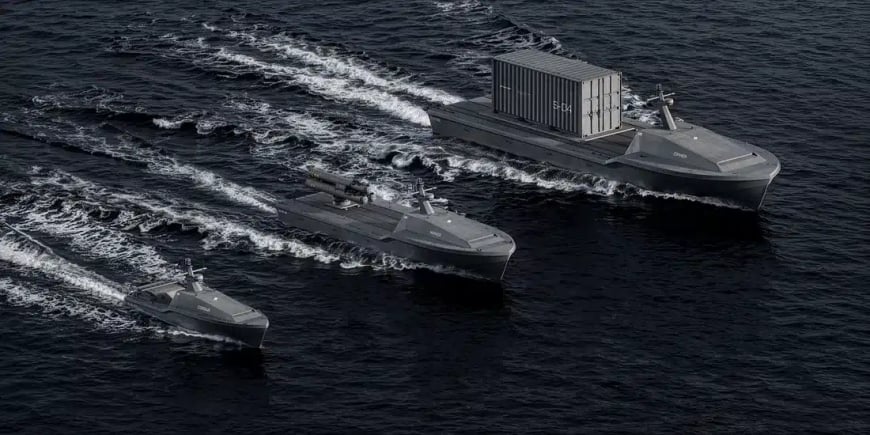
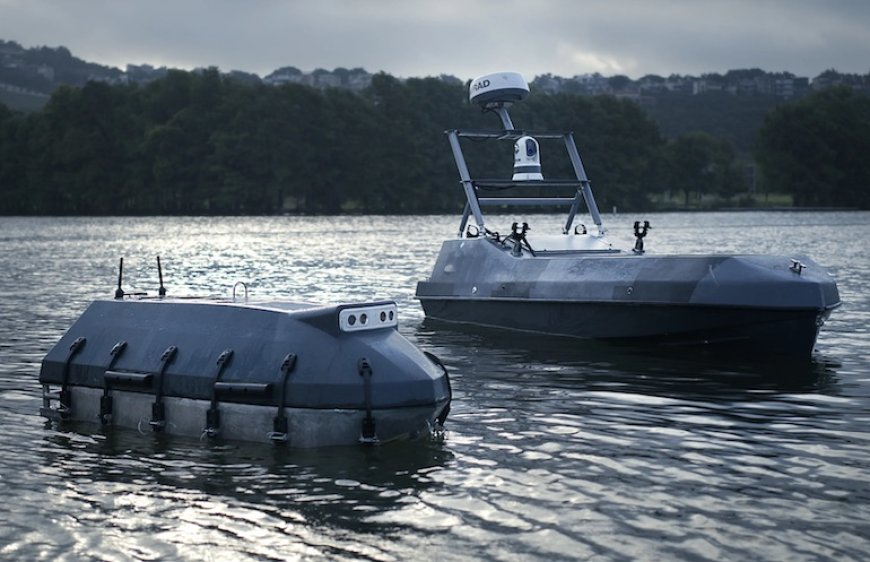
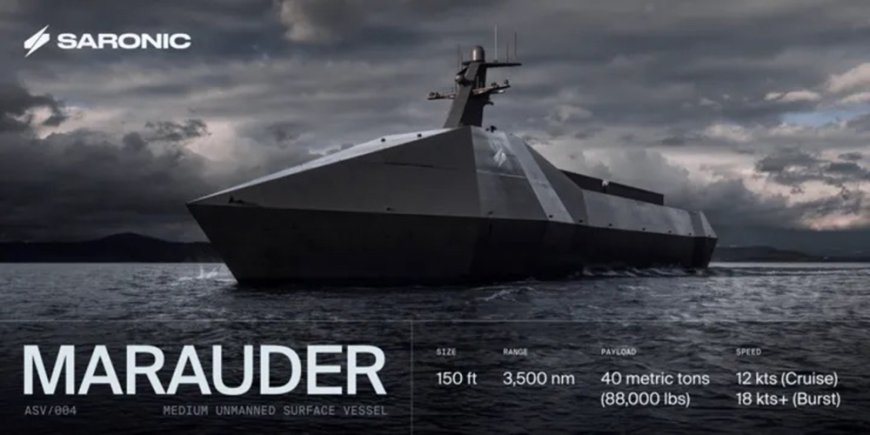
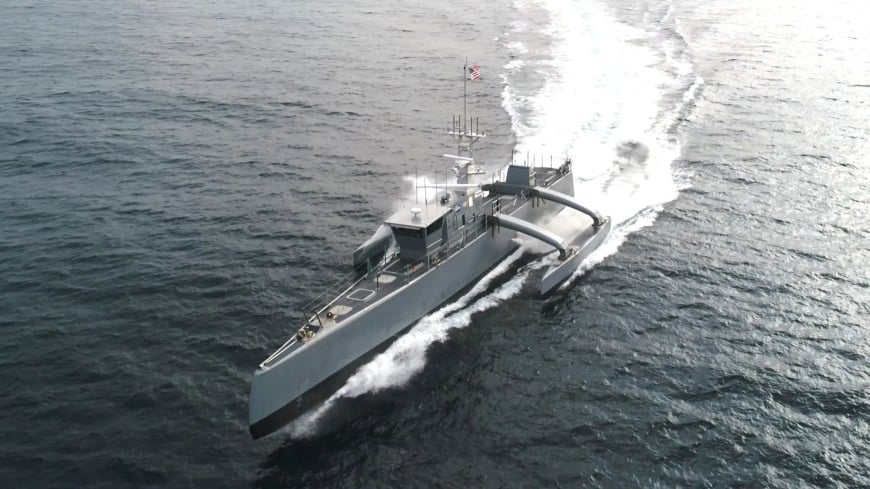
Their product ladder runs from backpack-portable six-foot drones all the way to a 150-foot unmanned ship:
- Spyglass: small, tactical ASV for close-in ISR and swarm roles.
- Cutlass: 14-foot patrol craft acting as a sensor node and comms relay.
- Corsair: 24-foot operational craft with long range and meaningful payload capacity.
- Mirage: 40-foot platform pushing out to multi-thousand-mile ranges.
- Cipher: 60-foot vessel capable of carrying containerized payloads.
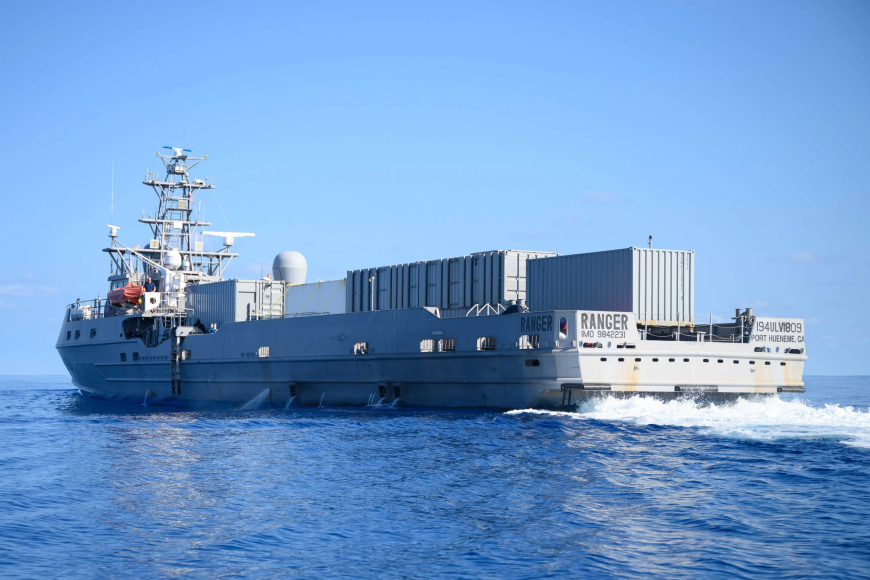
- Marauder: 150-foot medium unmanned surface vessel designed to haul multiple containers, sensors, and weapons modules.
Think of it as a Lego fleet: standardized hulls with a unified autonomy brain and containerized payloads that can swap from ISR to EW to strike with minimal friction. The hull is the hardware. The real product is the autonomy stack, the C2 layer, and the ability to iterate them at software speed.
Unlike traditional shipyards that live and die by one or two big government programs, Saronic is trying to operate more like a product company. It designs the hulls, writes the software, builds the vessels, and runs its own mission-planning and fleet management platform on top. The sales pitch is simple: if the Navy wants a hybrid fleet of unmanned systems, it doesn’t need a hundred different prototypes. It needs a family that can be produced at scale.
Port Alpha: Autonomous Warships as Industrial Policy
The real pivot isn’t just the boats. It’s the attempt to build a new kind of shipyard.
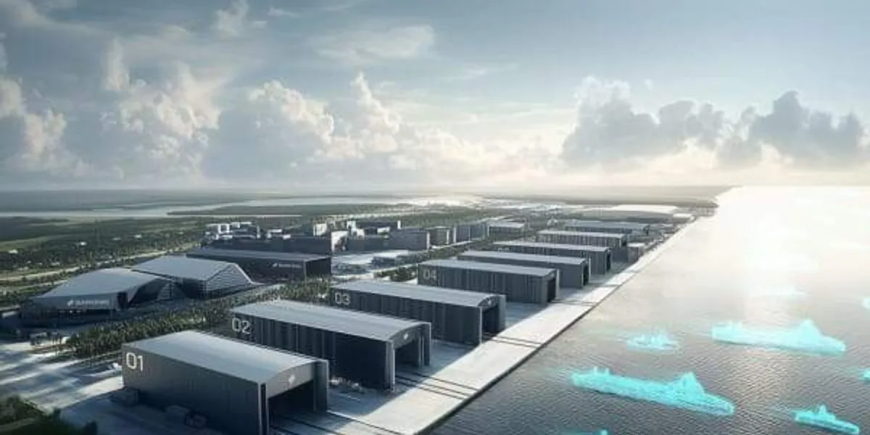
Saronic’s acquisition of a longstanding Gulf Coast shipbuilder gives it physical docks, waterfront access, and a workforce that actually knows how to build hulls. On top of that, the company is layering automation, modern manufacturing, and an autonomy-first design philosophy under a banner it calls Port Alpha: a “next-generation autonomous shipyard” intended to mass-produce unmanned vessels at a rate legacy yards have never even attempted.
In theory, Port Alpha is more than a facility. It’s a thesis:
- Use private capital to build hulls before requirements harden.
- Standardize platforms around containerized payloads instead of bespoke one-off designs.
- Hire both welders and autonomy engineers into the same factory and let the software drive the production tempo.
- Turn a static yard into a configurable, data-driven production system that can be replicated elsewhere.
Port Alpha is venture capital trying to do what Congress and the Pentagon have failed to do for thirty years: rebuild a flexible, scalable shipbuilding base in the U.S. without waiting for a dozen studies and a perfect RFP.
It’s also an experiment in time. Traditional shipyard modernization is planned on ten-year timelines. Port Alpha is framed on a startup clock: quarters, not decades. Saronic is cutting steel on its large unmanned vessel before the Navy has fully sorted out what exact role that hull will officially play. That’s either reckless or exactly what’s required in a world where threats move faster than the paperwork.
Replicator, Hybrid Fleets, and Swarm Doctrine
None of this happens in a vacuum. The Pentagon has already admitted that it cannot simply out-build China in large, exquisite platforms. Instead, it is pivoting toward “attritable” autonomous systems under initiatives like Replicator: thousands of relatively cheap, smart platforms intended to saturate the battlespace and flip the cost-exchange ratio.
In that world, a company like Saronic is not just a supplier. It’s a potential backbone.
A hybrid fleet logic emerges:
- Keep a smaller number of high-end manned platforms (carriers, nuclear submarines, large surface combatants).
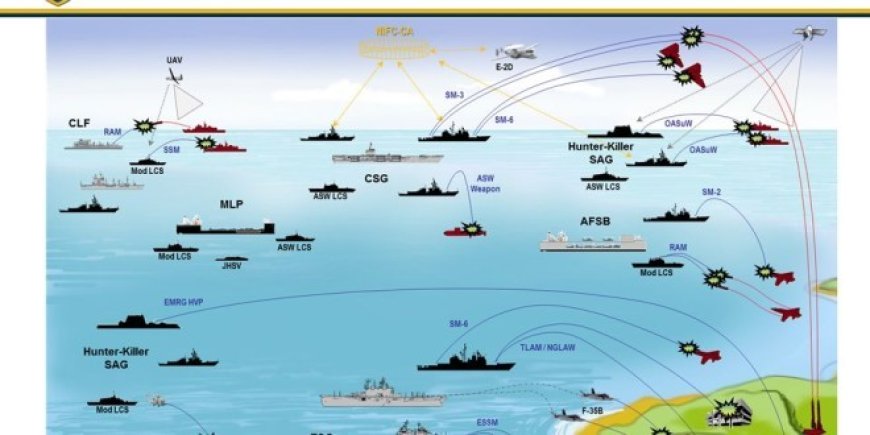
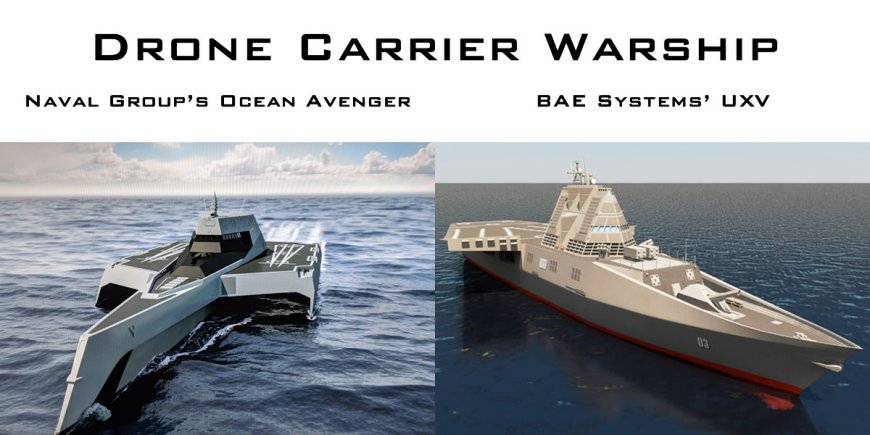
- Surround them with layers of unmanned vessels that scout, jam, sense, relay, and occasionally strike.
- Use autonomy and networking to create a moving, distributed sensor and weapons grid that is harder to target and cheaper to replace.
- Exploit containerization so the same hull can be rapidly repurposed between missions and theaters.
The center of gravity shifts from the flagship to the fabric. The question is no longer “How big is your carrier?” but “How dense is your autonomous swarm and how fast can you reconstitute it after losses?”
If that’s the direction of travel, Port Alpha is effectively a bet that the Navy will need a continuous stream of unmanned hulls across multiple sizes and mission sets — and that whoever can deliver that stream reliably will become a de facto industrial partner, whether or not they look like a “traditional” shipbuilder on paper.
What This Means for the Next Conflict Window
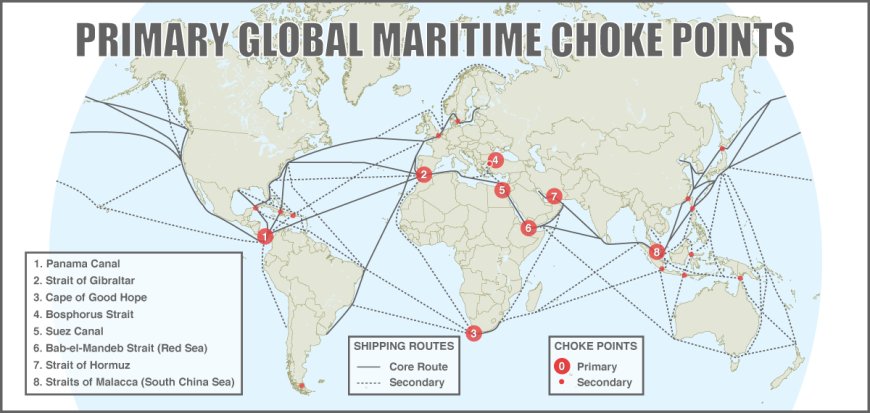
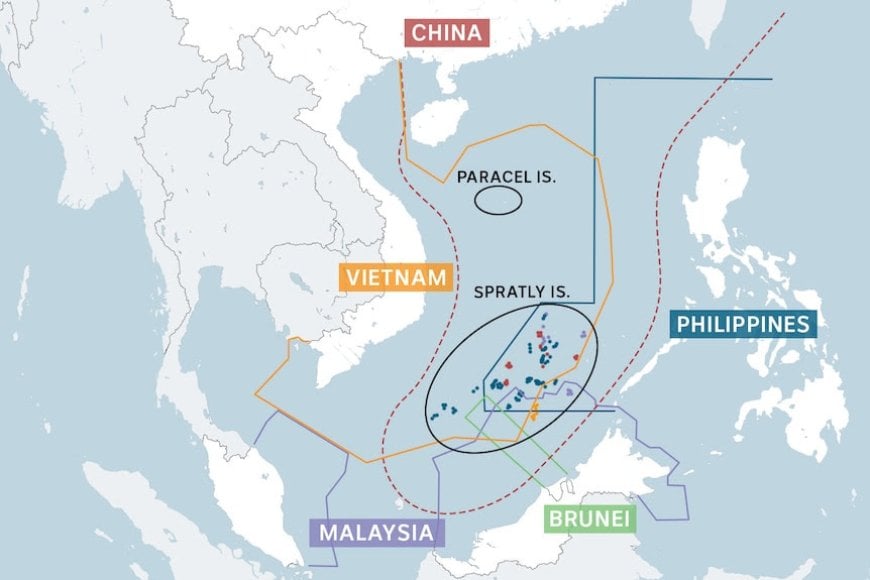
People tend to talk about these systems in abstract, sanitized tones. But the context is not academic. The question is whether the U.S. can field a meaningful hybrid fleet before the next major crisis hardens into a shooting war — in the Western Pacific, in the Persian Gulf, in the Caribbean, or at some chokepoint we are not yet watching closely enough.
The timing matters. Legacy shipyards are on decade timelines for nuclear subs and capital ships. Port Alpha is trying to move unmanned hulls on startup timelines. If the conflict window shows up halfway between those two clocks, the industrial model that can actually deliver hulls in the water will become policy by default.
In practice, strategy will be whatever the industrial base can physically build between now and the moment someone fires the first shot. Port Alpha is an attempt to change that answer without waiting for an act of Congress.
There are obvious risks. A VC-backed shipyard can move fast, but it can also overpromise. Autonomy software can fail in strange, emergent ways. Containerized payloads sound flexible on paper and messy in real operations. And depending on a handful of venture-financed firms for critical national capabilities introduces a new kind of concentration risk.
But the alternative is pretending the old system will somehow fix itself in time. The reality on the ground suggests otherwise. Schedules are already slipping. Workforces are already stretched. China’s yards are already booked years out with both commercial and naval work. Port Alpha, and companies like it, are what happens when a system quietly admits that the legacy path can’t get there from here.
Deeper Lens and FAQs
Is Saronic just hype, or is this real industrial capacity?
Both things can be true. Venture-backed companies are built to sell a story, and Saronic has absolutely sold one. But they’ve also bought a real yard, hired real workers, and delivered real vessels to real exercises. The open question isn’t whether they exist; it’s whether they can scale production, maintain quality, and survive the political mood swings that define defense budgets.
Couldn’t the U.S. just rebuild traditional shipyards instead?
In theory, yes. In practice, we waited too long. Rebuilding the entire industrial base the old way would take decades. The U.S. is now trying to build an asymmetric answer: combine the yards we still have, plus smaller modernized complexes like Port Alpha, with an autonomous, containerized fleet that multiplies force without requiring a thousand new destroyers.
What happens if Port Alpha fails?
Then the U.S. loses one of the few experiments trying to compress shipyard timelines from decades into years. The risk is not just about one startup. It’s about whether we can tolerate failure in industrial experiments, or whether our political circuitry punishes any deviation from the legacy mold until it’s too late to matter.
What if it succeeds?
If Port Alpha and similar efforts work, you get a template: cloneable autonomous shipyards that can be replicated across multiple coasts and allied nations, each capable of pushing out standardized unmanned hulls at scale. At that point, the maritime balance doesn’t just depend on who has more carriers. It depends on whose swarm fabric is denser, smarter, and harder to kill.
The bigger story isn’t “a cool drone company.” It’s whether the U.S. is willing to let startups, welders, and autonomy engineers rebuild a piece of the industrial state from the bottom up while the old shipyard machine wheezes in the background.
What's Your Reaction?
 Like
0
Like
0
 Dislike
0
Dislike
0
 Love
0
Love
0
 Funny
0
Funny
0
 Wow
0
Wow
0
 Sad
0
Sad
0
 Angry
0
Angry
0

Nexus (Christopher)
Founder of Pattern Nexus. I research markets, macro, geopolitics, AI, history, ancient systems, and the patterns most people overlook. I’m also building Market Radar, a trading scanner designed to read pressure, risk, confirmation, and setup quality before ch…
Related research
Washington Turns a Third Carrier Into an Iran-War Escalation Option
The United States is dispatching the USS Theodore Roosevelt carrier strike group and the Makin Island amphibious ready group toward the Mid…
3 shared topics, same research avenue.
Iran Turns America’s Missile Stockpile Into a Two-Theater Deterrence Gap
Fresh reporting and defense analysis point to a widening U.S. magazine-depth problem. The Iran war has drawn heavily on long-range strike w…
3 shared topics, same research avenue.
Consolidating Power: The Global Carrier Pattern and the Caribbean Surge
U.S. carrier strike groups are on the move — from the Ford in the Mediterranean to the Iwo Jima Amphibious Ready Group now under SOUTHCOM i…
3 shared topics, same research avenue.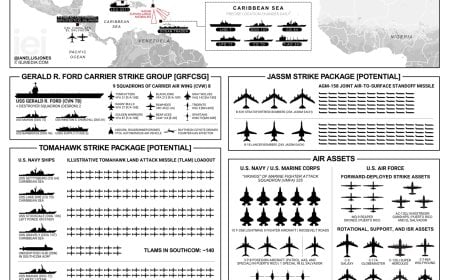
Venezuela, SOUTHCOM, and the New Western Hemisphere Power Map (2025 Update) | Pattern Nexus
Updated 2025 force-posture analysis: why the Caribbean just became the most important theater of the 21st century. Carrier groups, JASSM bo…
2 shared topics, same research avenue.
Trump Orders Immediate Resumption of U.S. Nuclear Weapons Testing — I Didn’t See This Coming
President Donald Trump has directed the Pentagon to immediately resume U.S. nuclear weapons testing, citing Russia and China. What happened…
2 shared topics, same research avenue.
Domestic Theater vs. Global Projection: Why Americans Misread Geopolitics
Americans see politics through a left–right lens, but the world engages the United States as a single strategic actor. Ilhan Omar’s abroad …
2 shared topics, same research avenue.
Signal in the System: USS Gerald R. Ford Deployment and the Next Phase of U.S. Power Consolidation
The U.S. Navy’s Gerald R. Ford carrier deployment near Venezuela isn’t about drug interdiction — it’s the next signal in a global realignme…
2 shared topics, same research avenue.
Comments (0)
Security Check
Please complete the captcha to verify you are human.