
Gold and Silver Are Not “Breaking” — They Are Digesting a Liquidity-Led Advance
After historic 2025 gains, gold and silver are correcting and consolidating in a way that is consistent with prior liquidity-led cycles. This Pattern Nexus breakdown anchors the move to positioning mechanics, margin and index flow effects, and the liquidity transmission timeline—without turning it into a “bear case” on precious metals.

This is not a “gold is dead” article. It is a cycle-structure article. After a historic, liquidity-led run, metals often cool off through consolidation and controlled retracement. That digestion phase can look bearish in isolation, but it is frequently the mechanism that stabilizes the complex before the next expansion impulse.
The cautious thesis
Gold and silver can pull back hard without the bull regime being “over.” In fact, sharp corrections are common after vertically extended moves, especially when the advance was fueled by a mix of momentum, positioning, and macro fear bids.
The working interpretation here is deliberately conservative:
- Gold remains in a long-term rising structure, but the market is de-leveraging and rebalancing after a major year.
- Silver is behaving like silver: higher beta, steeper drawdowns, and greater sensitivity to flow events.
- Near-term downside risk exists, but the structure points to digestion and stabilization rather than a regime break.
This matters because your framework is not “metals only go up.” Pattern Nexus is about liquidity timing. Liquidity cycles create waves. Waves include pauses.
What we can say as fact (not narrative)
Start with the anchors that are not debatable:
- Precious metals had a historic 2025, with gold posting one of its strongest annual gains in decades, and silver dramatically outperforming. Reuters summarized the year’s magnitude and the early-2026 continuation bid. (Reuters, Jan 2, 2026)
- Physical and official-sector demand has been structurally strong. The World Gold Council has documented multi-year elevated central bank buying (over ~1,000 tonnes in each of the last three years) and continued official-sector interest. (World Gold Council)
- ETF participation has returned in size. World Gold Council data shows sustained ETF inflows and record/near-record AUM and holdings into late 2025. (World Gold Council)
- Volatility-driven market plumbing matters. CME raised margin requirements on precious metals after extreme price swings, which can force mechanical selling and sharp pullbacks even when fundamentals are unchanged. (CME notice, AP recap)
- Flow events matter. Reports flagged that Bloomberg Commodity Index rebalancing can mechanically generate sizable futures selling in both gold and silver, with silver more vulnerable due to liquidity depth. (Barron’s, Jan 2026)
These five points alone explain why a strong secular backdrop can coexist with short, violent corrections.
Why metals correct after big years: mechanics that matter
If you want this article to survive gold bug attacks, you do not argue ideology. You explain market structure.
1) Margin is not a “bear catalyst,” it’s a forced positioning event
When exchanges raise margin requirements, traders must post more collateral. Some reduce exposure. This can create sharp, fast drawdowns that look like “reversals” but are often simply leverage being reduced. CME’s margin notice in late December 2025 explicitly ties changes to volatility management, and reporting around the move documented immediate pressure in gold and silver futures. (CME; AP)
2) Index rebalancing is mechanical selling, not a macro view
When major commodity indices rebalance, funds tracking them must buy and sell to match new weights. J.P. Morgan commentary reported by Barron’s estimated sizable flows, with silver potentially more price-sensitive due to lower market depth. That is not bearish “opinion.” That is a calendar-driven flow problem. (Barron’s)
3) Silver’s higher beta is a feature, not a warning
Silver routinely outperforms in upside phases and underperforms in drawdowns. Academic and institutional commentary has documented silver’s higher volatility and high beta relative to gold. CME’s own research has discussed silver’s higher beta dynamics in gold-silver relationships. (University of Colorado Denver paper; CME Group)
4) Demand can be strong while price still consolidates
Gold’s structural bid can remain intact even as price digests. The World Gold Council has repeatedly emphasized that official-sector demand and investment flows can remain strong through consolidations. The point is not “demand disappeared.” The point is “price ran ahead of timing and positioning.” (World Gold Council)
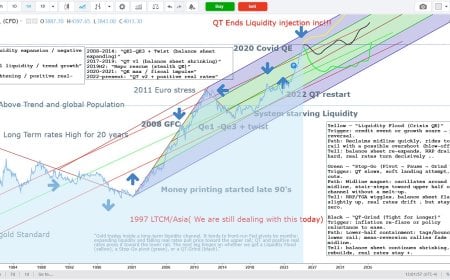
Chart breakdown: the four-chart sequence
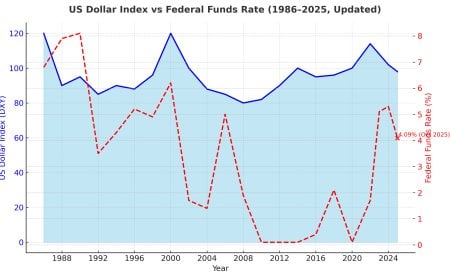
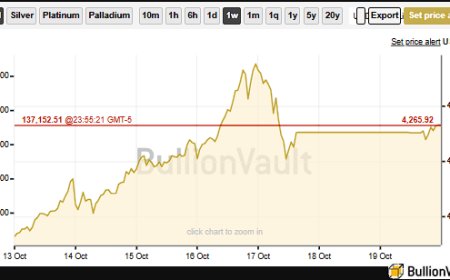
Note: These four charts are presented exactly as technical structure evidence, not as prophecy. They show how the market is behaving now, and what zones matter if this is consolidation rather than regime failure.
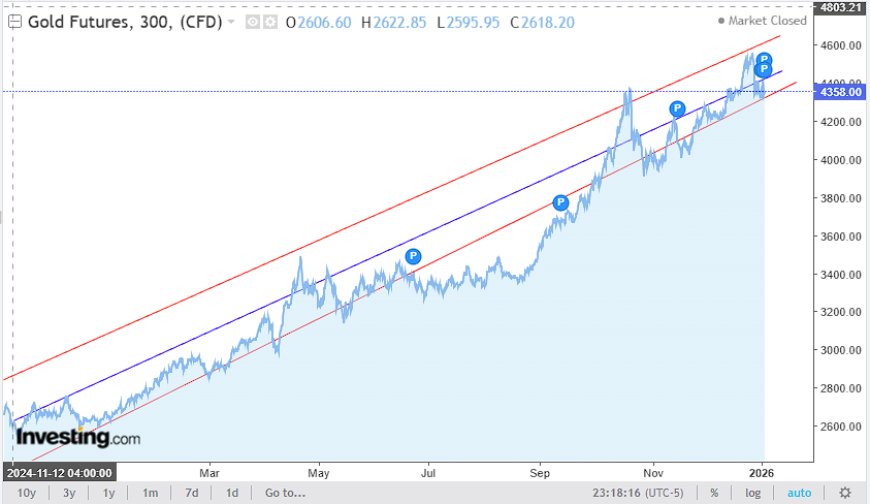
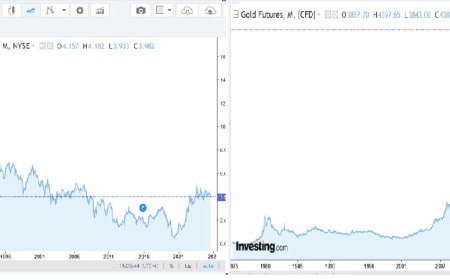
What this chart supports:
- The dominant trend is still up (channel integrity).
- The market recently traded near the upper channel region, where extensions commonly cool off.
- A pullback inside the channel is structurally normal, especially after a historic year and a volatility spike.
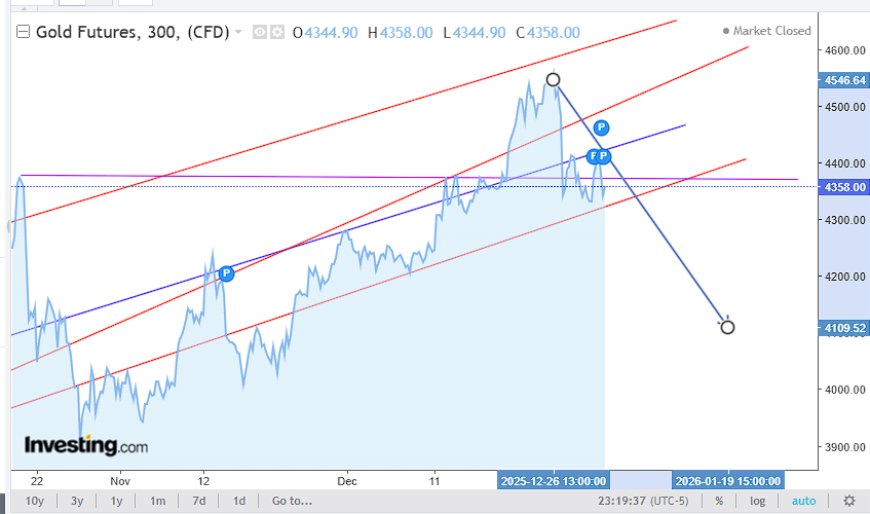
How to frame this without triggering ideological warfare:
- Consolidation zones are where new buyers and old profit-takers meet.
- If gold holds above long-term structural support while churning, that is stabilization, not failure.
- Mechanical selling (margin, rebalancing) can push into lower support bands briefly even in bullish regimes.
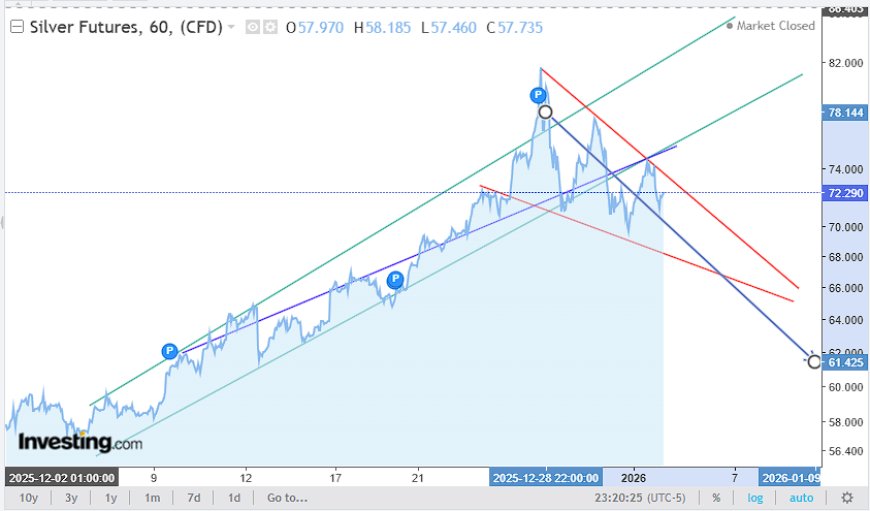
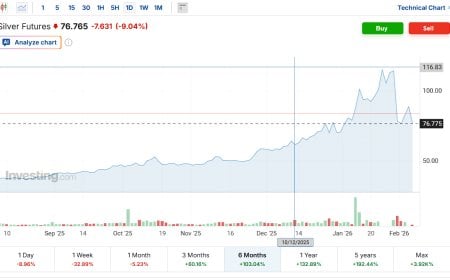
Why this matters in the Pattern Nexus framework:
- Silver is the “liquidity amplifier” metal. It exaggerates cycle phases.
- Silver weakness after a blow-off can be a confirmation of digestion, not a contradiction of the longer-term thesis.
- Silver’s vulnerability to flows (margin shocks, index flows) is higher, which can accelerate downside without changing the macro regime.
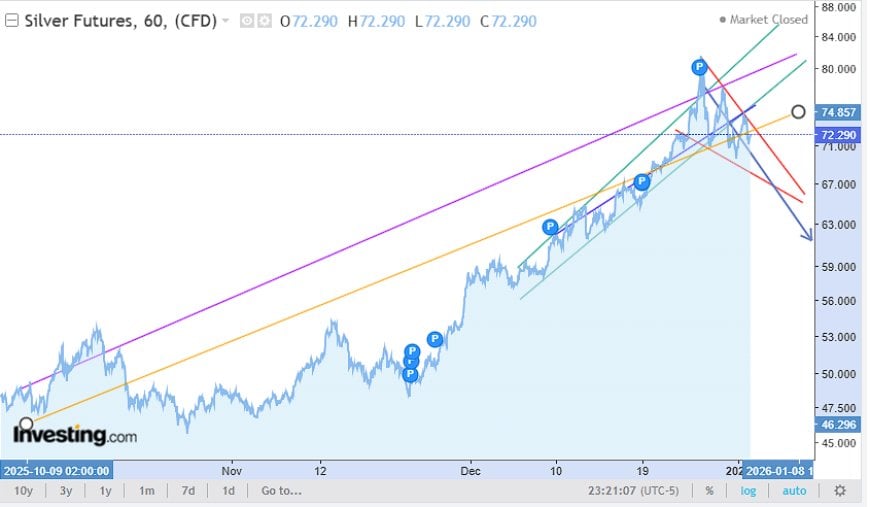
This chart gives you the cautious language you want:
- Mean reversion is not bearish by default; it is how parabolic advances survive.
- If silver re-bases above prior breakout structure, that is bullish stabilization.
- If silver loses structural trend and fails to recover key zones, that would be evidence of regime shift. We are not asserting that now.
Pattern Nexus Lens: liquidity timing and why stabilization can come first
Pattern Nexus is a liquidity framework, so we do not treat metals as ideology. We treat them as instruments that price liquidity expectations early.
Metals frequently front-run the “official” turn:
- They move on expectation (policy, real yields, credibility, geopolitics).
- They consolidate when the market must absorb positioning and flow effects.
- They resume once the next liquidity impulse becomes measurable and broad-based.
Two structural supports for the longer-term bull thesis remain documented in mainstream research:
- Official-sector gold demand has been elevated for multiple years, and gold’s role in reserves has been examined seriously by institutions such as the IMF and ECB, with discussion of geopolitical motives and real-yield linkage. (IMF working paper; ECB analysis)
- World Gold Council research continues to highlight the combination of investor demand, ETF flows, and central bank buying as a foundation for gold’s structural bid into 2026. (World Gold Council outlook and flow reports)
Now tie that to the short-term technical structure:
- When the complex is overheated, mechanical events can cause violent resets (margins, index rebalancing).
- Those resets can occur even while demand is strong and the medium-term macro setup is constructive.
- Stabilization inside rising structure is the “bridge” between an overheated upside wave and the next liquidity-driven leg.
In other words: if liquidity is about to expand, it does not require metals to grind up every day. It often requires them to stop being unstable first.
What would invalidate this framework
Caution is not just tone. It is defining what would prove the thesis wrong.
- Gold: a sustained break below long-term channel support and failure to reclaim the former balance zone would weaken the “digesting” argument.
- Silver: failure to stabilize near mean structure and continued breakdown through major support bands would be stronger evidence of regime change, not consolidation.
- Macro: a durable, broad-based rise in real yields combined with tightening liquidity conditions would be a genuine headwind, even with strong demand narratives.
Until those occur, the base case remains: volatility-driven digestion inside a bullish long-cycle regime.
Practical takeaways (bull case without cult framing)
- It is possible to be bullish metals and still respect technical digestion after historic gains.
- Margin shocks and index rebalancing are legitimate explanations for sharp pullbacks without invoking conspiracies.
- Silver is not “confirming collapse” by falling harder; it is behaving like a higher-beta metal in a de-leveraging phase.
- If liquidity expands, stabilization is the mechanism that prepares the market for the next leg, not a contradiction of it.
This is not an instruction to sell or buy. It is a structure map. The market is working off excess. That is how bull regimes persist.
Sources
- Reuters (Jan 2, 2026): Precious metals begin 2026 higher after a record-breaking 2025
- Reuters (Jan 2, 2026): Physical market premiums return as price retreats from highs
- World Gold Council: Gold Outlook 2026
- World Gold Council: Central Bank Gold Reserves Survey 2025
- World Gold Council: Gold ETF Flows (Nov 2025 reporting)
- World Gold Council: Gold Demand Trends Q3 2025
- CME Group Clearing Advisory (Dec 26, 2025): Performance Bond (Margin) requirements update
- Associated Press (Dec 2025): Gold and silver slide after CME raises margin requirements
- Barron’s (Jan 2026): Bloomberg Commodity Index rebalancing and potential silver selling pressure (J.P. Morgan estimates)
- CME Group research: Factors driving gold relative to silver (volatility and beta discussion)
- University of Colorado Denver paper: Gold-to-silver ratio, volatility and beta framing
- IMF Working Paper (2023): Gold as international reserves
- ECB analysis (2025): Gold demand, geopolitics, and real yields linkage
Qual é a sua reação?
 Curtir
0
Curtir
0
 Não gostei
0
Não gostei
0
 Amor
0
Amor
0
 Engraçado
0
Engraçado
0
 Uau
0
Uau
0
 Triste
0
Triste
0
 Bravo
0
Bravo
0

Founder of Pattern Nexus. I research markets, macro, geopolitics, AI, history, ancient systems, and the patterns most people overlook. I’m also building Market Radar, a trading scanner designed to read pressure, risk, confirmation, and setup quality before chasing a move. Pattern Nexus is where I connect the dots between data, history, technology, and the bigger system playing out around us.














Comentários (0)