
January 12, 2026: Metals Break Out, AI Leaders Grind Higher
A deep market wrap for January 12, 2026: equity indices edge higher, gold and silver rip to new highs, crypto and AI leaders stay bid, and the yield curve begins a meaningful re-steepening.

January is not about whether the Fed cuts in March. It is about the fact that rate policy is now inside the legal and political battlefield. Markets are trading control structure, not speeches.
When a Fed chair is under subpoena, a head of state is pulled off the board, and CES rolls out humanoids in the same month, a 0.2% move on the S&P is not “nothing happening.” It is the mask of stability over a full regime change.
The tape is clear: capital is migrating toward AI infrastructure, metals, energy, and parallel ledgers, and away from long-duration science projects. The system is choosing collateral and cash flow over narratives.
How January reset the power and liquidity map
Before looking at today’s prices, it is worth anchoring what actually happened in January so far. First, the Powell subpoena dragged the Federal Reserve directly into the legal and political arena. Rate policy is no longer just “what the committee thinks about inflation”; it is now entangled with prosecutorial leverage, election-year pressure, and the timeline for replacing the chair. Everyone knows the handoff window in May, and markets understand that the next Fed leadership will be aligned with an explicit political and industrial agenda.
Second, the United States executed a kinetic regime move in its own hemisphere by pulling Maduro off the board. Regardless of one’s politics, that operation broadcast a simple message to every capital in the region: the Monroe Doctrine is not dead, and Washington is prepared to enforce it. The follow-on behavior from Colombia and Mexico — the sudden caution, the quick recalculations — confirmed that this was not just a one-off raid but a structural signal about who controls corridors, supply chains, and energy routes in the Western hemisphere.
Third, CES 2026 took AI out of the abstract. Industrial humanoid robots on stage were not just a product demo; they were a forward earnings and capex event. They made it obvious that the AI cycle is not just about cloud GPUs and ad targeting. It is about physical labor replacement, grid load, copper and silver demand, and the repricing of human labor across logistics, manufacturing, and services. Markets saw a production function being rewritten in real time.
Layer these events together and the old macro playbook breaks. QT as a constraint effectively ended in late 2025. January’s news flow is the system quietly switching the liquidity rail: from sterile balance-sheet narratives to openly political, industrial, and geopolitical channels. Defense budgets, AI infrastructure, energy corridors, and fiscal operations are now the primary means of directing capital and risk, with the Fed increasingly pinned between legal pressure and political expectations.
January 2026 made it obvious that markets are no longer trading a central-bank-only universe; they are trading a state–corporate industrial regime where legal tools, military operations, and AI capex are all parts of the same liquidity system.
What that looked like on today’s tape
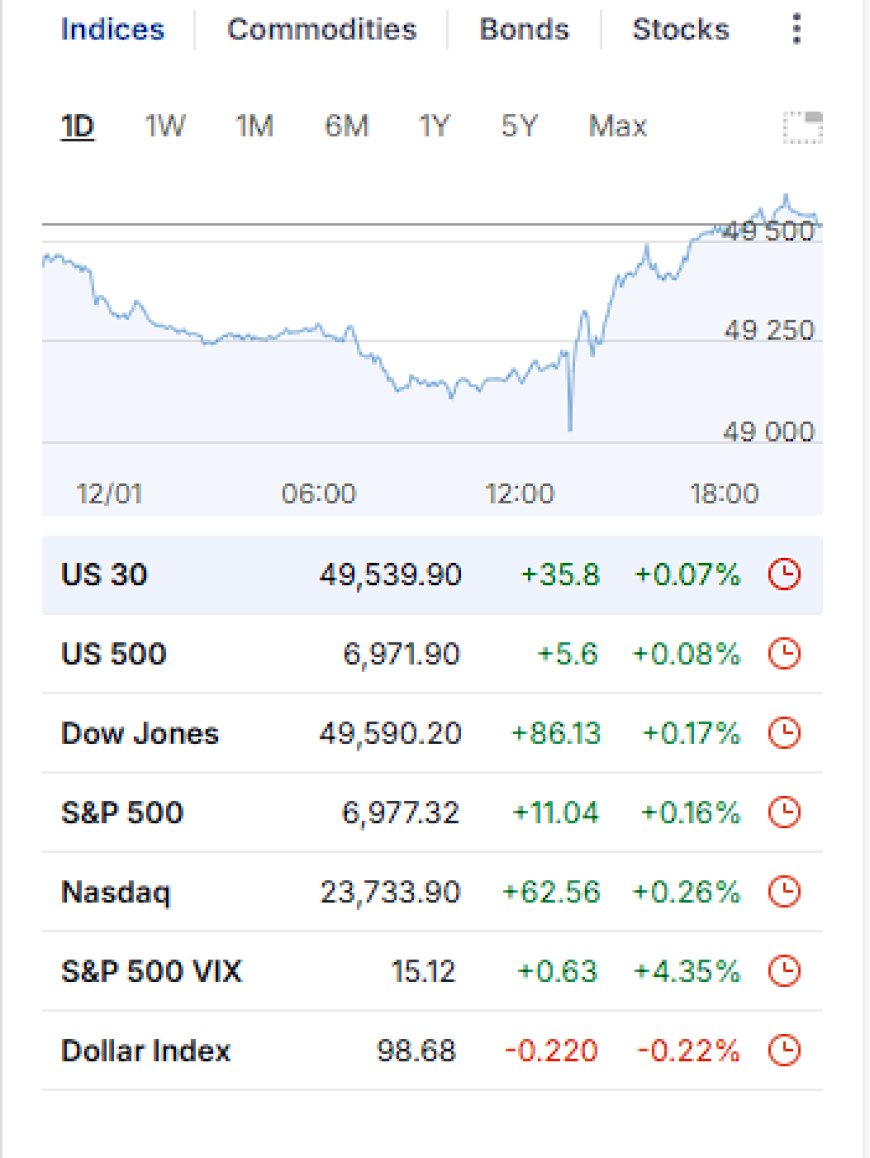
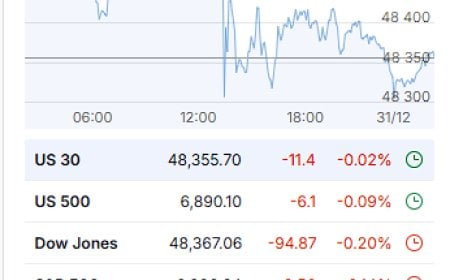
On the screen, January 12 does not look like crisis. The US 30 index closed near 49,540, up 0.07%. The US 500 printed 6,971.9, up 0.08%. The Dow finished at 49,590.2 (+0.17%), the S&P 500 at 6,977.3 (+0.16%), and the Nasdaq outperformed slightly at +0.26%. Volatility ticked up, with the VIX up more than 4% to 15.12, while the Dollar Index slipped around 0.22% to 98.68. That combination — small index gains, higher vol, and a softer dollar — is exactly what you would expect in a world where people are hedging regime risk but not yet willing to dump equities.
The intraday shape matters. Indices traded heavy through the middle of the session, sold on the headlines and uncertainty, then reversed and ground higher into the close as systematic flows and dip buyers stepped in. In a classic recession scare, that intraday move would usually fail; in this regime it did not. The reason is clear when you look at what was actually being bought and sold.
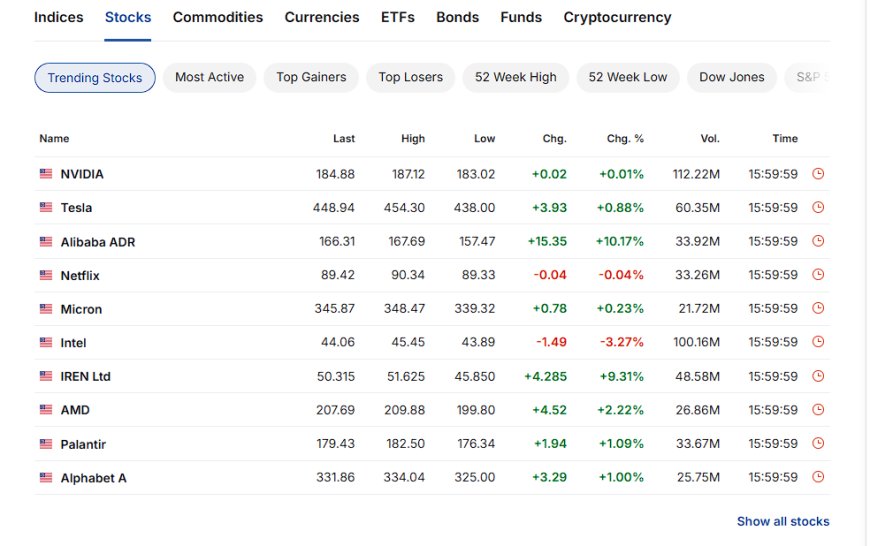
Leadership is exactly where you would expect in an AI–industrial cycle. NVIDIA traded around 184.9 on heavy volume and held its ground. Tesla closed near 448.9 (+0.88%). Micron and AMD both pushed higher, with AMD up more than 2%. Palantir and Alphabet A logged solid gains. These are not desperation bounces; they are controlled continuation trades in the core of the AI and data-center complex that will sit directly on top of the new industrial liquidity rail.
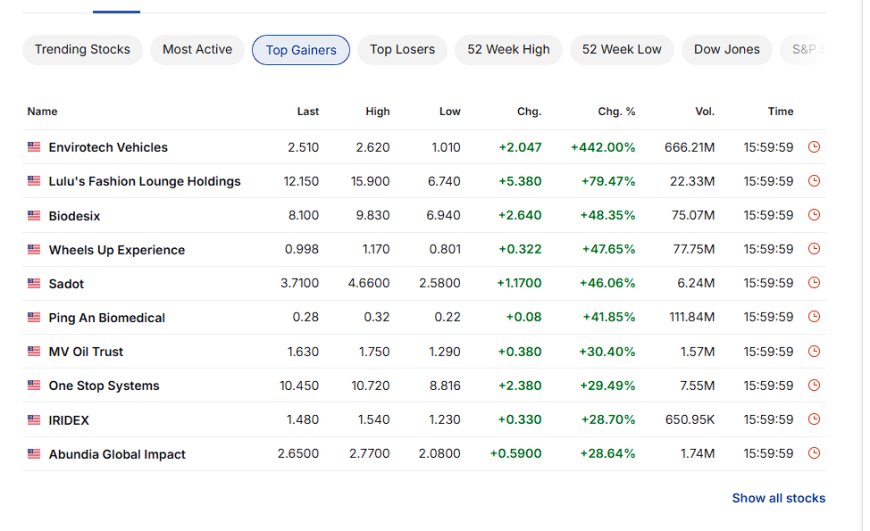
The top gainers list looks like a speculative blowtorch: Envirotech Vehicles up more than 440%, Lulu’s Fashion Lounge up nearly 80%, Biodesix and Wheels Up both up close to 50%. That is short-covering, positioning, and opportunistic money taking advantage of thin floats — not a signal that the underlying macro is suddenly euphoric.
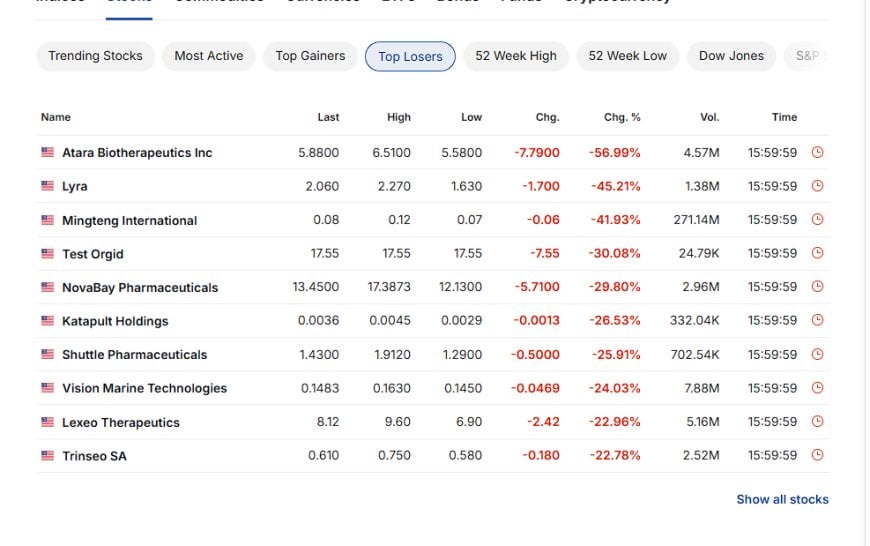
On the other side, biotech and therapeutics took the hit. Atara Biotherapeutics dropped nearly 57%. Lyra lost 45%. Mingteng International fell more than 41%. Several peers printed 20–30% red candles. That is what happens when the regime shifts from “cheap money, fund the story” to “state–corporate industrial allocation”: long-duration R&D without clear cash-flow pathways becomes an easy source of liquidity.
Put simply, today’s tape belongs to a market that understands the new game. It keeps paying for AI infrastructure and hard collateral, it uses speculative small caps as a pressure valve for risk appetite, and it starves the parts of the market that no longer sit on the core liquidity rails.
Metals, crypto, and energy as the execution layer
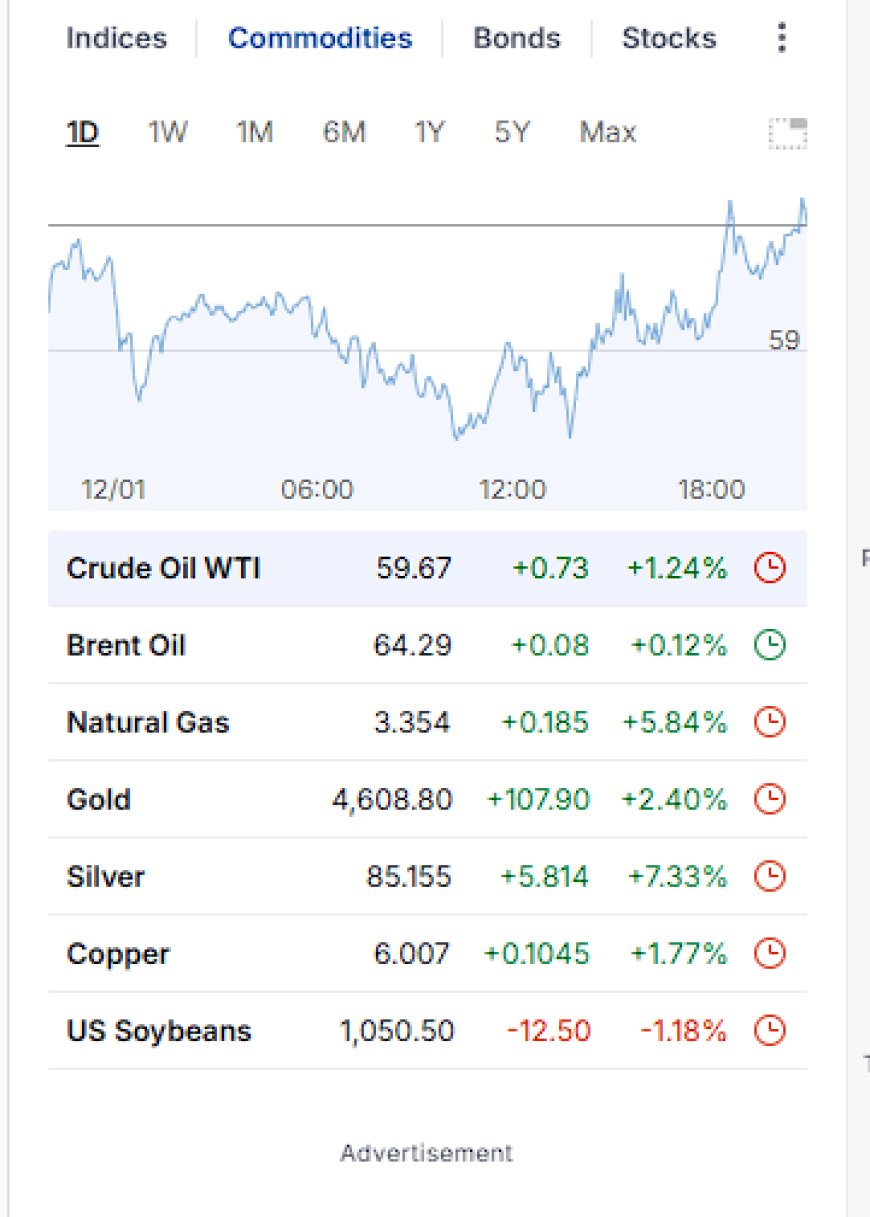
The metals board is where the regime shows up in pure form. Gold pushed to roughly $4,608.8 per ounce, up 2.40% on the day and printing fresh highs. Silver ripped to about $85.15, up more than 7%. Copper climbed around 1.77% to roughly 6.01. Crude WTI traded near $59.67 (+1.24%), Brent around $64.29, and natural gas spiked almost 6% to roughly 3.354.
This is not a simple “inflation hedge” trade. Gold is absorbing institutional risk: legal pressure on the Fed, the visible merger of state and corporate power, the use of sanctions and corridors as weapons, and the recognition that “independent” policy is now a narrative, not a constraint. Silver is the crossover asset, catching both the monetary hedge and the industrial demand from electrification, solar buildout, and the metals footprint of AI infrastructure. Copper confirms the industrial side of the thesis as data centers, humanoids, and grid upgrades all pull forward the need for wiring and power capacity.
Natural gas and power-sensitive energy tell the same story from a different angle. AI data centers, electric vehicles, heating, and industrial loads are all converging on the same grids. In that world, the constraint is not barrels on ships; it is electrons in the right place at the right time. Volatile nat gas pricing is the market’s way of saying that the AI story is only credible if the energy system can keep up, and that bottleneck will not be solved with a single policy announcement.
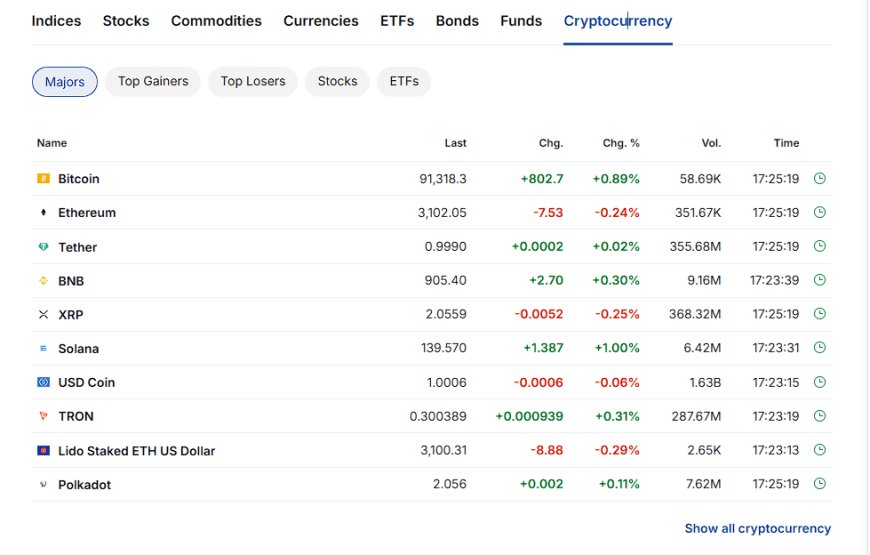
Crypto completed the hedge complex. Bitcoin held above the 91,000 area, up roughly 0.9%. Solana traded around 139.6, up about 1%. BNB was modestly green. Ethereum slipped slightly, continuing its pattern of lagging Bitcoin and the higher-beta chains. Stablecoins held their pegs and did their job as transactional liquidity rails.
This is a parallel-system posture. Metals and energy hedge the institutional and industrial risk on the legacy rails. Bitcoin and the broader crypto complex hedge the possibility that the next stage of the system will not be fully contained inside the current fiat and banking stack. The important detail is that none of these hedges are collapsing even as equities hold green — the market is paying for both upside optionality and structural protection at the same time.
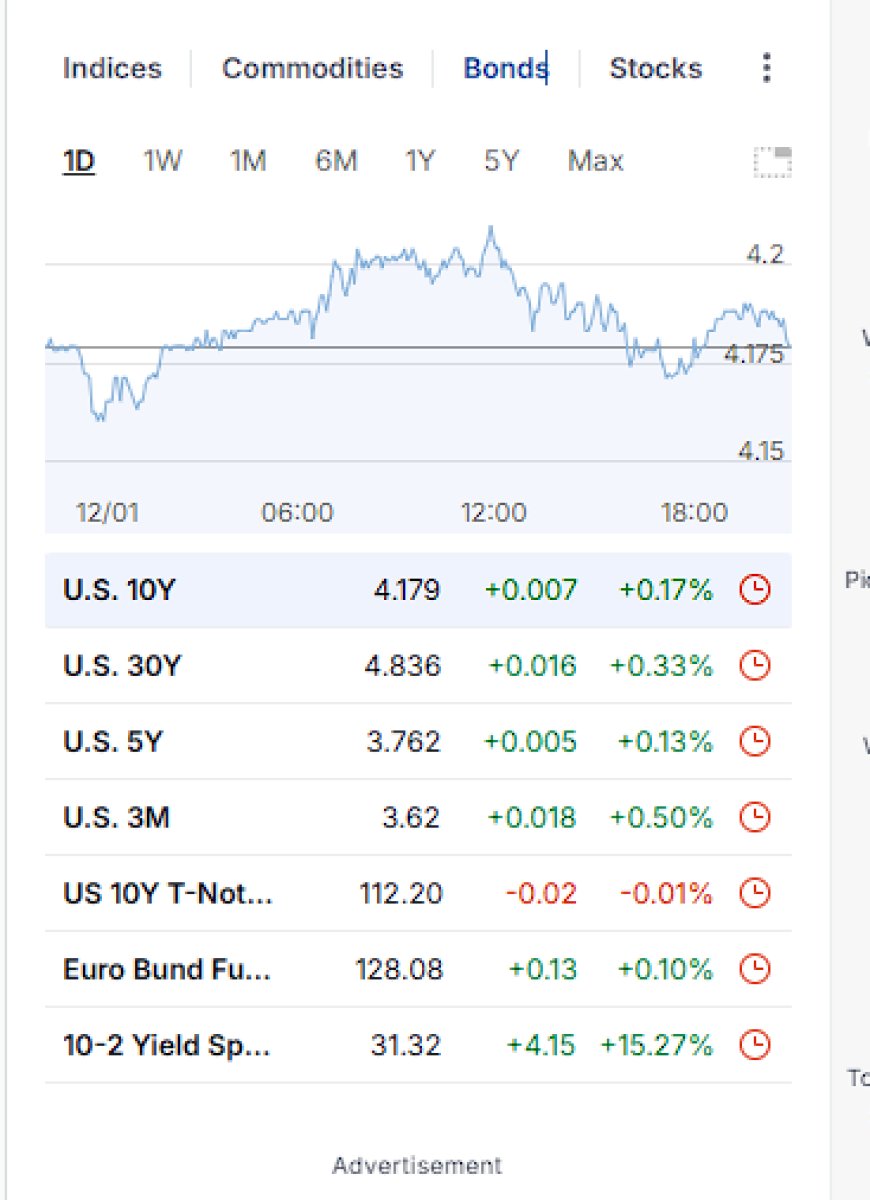
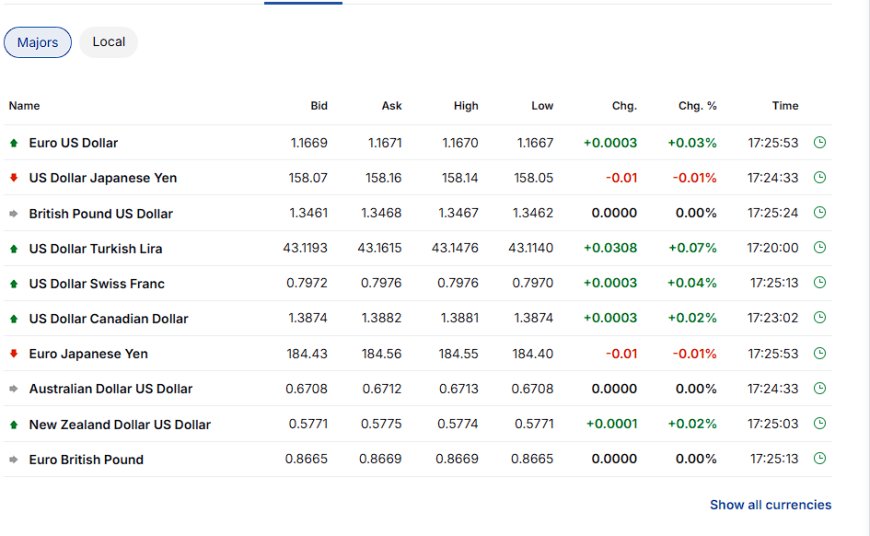
The bond and FX markets confirmed that this is not a funding panic. Treasury yields moved modestly; the dollar drifted lower but did not collapse. That is exactly what it looks like when global capital is not fleeing the system, but is actively rotating within it — away from abstract duration and toward claims on real things: metals, energy, industrial infrastructure, and parallel digital collateral.
Taken together, today’s moves across metals, crypto, and energy are the execution layer of everything January has already told you. Power has shifted, liquidity is being rerouted through industrial and geopolitical channels, and the market is aligning with that reality one basis point and one ounce at a time.
Pattern Nexus Lens
In the Pattern Nexus framework, January 12 is not a one-off “quiet day” with a metals pop. It is a live snapshot of the new regime: legal pressure on the Fed, kinetic enforcement in the hemisphere, AI walking onto factory floors, and markets quietly upgrading their hedge complex from bonds and volatility products to metals, energy, and parallel ledgers.
The important detail is what did not happen. Equities did not crack. Credit did not seize. Funding markets did not blow out. Instead, capital rotated: out of long-duration biotech and story stocks, into AI infrastructure, real collateral, and the sectors most tightly coupled to industrial liquidity and state priorities. That is what it looks like when the system accepts the regime change and stops pretending that the old playbook will come back.
Going forward, the signals that matter are not quarterly inflation prints or dot plots. They are: where the next wave of industrial contracts lands, how fast humanoid and automation projects move from demo to deployment, which corridors and partners fall in line or fall out of favor geopolitically, and how aggressively metals, energy, and Bitcoin keep front-running those shifts. January has already told you what game is being played. The tape is now showing you who is adapting and who is still trading the last cycle.
If markets were still trading the old regime, today would be about guessing the next Fed move. In the regime you are actually living in, today is about execution: metals vertical, AI and semis financed, biotech harvested for liquidity, and the parallel system getting a steady bid while power and liquidity consolidate into a state–corporate industrial machine.
FAQ
Why aren’t equities crashing if the regime shift is this serious?
Because the regime shift does not remove liquidity; it reroutes it. AI, defense, energy, and industrials are still being funded. The parts of the market that do not sit on those rails — like speculative biotech and long-duration R&D — are the ones taking the damage. Index-level stability can coexist with brutal rotation under the hood when capital knows which side of the new regime it wants to be on.
Is the metals move just a blow-off top?
A vertical day in gold and silver can always retrace in the short term, but the structure behind it is not a meme. Legal pressure on central banks, fiscal and industrial commitments that cannot realistically be reversed, and the hard capex needs of an AI and energy supercycle all argue for sustained demand for real collateral. Blow-off tops usually happen when narratives are rich and positioning is all-in; this move is happening while many investors are still officially pretending that the old framework is in charge.
What does this mean for housing and real assets that are not on the screen today?
Housing and many real assets are lagging indicators of the same process. When industrial liquidity, metals, and AI infrastructure lead, it is only a matter of time before excess liquidity and policy support bleed into land, housing, and other real collateral. The absence of a crash so far is not an accident; it is part of the same liquidity map that is now visible in metals, crypto, and AI. In this regime, housing is less about “affordability” narratives and more about whether you control scarce, productive, financeable assets on the right side of the capital flow.
Sources
Index levels, sector performance, metals, energy, crypto, FX, and Treasury data are derived from live market dashboards and major financial news outlets covering US markets and global macro developments in early January 2026.
- MarketWatch – US stocks and metals, January 12, 2026
- Reuters – Global markets, gold surge, dollar move
- Reuters – Wall Street and Fed-independence concerns
- AP – US markets and political backdrop
- E*TRADE – Daily market recap and macro data
Qual é a sua reação?
 Curtir
0
Curtir
0
 Não gostei
0
Não gostei
0
 Amor
0
Amor
0
 Engraçado
0
Engraçado
0
 Uau
0
Uau
0
 Triste
0
Triste
0
 Bravo
0
Bravo
0

Founder of Pattern Nexus. I research markets, macro, geopolitics, AI, history, ancient systems, and the patterns most people overlook. I’m also building Market Radar, a trading scanner designed to read pressure, risk, confirmation, and setup quality before chasing a move. Pattern Nexus is where I connect the dots between data, history, technology, and the bigger system playing out around us.










Comentários (0)