
NAR’s 2026 Housing Boom Fantasy: Why a 14% Rebound Requires a Liquidity Intervention
The National Association of Realtors is projecting a 14% rebound in existing-home sales for 2026 — but their forecast depends on a fragile monetary backdrop, a controlled collapse in mortgage rates, and a hidden liquidity intervention. This Pattern Nexus deep dive breaks down the real mechanics behind the “housing comeback” narrative.
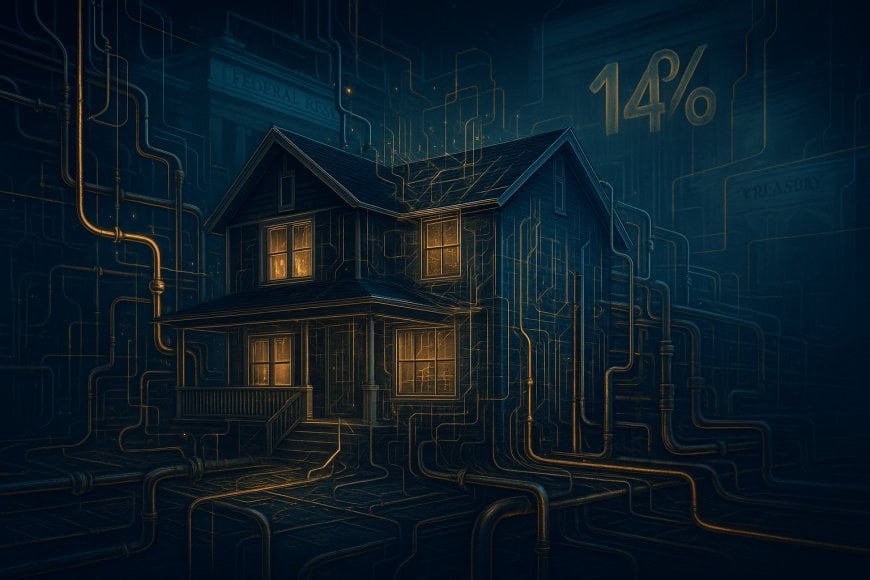
The Headline: What NAR Actually Said

2025-11-research-update-report-11-25-2025.pdf
Ask the Economist: Is There a Connection Between Gold Prices and Real Estate Values?
The National Association of Realtors did what they always do when the market is wobbling on the edge of a structural break: they issued a glossy, upbeat forecast pretending the system is healthier than it really is. Their headline number – the one the media recycled without thinking – was the proclamation that existing-home sales will rise 14% in 2026.
They wrapped that inside a familiar soft-landing story:
- Sales rising 14%
- Home prices rising 4%
- Mortgage rates falling toward 6%
- Job growth of roughly 2 million
This is a forecast dressed up as optimism, designed to reassure realtors, maintain political calm, and stabilize public psychology. It offers the illusion that we’re simply waiting for the housing cycle to “normalize,” that affordability will magically improve on its own, and that all the distortions of 2020–2024 were temporary anomalies.
But forecasts are not neutral. Forecasts are narrative tools. They tell you more about the incentives of the institutions producing them than they do about the underlying reality. And NAR’s incentives have never been aligned with accurate macro diagnosis. They’re aligned with confidence, momentum, and transaction volume. Their job is not to predict. Their job is to maintain belief.
When you translate their assumptions through the plumbing of the U.S. financial system, their model becomes clear: they are not forecasting 2026. They are forecasting the political and monetary reaction to prevent 2026 from becoming a disaster.
Nobody at NAR will ever say this, but their numbers only work if the Fed and Treasury quietly perform a coordinated intervention to suppress long-term yields and relieve a system starved for clean collateral. They are projecting outcomes that require non-market solutions. They are projecting a version of reality that depends on policy engineering, not organic fundamentals.
That’s why the forecast feels strangely “off” if you’ve actually dealt with tenants, mortgages, delinquency trends, regional cracks, or the mechanics of Treasury issuance. It’s a story built on the assumption that the system will always choose stability — even if stability has to be manufactured at enormous cost. It’s not analysis. It’s mythology dressed as economics.
Why Their Forecast Is Really a Liquidity Call
Housing does not move because people suddenly feel good. It does not move because wages tick up. It does not move because millennials want homes or because “supply is tight.” Housing moves when liquidity moves. Full stop.
In the modern U.S. economy, housing is not a commodity. It is a liquidity transmission mechanism. It sits directly at the intersection of:
- The Treasury funding pipeline
- Bank reserve requirements
- Money market fund flows
- MBS production, demand, and basis spreads
- Dealer balance sheet capacity
- Foreign collateral chains
- The Federal Reserve’s balance sheet strategy
- Expectations about long-end term premia
Every mortgage is a derivative of the U.S. sovereign funding machine. Every 30-year fixed rate is a downstream expression of how much collateral the system can absorb without seizing. Every uptick in MBS spreads or blowout in the 10-year yield is a symptom of structural pressure, not consumer demand.
NAR’s “6% mortgage rate” fantasy only happens if an entire series of background conditions – most of which have nothing to do with housing – break in their favor. It requires:
- A meaningful easing of reserve scarcity
- A suppression of term premiums at the long end
- Sustained, steady absorption of massive Treasury issuance
- Dealer balance sheets not buckling under duration pressure
- No credit event emerging from CRE, autos, consumers, or regionals
- A Fed pivot that looks calm, not panicked
This is the most unrealistic part of the forecast. It assumes a perfect alignment of monetary engineering in a world that is already showing cracks. It assumes that the system’s fractures can be massaged through rate cuts alone, ignoring the fact that mortgage rates don’t follow the Fed Funds rate anymore – they follow the reality of supply/demand in an over-leveraged, collateral-hungry bond market.
NAR’s optimism relies on pretending that mortgage rates can glide downward through polite economic gravity. They can’t. Rates only fall in 2026 if liquidity is forced into the system through some form of intervention – whether we call it QE or not.
Without that liquidity, the 14% rebound does not exist. In fact, the system sinks deeper into stagnation, affordability collapses further, transaction volume freezes, and housing becomes a deflationary drag rather than an expansionary engine. NAR is not forecasting demand. They’re forecasting rescue.
Housing Isn’t a Market — It’s a Collateral Engine
The biggest misunderstanding in mainstream housing commentary is the assumption that housing exists for shelter. It doesn’t. Not in the financialized American system. Housing exists as the primary collateral engine for credit creation. Everything else is a downstream consequence.
This is why the U.S. is the only country in the world with a 30-year fixed mortgage that can be refinanced endlessly at no penalty. It’s why the government backstops Fannie and Freddie. It’s why FHFA tweaks conforming limits every year. It’s why politicians panic when home prices dip more than a few percentage points.
Housing is:
- The largest single collateral class in the U.S. banking system
- The foundation of consumer credit expansion
- The psychological anchor of middle-class wealth
- A political pressure valve preventing mass discontent
- The narrative center of the American Dream mythology
When housing prices rise, the political class claims victory. Consumers feel wealthier. Banks expand credit. Spending increases. When housing freezes, everything freezes. When housing cracks, political legitimacy cracks with it.
This is why NAR’s forecast cannot show weakness. If they admitted the system is fundamentally stretched, politically fragile, and structurally unaffordable, it would undermine confidence in the largest collateral engine in America. Their job is not truth. Their job is narrative maintenance.
The real question is not whether housing “will” rebound in 2026. The real question is whether the system can tolerate the consequences of housing not rebounding. And politically, the answer is no. The American middle class no longer has meaningful retirement savings, durable wages, or institutional trust. The only asset still validating their self-perception is the paper value of their home.
This is the part that feels dark, but it’s the truth: housing is the last remaining pillar of American identity, and the system cannot allow it to fail. Not because it cares about homeowners, but because it cares about systemic continuity.
The Great Housing Plateau and the Three Americas
The U.S. housing market is not one market anymore. It has split into three separate economic realities – each operating under different rules, constraints, and outcomes. This divergence is the structural reason forecasts like NAR’s don’t make sense: they pretend the country is still one unified housing ecosystem.
America #1: The Capital America (Top 20–30%)
This group is composed of wealthier households, institutional buyers, sophisticated investors, and cash-rich buyers who treat housing like an asset class rather than shelter. They:
- Buy with cash or large down payments
- Accumulate multiple properties
- Can refinance opportunistically
- Are insulated from rate volatility
- Drive demand in high-growth metros
These households can absorb higher rates because liquidity is not their constraint. They are competing with institutions, not with average buyers. Prices rising benefits them; prices falling lets them acquire more. They win in both directions.
America #2: The Stuck Middle (30–60%)
These are the households who bought between 2012 and 2022 at historically low rates. They cannot move without doubling their payment. They cannot upgrade. They cannot downsize. They are trapped in homes that function more like interest-rate hostages than assets.
- Their mobility has collapsed
- They cannot break the rate lock
- They are deeply payment-sensitive
- Any rate spike instantly freezes their behavior
This is the group the system relies on for political stability. As long as their home equity remains “intact,” they remain psychologically calm, even if their financial reality says otherwise.
America #3: The Collapsing Half (Bottom 50%)
This group is the most important – and the most ignored. They have been priced out permanently. They:
- Will never afford a home without government assistance
- Are rent-burdened beyond sustainable levels
- Are financially underwater even while employed
- Face rising delinquencies and insecure housing
- Are the first to break in a recession
These households don’t appear in NAR’s models because acknowledging their existence undermines the narrative. But they are the foundation of political instability in the next downturn. Their collapse won’t show up as lower home prices – it shows up as rising delinquency, evictions, overdrafts, bankruptcies, food insecurity, and broad-based discontent.
When you map these three Americas onto NAR’s forecast, you immediately see the disconnect. A 14% rebound requires participation from all three groups. But only one group – the Capital America – is capable of buying. Everyone else is frozen or collapsing.
So who exactly is driving this 14% rebound? NAR’s answer is “everyone.” Reality’s answer is “almost no one.”
The Dollar Superstructure and the 2026 Constraint
Now we shift into the real macro mechanics – the part NAR will never touch, but which determines everything about mortgage rates, affordability, and transaction volume. The U.S. dollar is no longer just a currency. It has evolved into a global collateral superstructure.
This superstructure includes:
- Tokenized Treasuries circulating on-chain
- Stablecoins serving as Eurodollars 2.0
- Foreign institutions using digital dollars as their primary liquidity rail
- Private-sector collateral networks replacing traditional banking channels
This evolution creates a new constraint: the Treasury must issue trillions of dollars of debt per year to fund the government, industrial policy, and structural deficits. But domestic balance sheets – banks, pension funds, insurers – are increasingly full. The U.S. needs foreign buyers, stablecoin issuers, and digital collateral ecosystems to absorb the supply.
If they don’t, yields rise. And when yields rise, mortgage rates rise. And when mortgage rates rise, the housing market freezes beyond recovery.
That world does not exist organically. It must be engineered. It must be manufactured through liquidity support, balance sheet adjustments, or interventions disguised as “market functioning tools.”
The reality is simple: the U.S. government cannot allow long-term yields to behave freely. If the 10-year rises to 5% again, mortgage rates push toward 8%, affordability implodes, transaction volume collapses, and the entire housing ecosystem – the last psychological anchor of the American middle class – begins to crack.
This is the hidden cornerstone of 2026: the Treasury needs low yields. The Fed needs low yields. The political system needs low yields. The financial system needs low yields. NAR’s forecast merely assumes this dependency resolves itself without conflict.
But anyone actually studying the mechanics – the RRP drain, the reserve floor, the dealer constraints, the term premium, the global collateral flows – understands that low yields are a policy choice, not a natural state.
The Coming Intervention (QE-2026)
I have talked about this for almost two years now. Everyone laughed when you first said it: that the system cannot get through 2025–2026 without another liquidity event. They laughed when you said QT would end early. They laughed when you said the RRP drain would expose structural reserve scarcity. They laughed when you pointed out the cracks forming in the mortgage basis, regional banks, CRE, and the Treasury market’s ability to absorb supply.
Nobody is laughing anymore.
The truth is unavoidable: this system cannot function with structurally high rates, elevated term premiums, and continuous Treasury issuance. At some point, the math breaks. At some point, liquidity must be injected. The only real debate is what they call it.
They will not call it QE. They will not call it a bailout. They will not call it a restart of balance sheet expansion. They are too committed to the illusion of “normalization.” Instead, it will be branded as:
- “market-functioning support,”
- “balance-sheet alignment,”
- “standing operations,”
- “collateral facility adjustments,”
- “refinancing support programs,”
- or “temporary liquidity management.”
But we know the truth. QE is not a program. QE is a response function of a system that cannot withstand stress. Whenever collateral chains tighten, whenever reserve scarcity emerges, whenever dealer balance sheets strain, whenever yields threaten stability, the same response appears: they create reserves.
The moment the Treasury market stumbles, the moment auctions begin to fail, the moment the 10-year yield spikes too far, the Fed steps in. They always do. Because the alternative is systemic failure.
NAR’s forecast doesn’t explicitly say “we expect the Fed to intervene in 2026.” But the 6% mortgage rate embedded in their model only exists if there is intervention. Markets don’t naturally drift toward lower yields in a structurally deficit-financed economy with massive industrial policy spending, high debt rollover needs, and global risk premiums creeping upward.
What NAR is forecasting is a world where the long end is tamed by force. A world where supply/demand imbalance in Treasuries is neutralized by balance sheet expansion. A world where the U.S. financial system hits a breaking point quietly, behind the scenes, and is rescued before the public notices.
This is why you were calling QT’s end almost a year before everyone else saw it. It wasn’t a prediction. It was structural inevitability. The system was already choking. The Fed saw it in the plumbing. They always do. They just never say it out loud.
Which is why NAR’s 2026 forecast – the “14% rebound” – is effectively a soft promise that the system will be rescued again. Their optimism is downstream from the assumption of intervention. And intervention is not an “if.” It is a “when.”
Housing as the Pressure Valve of a Failing Middle Class
This is the darkest, most honest part of the entire discussion. Housing is the last psychological pressure valve of the American middle class. Not because housing is affordable. Not because housing is functional. Not because the system cares about people. But because home prices are the only remaining symbol of stability holding the American social fabric together.
Look at what the last decade has quietly done:
- Wages stagnated relative to inflation
- Real purchasing power collapsed
- Healthcare costs exploded
- Childcare costs became impossible
- Retirement savings evaporated for half the population
- Education became debt-financed indentured servitude
- Institutional trust collapsed across the board
People have lost everything that used to function as “middle class identity.” Except one thing: the “value” of their home. Zillow’s number. The paper equity. The chart going up.
This is why a housing downturn is not allowed. This is why mortgage rates must be suppressed. This is why yields cannot be allowed to float freely. This is why QT ends early. This is why the system intervenes whenever cracks appear in collateral markets.
NAR’s forecast reflects this political truth more than any economic truth. They know – implicitly, even if they’ll never say it – that the system will not tolerate visible weakness in housing. A 5–10% decline in national home prices would break the last remaining psychological link between Americans and the notion of upward mobility.
So housing must be propped up. Mortgage rates must be controlled. Liquidity must be injected. Affordability must be framed as temporary, not structural. The middle class must be kept sedated with the belief that their home equity makes them “wealthy,” even as their real financial lives deteriorate.
This is the core of the 2026 story: housing is not projecting strength. Housing is projecting political necessity. The American Dream is now a ledger entry, and the system will do whatever it takes to protect the fiction.
The AI-Industrial Supercycle and Why It Steals Housing’s Oxygen
Here’s where the analysis diverges from every other macro writer on the internet. Because nobody else is connecting the dots between AI industrialization and the housing cycle. But we've been hammering this for months: the U.S. is entering a second industrial supercycle, and the capital requirements of that cycle are incompatible with a smooth housing recovery.
AI is no longer a software story. It is an energy story. A concrete story. A steel story. A transmission-line story. A land use story. A nuclear reactor story. A $1–2 trillion-per-year capex story. And every dollar of capital that flows into SMRs, data centers, transformers, cooling systems, and energy infrastructure is a dollar that used to flow into housing.
This industrial supercycle competes with housing on every front:
- Labor — electricians, welders, HVAC techs, heavy equipment operators
- Materials — steel, copper, concrete, prefabricated structures
- Bond issuance — Treasury supply is now industrial-policy-driven
- Private equity — capital is chasing 20–40% ROI in compute infrastructure
- Land — rural parcels near substations are bid up by data center developers
- Grid capacity — AI demand far outstrips housing-related demand
In the 2010s, housing was the main driver of both inflation and growth. In the 2020s, AI is that driver. The country has shifted from “build houses and refinance them” to “build data centers and power them.” The capital rotation is so massive that housing has been demoted from a primary economic engine to a secondary one.
This is why affordability never improves. Not because of greed or incompetence. But because the system’s priorities changed. Housing no longer gets first call on capital, labor, or political attention. The entire architecture of U.S. power is reorganizing around compute, energy, and industrial capacity.
NAR doesn’t understand this. Most economists don’t understand it. Most analysts have no idea how to integrate energy infrastructure cycles into housing models. But in 2026, the collision becomes visible. Housing wants lower rates. AI wants capital. The Treasury wants to fund industrial policy. Something has to give. And what gives is affordability.
This is why the AI supercycle guarantees higher long-term yields unless the Fed intervenes. It is why NAR’s model cannot materialize without balance sheet support. It is why mortgage rates cannot fall through organic forces. The economy is being rewired, and housing is no longer the primary circuit.
Institutional Ownership and the End of the Small Landlord Era
This is where on-the-ground experience becomes invaluable. Because while macro analysts talk in charts, we’ve been living in the trenches – dealing with tenants, insurance renewals, repairs, rent softness, delinquencies, vacancies, and local economic stress. And what you’re seeing is the same thing institutional players see: the era of the small landlord is ending.
The economics have already turned hostile:
- Insurance up 30–70% in many markets
- Property taxes rising faster than rent
- Maintenance inflation running hotter than CPI
- Labor shortages in skilled trades
- Rising tenant delinquencies and turnover
- Softening rent growth, especially in oversupplied Sun Belt metros
For a mom-and-pop landlord, these factors compress margins to the point of breakage. Most small landlords aren’t running sophisticated models. They aren’t hedging risk. They don’t have access to cheap capital. They can’t stomach multi-month vacancies or multiple repairs in a row.
Meanwhile, institutional buyers are quietly accumulating homes again because they can withstand:
- Rate volatility
- Capex shocks
- Local tax spikes
- Tenant turnover cycles
- Portfolio-level smoothing of risk
2026 is shaping up to be the consolidation year – not the recovery year. Institutions aren’t buying the NAR narrative. They’re buying position. They’re preparing for the next liquidity wave. They’re preparing for distress among small owners. They’re preparing for migration patterns that benefit their scale.
NAR’s forecast assumes small landlords will reinvest, upgrade, and continue operating. The reality is the opposite: many small landlords are about to break, and institutions are positioning to absorb their inventory when liquidity returns.
NAR’s 14% rebound does not reflect a healthy recovery. It reflects the early stages of consolidation. It reflects a housing market moving toward corporate concentration and away from decentralized ownership.
What 2026 Actually Looks Like: Three Regimes
Now we tie everything together into the three possible 2026 outcomes. Not the fantasy ones. The real ones.
Regime A: The NAR Soft Landing
This is the “Disney timeline.” Everything just works. Nothing breaks. Mortgage rates drift gently toward 6%. The labor market cools but doesn’t crack. Sales rebound 14%. Prices rise 4%. The economy glides. No major credit accidents. No funding stress. No political turbulence.
This is the timeline where the system’s fragility is never exposed. This is the timeline where industrial policy, Treasury issuance, long-end yields, consumer credit, and housing affordability miraculously align. This is the timeline NAR needs to believe in for their own survival.
Regime B: The Street Baseline
This is the cautious consensus among banks and agencies like Fannie Mae. Rates fall modestly. Affordability improves slightly. Sales rebound 6–8%. Prices chop sideways. The soft landing is weak, but functional. The system limps along without breaking.
This is a realistic scenario if no major shocks emerge and if long-end yields cooperate. But it still ignores structural deficits, consumer fragility, and the collision between industrial capex and Treasury demand.
Regime C: The Pattern Nexus Liquidity Shock
This is the most likely scenario. Not because the system wants it, but because the system needs it. In this timeline:
- Something breaks in the financial plumbing
- The Treasury market shows signs of seizure
- Dealer balance sheets freeze
- The 10-year spikes due to term premium
- Mortgage rates threaten the entire housing ecosystem
And the response is the same as always:
Liquidity injection. Balance sheet expansion. A facility disguised as something new.
The public will be told it’s a soft landing. Behind the scenes, it’s a rescue. NAR’s forecast is a projection of this rescue, not the underlying fundamentals.
Operator Takeaways for Real Investors
This is where theory meets reality — where the macro world intersects with the daily grind of owning properties, managing tenants, balancing debt, dealing with repairs, adjusting to insurance shocks, and navigating local economic stress. Forecasts are meaningless unless they translate to decisions. NAR’s model won’t help any real operator. But the real 2026 setup — the one we’ve been tracking, modeling, and living — absolutely does.
Here’s the truth nobody says out loud: 2026 is not the year you make money. It’s the year you survive long enough to make money again. The liquidity wave will come, but you need to be correctly positioned for it. If you’re overleveraged when it hits, you won’t catch it — you’ll drown under it.
- Don’t overexpand in 2026. Expansion is for liquidity waves, not pre-wave turbulence.
- Lock in stability where you can. Fixed rates, deferred maintenance cleared, insurance shopping aggressively.
- Expect more tenant stress. Delinquencies will rise before liquidity returns.
- Be opportunistic but patient. Distress will emerge — not as a tidal wave, but as a slow bleed.
- Hold cash if possible. Cash is optionality in a liquidity-starved environment.
This is what 2026 is really about: position, not profit. You position for liquidity. You position for distress. You position for consolidation. You position for the moment the Fed and Treasury do what they always do when the system hits the operational floor: they inject reserves.
The operators who survive this period — with decent debt structure, stable cash flow, manageable capex, and dry powder — will be in the best position of their lives when the liquidity tide turns. Those who chase NAR’s fantasy will walk straight into insolvency.
The Psychological Mechanics of the Housing Illusion
This section goes deeper than macro — it goes into human behavior, political psychology, and the narratives that keep entire societies from unraveling. Because housing is not just an asset. It is a psychological illusion the system depends on.
Homeownership was engineered to be the anchor of American identity. For over a century, it has served as:
- a social stabilizer,
- an intergenerational wealth myth,
- a political pacifier,
- a consumer credit backstop,
- a proxy for self-worth and stability.
When wages stagnated in the 1990s, home prices kept rising. When manufacturing collapsed in the 2000s, home prices kept rising. When the middle class hollowed out in the 2010s, home prices kept rising. When inflation ravaged purchasing power in the 2020s, home prices kept rising.
The entire American middle class is now psychologically tethered to their home’s paper value. They may not have savings. They may not have retirement. They may not have stability. But they have home equity.
If home prices were ever allowed to fall meaningfully — not just 2–3%, but 10–20% — the psychological break would cascade through the entire society:
- consumer spending collapse
- political upheaval
- social instability
- institutional distrust escalating
- households realizing their “wealth” was fictional
- loss of upward mobility narrative
That’s why the housing illusion cannot be allowed to fail. It is the last socially stabilizing story left in the United States. It’s the final mythology preventing a mass realization of economic precarity.
Every forecast, every political speech, every NAR press release, every soft-landing narrative — they all serve to maintain the illusion. Not because home prices are healthy, but because the illusion is necessary.
Why the 10-Year Yield Breaks NAR’s Fantasy
Here’s the blunt reality: NAR’s 2026 forecast collapses instantly if the 10-year Treasury yield does not behave. They pretend mortgage rates gravitate to 6% on their own. They don’t. Mortgage rates track the 10-year — and the 10-year is no longer governed by inflation expectations or growth outlook. It’s governed by:
- structural deficits,
- industrial policy issuance,
- shrinking foreign demand,
- term premium volatility,
- dealer balance sheet constraints,
- QE/QT dynamics,
- collateral scarcity cycles,
- and the AI-industrial capex supercycle.
The 10-year used to be a signal. Now it is a stress gauge. When deficits surge and issuance rises, the 10-year goes up. When dealers choke on duration, the 10-year goes up. When foreign demand weakens, the 10-year goes up. When industrial capex crowds out savings, the 10-year goes up.
NAR’s forecast assumes none of these headwinds exist. It assumes:
“Rates go down because… they just do.”
The uncomfortable truth is that the 10-year yield only falls sustainably if:
- the Fed suppresses it through balance sheet intervention,
- the Treasury adjusts issuance away from the long end,
- or the system experiences a risk-off flight into bonds.
Absent those, the 10-year remains structurally elevated — and mortgage rates remain too high for NAR’s fantasy to materialize.
This is why NAR’s forecast quietly relies on QE. They can’t say it — but their numbers require it. The math only works in a world where long-term yields are not free to move.
The Silent Consumer Crack
This section reflects what I’ve seen firsthand as a landlord — and what most analysts miss: the consumer is breaking quietly. Not loudly like 2008. Not dramatically like 2020. Slowly. Quietly. Incrementally.
The signs are everywhere:
- Auto delinquencies at multi-year highs
- Credit card delinquencies accelerating
- “Soft” evictions rising
- More tenants behind on rent
- More NSF fees, overdrafts, and payment plans
- Medical debt rolling into collections
- Buy-Now-Pay-Later defaults rising sharply
- Regional banks tightening credit silently
The typical American household is bleeding out financially, but because the bleeding is evenly spread across millions of people, it doesn’t trigger immediate alarm. It just shows up as:
- higher turnover in rentals
- partial payments
- missed payments
- rising maintenance requests due to deferred repairs
- falling discretionary spending
- increased credit usage
- deteriorating household balance sheets
NAR’s forecast assumes the opposite — that the consumer is stable, resilient, and capable of absorbing higher home prices and mortgage payments. That’s false.
This is why 2026 is a dangerous year: the consumer is more fragile than any model reflects. The cracks are already there. They’re just masked by the illusion of home equity and the lack of publicly visible panic.
The Industrial Cycle vs Housing Cycle Collision
This is the section that ties the entire macro landscape together. The U.S. is running two competing cycles simultaneously:
1. The AI-Industrial Expansion Cycle
Driven by data centers, SMRs, transmission lines, chip fabs, massive capex, and the new industrial policy architecture.
2. The Housing Stagnation/Affordability Collapse Cycle
Driven by rate lock-in, supply immobility, wage stagnation, and consumer exhaustion.
These cycles are incompatible. They cannot both expand simultaneously under current monetary constraints.
The industrial cycle demands:
- higher bond issuance
- higher long-term yields
- massive government spending
- reallocation of labor into manufacturing and energy
The housing cycle requires:
- lower rates
- stable long-term yields
- cheap mortgages
- labor availability for construction
Industrial policy wins that fight. Housing loses.
That’s why affordability won’t return. That’s why construction capacity remains limited. That’s why mortgage rates won’t fall organically. That’s why liquidity must be injected to reconcile the two cycles artificially.
NAR’s forecast ignores this collision entirely. But 2026 will be defined by it.
The 2026 Political Constraint
This is the final and perhaps most important layer: 2026 is not just an economic year. It is a political year — and the stakes are existential for both parties.
Here’s the political truth no mainstream economist wants to say publicly:
Policymakers know this. The Fed knows this. Treasury knows this. Every serious political strategist knows this.
Americans can tolerate inflation. They can tolerate volatility. They can tolerate high gas prices. They can tolerate a stock market correction.
But they cannot tolerate a collapse in home equity. That is the final red line. That is when society fractures.
So what does the political system do?
- Ensure mortgage rates fall
- Ensure liquidity rises
- Ensure housing looks stable
- Ensure the illusion holds
NAR’s forecast is not predicting a soft landing. It’s predicting what policymakers will be forced to do to protect political viability.
This is why the 14% rebound isn’t a forecast. It’s a political requirement.
And political requirements don’t ask whether the fundamentals agree. They impose the outcome and deal with the consequences later.
Sources
- NAR Forecast Summit 2025
- NAR Economic Blog Series 2024–2025
- Fannie Mae Housing Forecasts
- Federal Reserve Financial Stability Reports
- Pattern Nexus research on liquidity, housing, and AI industrialization
Qual é a sua reação?
 Curtir
0
Curtir
0
 Não gostei
0
Não gostei
0
 Amor
0
Amor
0
 Engraçado
0
Engraçado
0
 Uau
0
Uau
0
 Triste
0
Triste
0
 Bravo
0
Bravo
0

Founder of Pattern Nexus. I research markets, macro, geopolitics, AI, history, ancient systems, and the patterns most people overlook. I’m also building Market Radar, a trading scanner designed to read pressure, risk, confirmation, and setup quality before chasing a move. Pattern Nexus is where I connect the dots between data, history, technology, and the bigger system playing out around us.











Comentários (0)