
SEC Approves DTCC’s Tokenization Plan for U.S. Stocks, Bonds, and Treasuries
The SEC has approved DTCC’s groundbreaking plan to tokenize U.S. stocks, bonds, ETFs, and Treasuries, launching a regulated digital-asset framework that modernizes the core plumbing of American markets. This decision marks a major step toward the Tokenized Reserve Era, enabling programmable settlement, 24/7 collateral mobility, and blockchain-based market infrastructure.
SEC Approves DTCC Plan to Tokenize U.S. Stocks, Bonds, and Treasuries
Published: December 12, 2025
By: Pattern Nexus
In a landmark move, the U.S. Securities and Exchange Commission formally approved the DTCC’s plan to tokenize the core assets of American capital markets — including equities, corporate bonds, ETFs, and U.S. Treasury securities. This is not a side-experiment. This is the modernization of the financial system’s plumbing.

Executive Summary
The SEC has issued a formal No-Action Letter to the Depository Trust & Clearing Corporation (DTCC) — specifically the Depository Trust Company (DTC) — authorizing the creation and use of tokenized representations of traditional securities on approved blockchain networks. This includes U.S. equities, ETFs, corporate bonds, and the full spectrum of U.S. Treasury instruments.
This approval is the first major regulatory greenlight to integrate blockchain infrastructure directly into the core settlement machinery of U.S. capital markets. It is a controlled deployment, tightly permissioned, and built to run alongside DTCC’s existing systems rather than replace them.
What the SEC Actually Approved
The SEC’s No-Action Letter does not rewrite securities law. Instead, it gives DTCC permission to operate a multiyear pilot in which securities held in DTCC custody can be represented as 1:1 digital tokens on designated blockchains. These tokenized assets will carry the exact same legal ownership rights, dividends, coupons, and settlement obligations as the underlying instruments.
Key permissions include:
- Minting and burning digital tokens tied to real securities positions
- Maintaining a one-to-one canonical mapping between DTCC custody and on-chain representation
- Using registered blockchain wallets for institutional participants
- Operating on pre-approved blockchain networks with data-integrity safeguards
Critically, this framework brings tokenization into the regulated center of the financial system — not the periphery.
The Scope: Stocks, Bonds, ETFs, Treasuries
The pilot covers the most important and liquid asset classes in the U.S. market:
- U.S. equities (including most Russell 1000 stocks)
- Exchange-Traded Funds (ETFs)
- Corporate bonds from investment grade to high yield
- U.S. Treasury securities: bills, notes, bonds
This is not a niche tokenization experiment with private credit or real estate tokens. This is the core of the global financial system — digitized under a watchful regulatory framework.
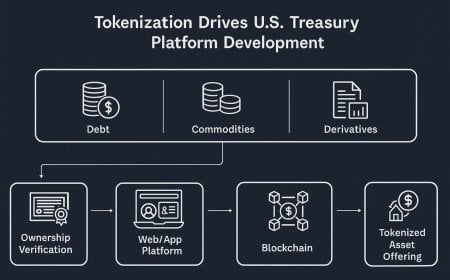
How DTCC’s Tokenization Architecture Works
DTCC’s model is intentionally conservative and designed to maintain systemic integrity.
1. Centralized Custody, Decentralized Representation
The underlying securities remain stored and settled inside DTCC’s conventional books. The blockchain representation is a synchronized digital mirror of the real asset.
2. Minting and Burning
When an institution requests tokenization of an asset:
- DTCC “locks” the underlying security in custody
- DTCC mints a corresponding digital token and sends it to the participant’s registered wallet
When the token is returned for settlement:
- DTCC burns the token
- DTCC updates its books to release the underlying security
3. Permissioned Blockchains, Registered Wallets
The system will operate on a limited set of approved chains and wallets, ensuring auditability, compliance, and regulatory visibility. This is not DeFi. It is regulated digital market infrastructure.
4. Interoperability Goals
Over time, DTCC aims to support atomic settlement, cross-venue collateral mobility, and programmable financial contracts through smart contracts — all while preserving regulatory compliance.
Timeline and Operational Phases
The No-Action Letter provides a structured, three-year testing window.
Phase 1 (2026): Infrastructure Deployment
- Wallet registration for institutional clients
- On-boarding approved blockchains
- Initial tokenization of low-risk instruments (e.g., select Treasuries and large-cap equities)
Phase 2 (2027–2028): Expanded Tokenization
- Broader equities coverage
- Corporate bond tokenization at scale
- Collateral mobility across digital and traditional venues
Phase 3 (End of Pilot): Evaluation and Permanent Rulemaking
- SEC reviews systemic impact, risks, failures, and benefits
- Possible transition to full operational status
Market and Regulatory Implications
1. Settlement Speed and Efficiency
Tokenized securities could enable near-real-time clearing and instantaneous collateral transfer — even though the underlying custody remains centralized.
2. 24/7 Liquidity
With tokenized assets trading on blockchain rails, markets could gradually shift away from the constraints of traditional trading hours.
3. Reduced Counterparty and Operational Risk
The blockchain layer provides synchronized, tamper-resistant transaction histories, reducing reconciliation burdens and lowering operational failure risk.
4. Regulatory Visibility and Control
Unlike retail crypto markets, the DTCC tokenization system is built with full regulatory integration from the start. Wallets are permissioned. Chains are permissioned. Data visibility is built-in. Compliance is structural.
5. A Bridge Between Traditional Finance and DeFi
While tightly controlled today, this architecture opens the door for future interoperability with decentralized applications — once regulators become comfortable with programmable settlement.
Pattern Nexus Lens
This approval is the most consequential step so far in the United States’ broader transition into the Tokenized Reserve Era — an era where financial assets, reserves, and even sovereign monetary instruments move across programmable, digital rails.
You cannot understand this event in isolation. The SEC, Treasury, and Federal Reserve have all signaled — through regulation, pilot programs, and international frameworks — that the next decade of financial infrastructure will be built around:
- 24/7 collateral mobility
- Digital settlement rails
- Tokenized reserves and securities
- Real-time regulatory visibility
- A globally competitive, programmable dollar system
DTCC is not jumping on a trend. It is implementing the architecture that will support the next century of U.S. financial dominance.
Second-Order Implications
Several downstream effects will emerge from this shift:
1. Treasury Market Reinvention
Tokenized Treasuries will accelerate the global shift toward digital dollar liquidity, potentially undermining offshore dollar substitutes and enhancing U.S. monetary reach.
2. ETF Market Transformation
Programmable ETFs with instant settlement and fractionalization at the wallet level open the door for a new era of retail and institutional access.
3. Corporate Debt Optimization
Bond tokenization will allow automated coupon distribution, real-time collateralization, and reduced friction in primary and secondary markets.
4. Geopolitical Competition
By modernizing its financial infrastructure first, the United States strengthens the long-term global position of the dollar against competing digital currencies emerging from China and BRICS-aligned states.
FAQ
Does this mean stocks will trade on public blockchains?
No. Only permissioned networks approved by regulators and DTCC will be used.
Is this the same as crypto token trading?
No. These tokens represent real, regulated securities with full legal guarantees and custodial backing.
Will settlement become instant?
Not immediately, but the infrastructure will allow settlement compression far beyond T+1.
Qual é a sua reação?
 Curtir
0
Curtir
0
 Não gostei
0
Não gostei
0
 Amor
0
Amor
0
 Engraçado
0
Engraçado
0
 Uau
0
Uau
0
 Triste
0
Triste
0
 Bravo
0
Bravo
0

Founder of Pattern Nexus. I research markets, macro, geopolitics, AI, history, ancient systems, and the patterns most people overlook. I’m also building Market Radar, a trading scanner designed to read pressure, risk, confirmation, and setup quality before chasing a move. Pattern Nexus is where I connect the dots between data, history, technology, and the bigger system playing out around us.










Comentários (0)