
Silver Cracks $90: Mint Repricing, Retail Limits, and the Physical Supply Shock
Silver didn’t just hit $90+—it hit the distribution layer. The U.S. Mint’s repricing warning, “Not Available” grids, authorized purchaser minimums, retailer purchase throttles, and CME margin controls reveal where the real stress lives: logistics, allocation, and control of the pipe.
![[HERO_IMAGE_ALT]](https://patternnexus.com/uploads/images/202601/image_870x_6968516d966f4.jpg)

Spot is a number. Physical is a pipe. When the pipe can’t reprice and restock at the speed of the number, “availability” becomes the signal.
The “shortage” most people experience is often a retail allocation event: limits, minimums, pulled listings, and widening premiums, not a global disappearance of silver atoms.
Control stack in one sentence: retailers throttle demand, the Mint reprices, and the exchange raises margins. Same move, three layers, three different brakes.
The Tape: $90 Was the Headline, $92 Was the Reality
If you were online today, you saw the same three phrases repeated a thousand different ways: “Silver broke $90.” “Silver is going to $100.” “Mints/dealers are out.”
The clean version is simple: Reuters reported spot silver breaking $90/oz for the first time on January 14, 2026, with the move tied to softer inflation data, rate-cut expectations, geopolitical tension, strong demand, and tightening inventories. The broader market tape put silver in the low $90s (and other coverage the same morning noted record prints around ~$92).
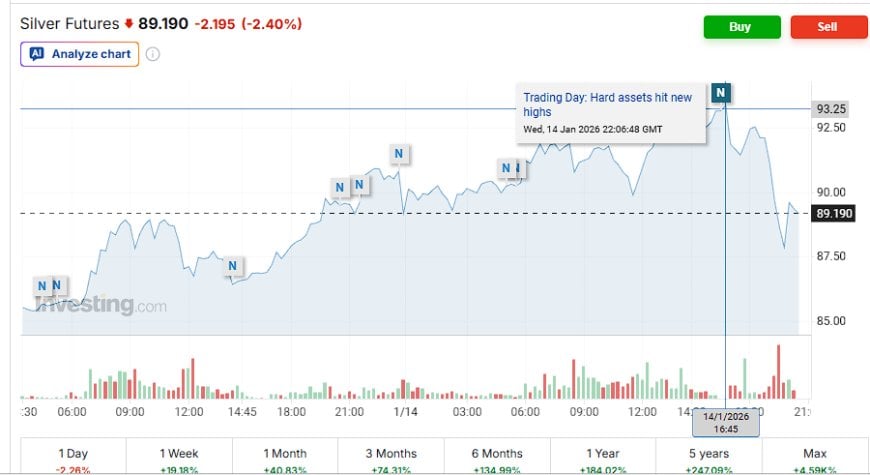
$90 is not “magic.” It’s a trigger point where pricing systems, inventory systems, and risk systems start flipping from “business as usual” to “slow down, update, ration.”
Why This Move Happened: Rates, Risk, and the Metal Complex
Today’s move wasn’t one thing. It was a stack.
First, the macro fuel: Reuters tied the surge to softer U.S. inflation data and the market pricing rate cuts, plus geopolitics and safe-haven demand. When rates are expected to fall, non-yielding assets (gold and silver) get mechanically more attractive, and the “store-of-value bid” tends to show up fast.
Second, the “metal complex” effect: silver didn’t move in isolation. Coverage today notes gold, silver, and even industrial metals catching a bid in the same fear/liquidity window.
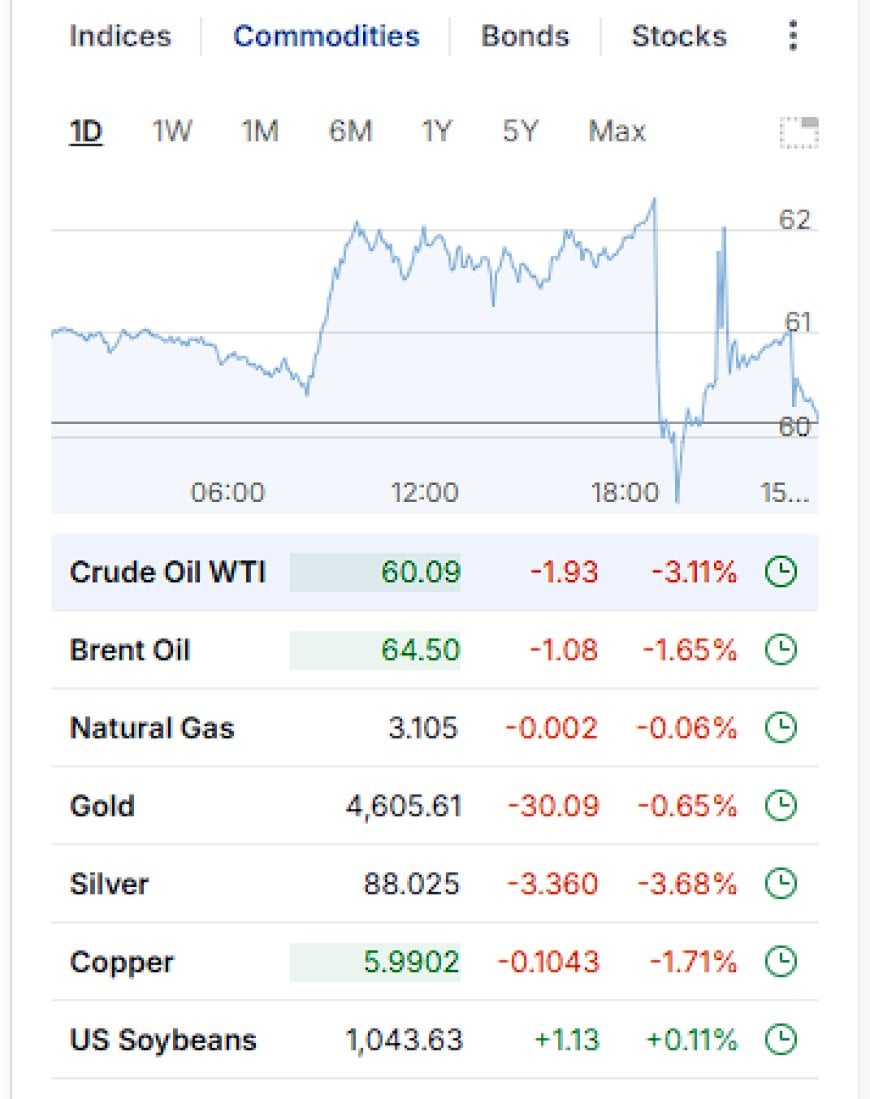
Silver is half monetary narrative and half industrial plumbing. That’s why it behaves like a “risk asset” and a “panic asset” in the same week. When the tape turns, it does not move politely.
And if you want a supply-side backdrop that matters for 2026: Reuters reported China naming export-eligible companies for silver (2026–2027) as part of a broader critical-minerals restriction posture. That doesn’t “explain today,” but it does explain why the market is hypersensitive to “tightness” headlines.
The Mint Layer: Repricing, “Not Available,” and the Bullion Reality
This is where the internet loses its mind, because people mix three different things into one sentence. So I’m going to separate them cleanly.
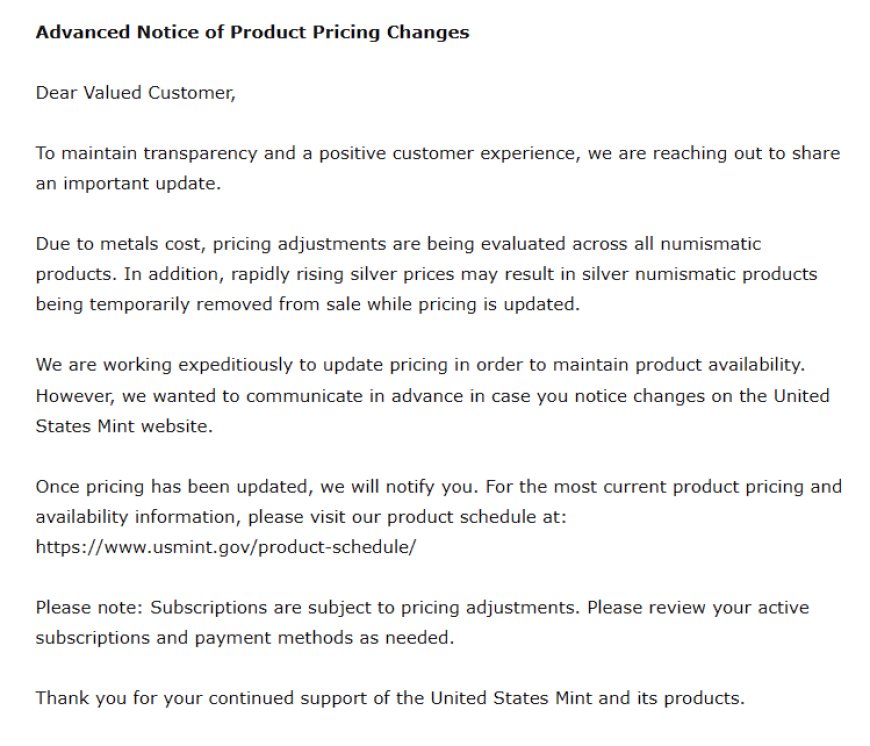
One: the U.S. Mint publicly signaled repricing stress. A customer notice (quoted by CoinNews) states pricing adjustments are being evaluated across all numismatic products, and rapidly rising silver prices may result in silver numismatic products being temporarily removed from sale while pricing is updated.
Two: the Mint’s own silver catalog shows a lot of “Not Available.” That’s not proof of apocalypse. It’s proof the Mint is not a 24/7 retail liquidity pool.
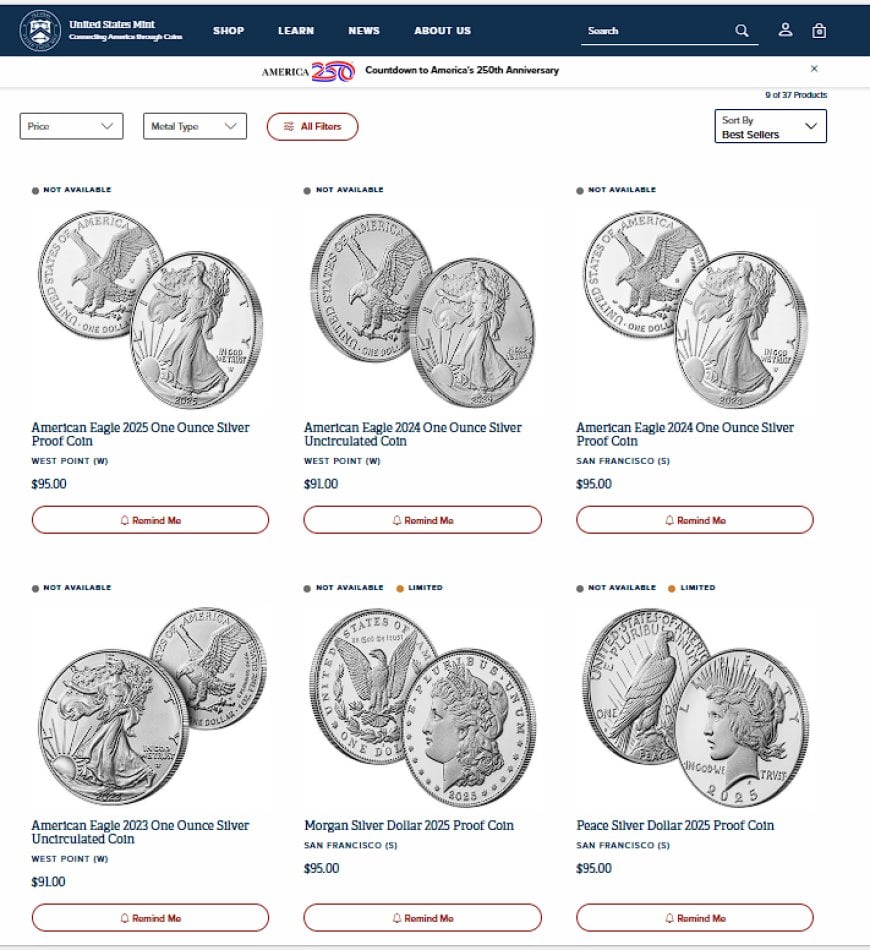
Three: bullion reality. The Mint does not sell bullion coins directly to the public; it distributes through Authorized Purchasers. And those Authorized Purchasers aren’t ordering “a few tubes.” The Mint’s own page lists the American Eagle silver bullion premium as LBMA Silver price + $3.05 per coin, with a minimum ordering requirement of 25,000 ounces.
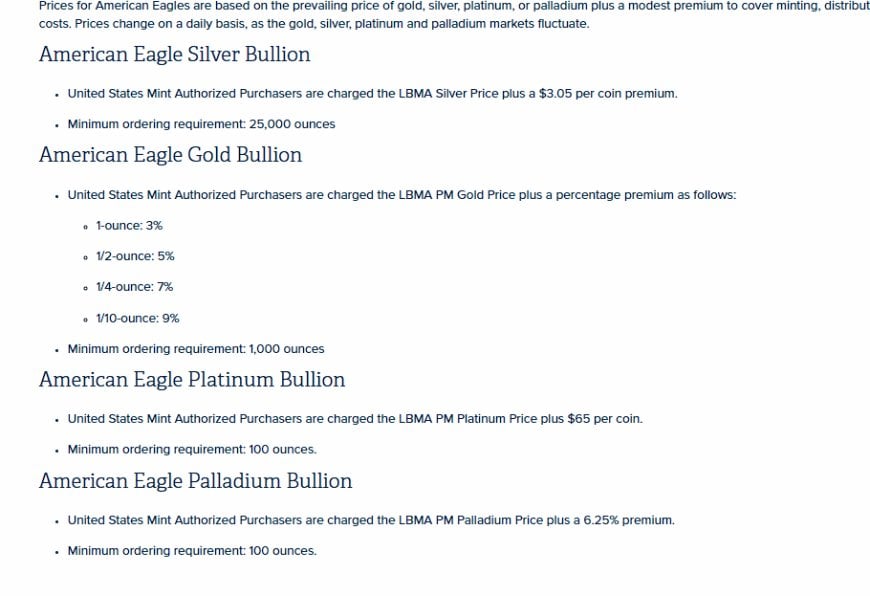
If someone tells you “the Mint stopped shipping silver,” your next question should be: “Which product, which program, and to whom?” Numismatic repricing is not the same thing as bullion distribution. And neither one is the same thing as a retailer being sold out.
Also, if you’re trying to interpret Mint status labels like a normal human: the Mint defines Back Order, Currently Unavailable, and Sold Out clearly in its FAQ.
Finally, the 2026 one-ounce Silver Proof Eagle is scheduled as an upcoming release (available February 26, 2026). That’s not “shipping stopped.” That’s “release schedule.”
Retail Is the Chokepoint: Limits, Lot Sizes, and “Minimum Orders”
Here’s what actually happens in a vertical tape: retail becomes the battlefield, because retail is where the crowd shows up.
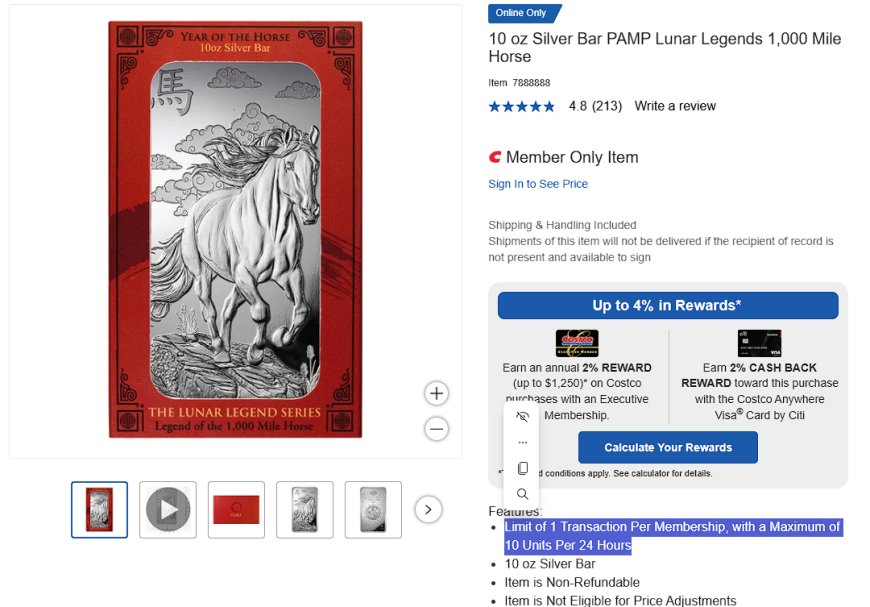
Costco is the cleanest example because the limits are literally printed on the page. On a 10 oz silver bar listing, Costco shows: “Limit of 1 Transaction Per Membership, with a Maximum of 10 Units Per 24 Hours.” That is a throttle. Not a rumor. Not a screenshot war. The text is right there.
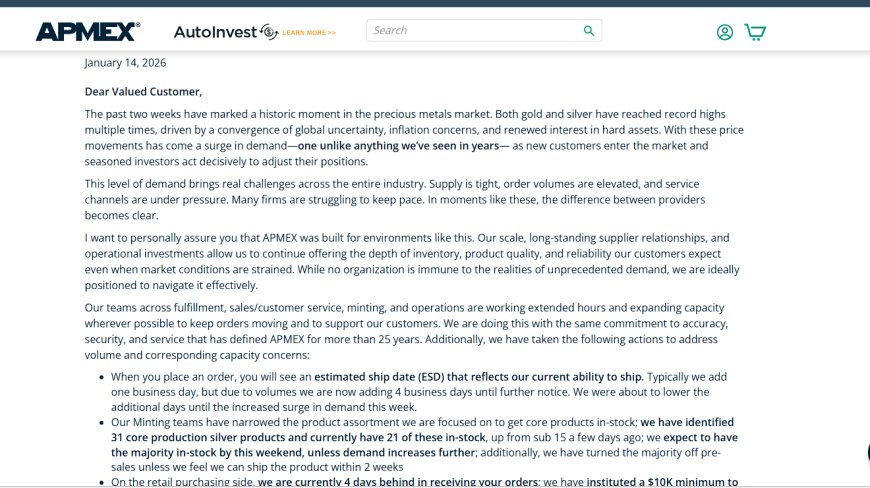
Now for the dealer side. This is where you start hearing “minimum orders,” “processing delays,” “no presales,” “allocation,” “we’re out,” all at the same time. The most important thing that hit the tape today is not speculation. It’s a primary-source statement from APMEX’s CEO dated January 14, 2026.
APMEX said they’re adding four business days to estimated ship dates due to volume, narrowing production to core silver products, turning off most presales unless they can ship within two weeks, and that they’re currently four days behind receiving orders. Then the line that tells you everything: “we have instituted a $10K minimum to help keep volumes down and improve service levels.”
Singles are chaos. Tubes and bars are control. When demand spikes, sellers often funnel inventory into bigger units because it slows the “vacuum effect,” reduces fulfillment complexity, and keeps the pipeline functional. That’s not a conspiracy. That’s rationing-by-format.
One more technical detail that matters: MINING.COM noted the market is showing signs of silver tightness, including commentary that the metal is in a “perpetual state of backwardation.” In plain English, that means the near-term price is staying elevated relative to later delivery months, which is consistent with scarcity and urgency in immediate supply.
Paper Layer Controls: CME Margins + A New 100-Ounce Contract
If retail is the crowd, futures is the leverage. When silver goes vertical, exchanges don’t “debate narratives.” They change the rules of engagement.
CME’s January 12, 2026 clearing advisory shows a shift: margins for gold/silver/platinum/palladium were moved to a percentage-of-notional framework. In that same document, COMEX 5000 Silver futures (SI) show a 9% requirement (with HRP higher). That’s the paper-layer brake pedal.
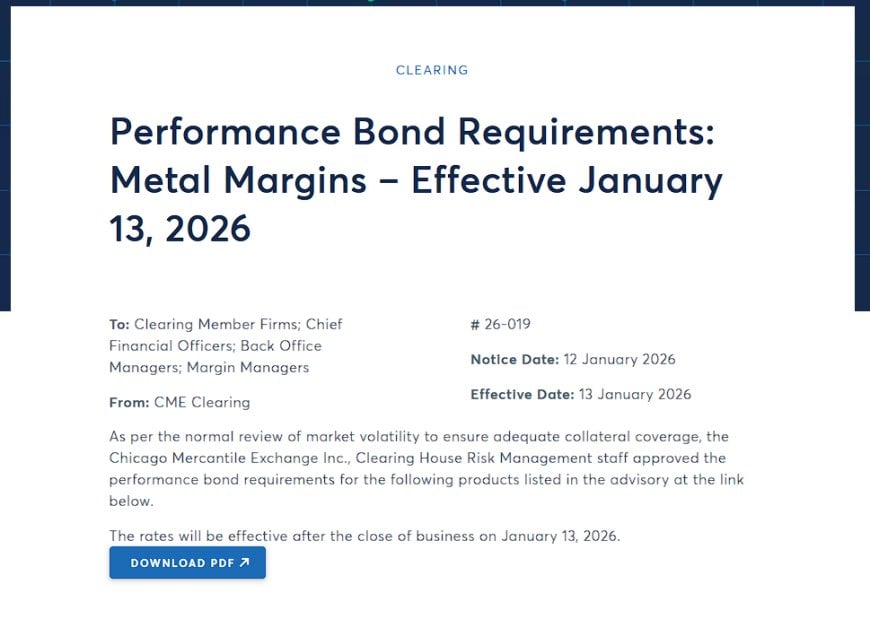
And while margins make it harder to swing size, CME is also doing something that looks contradictory until you understand the incentive: they’re launching a smaller silver contract to bring more participants in.
CME announced on January 13, 2026 it will launch a 100-ounce silver futures contract on February 9, 2026 (pending regulatory review), explicitly tying the move to record retail demand and broader interest in metals exposure.
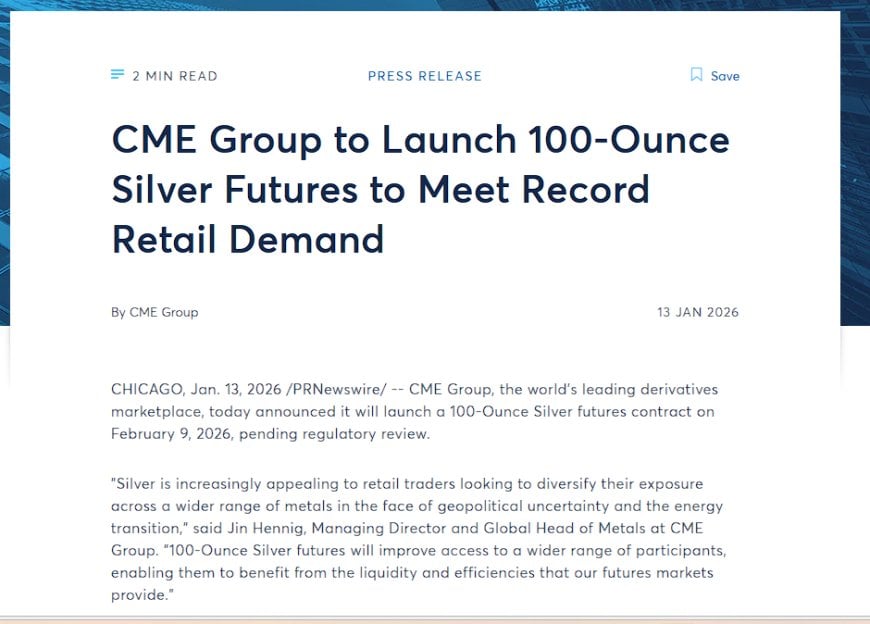
Higher margins reduce leverage during volatility. Smaller contracts increase access and participation. Same system, two levers, one outcome: keep the machine liquid while preventing blow-ups.
Pattern Nexus Lens
This is the Pattern Nexus point that matters: markets are not just prices. markets are permissions.
January 14, 2026 gave you a perfect cross-section of the stack:
- Price layer: silver prints $90+, the crowd sees a number.
- Mint layer: repricing warnings, temporary removal risk, “Not Available” grids.
- Retail layer: throttles and minimums show up as demand management.
- Exchange layer: margin is raised, rulebook adapts, a new contract is introduced.
If you want to understand “what silver is doing,” stop staring only at spot. Watch the throttles: minimum orders, purchase limits, pulled listings, delivery delays, backwardation, and margin changes. That’s where the truth leaks out.
FAQ
Did the U.S. Mint “halt all silver sales” on January 14, 2026?
The sourced/confirmable piece is the Mint’s repricing warning: rapidly rising silver prices may result in silver numismatic products being temporarily removed from sale while pricing is updated. Separately, the Mint’s catalog shows many items “Not Available.” “Halt all silver sales” is an overreach unless you’re specifying product category and program.
Why can’t I buy bullion Silver Eagles directly from the U.S. Mint?
Because the Mint doesn’t sell bullion directly to the public. It distributes through Authorized Purchasers, and the minimum order sizes are institutional scale (25,000 ounces for Silver Eagle bullion, per the Mint’s own page).
What does “backwardation” mean, and why do I care?
Backwardation is when near-term prices stay higher than later delivery months. You care because it’s consistent with “get the metal now” pressure and immediate tightness. MINING.COM reported commentary describing silver as being in a “perpetual state of backwardation.”
Why are retailers putting limits on silver?
Limits are a throttle: inventory risk control, bot control, and allocation control. Costco’s listing language is explicit (1 transaction per membership, max 10 units per 24 hours on a 10 oz silver bar listing). Dealers can do the same thing via minimum orders (APMEX instituted a $10K minimum on Jan 14, 2026 to keep volumes down and improve service).
Why did CME raise margins, and what does that do?
CME margins are a volatility shock absorber. CME’s January 12, 2026 clearing advisory shows the shift to percentage-of-notional margins and lists COMEX 5000 silver (SI) at 9% (HRP higher). Higher margins make leveraged trading more expensive, which can slow speculative churn without stopping the underlying move.
Why is CME launching a 100-ounce silver futures contract at the same time?
Because volatility and accessibility are two different problems. CME announced a 100-ounce silver futures contract launching February 9, 2026 (pending regulatory review), explicitly tied to record retail demand and broader interest in metals exposure.
Sources
These sources support the Jan 14, 2026 price action, macro drivers, mint repricing language, bullion distribution structure, retail throttles/minimums, and exchange-level margin and contract changes.
- Reuters (Jan 14, 2026): Spot silver breaks through $90
- Reuters (Jan 14, 2026): CPI/rate-cut expectations + geopolitics driving metals
- MINING.COM (Jan 14, 2026): Silver ~$92, tightness, backwardation commentary
- CoinNews (Jan 12, 2026): Mint customer notice on repricing and temporary removal
- U.S. Mint: Silver Coins catalog (availability snapshots)
- U.S. Mint FAQ: Back Order vs Currently Unavailable vs Sold Out
- U.S. Mint: 2026 Silver Proof Eagle schedule (Feb 26, 2026)
- U.S. Mint: Authorized Purchasers (LBMA + $3.05, 25,000-oz minimum)
- U.S. Mint: Bullion Coins (not sold direct to public)
- Costco: 10 oz silver bar listing showing purchase limits
- APMEX (Jan 14, 2026): CEO letter on demand, delays, and $10K minimum
- CME Clearing (Jan 12, 2026): Performance bond changes, % of notional, COMEX silver listed at 9%
- CME Group (Jan 13, 2026): 100-ounce silver futures launching Feb 9
- Reuters (Dec 30, 2025): China export licensing posture for silver (2026–2027)
Kakva je vaša reakcija?
 Sviđa mi se
0
Sviđa mi se
0
 Dislike
0
Dislike
0
 Ljubav
0
Ljubav
0
 Smešno
0
Smešno
0
 Vau
0
Vau
0
 Žalostan
0
Žalostan
0
 Besan
0
Besan
0

Founder of Pattern Nexus. I research markets, macro, geopolitics, AI, history, ancient systems, and the patterns most people overlook. I’m also building Market Radar, a trading scanner designed to read pressure, risk, confirmation, and setup quality before chasing a move. Pattern Nexus is where I connect the dots between data, history, technology, and the bigger system playing out around us.


















Komentari (0)