
October 2025: Housing, Wealth & the Interest Rate Reversal
Housing Affordability and Wealth Trends – October 2025, An in-depth look at how falling interest rates, easing inflation, and a shifting rental market are impacting real estate and wealth distribution in October 2025.
October 2025: Macroeconomic Signals Reshaping Real Estate and Wealth
The fall of 2025 finds the real estate landscape at a pivotal moment. Key macroeconomic signals — from shifting interest rates and inflation trends to housing supply dynamics and investor sentiment — are converging to redefine wealth and property markets. After several tumultuous years of rapid rate hikes and surging inflation, the winds appear to be changing. This article examines how these macro forces are influencing housing affordability, investment behavior, and the broader real estate outlook as of October 2025.
Interest Rates Pivot and Inflation Eases
Monetary policy at a turning point: The Federal Reserve is signaling a transition from its aggressive tightening cycle toward easing. In late October 2025, economists widely expect the Fed to cut its benchmark interest rate by another 0.25%, following a similar cut last month. This would bring the federal funds rate down into the high-3% to 4%, a notable step back from the 5%+ levels that prevailed during the peak of the inflation fight. Financial markets have largely priced in these moves, reflecting hopes that the era of “higher for longer” rates is waning.
Balancing inflation and growth: Inflation, while still above the Fed’s 2% target, has moderated significantly from the post-pandemic highs. Consumer price increases hover around the 3% year-over-year mark as of early fall 2025. This is a far cry from the 8–9% inflation rates seen in mid-2022. Easing price pressures, combined with signs of a cooling labor market, have prompted Fed officials to prioritize economic growth and employment stability. A recent government shutdown delayed some official data releases, adding uncertainty, but private indicators suggest the job market is softening without collapsing. The Fed’s delicate stance — acknowledging lingering inflation risk while guarding against a sharper slowdown — has set the stage for the current rate-cutting bias.
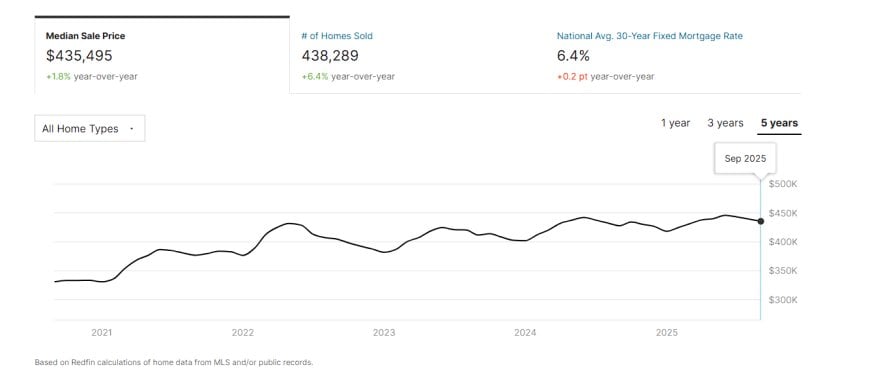
Borrowing costs finally retreat: The impact of this monetary pivot is being felt in borrowing costs across the board. Long-term bond yields have pulled back from their highs, and critically, mortgage rates have begun to ease. After reaching levels above 7% last year, the average 30-year fixed mortgage rate dipped to around 6.2–6.3%% in September and early October 2025. That marks the lowest mortgage level in roughly a year and offers a measure of relief to prospective homebuyers. While rates above 6% are still historically elevated, the direction of change is downward — a welcome development for the interest-sensitive housing sector. Every fraction of a percentage point drop in mortgage rates slightly bolsters buyers’ purchasing power and eases monthly payment burdens.
Investor response and asset impacts: The shift in rate expectations has also reverberated through financial markets. Stocks, which endured volatility under higher rates, have rallied in anticipation of looser policy — the S&P 500 is up over 15% year-to-date, though housing-related equities lag behind that benchmark. Bond prices have stabilized as yields came off recent peaks. Real estate, often seen as a classic inflation hedge, held its value relatively well during the inflation surge, and now stands to benefit from a gentler rate environment. However, analysts caution that the full benefits for housing demand may not materialize until mortgage rates approach the mid-5% range; according to industry economists, only a drop back near 5% would “meaningfully revive” homebuyer activity and entice more sellers into the market. For now, the macro trajectory — ebbing inflation and a likely plateauing of interest rates — is injecting cautious optimism into what had been a very tight and costly real estate financing climate.
Housing Affordability Stretched, but Past the Worst
Home prices vs. incomes at record highs: Housing affordability has been front and center in 2025, after interest rate shocks and pandemic-era price surges pushed homeownership out of reach for many. By 2024, the U.S. median single-family home price had rocketed to about 5 times the median household income, nearly matching the highest price-to-income multiples on record. (For context, this ratio was only ~4.1 in 2019 and around 3.2 in the 1990s.) In some expensive coastal markets, the figures are staggering: prices in San Jose, CA have exceeded 12× the local median income, with Los Angeles around 11× and New York over 7×. Such extremes underscore the severe affordability challenges that built up in recent years. Rapid home-price appreciation (nearly +50% nationally from 2019–2024) far outran income growth (+22% in that period), leaving even middle-income families struggling to buy in many cities.
Mortgage burden and recent improvements: The combination of lofty prices and 7% mortgage rates in 2022–2023 produced a historic squeeze on homebuyers. At one point in late 2023, the monthly principal-and-interest payment on an average-priced home devoured about 35% of median household income — well above the traditional ~25% affordability benchmark. Now, thanks to the recent pullback in rates, affordability has inched back from that cliff. As of fall 2025, a typical mortgage payment amounts to roughly 30% of median income. That is the best (lowest) affordability metric in roughly two and a half years. It’s a notable decline from last year’s extremes (and down from the 32%+ levels seen over the summer), though still higher than the long-term norm. In effect, housing has shifted from “virtually unattainable” in many markets to merely “highly expensive.” Any sustained relief for homebuyers will likely require both further interest rate declines and a leveling off in home prices. On the positive side, a dozen or more Midwestern metros where home prices are more modest have now returned to near-normal affordability levels, indicating that not all markets are equally strained.
Regional disparities and locked-in sellers: Affordability in 2025 depends enormously on location. In relatively affordable metros — often in the Midwest or parts of the South — home prices and incomes are more in balance, and indeed some of these areas are seeing buyer activity pick up. In contrast, the gap remains extreme in many coastal cities and tech-driven markets (for example, Los Angeles’ median home still commands over 60% of a typical family’s income in mortgage payments. One major factor keeping prices elevated is the chronic housing supply shortage. Many existing homeowners refinanced into ultra-low 2–3% mortgage rates in 2020–2021 and are essentially “locked in” to their current homes; they’re loath to sell and give up cheap loans, which means fewer homes are being listed for sale. This has kept inventory of homes on the market extraordinarily low. Even now, total listings nationwide remain about 17–19% below the 2017–2019 pre-pandemic norm. This entrenched shortage of sellable homes has propped up prices, offsetting what affordability gains lower rates might have provided. In effect, many would-be move-up sellers have become “frozen” in place, which continues to constrain options for first-time buyers.
A Cooling Market Helps Buyers – to a Point
Buyers regain some bargaining power: The tide is turning subtly in favor of homebuyers compared to the frenzied seller’s market of the pandemic years. With mortgage costs high and economic uncertainty lingering, demand is subdued and homes are sitting on the market longer. Multiple metrics from this fall indicate less competitive heat in the housing market: only about 1 in 4 homes sold above their list price in September 2025, the lowest share for any September since 2019. The average sale-to-list price ratio has dipped below 99%, meaning the typical home is now selling for slightly under asking. Properties are taking a median of 50 days to sell, the slowest pace for early autumn in roughly seven years. According to Redfin data, there are currently around 36% more active sellers than buyers in the market — a near-record imbalance that gives buyers more leverage to negotiate on price and contingencies. Many house hunters, aware of their strengthened position, are making aggressive offers or asking for seller concessions (closing cost help, repair credits, etc.). In short, after years of frantic bidding wars, the playing field is leveling out.
Prices plateau but don’t plummet: Importantly, this cooling in market activity has not led to outright price declines nationally — at least not yet. In fact, median home prices have proven resilient. September’s median sale price was up roughly 1–2% year-over-year, reaching about $435,000 and marking a record high for that month. In many regions, sellers have been willing to wait longer rather than slash prices dramatically. Some would-be sellers are even choosing to rent out their properties instead of selling into a weak market, which helps keep supply tight. The modest price gains indicate a kind of uneasy plateau: while buyer competition has waned, the lack of inventory provides a floor under prices. Power is shifting toward buyers in negotiations, but homeowners are generally not desperate. The result is that home values have largely stalled at a high plateau instead of collapsing. Only in a few overheated markets (for instance, parts of Texas) are prices slightly down from a year ago, while others (Midwestern cities like Milwaukee and Detroit) still see solid annual price growth. This divergence reflects local supply-demand variations. Overall, the market appears to be seeking a new equilibrium: buyers are cautious and price-sensitive, yet sellers are buttressed by low inventory and still-strong nominal prices. Housing economists describe it as a stalemate that could persist until a bigger catalyst — such as a substantial mortgage rate drop or a broader economic shift — tilts the balance decisively.
New home builders adapt and benefit: One segment seeing a nuanced shift is the homebuilding industry. Homebuilders have been filling some of the inventory void left by reluctant existing owners. Throughout 2025, builders sold a higher share of homes than usual, as buyers unable to find suitable existing homes turned to new construction. Builder sentiment, which had been gloomy over the summer, improved markedly in October. The National Association of Home Builders’ confidence index jumped five points to 37 (on a 0–100 scale) this month, its highest reading since spring. While an index level below 50 still denotes more builders seeing conditions as poor than good, the rise suggests pessimism is ebbing. Builders reported better foot traffic from buyers and a notably brighter outlook for the next six months – the forward-looking sales expectations component of the index even moved into positive territory above 50. Lower mortgage rate quotes (down to the mid-6% range) have been “an encouraging sign for affordability,” noted the NAHB chairman, though he cautioned that most buyers remain on the sidelines awaiting bigger rate declines. To maintain sales, many builders are still offering incentives: roughly 38% of builders cut home prices in October (averaging a 6% reduction), and about two-thirds are throwing in perks like mortgage rate buydowns or free upgrades. These sweeteners are helping move inventory, but they also underline that the new-home market is still challenging. On the upside, builder stocks have enjoyed a relief rally recently. After sliding earlier in the year, major homebuilder equity indices rebounded by over 3% in mid-October as Treasury yields fell. Even so, year-to-date these homebuilder stocks have underperformed the broader market, reflecting lingering investor caution. Wall Street appears to be betting that the worst is over for housing, but also that a true rebound may await even lower interest rates. In sum, builders are navigating the cross-currents with guarded optimism – and they stand ready to ramp up construction if conditions further improve in 2026.
Relief in the Rental Market
Rents finally cool off: For the first time in several years, renters across the U.S. are catching a bit of a break. The relentless rent increases that characterized 2021–2024 have largely subsided by fall 2025. Nationally, rent growth for apartments has decelerated to roughly 1–2% year-on-year– in fact, annual rent inflation (around +1.7% in September) is at its lowest level since early 2021. Many large rental markets are seeing a outright flattening or modest decline in rents. Abundant new supply is a big reason why. The country has been in the midst of an apartment construction boom: 2024 saw more multifamily units completed than any year in the past 50 years. Now those new buildings are coming online and easing the pressure on the rental stock. In cities that built aggressively, vacancies are ticking up and landlords are competing for tenants. As a result, rent prices are even falling in several once-hot Sun Belt locales (annual rents down nearly 5% in Austin and 3–4% in Denver and Phoenix):. This represents a remarkable turnaround from just a couple years ago, when double-digit rent hikes were commonplace in those boomtowns.
Concessions and affordability gains: Alongside slower rent growth, landlord behavior has shifted in favor of tenants. Rental concessions have hit record highs – more than 37% of listings now advertise incentives like a free month or reduced deposit, up from only about 14% of rentals offering freebies in 2019. In many metro areas, it’s become standard for large apartment complexes to dangle move-in specials to fill units. These perks effectively lower the cost for renters and signal that property owners are feeling some pressure to keep occupancy up. Thanks to moderating rents and rising wages, rental affordability is marginally improving. The typical U.S. tenant household now spends around 28.4% of its income on rent, slightly less than a year ago and below the standard 30% affordability threshold. While this change is modest, it is the first meaningful improvement in renter budgets in about four years. Renters in 38 of the 50 largest metros saw their rent-to-income ratio fall over the past year. Still, these gains vary widely by location. Some high-cost, supply-constrained cities (for example, New York and San Francisco) are actually seeing rents continue to rise by 5%+ annually because demand remains strong and building new units is difficult. Meanwhile, markets that added a glut of new apartments are experiencing the greatest relief. Overall, the U.S. rental market’s fever has broken — a welcome development for the roughly one-third of Americans who rent their homes.
What’s next for rentals: Industry analysts predict that the rental cooldown will persist into 2026. Apartment vacancy rates, now at their highest level in years (hovering around 7% nationally), may climb further as more projects finish construction. This winter, landlords are expected to continue boosting concessions and could even resort to outright rent cuts in some oversupplied locales when demand is seasonally weakest. The takeaway is that after an acute affordability crisis, renters are finally gaining leverage. However, the degree of relief will remain highly local. The underlying lesson of 2025’s rental market is that adding supply works: cities that rapidly built housing have managed to temper price growth, whereas those that didn’t are still grappling with expensive rents. From a wealth perspective, the cooling rental environment has mixed implications. It may slightly ease inflation (since rent is a major component of price indexes) and give consumer spending a boost as tenants devote less of their paycheck to rent. On the other hand, real estate investors in the multifamily sector could see slower income growth. But so far, higher vacancies and plateauing rents have not caused alarm; in fact, many institutional investors remain bullish on apartments as a long-term bet, especially with homeownership so unattainable for young households. The rental market’s breather in late 2025 underscores the broader theme: the U.S. housing system is adjusting, unevenly, to the new economic reality.
Commercial Real Estate Outlook: Cautious Optimism
Sentiment on the rise: Commercial real estate (CRE) — encompassing office buildings, shopping centers, warehouses, apartments and more — has weathered a challenging period over the past two years. The good news is that industry sentiment is finally perking up as 2025 winds down. A prominent index of commercial real estate executives’ outlook jumped into positive territory for the first time since before the pandemic. The NAIOP CRE Sentiment Index, released in October, climbed to 56 (above 50 indicates expectations of improving conditions). This represents a notable rebound from the dim outlook earlier in the year. Developers, owners, and investors surveyed expressed greater optimism that the next 12 months will bring better conditions in capital markets and property fundamentals. One key driver is the anticipation of lower interest rates: cheaper financing would alleviate some of the pain from the past years’ rate spike. Survey respondents also reported less concern about runaway construction costs, as materials prices have stabilized. In short, the commercial real estate community senses that the worst of the tightening cycle is over, and that a gentle recovery could be in store.
Uneven sector performance: That optimism, however, is very bifurcated across property types. The darlings of commercial real estate remain industrial facilities and multifamily rental housing — sectors that proved resilient through the pandemic and continue to enjoy solid demand. Indeed, investors say they plan the most acquisitions in warehouses and apartment buildings in the coming year. By contrast, the office sector is still grappling with a structural downturn. Remote and hybrid work patterns have left offices half-empty in many cities, pushing the U.S. office vacancy rate to roughly 19%
Challenges and opportunities: Despite the brighter mood, commercial real estate faces headwinds. A looming “wall” of debt maturities — estimated around $1.5 trillion of CRE loans coming due by the end of 2025 — is putting pressure especially on owners of older offices and hotels. Refinancing these loans has become more difficult and costly, and some high-profile office buildings in major cities have already defaulted or sold at a loss this year. Regulators and banks are closely watching this sector due to regional banks’ exposure to commercial mortgages. However, the anticipated Fed rate cuts could materially help here by improving refinancing terms and liquidity. In the meantime, many commercial landlords are restructuring loans or bringing in new equity to weather the storm. On the upside, well-capitalized investors see 2025–2026 as an attractive time to deploy funds into commercial properties at discounted prices. Private equity firms and opportunity funds are actively hunting for bargains in distressed office and hotel markets, hoping to ride the recovery in later years. In segments like logistics warehouses, rental growth is still strong thanks to e-commerce, and modern distribution facilities remain in short supply in key hubs. Overall, the CRE outlook for 2026 is guardedly optimistic: most players expect a gentle recovery as the economy stays on a moderate growth path. The era of free-flowing money and ultra-low cap rates is over, but for those who navigated the downturn, the coming environment of lower rates and stabilizing vacancies could mark the beginning of a new cycle.
Wealth and Real Estate: Navigating the Cross-Currents
Portfolio implications: The macro shifts of late 2025 carry significant implications for wealth management and real estate as an asset class. High interest rates over the past two years reshuffled many investors’ portfolios — suddenly cash and bonds offered appealing yields, making them competitive with real estate for the first time in over a decade. Now, as rates start to fall, the relative calculus is changing again. Real estate is poised to regain some allure for investors who had sat on the sidelines. Already, REITs (real estate investment trusts) and real estate equities have bounced up from mid-year lows, anticipating easier financing conditions. Real estate remains a fundamental pillar of wealth for households: homeowners collectively saw their housing equity hold strong (or even increase modestly) through the inflationary spike, thanks to robust home values. For those owners, houses continued to function as a hedge against inflation and a store of value. However, younger and would-be homeowners found themselves unable to participate in that wealth generation due to high barriers to entry. The result is a widening divide — those who owned property pre-2022 locked in both low rates and price gains, while newcomers face high costs and now, stricter credit standards (the average credit score on new mortgages hit a record high, reflecting how only the most qualified buyers are succeeding. Going forward, any improvement in affordability will dictate how broadly real estate wealth can be shared by new entrants.
Sentiment and strategy: As of October 2025, sentiment around real estate as an investment is improving but remains measured. Surveys show that a large majority of consumers still feel it’s a “bad time to buy a house,” citing high prices and interest costs. That prevailing wariness could start to ebb if mortgage rates continue inching downward and if home prices stay flat or soften. For investors, the strategy is increasingly selective. Many are favoring real estate sectors and geographies with strong fundamental demand (for example, Sun Belt industrial parks or affordable suburban housing developments) and avoiding areas with structural challenges (like obsolete urban office towers). There is also a growing emphasis on income generation — rental yields and cash flow — to compensate for any short-term value fluctuations. In an environment where the stock market has been robust and bond yields are still decent, real estate must earn its place via steady income and long-term appreciation potential. On that front, the current high rental occupancy in residential and the record-low homeownership affordability might actually spur more rental demand, benefiting landlords and multifamily investors. At the same time, if the Fed’s policy easing successfully engineers a “soft landing” (taming inflation without a deep recession), real estate could emerge as a prime beneficiary in 2026: easier credit, renewed buyer confidence, and sustained economic growth would create a fertile backdrop for property markets to gain momentum again.
The road ahead: The macroeconomic signals in late 2025 suggest that change is afoot, but also that patience is required. Interest rate trends are finally turning friendlier for real estate, yet the adjustment process is gradual. Inflation is down from its peak, though not fully vanquished. Housing supply remains a long-term concern, even as short-term inventory and construction cycles fluctuate. Investor sentiment is improving in some corners but is hardly exuberant. In essence, the stage is being set for a potential inflection point: Real estate has held its ground through the storm of inflation and rate hikes, and now a period of stabilization and modest recovery could be on the horizon. Savvy observers note that the U.S. housing market today is very different from the mid-2000s bubble era — homeowners have more equity and less risky debt, and there’s an acute housing shortage rather than an oversupply. Those factors should help underpin values. For current homeowners, the challenge is managing their existing wealth (with many choosing to remodel or invest in their properties since moving is difficult). For prospective buyers, it’s a waiting game for conditions to improve. And for investors, it’s about identifying which real estate segments will thrive in the new cycle. The final quarter of 2025 will be an important watch period: the Federal Reserve’s next moves, the trajectory of inflation, and the resilience of the economy will all influence whether real estate in 2026 experiences a gentle lift-off or faces more choppy waters. In either scenario, staying informed and adaptable will be key — as the pattern nexus of macroeconomics and real estate continues to evolve.
Vad är din reaktion?
 Gilla
0
Gilla
0
 Ogilla
0
Ogilla
0
 Kärlek
0
Kärlek
0
 Rolig
0
Rolig
0
 Wow
0
Wow
0
 Ledsen
0
Ledsen
0
 Arg
0
Arg
0

Founder of Pattern Nexus. I research markets, macro, geopolitics, AI, history, ancient systems, and the patterns most people overlook. I’m also building Market Radar, a trading scanner designed to read pressure, risk, confirmation, and setup quality before chasing a move. Pattern Nexus is where I connect the dots between data, history, technology, and the bigger system playing out around us.

















Kommentarer (0)