
Venezuela Dock Strike: A Likely CIA Operation and the Cost of Breaking Deniability
Conflicting reports about a U.S. strike on a Venezuelan dock point to a likely CIA-led deniable operation. Trump’s public acknowledgment may have disrupted escalation control and strategic ambiguity.
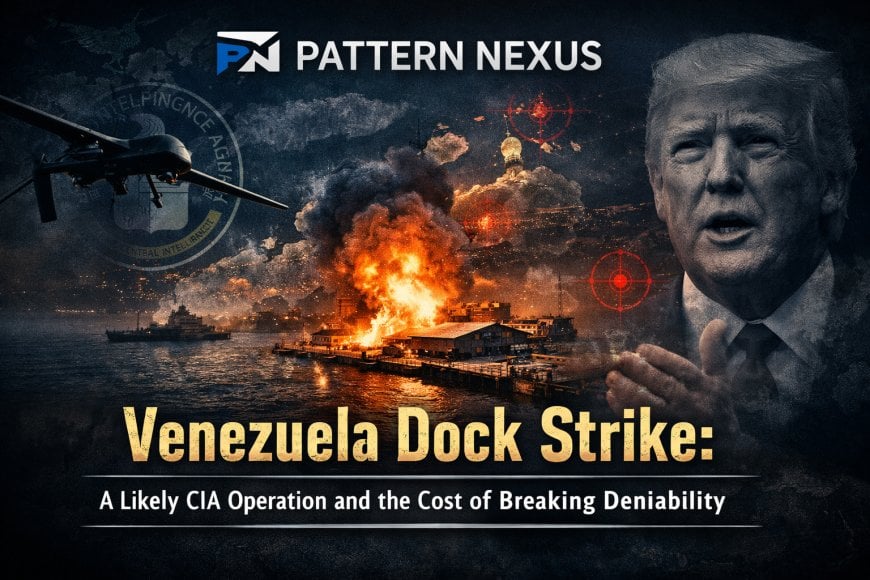
Trump publicly claimed the U.S. “hit” a dock facility in Venezuela tied to drug-boat logistics. Reporting points to a likely deniable, intelligence-led strike. The real story is what happens when deniability collapses: escalation pressure, attribution chaos, and a Venezuela–Caribbean control layer repricing in real time.
Snapshot

What Trump Said (Exact Language Matters)
Trump’s phrasing is the fulcrum of the entire story, because it converts a deniable operation into a declared act without the normal scaffolding of attribution, legal authority messaging, or escalation management.
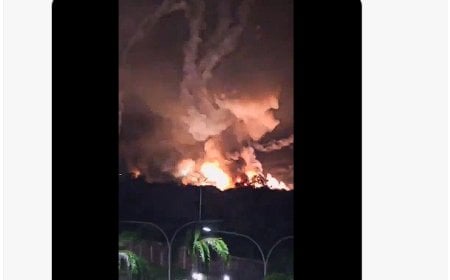
“There was a major explosion in the dock area where they load the boats up with drugs.”
“We hit … the area… And that is no longer around.”
The Verification Gap and Why Reporting Diverges
The reason you are seeing “all kinds of varying reporting” is straightforward: a presidential claim landed in the public domain before the system that normally stabilizes facts kicked in. No formal after-action statement. No photographic confirmation. No named agency. No on-record Venezuelan acknowledgment.
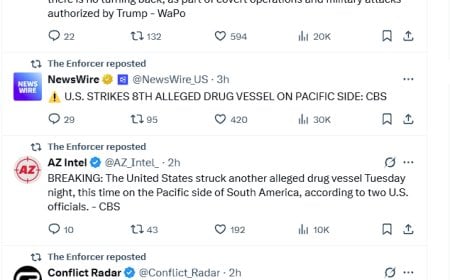
Reuters noted that U.S. officials did not confirm the incident and that speculation emerged around an industrial incident in Zulia state, which the company involved denied was linked to Trump’s remarks. That is exactly how attribution collapses in the wild: a real explosion becomes “evidence” for an unverified strike story.
What Likely Happened
Based on the structure of the reporting and the incentive profile of the operation described, the highest-probability scenario is an intelligence-led, precision strike on a coastal logistics node used for narcotics loading operations. CNN-style sourcing framed it as intelligence-directed and drone-enabled rather than a conventional, publicly owned military action.
Why Deniability Was the Strategy
Deniability is not about secrecy for secrecy’s sake. It is an escalation-control tool. It creates an off-ramp for the target: “ignore it, absorb it, do not respond.” It also creates an off-ramp for the initiator: “we are not declaring a new war threshold.”
The three pillars deniable action protects
- Escalation control: The target can avoid a forced response cycle.
- Legal insulation: The action stays inside a gray zone with fewer public commitments.
- Narrative leverage: The target risks revealing illicit infrastructure if it complains.
Trump’s public acknowledgment compromises all three. It narrows the target’s ability to stay quiet, invites legal and political scrutiny, and converts a gray-zone pressure tool into a declared talking point.
The Venezuela–Caribbean Framework
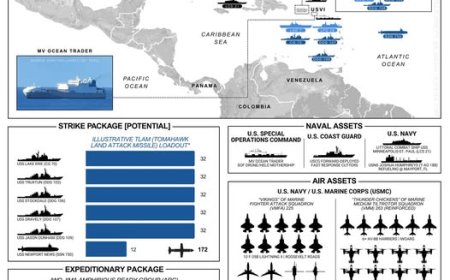
This strike narrative sits inside a broader Venezuela–Caribbean pressure architecture. Pattern Nexus does not view this as an isolated “drug story.” We view it as a basin-level control system designed to regulate flows.
Under this framework, the dock strike is a micro-adjustment: a selective strike on infrastructure that supports flows. The disclosure is the macro-risk: it pressures the whole basin posture by reducing ambiguity.
Pattern Nexus Lens
FHQ: Framework Hypothesis Quadrant
Base Case (Highest Probability)
A deniable, intelligence-led strike hit a remote dock/loading node tied to narcotics logistics. The operation was designed to remain unattributed; public confirmation was not part of the plan.
Alternate Case
Joint intelligence–military execution occurred, but message discipline fractured due to internal politics, creating a partial-attribution environment with no formal confirmation.
Low Probability
No land strike occurred; Trump conflated maritime interdictions and broader pressure actions into a single “dock strike” narrative. This weakens if additional independent confirmation emerges.
Tail Risk
The deniability breach forces a response cycle: asymmetric retaliation, basin-level escalation, or accelerated enforcement posture that begins to resemble blockade dynamics.
What to Watch Next
Signals that would confirm the strike beyond rhetoric
- Commercial satellite imagery showing fresh dock damage consistent with a precision strike.
- A SOUTHCOM or DoD statement acknowledging “operations” that implicitly include land-based nodes.
- Venezuelan statements that reference a specific coastal location rather than generic denunciations.
- Credible geolocated video accepted by major outlets (not recycled industrial footage).
Signals that escalation risk is rising
- Caribbean NOTAMs and maritime advisories expanding in scope or frequency.
- Operational language shifting from “interdiction” to “quarantine,” “exclusion,” or “blockade-adjacent” semantics.
- New pressure applied to Venezuela-linked flows: oil cargo interdiction patterns, port insurance repricing, or shipping reroutes.
- Evidence of retaliatory asymmetric actions (cyber, proxies, or maritime harassment).
Bottom Line
The public-facing debate is “did the strike happen?” The structural question is “what happens when deniable pressure is publicly claimed?”
If the strike was intelligence-led, then the ambiguity was the strategy. Trump’s language narrowed the off-ramps, increased the incentive for attribution theater, and forced the Venezuela–Caribbean pressure architecture closer to a declared escalation ladder.
Sources
Official reporting is quoted above and attributed by outlet. Links provided here for reference.
- Reuters — U.S., Venezuelan officials mum after Trump mentions action against drug-boat facility (Dec 29, 2025)
- Associated Press — Trump says the U.S. “hit” a facility along shore where alleged drug boats “load up” (Dec 29, 2025)
- PBS NewsHour — AP wire version of the report (Dec 29, 2025)
- Washington Post — Trump claims U.S. destroyed Venezuelan dock used by drug traffickers (Dec 29, 2025)
- The Guardian — Trump claims U.S. struck a “big facility” in Venezuela without offering details (Dec 29, 2025)
Ni Nini Jibu Lako?
 Penda
0
Penda
0
 Chukia
0
Chukia
0
 Upendo
0
Upendo
0
 Picha za kuchekesha
0
Picha za kuchekesha
0
 Poa
0
Poa
0
 Huzuni
0
Huzuni
0
 Hasira
0
Hasira
0

Founder of Pattern Nexus. I research markets, macro, geopolitics, AI, history, ancient systems, and the patterns most people overlook. I’m also building Market Radar, a trading scanner designed to read pressure, risk, confirmation, and setup quality before chasing a move. Pattern Nexus is where I connect the dots between data, history, technology, and the bigger system playing out around us.








Maoni (0)