
The Powell Subpoena and the Liquidity Regime Transition
A subpoena against Powell over his Senate testimony signals institutional pressure toward rate suppression and liquidity convergence between Treasury, Fed, and industrial policy.
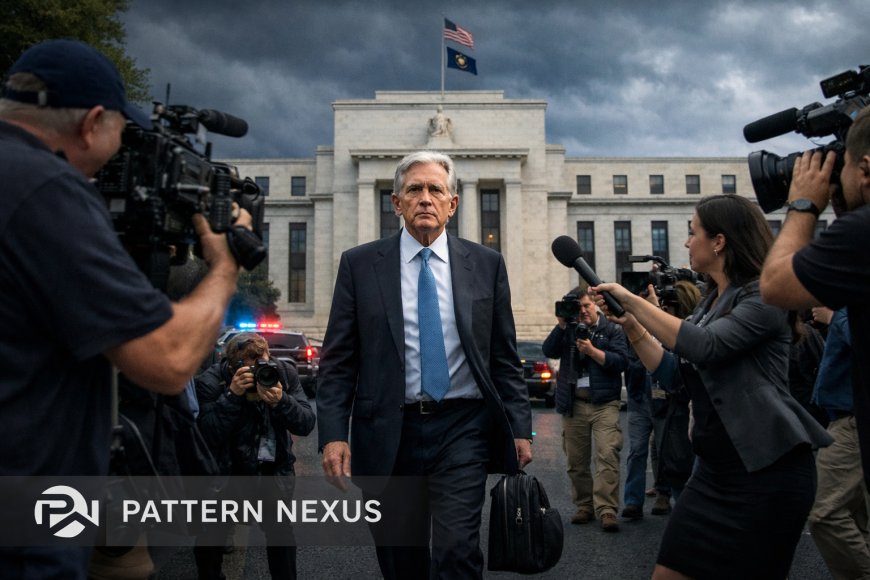
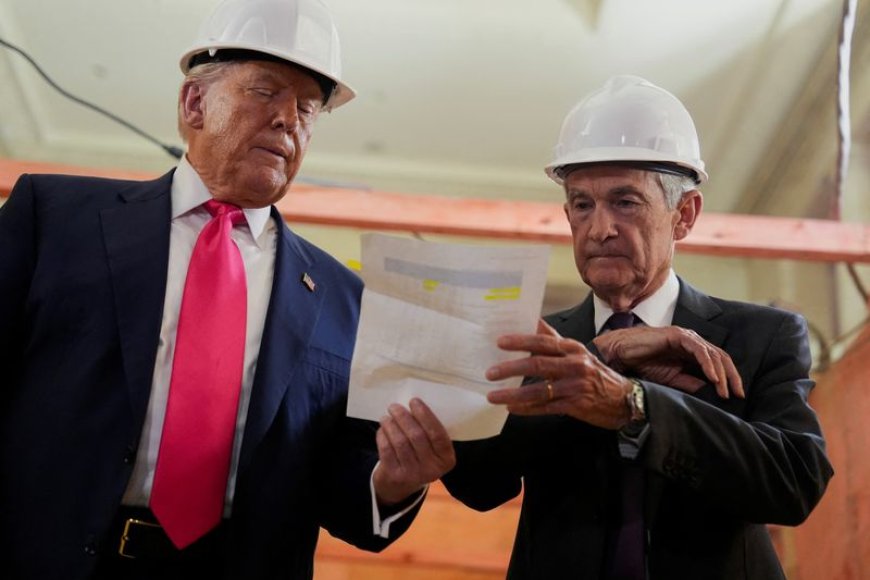

This is not about procurement. It is about rate suppression, debt management, and policy alignment.
Institutional independence between the Fed and the political branch is being retired in real-time.
The Everything Bubble 3 playbook requires cheap money, higher nominal asset values, and sovereign-grade financial repression.
Good evening.
On Friday, the Department of Justice served the Federal Reserve with grand jury subpoenas, threatening a criminal indictment related to my testimony before the Senate Banking Committee last June. That testimony concerned in part a multi-year project to renovate historic Federal Reserve office buildings.
I have deep respect for the rule of law and for accountability in our democracy. No one—certainly not the chair of the Federal Reserve—is above the law. But this unprecedented action should be seen in the broader context of the administration’s threats and ongoing pressure.
This new threat is not about my testimony last June or about the renovation of the Federal Reserve buildings. It is not about Congress’s oversight role; the Fed through testimony and other public disclosures made every effort to keep Congress informed about the renovation project. Those are pretexts. The threat of criminal charges is a consequence of the Federal Reserve setting interest rates based on our best assessment of what will serve the public, rather than following the preferences of the President.
This is about whether the Fed will be able to continue to set interest rates based on evidence and economic conditions—or whether instead monetary policy will be directed by political pressure or intimidation.
I have served at the Federal Reserve under four administrations, Republicans and Democrats alike. In every case, I have carried out my duties without political fear or favor, focused solely on our mandate of price stability and maximum employment. Public service sometimes requires standing firm in the face of threats. I will continue to do the job the Senate confirmed me to do, with integrity and a commitment to serving the American people.
Thank you.
Statement from Federal Reserve Chair Jerome H. Powell
The Sunday Night Signal
On Sunday evening, Powell released a statement confirming that he and the Federal Reserve had been served with Justice Department grand jury subpoenas tied to his Senate testimony last July about the Federal Reserve building modernization project. The official claim is that Powell misled Congress on procurement and project management disclosures. Unofficially, Powell himself has characterized the move as an intimidation attempt, and lawmakers from both parties have warned that it crosses a line on central bank independence.
If this were truly about procurement irregularities, the matter would have been delegated to an inspector general or administrative review process, as has been the norm for decades. Escalating to a criminal grand jury and openly threatening indictment is an institutional weapon, not an oversight mechanism. It creates a direct linkage between monetary decisions and prosecutorial risk at the top of the Fed.
The government chose the most coercive path possible for what is normally handled as administrative oversight. That choice is the signal: monetary policy is now inside the arena of hard political and legal power, precisely as the next liquidity regime is being built.
Why Powell Was Targeted
Powell represents a rate constraint on the administration’s broader economic architecture. The administration is pursuing a policy suite that can only function under cheaper money: inflate away sovereign debt, increase nominal GDP, widen tax base collection through revenue inflation, and enable massive capital formation around artificial intelligence, robotics, reshoring, energy, and critical infrastructure.
The strategy is not being hidden. Sovereign-grade inflation and liquidity expansion have been openly discussed as policy tools. The constraint is time and interest rates. Powell has signaled caution, whereas the Treasury and executive branch have signaled acceleration.
- Higher-for-longer breaks the refinancing engine
- Lower rates reopen collateral channels and industrial credit
- Sovereign debt rollover requires nominal suppression of real yields
These pressures are not theoretical. At current debt levels, higher-for-longer interest rates translate into rising interest expense that compounds faster than tax receipts can grow. That dynamic erodes fiscal space, crowds out discretionary spending, and forces political actors to choose between austerity, financial repression, or inflationary debt management. The administration’s choice is clear: inflate nominal GDP, suppress real yields, and extend sovereign solvency through liquidity rather than cuts.
Cheaper money also underpins the industrial policy architecture now being constructed around artificial intelligence, reshoring, energy transition, and national security manufacturing. These sectors require long-duration capital and large up-front financing. Without lower benchmark rates and reopened collateral channels, the capital stack for that investment either becomes prohibitively expensive or fails to clear entirely. If the United States intends to lead the next industrial supercycle, it cannot do it at sustained real positive yields.
The Liquidity Regime Shift
The subpoena marks the point where political power acknowledges that fiscal and monetary separation is no longer operationally viable. The United States is now entering a liquidity regime that resembles prior high-debt industrial transitions: coordinated rate suppression, controlled inflation, engineered liquidity channels, and a slow erosion of real yields.
The state has made its decision: inflate, not default. Political austerity is a dead model in a post-industrial sovereign debt environment. The subpoena against Powell is merely the opening signal of forced institutional convergence.
This is not unprecedented. High-debt industrial transitions historically fuse monetary and fiscal policy into a single operational unit. In the post–World War II United States, the Fed was compelled to cap long-term Treasury yields as reconstruction and reindustrialization proceeded. In mid-century Britain and Japan, state-directed liquidity and yield management financed export and industrial recovery. In China’s 1990–2010 buildout, state banking and fiscal policy became inseparable to sustain capital formation. Different ideologies, same mechanism: liquidity, industrial policy, and sovereign solvency are interlinked during high-debt industrial phases.
Pattern Nexus Lens
The Powell subpoena is not a partisan spectacle. It is a systems-control event. Liquidity, sovereign solvency, industrial capacity, and geopolitical positioning are becoming a single fused policy domain. The Fed is no longer treated as a detached technocratic body. It is being integrated into the survival calculus of the state.
When debt, industry, and geopolitics converge, monetary independence dies first.
FAQ
Is the subpoena truly about procurement?
No. That is the pretext. The mechanism chosen indicates coercion, not oversight.
Is this about partisan politics?
No. Both parties have supported Treasury–Fed convergence during high-debt cycles. This is structural, not partisan.
What comes next?
Rate suppression, liquidity channel expansion, controlled inflation, and eventual sovereign-grade financial repression.
In practical terms, this plays out across time:
- 0–12 months: rate jawboning, easing bias, volatility suppression, and reopening of credit channels
- 12–36 months: industrial capital formation, asset reflation, public–private financing corridors, and fiscal impulse
- 36+ months: financial repression, negative real yields, currency debasement, and sovereign liability management through nominal growth
This is how high-debt sovereigns avoid default while still funding a strategic industrial agenda.
Sources
Links support timeline, statements, and procurement testimony context.
- Powell statement on DOJ subpoenas and indictment threat
- Reuters coverage of Powell’s comments
- Justice Department subpoena reporting
Яка ваша реакція?
 Подобається
0
Подобається
0
 Неподобання
0
Неподобання
0
 Любов
0
Любов
0
 Смішно
0
Смішно
0
 Ух ти
0
Ух ти
0
 Сумно
0
Сумно
0
 Злий
0
Злий
0

Founder of Pattern Nexus. I research markets, macro, geopolitics, AI, history, ancient systems, and the patterns most people overlook. I’m also building Market Radar, a trading scanner designed to read pressure, risk, confirmation, and setup quality before chasing a move. Pattern Nexus is where I connect the dots between data, history, technology, and the bigger system playing out around us.













Коментарі (0)