
Oracle Financial Health & Collapse Risk – December 2025
Detailed analysis of Oracle’s financial stress as of December 2025, including stock performance, debt risk, CDS surge, AI spending, and expert warnings.
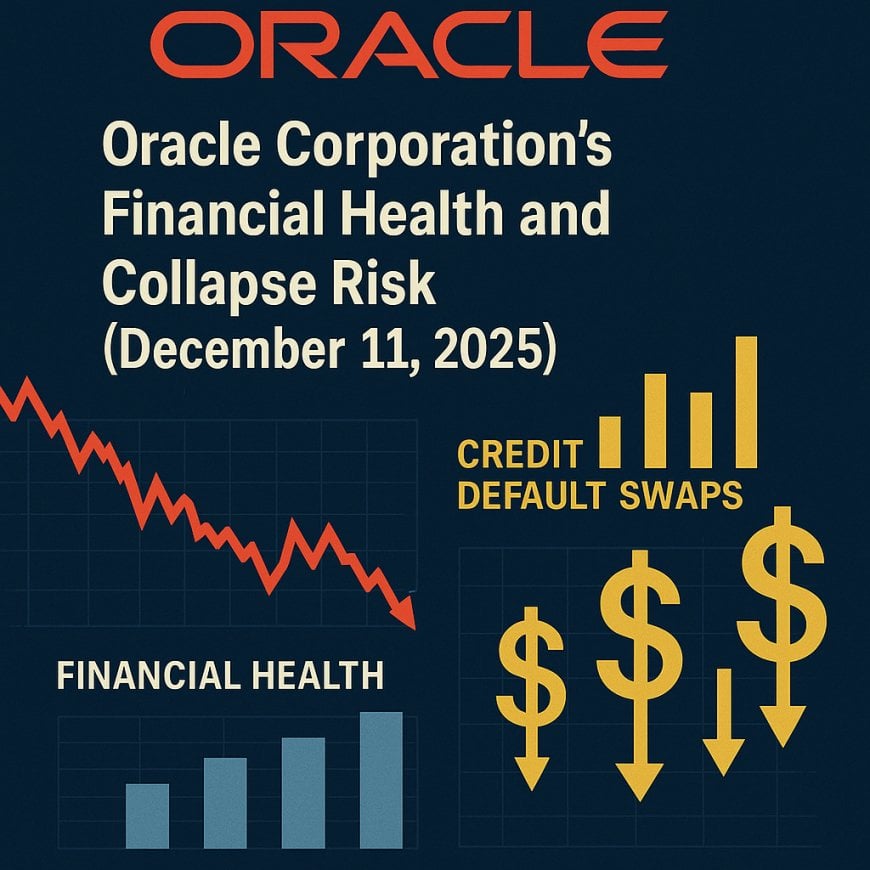
Oracle Financial Health & Collapse Risk – December 2025

Stock Performance and Market Reaction
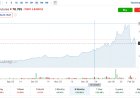
Oracle’s stock suffered a dramatic plunge on December 11, 2025, following its latest earnings release and forward guidance. Shares dropped 13–15 percent intraday—the worst single-day decline since the 2001 dot-com crash. Trading levels around $197–200 represented a fall from the low $230s, erasing approximately $90–105 billion in market capitalization. This move extended a broader 33–35 percent decline from Oracle’s September 2025 peak.
Markets reacted sharply to weak revenue figures and an aggressive CapEx increase. Q2 revenue came in at $16.06 billion, slightly below expectations. A one-time $2.7 billion asset gain boosted EPS to $2.26, but the company simultaneously raised FY2026 CapEx from $35 billion to $50 billion. The announcement triggered widespread selling, pressured AI-linked peers such as Nvidia and AMD, and reignited concerns about an AI-driven capital-expenditure bubble. At least thirteen brokerages cut price targets after the release.
Credit Default Swaps (CDS) – Rising Stress Signals
Oracle’s 5-year CDS surged between 12 and 17 basis points on December 11, closing above 140 bps—levels not seen since the 2008 financial crisis. CDS spreads have more than doubled from the 60–70 bps range earlier in 2025. Over seven weeks, more than $5 billion in CDS traded versus roughly $200 million over the same period a year earlier. Morgan Stanley forecasts CDS levels could reach 150–200 bps in 2026 as credit concerns deepen.
Bloomberg highlighted the parallels to Lehman Brothers, whose CDS began accelerating months before collapse. Oracle’s debt load and unprecedented spending push have made it uniquely exposed among mega-cap tech firms, with CDS pricing signaling significantly greater perceived default risk than peers such as Microsoft or Google.
Financial Health: Balance Sheet, Debt, and Cash Flow
Oracle’s debt rose to $104–108 billion by late 2025, up from roughly $90.5 billion in 2023. Some analyst models that include additional off-balance-sheet obligations place the figure even higher—at $120–130 billion. Q2 free cash flow came in at –$10 billion as CapEx spiked to $12 billion versus expectations near $8.8 billion. FY2026 CapEx is now projected at $50 billion, the most aggressive build-out initiative in company history.
Cash flow deterioration is severe. Trailing twelve-month free cash flow stands at –$13 billion, Oracle’s weakest position in more than two decades. Net debt-to-EBITDA may exceed 4.0× by FY2027. While Oracle’s credit rating remains BBB/Baa2, both S&P and Moody’s have issued Negative outlooks. Barclays has warned that Oracle could face a liquidity crunch by November 2026 without additional financing.
Revenue, Earnings, and Business Outlook
Q2 FY2026 revenue increased 14 percent year over year to $16.1 billion, driven by a 66 percent surge in cloud infrastructure. Oracle reported a $523 billion backlog—up nearly 400 percent year over year—primarily tied to cloud commitments from OpenAI, Meta, and Nvidia. However, Q3 guidance disappointed, with revenue growth expected at 19–21 percent and EPS projected at $1.70–1.74, indicating slower-than-anticipated monetization of AI workloads.
Legacy software revenue continues to decline. Oracle leadership maintains confidence that high-intensity AI investments will pay off, but execution risk is substantial, particularly given concentrated dependence on a small set of hyperscale partners.
Expert Commentary and Warnings
- Morgan Stanley: CDS spike indicates escalating credit risk; leverage may exceed 4×; outlook shifted to Negative.
- Barclays: Forecasts –$28 billion free cash flow in FY2026; warns of potential liquidity exhaustion by late 2026; labels Oracle the first potential “AI fallen angel.”
- BofA: Argues the CapEx surge is necessary and strategically sound; long-term bullish on AI cloud build-out.
- Citi: Projects Oracle will need to raise $20–30 billion annually for the next three years; flags sustained credit strain.
- Ratings Agencies: S&P and Moody’s maintain Negative outlooks; Fitch remains Stable but highlights increasing risk factors.
Historical Comparisons and Context
Oracle’s current risk profile exhibits characteristics seen in both the dot-com bubble and the 2008 liquidity crisis. High CapEx, speculative customer dependence, and lagging profitability parallel the late-1990s cloud and telecom overbuild. Meanwhile, CDS market behavior resembles the pre-crisis credit deterioration seen in 2008. Partnerships with OpenAI echo past periods where iconic but volatile clients distorted long-term revenue expectations, much like Cisco or WorldCom during earlier tech cycles.
Although Oracle retains core strengths in enterprise software and infrastructure, its financial posture is more fragile than at any point in the last twenty years.
Pattern Nexus: Why This Matters
Oracle’s evolving financial situation carries implications far beyond corporate earnings. It reflects the broader macro tension between AI-driven capital expenditure cycles and tightening global liquidity. Oracle is effectively stress-testing the model of debt-financed AI infrastructure expansion, and markets are reacting accordingly.
The rapid repricing of Oracle’s CDS demonstrates how quickly confidence can unwind when cash burn, leverage, and uncertain revenue timing converge. Large bondholders, credit-rating committees, and policy observers are now watching Oracle as a live case study in whether the AI-capex boom will remain sustainable—or become the next systemic fault line.
The ramifications span market structure, regulatory frameworks, and competitive dynamics across the sector. If Oracle falters, smaller AI-infrastructure aspirants may reassess expansion plans, and capital markets may impose stricter discipline on long-duration, high-burn technology strategies.
Expanded Analysis
Oracle’s strategic pivot from legacy enterprise software toward AI-centric cloud infrastructure requires unprecedented near-term financial sacrifice. The company is betting heavily that long-term cloud contracts—particularly from AI hyperscalers—will eventually offset enormous CapEx and transient negative free cash flow. The challenge arises from timing mismatches: infrastructure spending is immediate, while revenue realization can lag by multiple years.
The surge in debt magnifies this mismatch. If revenue from AI workloads fails to accelerate quickly enough, Oracle risks entering a negative feedback loop involving credit downgrades, higher borrowing costs, and constrained liquidity. This is the dynamic that analysts fear could resemble early indicators of crisis seen in prior market cycles.
Ultimately, Oracle’s situation is emblematic of a broader macro transition as the AI industrialization wave expands faster than liquidity conditions permit. Oracle is not alone, but it is the most visible stress point—a bellwether for how the financial system will treat capital-intensive AI infrastructure strategies in an environment of rising credit spreads.
Conclusion
Oracle stands at a financial crossroads. While collapse is not imminent, the company is operating under heightened stress: deteriorating free cash flow, rising leverage, CDS spikes, and a CapEx trajectory unmatched by peers. Its ability to navigate the next 12–18 months will determine whether Oracle emerges as a dominant AI-cloud leader or becomes a cautionary tale of overextended ambition in the early AI-infrastructure era.
Каква е вашата реакция?
 Харесай
0
Харесай
0
 Не ми харесва
0
Не ми харесва
0
 Любов
0
Любов
0
 Смешно
0
Смешно
0
 Уау
0
Уау
0
 Тъжен
0
Тъжен
0
 Ядосан
0
Ядосан
0

Founder of Pattern Nexus. I research markets, macro, geopolitics, AI, history, ancient systems, and the patterns most people overlook. I’m also building Market Radar, a trading scanner designed to read pressure, risk, confirmation, and setup quality before chasing a move. Pattern Nexus is where I connect the dots between data, history, technology, and the bigger system playing out around us.











Коментари (0)