
Market Wrap – December 11, 2025: Post-Cut Melt-Up, Oracle Shock, and a Stubborn Front End
Daily Pattern Nexus market wrap for December 11, 2025: index melt-up after the Fed’s first asset-purchase move, Oracle’s AI-spend shock, rate-curve tension, gold weakness, and mostly-sideways crypto.
Session Overview
Markets spent the second day after the Fed’s rate cut and Treasury-bill purchase pivot accelerating the same pattern that started yesterday: broad risk-on in index space, a modest bid for duration, and a rotation inside technology as investors try to separate “capex black holes” from cash-flow machines.
From the Pattern Nexus liquidity framework, it does not really matter whether you label the Fed’s new posture as “QE,” “short-term Treasury operations,” or some creative acronym that sounds less politically radioactive. Functionally, it is monetary expansion: the central bank is injecting reserves against government collateral, expanding the effective monetary base while lowering the policy rate. The tape is trading that reality.
Equity Indices: Dow Melt-Up, S&P Records, Nasdaq Lag
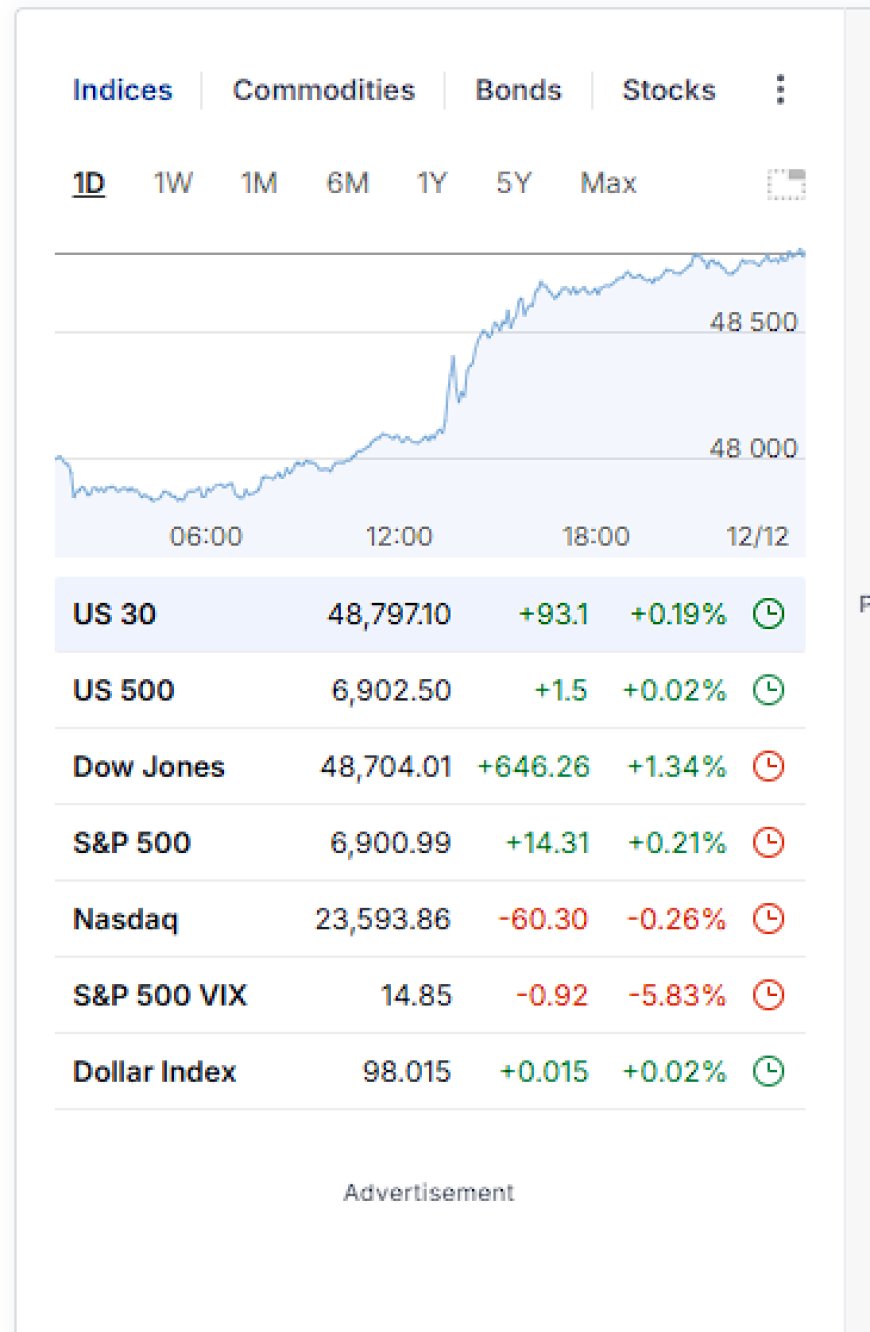
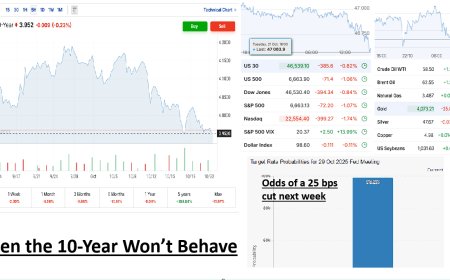
The index tape was classic post-cut relief with a twist: the US 30 closed just under 48,800, up roughly 0.2% on the day but more than that off the intraday lows, extending a powerful two-day melt-up as capital plows into high-dividend, old-economy names that still benefit from lower discount rates.
The broader US 500 and S&P 500 printed record territory again on the close, but the move was more measured in percentage terms: the index added only a few basis points today after yesterday’s surge. Volatility continued to leak lower, with the S&P 500 VIX slipping another 5–6%, consistent with a market that believes the Fed will lean against hard landings but is not yet pricing a full-blown easing campaign.
The weak spot was the Nasdaq, which closed modestly red even as the Dow made new highs. Most of that divergence traces back to the Oracle shock and sympathy selling across the AI-capex complex, which we will detail in the single-stock section below.
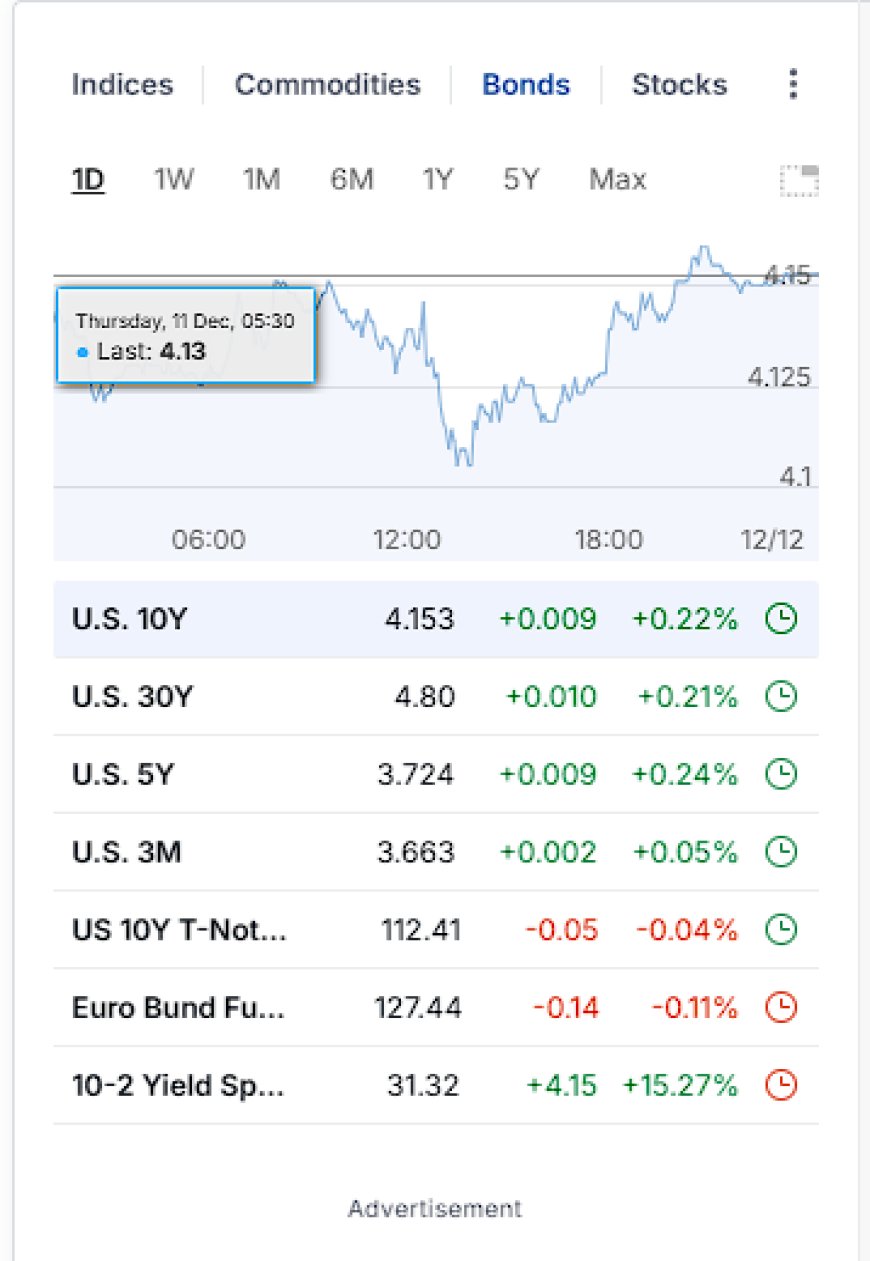
Rates and Curve Structure: 10-Year Wrestling Match, 3-Month Above Target
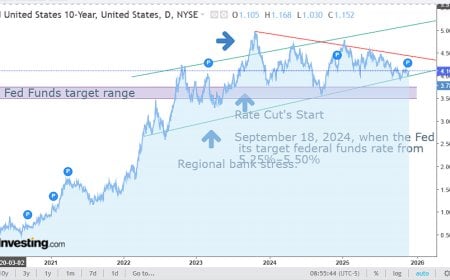
The 10-year Treasury spent the session in a tug-of-war between “more liquidity” and “longer-run inflation risk.” Yields chopped around the 4.1% handle and finished the day a touch higher, keeping the long end well above the new Fed funds range but no longer threatening a disorderly breakout.
More interesting for the Pattern Nexus lens is the very front end. The 3-month Treasury bill yield is now trading above the top of the Fed’s freshly lowered target band. In a textbook easing cycle, the front end should sit inside or slightly below the policy rate as markets price future cuts. Instead, we have a situation where the Fed is easing on paper while the bill market still demands a premium, a loud signal that funding stress and collateral demand remain elevated in the real system.
The 5-year and 30-year tenors moved in parallel with the 10-year, leaving the curve still inverted on the 3M–10Y segment but with the degree of inversion narrowing. That is the classic transition profile from “hard-landing fear” toward “soft-landing hope,” but it is happening in the shadow of an explicit liquidity add, not a clean organic recovery.
Commodities: Energy Bid, Strong Flows Out of Gold
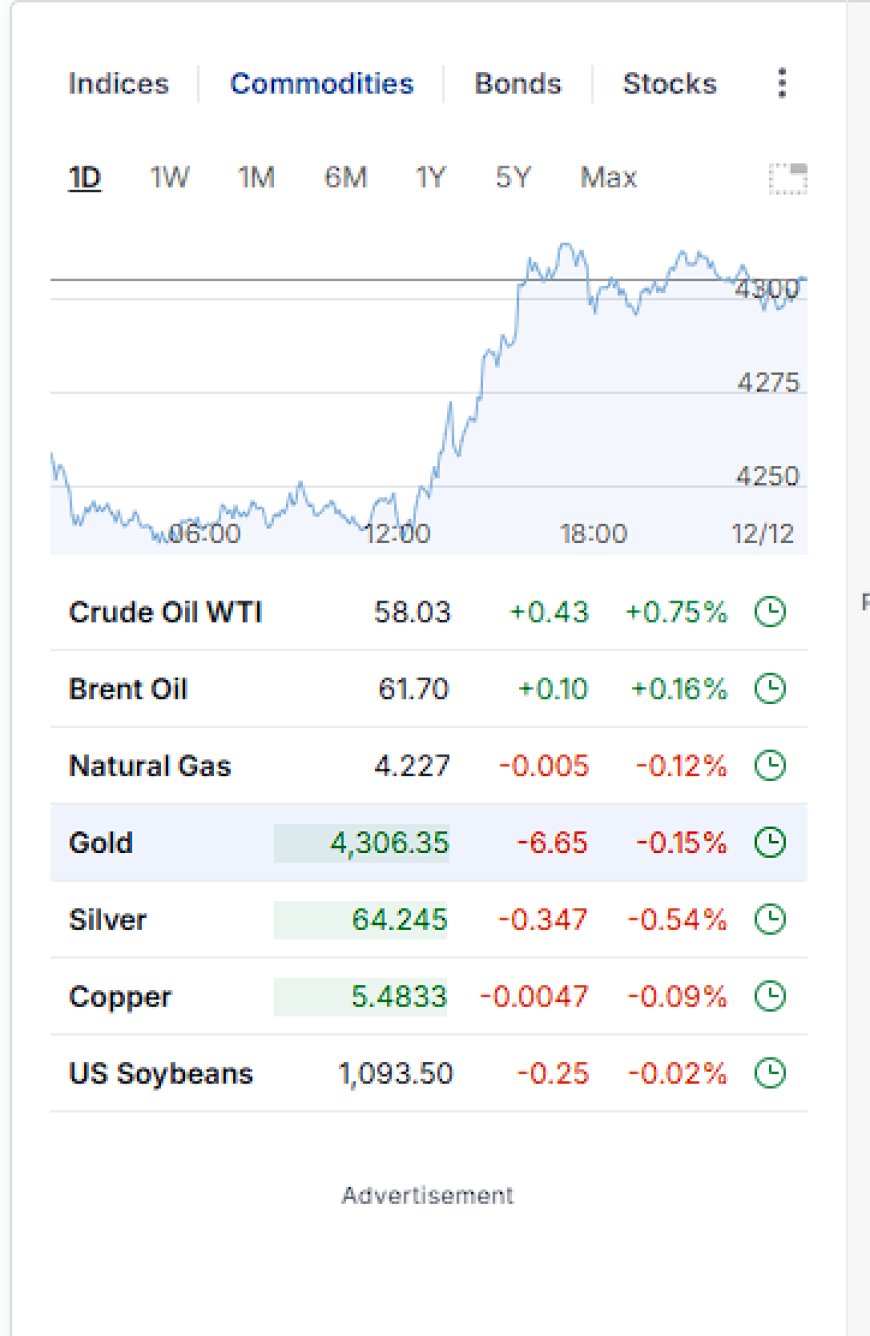
In the commodity complex, crude oil caught a modest bid: front-month WTI settled in the high-$50s, up around three-quarters of a percent, with Brent up a touch as well. That is consistent with a market that is recalibrating toward “no imminent recession” plus ongoing geopolitical risk in energy corridors.
Natural gas was slightly red on the day despite the developing polar-vortex pattern in the upper atmosphere. Traders appear reluctant to re-price winter risk until the cold anomalies start showing up in the near-surface temperature data and storage pulls.
The more important move was in gold. Flows rotated out of the metal again, leaving spot lower on the session and continuing a short-term pattern of weakness that really started as soon as the Fed signaled that it was willing to put a floor under risk assets. In an expansionary-liquidity regime, gold often performs in two stages: first, it bleeds as capital chases beta and carry; later, as the inflationary implications of “money printing” become harder to ignore, it catches a second-stage bid. Right now we are clearly in stage one.
Silver and copper both posted small losses, reflecting the same “risk-on in equities, but not yet in industrial metals” posture.
Currencies: Dollar Index Quiet, Micro-Moves Under the Hood
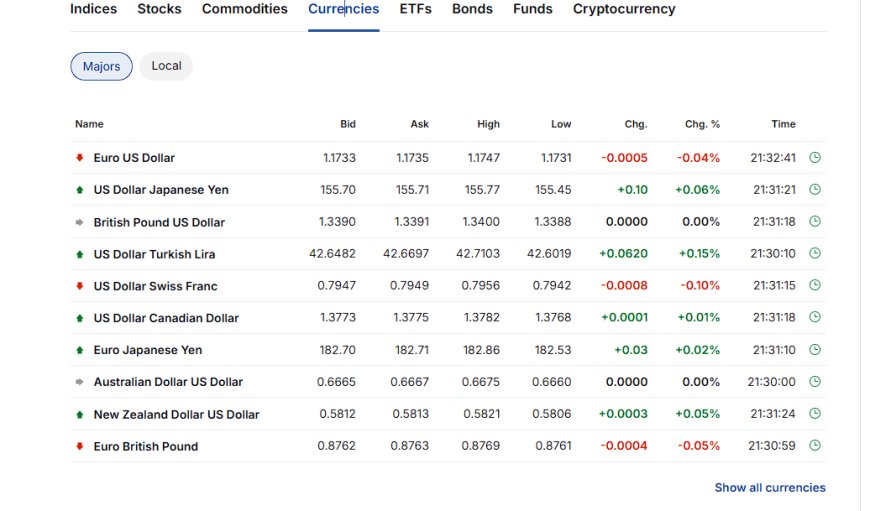
The Dollar Index finished essentially flat, nudging slightly higher intraday but never breaking out. That flat headline masks the usual grind: the euro dipped a few basis points against the dollar, while the yen weakened modestly as global carry trades came back on after the Fed’s cut.
Resource-linked currencies like the Canadian and Australian dollars barely moved, which fits with the idea that today’s commodity reaction was more about financial positioning than a new macro thesis.
Crypto: Mostly Sideways After the Cut
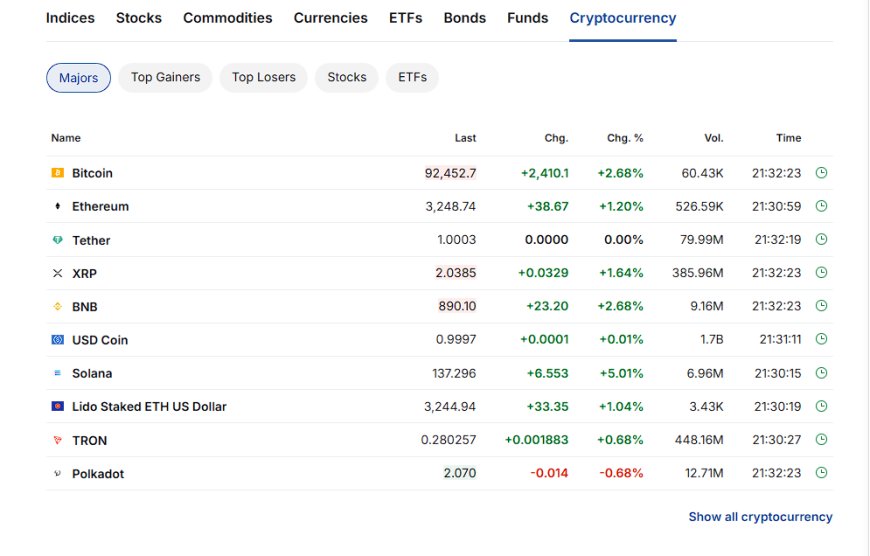
The crypto complex spent most of the day in digestion mode. Bitcoin hovered in the low-$90k range, up a couple of percent but effectively moving sideways relative to the post-cut spike. Ethereum and the larger alt-caps posted similar one-percent-type moves.
The key takeaway here is not today’s candle but the regime shift: when the Fed is adding reserves and lowering the policy rate, the structural backdrop for crypto improves even if the tape takes a breather. For now, the market is consolidating rather than chasing.
Single-Stock Flows: Oracle’s AI Capex Shock vs. Cash-Flow Tech
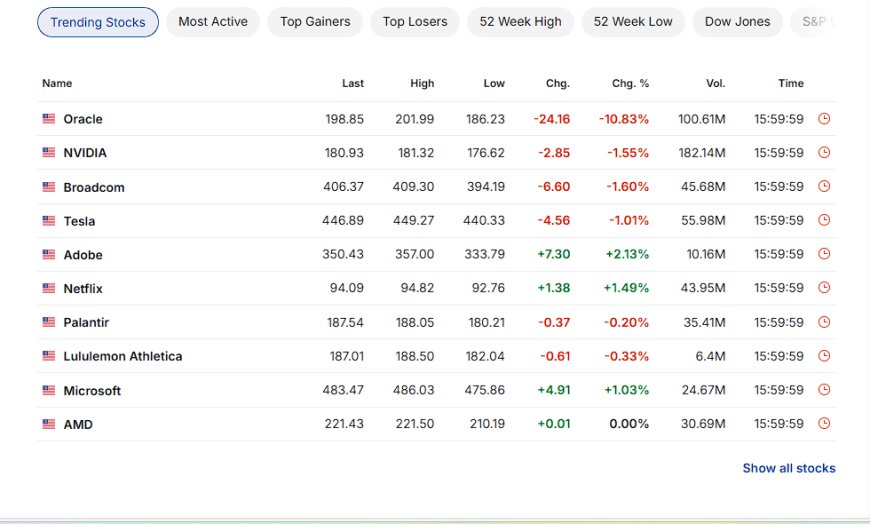
Today’s equity story was not “tech” in the aggregate, it was the split inside tech. Oracle dropped more than 10% on the session after earnings and forward guidance highlighted massive AI-data-center spending, rising leverage, and slower-than-hoped revenue realization. That combination revived the fear that some parts of the AI theme are becoming a “show-me trade”: investors now want actual cash flows, not just capex slide decks.
In sympathy, other AI-exposed names like NVIDIA, Broadcom, and to a lesser degree Tesla traded lower, pulling on the Nasdaq even as the Dow ripped. On the other side of the ledger, cash-flow-rich software names fared better: Adobe closed solidly higher, Microsoft added about 1%, and even some of the high-beta names like Netflix posted green closes.
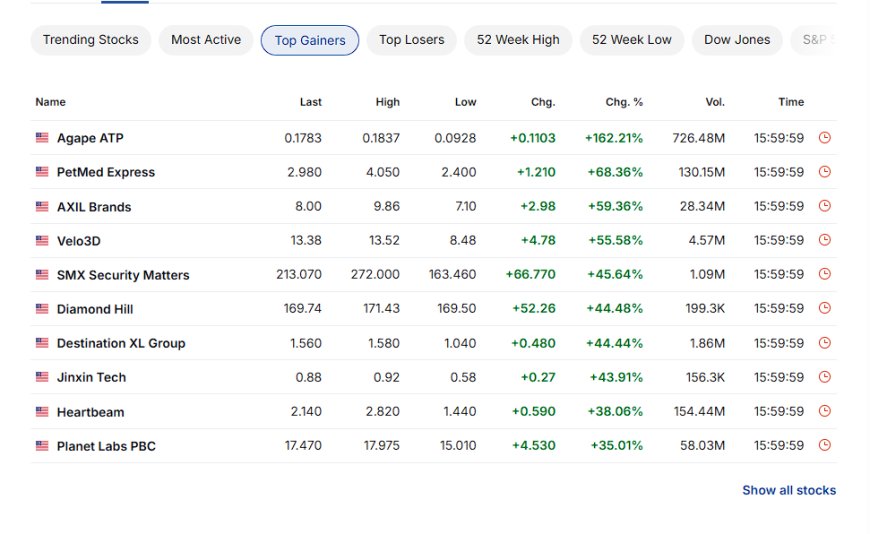
The top gainers list was full of thinly traded small caps putting up 40–160% intraday moves: a classic signature of easy liquidity sloshing into high-beta corners of the tape. These are not balance-sheet stories; they are positioning and sentiment release valves.
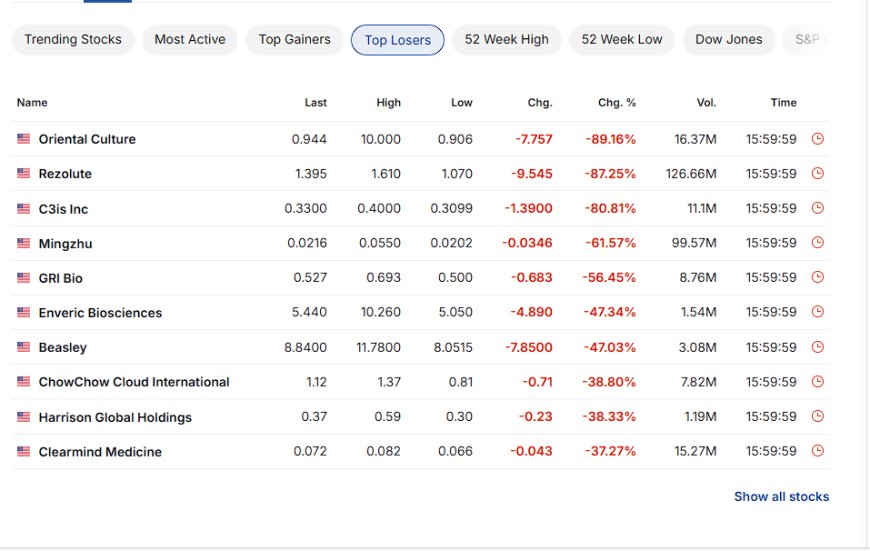
The top losers list showed the other side of that speculative barbell, with several micro-caps down 40–80% on the day. In a regime where liquidity is re-entering the system, this is exactly what you would expect: a rotation from crowded, fragile stories into whatever narrative the market thinks will be funded next.
Brief Wrap-Up
In one paragraph: indices extended their post-cut melt-up, with the Dow and S&P printing record territory while the Nasdaq lagged under Oracle-driven AI jitters; the 10-year sat near 4.1% with the 3-month stubbornly above the Fed’s new target, signaling unresolved funding tension; energy caught a modest bid while gold and other precious metals saw strong outflows; the dollar and major FX pairs were mostly range-bound; and crypto traded sideways, consolidating recent gains in a newly expansionary monetary backdrop.
Pattern Nexus Lens: Call It Whatever You Want, It’s Still Money Printing
The semantic fight over whether the Fed is doing “QE,” “T-bill operations,” or some bespoke acronym is mostly a distraction. The balance sheet is expanding against government collateral, reserves are increasing, and the policy rate has been cut. From the perspective of the real economy and asset markets, that is monetary expansion.
The tell is not just in today’s index closes but in the cross-asset pattern: volatility crushed, small-cap rockets and micro-cap implosions on the same tape, a front end that refuses to fully follow the policy rate down, and gold bleeding as capital chases beta. This is what the early phase of a new liquidity wave looks like.
The open question for the coming weeks is simple: does the Fed’s move successfully pull the entire curve lower, or do we end up in a world where the 10-year and 30-year start to price a second-round inflation impulse while risk assets celebrate the first wave? Tomorrow’s opening salvo of asset purchases will start to answer that question.
Sources
- MarketWatch live markets coverage – December 11, 2025 index performance and record closes.
- Reuters and other wire services – Oracle earnings, AI capex guidance, and single-stock reactions across the AI complex.
- US Treasury and market data providers – intraday and closing levels for US yields and the dollar index.
- Exchange feeds and major financial portals – session performance for commodities, crypto majors, and top gainers/losers.
আপনার প্রতিক্রিয়া কি?
 পছন্দ করুন
0
পছন্দ করুন
0
 অপছন্দ
0
অপছন্দ
0
 ভালোবাসা
0
ভালোবাসা
0
 মজার
0
মজার
0
 বাহ!
0
বাহ!
0
 দুঃখজনক
0
দুঃখজনক
0
 গোস্বামী
0
গোস্বামী
0

Founder of Pattern Nexus. I research markets, macro, geopolitics, AI, history, ancient systems, and the patterns most people overlook. I’m also building Market Radar, a trading scanner designed to read pressure, risk, confirmation, and setup quality before chasing a move. Pattern Nexus is where I connect the dots between data, history, technology, and the bigger system playing out around us.














মন্তব্যসমূহ (0)