

Recessions Aren’t the Crisis — They’re the Trigger
Recessions are not the catastrophe — they’re the mechanical pivot that flips the modern dollar system from contraction back into liquidity expansion. A deep dive into why doom prophets misread the cycle, why 2026 is structurally important, and how the funding plumbing actually drives markets.
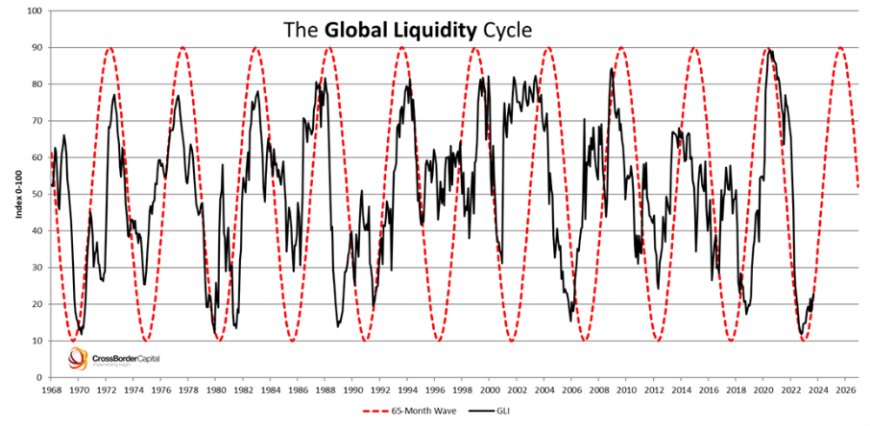
Recessions are not the catastrophe — they’re the mechanical pivot that flips the modern dollar system from contraction back into liquidity expansion. A deep dive into why doom prophets misread the cycle, why 2026 is structurally important, and how the funding plumbing actually drives markets.
Jump to a section
Recessions Aren’t the Crisis — They’re the Trigger
Why the doom prophets keep misreading the cycle, why Albert Edwards isn’t entirely wrong but is staring at the wrong layer, and why recessions are the mechanical pivot into the next liquidity regime — not the end of the world.
On This Page
- The Great Misunderstanding in Modern Macro
- The New Dotcom Prophets and Their Blind Spot
- Narrative Macro vs Mechanical Macro
- Recessions as Structural Waypoints, Not Catastrophes
- The Historical Pattern: 2000, 2008, 2020
- Inside the Plumbing: Reserves, Collateral, and QT’s Wall
- How Recessions Actually Trigger Liquidity Cycles
- Why 2026 Is a Structural Pivot, Not a Vibes Call
- The AI–Energy–Liquidity Flywheel Behind the Next Regime
- What This Means for Investors, Workers, and Households
- Conclusion: Recession as Portal, Not Apocalypse
The Great Misunderstanding in Modern Macro
Every cycle has its prophets of doom. In the late 1990s they warned that the internet mania would end badly. In the mid-2000s it was the people screaming about housing. Today it’s a familiar cast of veteran strategists — including some of the same names from the dotcom era — arguing that the United States is heading toward an even bigger crisis than 2000 or 2008.
One of those voices is the dotcom-era strategist often credited with “calling” the tech bubble before it burst. Today he’s back in the headlines warning that this time is worse: valuations are obscene, debt is out of control, politics are broken, and the middle class is exhausted. From that vantage point, recession looks like the final act — the moment when all the excess and denial finally catch up to the system.
This article is about that difference.
It’s not about whether the economy is “strong” or “weak,” whether you should feel optimistic or pessimistic, or whether one celebrity strategist will be “right” again. It’s about something simpler and more important:
- What actually drives the global dollar system at the machine level.
- Why recessions keep showing up at the exact points where liquidity regimes flip.
- Why focusing on recession as the end of the story misses the real mechanism that forces policy change.
- Why 2026 isn’t just a vibes call — it’s the logical endpoint of a reserve and collateral trajectory we’re already on.
The goal here is not to dismiss Albert Edwards or others like him. He is directionally right about a lot of the stress. But his framework — like almost all traditional macro — is locked at the narrative layer: valuations, debt, sentiment, politics. The system itself runs deeper.
The New Dotcom Prophets and Their Blind Spot
Let’s start with the standard script. The modern doom narrative goes something like this:
- Tech and AI stocks are “in a bubble,” just like dotcom.
- Debt is at record levels across households, corporations, and the federal government.
- Interest rates are higher, so servicing that debt is more painful.
- Politics are dysfunctional and polarizing — fiscal and monetary responses will be messy.
- Therefore: a major recession and market crash are inevitable and will be worse than what we saw in 2000 or 2008.
On the surface, it’s not crazy. Debt is bigger. Valuations are rich. The world is more complex. Geopolitics adds extra tail risk that dotcom investors didn’t have to think about. If you stop at that level of analysis, “big recession → big crash” feels like the obvious conclusion.
But there’s a blind spot built into this way of thinking.
That doesn’t mean recessions don’t matter. They absolutely do — for jobs, for small businesses, for households trying to keep their heads above water. It means that if you’re trying to understand the system, recession is not where you start.
Narrative Macro vs Mechanical Macro
To see where the disconnect comes from, you have to separate two layers of analysis:
- Narrative Macro – how most people, including very smart strategists, talk about the economy: valuations, growth, earnings, policy decisions, geopolitical risk, and investor sentiment.
- Mechanical Macro – how the plumbing of the modern dollar system actually functions: reserves, collateral, dealer balance sheets, central bank facilities, and the constraints that force policy pivots.
Narrative Macro: The Surface Layer
In narrative macro, the storyline goes like this:
- Stocks move because earnings expectations change.
- Recessions start because consumers pull back or the Fed “over-tightens.”
- Crises arrive when overvaluation and excess leverage meet a shock.
- Policy responses are mostly political choices — stimulus here, austerity there.
It’s not that this is completely wrong. It’s just that it’s incomplete. It describes what you see on the surface — the waves — not the undercurrents.
Mechanical Macro: The Plumbing Layer
Mechanical macro doesn’t care about earnings narratives first. It cares about:
- The level and distribution of bank reserves.
- How much high-quality collateral exists and who holds it.
- Where QT is biting into liquidity and at what pace.
- When the system is bumping into a reserve floor — the point where small outflows cause big funding stress.
- How facilities like ON RRP, the Standing Repo Facility (SRF), and the TGA are interacting.
- How dealer balance-sheet capacity and regulatory constraints limit the absorption of new Treasury issuance.
In this view, recessions aren’t spontaneous tragedies. They’re part of a sequence:
- Liquidity expands aggressively (QE, fiscal stimulus, credit growth).
- Reserves balloon, risk assets rip, real economy accelerates.
- Inflation or asset bubbles worry policymakers; tightening begins (QT, rate hikes).
- Reserves are drained, collateral distribution gets stressed, funding markets tighten.
- Real economy responds with a lag: hiring slows, investment pulls back, recession forms.
- That recession forces the system to pivot back into liquidity expansion (QE-type interventions), starting the next cycle.
That’s the core difference between the doom prophets and the plumbing view.
Recessions as Structural Waypoints, Not Catastrophes
From the plumbing perspective, recessions are not freak anomalies or civilization-ending events. They’re **structural waypoints** — recurring mechanical phases in the life cycle of a highly leveraged, reserve-constrained system.
Think of a recession not as a meteor hitting the earth, but as a pressure relief valve in a closed-loop hydraulic system. It’s painful and disruptive at the human level, but at the system level it serves a consistent set of functions:
- Clears weaker balance sheets. Marginal borrowers get wiped out. Speculative leverage gets repriced or destroyed. The system sheds fragility.
- Creates political and social permission for stimulus. As unemployment rises and growth stalls, suddenly things that were “politically impossible” become inevitable.
- Gives central banks cover to reverse tightening. The same policymakers who insisted on higher-for-longer rates discover a new tolerance for “flexibility” once recession shows up in the data.
- Marks the pivot back into liquidity expansion. Rate cuts, QE, fiscal packages, credit facilities — all of these become thinkable again once recession is undeniable.
That doesn’t mean recessions are good. It means they’re structurally necessary inside the current design of the system. A world that runs on credit, collateral, and levered duration can’t expand in a straight line forever. It breathes.
Exhale, inhale. Expansion, contraction. Boom, recession, reflation.
Doom prophets frame recession as the end of the cycle. Mechanical macro treats it as the hinge between regimes.
The Historical Pattern: 2000, 2008, 2020
To see how deeply embedded this pattern is, look back at the last three major shocks in the U.S.-centric system.
Dotcom Bust (2000–2002)
The narrative version says:
- Tech stocks were absurdly overvalued.
- The bubble popped, the Nasdaq collapsed, and a mild recession followed.
The mechanical version adds:
- After years of easy policy, the Fed tightened into late-cycle conditions.
- Financial conditions tightened, risk appetite snapped, and growth slowed.
- The recession provided the backdrop — and justification — for aggressive rate cuts and renewed liquidity support.
The punchline: the dotcom bust hurt, but it didn’t end the system. It triggered the next liquidity wave, which flowed into housing, structured credit, and global carry trades.
2. Global Financial Crisis (2008–2009)
The narrative version is familiar:
- Reckless lending and housing speculation created a gigantic bubble.
- Subprime cracked, credit markets froze, Lehman blew up.
- The worst recession since the Great Depression followed.
The mechanical angle:
- Collateral at the core of the credit system (mortgage-backed securities) was mispriced and mis-rated.
- When that collateral was questioned, funding markets imploded.
- The recession was real, but the systemic event was a collateral and funding crisis.
- The policy response — QE1, QE2, QE3 — was a massive liquidity regime shift that re-anchored the system around central bank balance sheets.
Again: the recession was brutal. But from a system perspective, it marked the point where the dollar architecture evolved into a more overt, central-bank-anchored regime.
Pandemic Shock (2020)
Narrative:
- A global pandemic shut down the real economy.
- Markets panicked, unemployment spiked, and a short but intense recession hit.
Mechanical:
- Funding markets seized up in March 2020 as everyone tried to sell what they could and hoard dollars.
- The Fed opened the firehose: QE at historic speed, emergency facilities, backstops.
- Fiscal authorities layered on massive direct transfers, moving liquidity straight into household and corporate balance sheets.
- The subsequent boom in risk assets and inflation was the logical outcome of that liquidity wave.
The next cycle will follow the same structure — but this time the constraints look different, because the architecture has changed again.
Inside the Plumbing: Reserves, Collateral, and QT’s Wall

To understand why 2026 looks structurally important, you have to walk through how the post-2010 dollar system actually operates.
The Reserve System, Not the Old Corridor World
The current regime is a floor system. Banks aren’t starved for reserves the way they were in the older corridor system. Instead, the Fed uses administered rates and a large reserve supply to manage conditions.
That means:
- Reserves aren’t just “background liquidity” — they are a primary operating tool.
- The system has a usable reserve floor — a point below which things start to break.
- QT (balance-sheet reduction) isn’t just reversing QE. It’s walking the system back toward that floor.
ON RRP: The Shock Absorber That’s Now Gone
During the massive QE wave, the Fed’s Overnight Reverse Repo Facility (ON RRP) acted as a buffer. Excess cash from money market funds parked there, soaking up surplus reserves and keeping the system stable.
As QT progressed and Treasury issuance ramped, that buffer was drained. Money left ON RRP and flowed into bills and other assets. Eventually, ON RRP moved toward zero — a sign that the easy surplus was gone.
Dealer Balance Sheets and Treasury Issuance

Layer on top of that:
- Massive, ongoing Treasury issuance to fund deficits.
- Regulatory and capital constraints limiting how much duration banks and dealers can hold.
- A global investor base that can shift relatively quickly among asset classes.
The result is a system trying to absorb a firehose of government paper while simultaneously reducing the central bank’s balance sheet — all without destabilizing funding markets.
There is a limit to how long that can run before something structurally has to give.
QT, SRF, and the Path to the Floor
As QT moves forward and ON RRP is exhausted, more stress shows up around:
- Repo rates and availability.
- Usage of the Standing Repo Facility (SRF) as a safety valve.
- Bid-ask spreads and liquidity in key collateral markets.
- Risk appetite in credit and duration-heavy assets.
You don’t need a specific “shocking event” for this to matter. The mechanical setup means that continuing QT into a softening economy pushes the system closer and closer to the point where the Fed either:
- accepts rising funding stress and recession risk, or
- acknowledges that the balance sheet has to stop shrinking and eventually grow again.
That’s the backdrop for the 2026 idea. It’s not about a date on a calendar. It’s about when the plumbing and the cycle collide.
How Recessions Actually Trigger Liquidity Cycles
Now we can tie the two layers together: the plumbing and the recession.
In a typical late-cycle sequence under the current regime, the steps look like this:
- Liquidity Extraction Phase
The Fed runs QT and keeps policy tight. Treasury continues heavy issuance. ON RRP is drained. Reserves decline toward the floor. - Funding Stress Builds
Collateral demand rises. Marginal borrowers feel the pinch. Credit conditions tighten. Risk premia start to widen. - Real Economy Responds with a Lag
Hiring slows. Capex gets trimmed. Marginal businesses and households struggle. Growth decelerates, then dips. - Recession Materializes
GDP prints negative. Unemployment rises. Political noise about “doing something” gets louder. - Policy Constraint Becomes Politically Visible
Central banks can now point to real-economy weakness as justification for easing. Fiscal authorities can justify bigger deficits as “support.” - Liquidity Regime Flips
QT stops. Balance sheet stabilizes, then grows. Facilities expand. Markets front-run the policy pivot. The next wave of liquidity begins.
That’s why, from a structural perspective, the obsession with recession as an end state is misplaced. The system is designed — politically, socially, and mechanically — to respond to recession with liquidity.
Why 2026 Is a Structural Pivot, Not a Vibes Call
When you say “2026 is almost certainly the next liquidity-injection cycle,” it can sound like a bold prediction or a date guess. But under the hood, it’s much more boring: it’s a map of where current trajectories logically converge.
What’s Already Baked In
As of late-2025, several elements are not mysteries:
- QT has already been running for years — we’re not at the beginning of tightening.
- ON RRP has been largely drained — the surplus cushion is gone.
- Treasury issuance is structurally elevated, not a one-off event.
- Reserves are closer to the floor than to the QE peak.
- Growth is already showing late-cycle characteristics in multiple sectors.
On current trajectories, the system doesn’t have another decade of QT in front of it. It has a few more steps before the collision between:
- reserve scarcity,
- funding stress, and
- real-economy slowdown
becomes politically and mechanically impossible to ignore.
The Role of the Recession in This Map
In our framework, a recession in this window is not an optional variable — it’s part of the sequence. It’s how the system expresses the stress that has already built up in the funding architecture.
You’re not saying:
“Maybe we’ll have a recession; maybe we won’t. Either way, QE shows up.”
You’re saying:
“If we keep running QT into this setup, the natural outcome is a recession that then forces the pivot. That pivot is the 2026 liquidity cycle.”
That’s not cheerleading. It’s not doomerism. It’s acknowledging the system’s feedback loop.
The AI–Energy–Liquidity Flywheel Behind the Next Regime
There’s another layer to this that most doom prophets ignore entirely: the real-economy transformation being driven by AI and energy infrastructure.
Pointing at AI stocks and shouting “bubble” is easy. It’s also incomplete. What’s actually happening under the surface is a re-industrialization cycle:
- Explosive demand for compute (GPUs, TPUs, specialized accelerators).
- Buildout of multi-gigawatt data-center clusters across key geographies.
- Growing interest in SMRs and advanced nuclear to feed those clusters.
- New financing structures around tokenized Treasuries, stablecoin rails, and digital collateral.
This isn’t just another app cycle. It’s industrial policy wrapped in a tech narrative.
That’s another place where you diverge sharply from the dotcom-style doomers. In 2000, a lot of the mania really was built on nothing yet. Today, under the froth, there’s an emerging industrial base that will likely be treated as strategic national infrastructure.
When the 2026 liquidity wave hits, it won’t just float “AI stocks” in isolation. It will likely accelerate:
- financing of new grid and generation capacity,
- public–private partnerships for AI and energy buildout,
- capital formation around tokenized collateral and digital funding markets.
What This Means for Investors, Workers, and Households
All of this can sound abstract. Reserves, collateral, QT, ON RRP, SRF — these are plumbing terms. But the consequences show up in very real ways:
For Investors
- Recession is not the moment to permanently give up on risk assets. Historically, it’s been the zone where the next liquidity wave is born.
- At the same time, ignoring the tightening path into that recession is dangerous. Late-cycle leverage burns the fastest.
- The real edge is understanding where in the sequence you are: how far into QT, how close to the reserve floor, how visible the slowdown is.
For Workers and Households
- Recessions are painful in human terms even if they’re structural in system terms. Jobs get cut. Income volatility rises. Credit tightens.
- Understanding that the system is likely to respond with liquidity doesn’t magically solve that — but it helps frame decisions about fixed vs floating debt, emergency buffers, and timing of big purchases.
- The squeeze on the middle class is real, and it’s compounded by each cycle. Liquidity waves have not been distributed evenly. That’s a political and social risk going forward.
For Policy and Society
- Every new crisis has been “solved” with larger and faster interventions than the one before.
- That ratcheting pattern is part of why doomers think the system must eventually collapse.
- our view is more conditional: the system won’t collapse on this cycle, but each round of larger liquidity and bigger deficits changes the character of the system — pushing it toward a more overt fusion of monetary and industrial policy.
Conclusion: Recession as Portal, Not Apocalypse
The difference between our view and the Albert Edwards style of analysis boils down to one sentence:
Recession is not the crisis. Recession is the portal through which the system passes from one liquidity regime into the next.
That doesn’t make recession trivial. For real people, layoffs and business failures are not abstractions. But at the system level, the modern dollar architecture has settled into a recognizable pattern:
- Liquidity overshoots.
- Authorities tighten into late cycle.
- Reserves and collateral distribution become stressed.
- Recession emerges as the real-economy expression of that stress.
- Recession justifies and forces the pivot back into liquidity expansion.
2026, in this framework, is not a prophecy. It’s a waypoint where multiple trajectories converge:
- QT running long enough to hit the practical reserve floor.
- ON RRP already drained.
- Treasury issuance structurally elevated.
- The real economy already walking into late-cycle conditions.
The doom prophets are right that something has to give. They’re wrong about what that something is.
The system doesn’t end at recession. It resets.
And if history is any guide, the next reset won’t just be more of the same — it will harden the next layer of the architecture: deeper integration of central bank balance sheets, tokenized collateral rails, and AI-driven industrial buildout.
Mikä on reaktiosi?
 Tykkää
0
Tykkää
0
 Epätäydellinen
0
Epätäydellinen
0
 Rakkaus
0
Rakkaus
0
 Hauska
0
Hauska
0
 Vau
0
Vau
0
 Surullinen
0
Surullinen
0
 Vihaisa
0
Vihaisa
0

Nexus (Christopher)
Founder of Pattern Nexus. I research markets, macro, geopolitics, AI, history, ancient systems, and the patterns most people overlook. I’m also building Market Radar, a trading scanner designed to read pressure, risk, confirmation, and setup quality before ch…
Related research

The New Fed Chair Does Not Inherit an Economy. He Inherits the Permission Stack.
Kevin Warsh is not simply inheriting the Federal Reserve. He is inheriting the control layer where inflation, debt service, Treasury fundin…
5 shared topics.
The Headline Is Late: How Pattern Nexus Mapped the Chokepoint War Before Hormuz Became Visible
The Iran-Hormuz crisis did not create the Pattern Nexus framework. It exposed it. For months, Pattern Nexus had already been mapping the de…
6 shared topics, same research avenue.
The Financialization of Everything: A 2013 Wake-Up Post Rebuilt Through the Pattern Nexus Lens
A Pattern Nexus reconstruction of a 2013 blog post on long-run price levels, the Fed’s crisis interventions, dollar swap lines, and why “mo…
5 shared topics, same research avenue.
Happy New Year 2026: Rate Cuts, Yield Control, Asset Rotation, and the Next Phase of Managed Liquidity
Pattern Nexus 2026 outlook: 4–6 rate cuts (100–275 bps), slower second-half easing, rising probability of yield control, bond-market resist…
5 shared topics, same research avenue.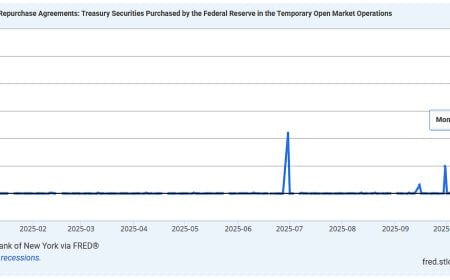
The Day QT Died and QE Began: December 1, 2025 — The Quiet Restart of the Liquidity Engine
QT officially ended on December 1, 2025 — but the real story happened in the plumbing. With the RRP buffer nearly gone, SOFR volumes explod…
7 shared topics.
The New American Crypto Order: How Trump’s Executive Actions, Treasury Strategy, and Federal Reserve Alignment Are Rewiring the Dollar System
The United States has quietly shifted from restricting crypto to absorbing it. Trump’s Strategic Bitcoin Reserve, the Digital Asset Stockpi…
5 shared topics, same research avenue.
The Dollar Fortress: How Bretton Woods, the Marshall Plan, and the 1951 Accord Forged the First Dollar Liquidity Regime (1947–1953)
After World War II, the Bretton Woods system, the Marshall Plan, and the 1951 Treasury–Fed Accord fused into a single architecture: the dol…
6 shared topics, same research avenue.
NAR’s 2026 Housing Boom Fantasy: Why a 14% Rebound Requires a Liquidity Intervention
The National Association of Realtors is projecting a 14% rebound in existing-home sales for 2026 — but their forecast depends on a fragile …
5 shared topics.
Kommentit (0)
Security Check
Please complete the captcha to verify you are human.