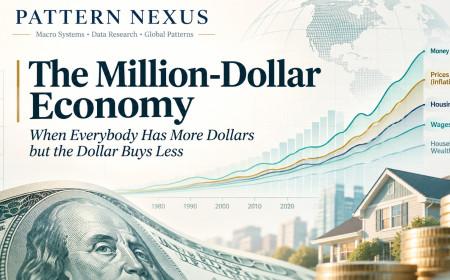
The U.S. money supply has expanded nearly fifteenfold since 1980, while consumer prices have quadrupled. Household wealth, wages, housing, and everyday expenses have followed very different trajectories. Using historical Federal …
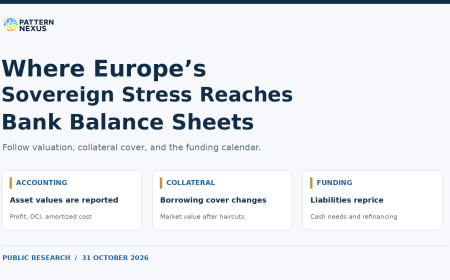
Government-bond repricing can reach a bank through accounting, collateral cover, and funding costs on different schedules. PN examines the latest sovereign-exposure data and follows one bond through those channels to identify whe…
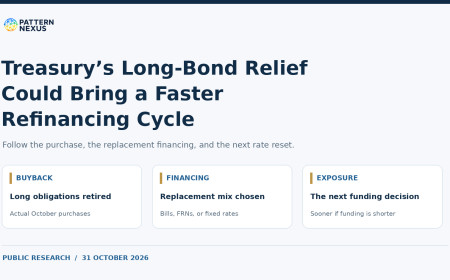
Treasury’s larger long-end buybacks can improve trading today. PN follows the actual cash payments, September maturity data, and replacement-financing choices to test whether that relief could bring future interest-rate exposure…
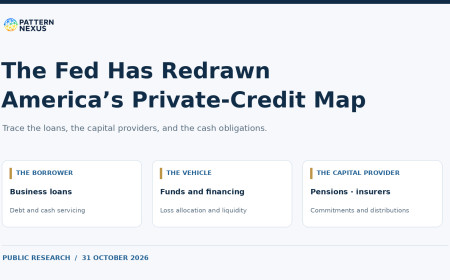
New Federal Reserve tables connect private-credit loans with their vehicles and capital providers. PN follows pension and insurer ownership, fund borrowing, capital commitments, and the cash pressures that could shape the next le…
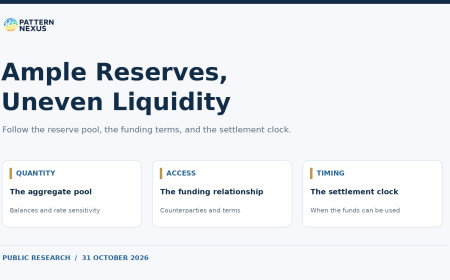
Aggregate reserves can support rate control while funding conditions differ by institution. PN examines October research, overnight-rate distributions, Treasury cash, reserve management, and settlement timing to identify the next…
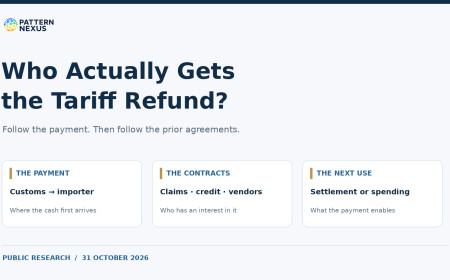
Tariff refunds can pass through importers to claim buyers, vendors, and employees. PN follows the cash and accounting in three company disclosures to test how much new operating relief the refund cycle creates.
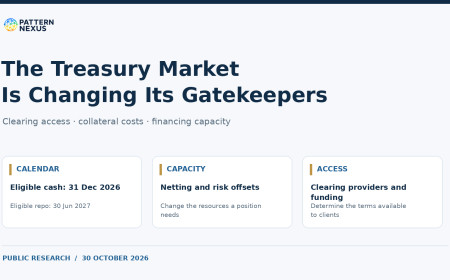
Treasury clearing deadlines are approaching. PN examines who gains from netting and cross-margining, how access and funding terms shape the benefits, and what would signal pressure through 2027.
Pricing markets in gold through October 29, 2026 exposes the dispersion beneath nominal records, near-record leverage, high-rate reserve support and a larger global debt structure.
The opening episode of The Next Normal maps a century of AI acceleration, programmable liquidity, corporate-state power, human divergence, digital identity, virtual economies, and off-world infrastructure from 2025 to 2125.
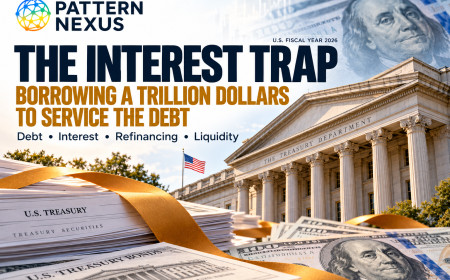
The United States finished fiscal 2026 with a $1.992 trillion deficit. Net interest accounted for $1.052 trillion of it. I break down the budget, the refinancing cycle, and how borrowing to service debt creates another layer of f…
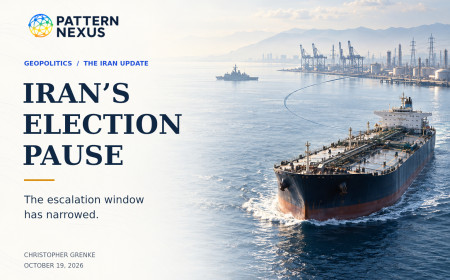
The first follow-up to the October 8 Iran forecast confronts Trump’s election pause, checks actual naval posture, and follows the conflict through shipping, infrastructure, fuel and financing. The November 5 endpoint stays fixed.…
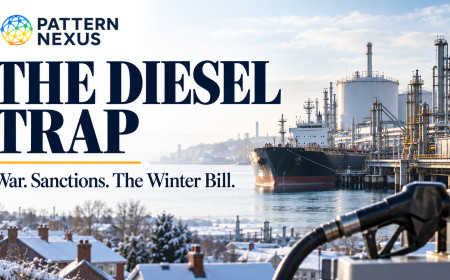
The October Russia-sanctions waiver adds a new policy chapter to the Pattern Nexus oil-war thesis. I connect the diesel bottleneck to emergency fuel commitments, uneven winter heating costs, the original Iran escalation window, h…
Continue your research
Where to go next
Choose the next view that answers a different question.
If Pattern Nexus has been useful to you, help keep it growing.
Pattern Nexus is independently built and operated.
Most of the research remains publicly available,
but the data, servers, tools, research and time behind it all
have real costs.
Books, memberships and direct support help fund the next stage
without putting everything behind a paywall.