
The Illusion of Relevance: Streamers, TikTok, and the Fractured Reality of the Online World
The Illusion of Relevance: How Online Worlds Detached from Reality

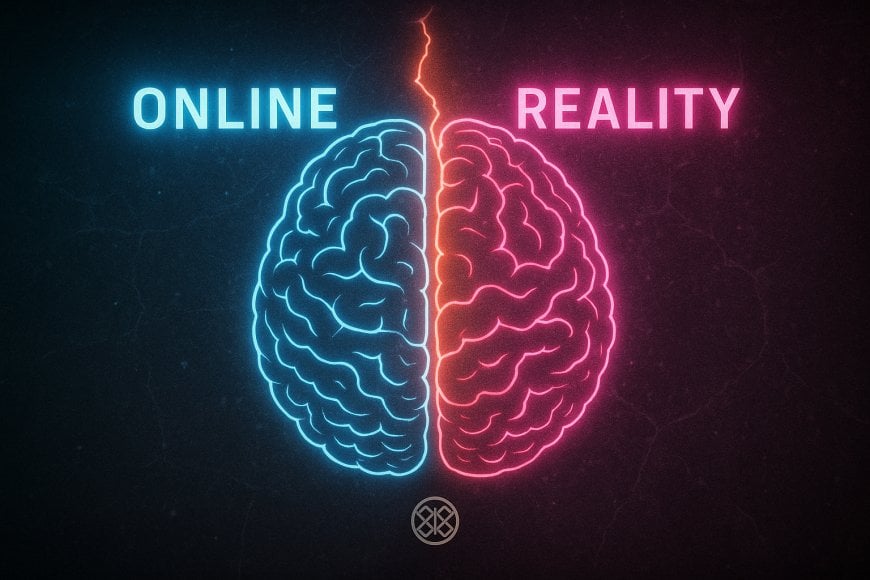
The internet has splintered into a constellation of micro-ecosystems — fragmented worlds built around algorithms, opinions, and fleeting dopamine loops. Each one is a self-contained digital bubble where validation substitutes for truth, and the applause of a thousand strangers feels indistinguishable from societal importance. Streamers, TikTokers, and influencers orbit these artificial suns of attention, convinced that the light they reflect is their own. Every like, donation, or comment reinforces the illusion that their constructed world *is* the world.
The Algorithmic Delusion of Relevance
TikTok represents the peak of algorithmic conditioning. It doesn’t reward quality or insight — it rewards intensity. The machine doesn’t care what you believe, only how quickly it can make you feel. In thirty seconds or less, it converts emotion into currency. Each viral post delivers a tiny neurochemical spark — a micro-orgasm of relevance — tricking creators into believing their influence extends beyond the scroll.
This system isn’t social media; it’s behavioral economics disguised as entertainment. The platforms measure engagement, not enlightenment. They’ve turned human experience into quantifiable noise, where attention is the only commodity that matters. Over time, this feedback loop reshapes personality: attention becomes identity, engagement becomes validation, and the illusion of relevance becomes indistinguishable from actual significance.
Within this digital theatre, millions perform to audiences that mirror themselves. Echo chambers become amphitheaters of self-affirmation. Entire movements surge and vanish inside timelines that never breach the surface of the physical world. It’s a collective hallucination — a new kind of social religion powered by dopamine instead of doctrine — where metrics replace meaning and virality is mistaken for victory.
Two Worlds: The Online and the Actual
The United States has hundreds of millions online, but tens of millions who aren’t. Those who live primarily offline exist in a completely different social universe. Their opinions don’t trend; their existence isn’t filtered through hashtags. They still navigate reality by the physical consequences of action — not by algorithmic alignment.
The internet’s fiercest ideological wars rarely reach these people. The moral crusades, digital cancellations, and hashtag rebellions that feel existential inside the feed barely register outside it. To the offline world, these conflicts are flickers of noise — entertainment for the hyper-connected. To the terminally online, those not participating might as well not exist. It’s not merely polarization — it’s bifurcation: two civilizations occupying the same geography but living in separate perceptual realities.
The most unsettling truth is that both sides are invisible to each other. The digital world believes it dictates culture, unaware that the majority still moves according to older laws of survival, labor, and material necessity. Meanwhile, those rooted in the physical world underestimate how digital perception quietly shapes policy, markets, and social behavior. We are witnessing the evolution of dual societies — one algorithmic and abstract, the other corporeal and enduring.
Gen Z and the Workplace Collision
For Gen Z — the first generation fully incubated inside this digital infrastructure — the collision between online conditioning and real-world expectations is seismic. They were raised in ecosystems that rewarded self-branding, emotional display, and hyper-personalized validation. Every post became a performance; every opinion a product. Then they enter a workplace that doesn’t care. Reality does not operate on follower counts or moral signaling. It values reliability, composure, and tangible results.
This is where the dissonance becomes generational trauma. The traits optimized for algorithmic survival — rapid expression, constant self-promotion, performative empathy — don’t translate to environments governed by merit, hierarchy, and accountability. Many feel alienated, convinced that the system is broken, when in truth, they’ve been trained by a different one. They’ve spent a decade mastering the art of digital performance — only to discover the real world speaks an entirely different language.
This isn’t a moral failing; it’s an adaptive one. When your adolescence is shaped by platforms that reward visibility over substance, the concept of “earning relevance” through long-term effort feels outdated. The emotional expectation built online — that every opinion deserves validation — collapses against the apathy of the adult world. The result is identity fatigue: burnout not from overwork, but from the realization that your cultivated self doesn’t convert to value outside the screen.
The Parasocial Paradox
The internet has created a new psychological ecosystem — one where people maintain one-sided emotional relationships with strangers. Streamers and audiences form parasocial bonds that mimic intimacy, but without the grounding of reciprocity. The viewer feels known; the creator feels admired. Both confuse simulation for connection. It’s intimacy on demand — affection without accountability, empathy without friction.
When a public figure is “canceled,” the outrage rarely leaves the boundaries of these digital ecosystems. It’s a form of symbolic punishment that exists within an entertainment feedback loop. Unless it escalates to threats or doxxing, it’s not *real-world harm* — it’s collective storytelling. The human brain, however, hasn’t evolved to distinguish digital condemnation from real social ostracization. Both trigger the same neural responses of threat and shame. Society’s cognitive wiring hasn’t adapted to an always-on world where the crowd is eternal and invisible.
The Cognitive Lag of a Networked Species
Our neurology was built for tribes of 150 people, not networks of millions. The same circuits that evolved to process trust, belonging, and social threat are now overloaded by digital hyper-connectivity. Every notification, like, or comment hijacks neural pathways meant for survival, producing an artificial sense of importance. We mistake micro-validation for universal truth because our brain’s reward system treats them the same.
This mismatch between ancient biology and modern networks has created what could be called cognitive lag — the delay between technological expansion and psychological adaptation. Humanity’s tools have evolved faster than our mental firmware can update. We now process virtual signals as though they carry real-world consequence, collapsing the boundaries between perception and reality.
This is the fundamental problem of the digital age: we treat online interaction as social reality, when it’s only a projection of it. It lacks texture — no body language, no silence, no consequence. Without those anchors, our moral and emotional instincts drift into abstraction. The result is a species living in a global hallucination where perception has replaced presence and where perceived relevance replaces actual impact.
Reality’s Quiet Resistance
Yet, the real world remains indifferent. Rent still has to be paid. The infrastructure of civilization hums on, unphased by what trends on TikTok or Twitter. Water flows, freight moves, power grids pulse — all by people who don’t care about hashtags. When the servers crash, so do the empires built upon them.
There’s a strange comfort in that. For all the noise and outrage, reality has inertia. It doesn’t need engagement to exist. The soil doesn’t tweet. The wind doesn’t trend. The physical world resists the illusion because it doesn’t recognize it. True relevance doesn’t beg for recognition; it proves itself through consequence.
Until humanity learns to distinguish simulation from substance — until we remember that truth doesn’t require an audience — we’ll remain suspended between two planes: one that exists, and one that merely performs existence. The question is no longer whether the digital world will dominate reality, but whether reality will survive the human need to be seen.
Care este reacția ta?
 Îmi place
0
Îmi place
0
 Dezaprobat
0
Dezaprobat
0
 Iubire
0
Iubire
0
 Amuzant
0
Amuzant
0
 Wow
0
Wow
0
 Tristețe
0
Tristețe
0
 Înfuriați
0
Înfuriați
0












Comentarii (0)