
Week Ahead: The Reaction-Function Week (Fed Holds, Mega-Cap Earnings, Treasury Supply) — Jan 26–30, 2026
The Fed is expected to hold, but the week is not calm. Markets trade language, auctions, and mega-cap guidance while shutdown-delayed data drops (trade balance, factory orders, wholesale inventories, PPI). A Pattern Nexus preview of the catalysts, mechanics, and scenarios for Jan 26–30, 2026.
![[HERO_IMAGE_ALT: a dark macro dashboard with rate curves, auction calendar, earnings icons, and metals/FX tickers]](https://patternnexus.com/uploads/images/202601/image_870x_69770c2809375.jpg)

“No cut” is not a calm regime. When the decision is priced, the market trades the wording, the tone, and what Powell refuses to validate.
Shutdown-delayed data can “surprise” simply because positioning drifted while the data was missing. Old information hits a new market structure.
Treasury supply is a sentiment detector. If auctions show weak demand (tails, weak bid-to-cover), “Fed hold” can still tighten financial conditions.
Mega-cap guidance is the macro this week. If guidance is clean, the market tolerates “higher for longer.” If guidance is weak, rates become the scapegoat.
Gold and silver at the highs means “credibility” is already being priced. If the Fed sounds dismissive while the dollar stays weak, metals can accelerate.
Iran risk premium is a macro input. Oil is not “just oil” when the market is hypersensitive to inflation expectations and policy credibility.
The Setup: What’s Priced vs What’s Not
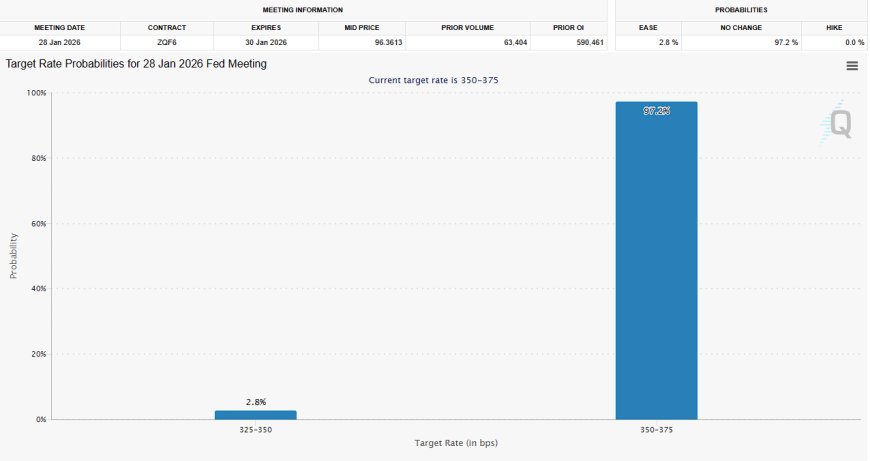
Start with the asymmetry: the market largely expects the Fed to hold, so the “surprise” is not the rate move, it’s the communication. When consensus hardens, the distribution of outcomes shifts toward second-order effects: the wording that changes the implied path, the press conference that tightens (or loosens) financial conditions, and the risk premium that leaks into FX and commodities.
The other setup feature is compression. This week concentrates multiple “macro decision engines” into a narrow window: (1) the Fed’s statement and Powell’s presser, (2) mega-cap earnings, and (3) Treasury auctions that test real money demand for duration into event risk.
Now add the overlay that makes this week feel different: metals are already trading like a referendum on policy credibility, the dollar is soft, and Iran headlines are reintroducing energy risk premium. The market doesn’t need a cut to move. It needs a narrative that “holds together.” When that narrative fractures, pricing moves through FX and commodities first, then into rates and equity multiples.
If Powell stays “maximum flexible” and mega-cap guidance is solid, risk can levitate even without cuts. If Powell pushes back on easing expectations while earnings guidance disappoints, the market reprices through discount rates and multiples fast. If the dollar stays weak and oil risk premium rises, that feedback loop can make “no cut” feel tighter anyway.
The Calendar: Day-by-Day Catalysts (US + Global)
The US data slate is unusually important because several prints are flagged as shutdown-delayed. That creates two effects: (1) more room for “surprise” because market positioning drifted without the data, and (2) weaker confidence in the cleanliness of the series, which can raise “interpretation risk” and widen intraday ranges.
Non-scheduled catalysts matter too this week: FX rhetoric (USDJPY/intervention risk), Middle East headlines (Iran/oil), and metals volatility (gold/silver) can front-run the macro calendar. If you only watch scheduled prints, you miss the real transmission channels.
Monday (Jan 26)
- Durable goods orders (Nov, delayed) at 8:30 a.m. ET: capex impulse proxy, also a narrative lever for “growth is sticky.”
- Treasury supply: 13- and 26-week bills plus the 2-year note auction (settles Feb 2).
- Overlay watch: USDJPY levels and intervention rhetoric; metals continuation; oil sensitivity to Iran headlines.
Tuesday (Jan 27)
- Conference Board Consumer Confidence (Jan) at 10:00 a.m. ET: consumer “mood” as a spending/slowdown tell.
- FHFA House Price Index release day (Nov data): housing conditions as the slow-burn macro constraint.
- Treasury supply: 5-year note auction (settles Feb 2) and 6-week bill.
- FOMC day 1: no decision yet, but positioning hardens.
- Overlay watch: risk parity/CTA de-grossing risk if metals and FX extend; watch VIX and breadth.
Wednesday (Jan 28)
- Bank of Canada decision + MPR at 9:45 a.m. ET: CAD/US spreads as a cross-border risk sentiment input.
- FOMC statement at 2:00 p.m. ET and Powell press conference at 2:30 p.m. ET.
- Treasury supply: 2-year FRN auction (settles Feb 2).
- Overlay watch: if Powell pushes back while the dollar is already weak, FX and metals can gap first.
Thursday (Jan 29)
- Weekly jobless claims at 8:30 a.m. ET: watch trend and revisions, not one print.
- Trade balance (Nov, delayed) at 8:30 a.m. ET: goods deficit optics, GDP arithmetic, and USD narrative leverage.
- Nonfarm productivity (Q3) at 8:30 a.m. ET: a quiet but potent driver of “inflation pressure vs margin relief” debates.
- Factory orders (Nov, delayed) and wholesale inventories (Nov, delayed) at 10:00 a.m. ET.
- Treasury supply: 7-year note auction (settles Feb 2).
- Singapore MAS policy statement + macro review: FX-band policy that can ripple through Asia risk sentiment.
- Overlay watch: 7-year auction quality matters more if oil is rising (inflation expectations) and the dollar is falling.
Friday (Jan 30)
- PPI (Dec, delayed) at 8:30 a.m. ET: wholesale inflation pulse that can reprice rate expectations quickly.
- Overlay watch: metals volatility into the close and weekend headline risk (Middle East) can widen ranges.
The Fed: What Matters When “Hold” Is Consensus
The market’s base case is a hold. That means Powell’s objective is not “surprising markets,” it’s preventing markets from loosening conditions prematurely. In practice, that becomes a language game: communicate patience without accidentally promising cuts, and communicate vigilance without implying hikes.
The three questions that matter most:
- Inflation confidence: Is the committee comfortable that inflation is trending sustainably toward target, or do they still need “more evidence”?
- Labor tolerance: What level of labor deterioration would justify easing, and how quickly would they move if it appeared?
- Timeline discipline: Does Powell validate a “cuts later this year” story, or does he explicitly keep the market from anchoring on a date?
A fourth question is increasingly relevant when the dollar is weak and commodities are ripping:
- FX and import-price stability: Does Powell acknowledge that a weaker dollar can re-ignite inflation via commodities/imports, or does he treat FX as “not our mandate” while still watching the effect through financial conditions?
If Powell is too calm, markets ease conditions for him and he has to re-tighten later with words. If he is too sharp, he tightens conditions into earnings season and risks becoming the headline villain. If he ignores metals/dollar signals entirely, he risks looking behind the curve on credibility.
Earnings as Macro: Mega-Cap Guidance, AI, and Multiples
Earnings week matters because it is the only “fundamental” input that can override a hawkish tone without the Fed’s cooperation. If mega-cap guidance is strong and coherent, markets can tolerate restrictive policy because growth can justify the multiple. If guidance is weak, the same policy setting becomes “too tight,” and the market starts pricing cuts as a rescue.
This week’s key dynamic is AI capex versus AI monetization. Investors will listen for:
- Capex trajectory: accelerating, flat, or “efficiency phase” language starting?
- Margins and unit economics: is AI spend compressing margins or showing operating leverage?
- Demand clarity: enterprise demand, ad demand, consumer demand, and pricing power.
- Guidance quality: specificity beats optimism. Vague “AI tailwinds” gets punished.
One more addition in this environment: mega-cap guidance can spill into the dollar and rates through capital flow expectations. If AI capex stays “infinite” while the dollar is weak, the market can start treating U.S. funding needs (Treasury supply) and private capex simultaneously as a liquidity stress test.
If mega-cap guides higher while Powell stays non-committal, risk can grind up. If mega-cap guides lower while Powell stays firm, risk can gap down. If metals/FX are already disorderly, “good earnings” may only stabilize, not rally.
| Date | Company | Ticker | Release timing | Call/Webcast (ET) | Why it matters |
|---|---|---|---|---|---|
| Tue, Jan 27 | American Airlines | AAL | Before market open | 8:30 AM | Demand, pricing, and travel/consumer resilience. |
| Tue, Jan 27 | UPS | UPS | Pre-open (results ~6:00 AM) | 8:30 AM | Global shipping/commerce pulse; margin + volume read-through. |
| Tue, Jan 27 | UnitedHealth Group | UNH | Before market open | 8:00 AM | Health-cost trend + guidance; defensive index weight. |
| Tue, Jan 27 | Boeing | BA | Before market open | 10:30 AM | Production/quality cadence; defense + aerospace cycle optics. |
| Tue, Jan 27 | Texas Instruments | TXN | After market close | 4:30 PM | Semis cyclical check: industrial demand + inventory cycle. |
| Tue, Jan 27 | Seagate | STX | After market close | 5:00 PM | AI data-center storage demand and pricing power. |
| Wed, Jan 28 | GE Vernova | GEV | Before market open | 7:30 AM | Grid buildout, power equipment, electrification cycle. |
| Wed, Jan 28 | Starbucks | SBUX | Before market open (results 7:45 AM) | 8:00 AM | Consumer discretionary read; traffic vs price mix. |
| Wed, Jan 28 | Meta Platforms | META | After market close | 4:30 PM | Ads + engagement; AI capex and margin discipline. |
| Wed, Jan 28 | Microsoft | MSFT | After market close | 5:30 PM | Azure growth + AI monetization; capex trajectory. |
| Wed, Jan 28 | Tesla | TSLA | After market close | 5:30 PM | Margins, delivery cadence, autonomy/robotics narrative. |
| Wed, Jan 28 | IBM | IBM | After market close | 5:00 PM | Enterprise IT spend, services, AI “real adoption” signals. |
| Thu, Jan 29 | Caterpillar | CAT | Before market open (results 6:30 AM) | 8:30 AM | Industrial cycle + infrastructure capex read-through. |
| Thu, Jan 29 | Comcast | CMCSA | Before market open | 8:30 AM | Broadband adds/churn; ad demand and media margins. |
| Thu, Jan 29 | Mastercard | MA | Before market open | 9:00 AM | Consumer spend + travel cross-border volume; payments health. |
| Thu, Jan 29 | Apple | AAPL | After market close | 5:00 PM | iPhone/Services mix; guidance as “megacap risk-on/risk-off.” |
| Fri, Jan 30 | Verizon | VZ | Pre-open (materials 6:30 AM) | 8:00 AM | Telecom pricing war + subscriber/ARPU regime. |
| Fri, Jan 30 | American Express | AXP | Before market open | 8:30 AM | Consumer credit + spend mix; travel/affluent cohort check. |
| Fri, Jan 30 | Regeneron | REGN | Before market open | 8:30 AM | Biopharma read; pipeline + key product demand signals. |
| Fri, Jan 30 | Exxon Mobil | XOM | Pre-open (press release 6:30 AM) | 9:30 AM | Oil/gas + refining margins; energy earnings as inflation input. |
| Fri, Jan 30 | Chevron | CVX | Before market open | 11:00 AM | Energy macro + cash-return stance; capex and supply discipline. |
Scenarios and “If-Then” Trade Map
Here’s the decision tree. The point is not predicting the exact path, it’s pre-committing to what you think the market will reward or punish. That reduces emotional trading when volatility spikes.
Base case: Hold + flexible tone + mixed but acceptable guidance
- Rates: stable-to-rangebound; curve trades nuance (front end calmer than you’d expect).
- Equities: index supported if guidance isn’t a shock; leadership stays narrow.
- FX/metals: elevated risk premium but controlled; gold/silver consolidate rather than vertical.
- Energy: risk premium remains in the background; oil sensitive to headlines but not runaway.
Hawkish hold: Powell pushes back on easing expectations
- Rates: front-end yields firm; financial conditions tighten even without a hike.
- Equities: multiple compression, especially long-duration tech, unless earnings overwhelm.
- FX/metals: two-way risk. If hawkishness strengthens the dollar, metals can pull back. If the dollar stays weak anyway, metals can treat hawkishness as “credibility stress” and keep climbing.
- Watch: auctions. Weak demand plus hawkish tone can cascade.
Dovish hold: Powell emphasizes downside risks
- Rates: front-end yields slip; “cuts later” narrative strengthens.
- Equities: relief rally possible, but only durable if earnings confirm growth.
- FX/metals: dovish + weak dollar is combustible for metals (especially silver), but can also trigger “intervention talk” in FX if USDJPY breaks too fast.
- Risk: if dovishness reads as fear, markets can flip from relief to concern fast.
Risk shock: Iran escalation / FX disorder / auction failure
- Equities: gap risk rises; liquidity becomes the story.
- Oil/metals/JPY: safe-haven and scarcity bids can accelerate.
- Fed: forced to “manage the narrative” more aggressively in following weeks, even if policy is unchanged.
Gold & Silver: The Anti-Policy Trade Goes Mainstream
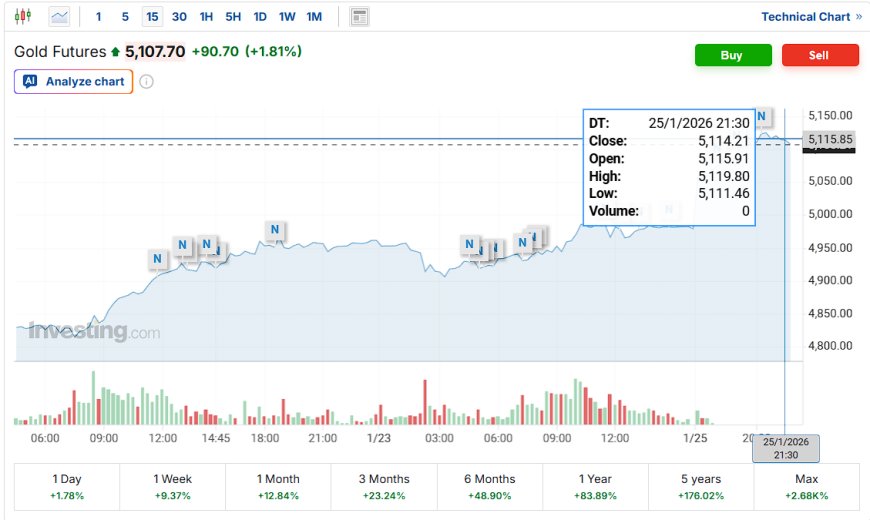
Gold and silver entering the week at extreme levels changes how the rest of the macro calendar trades. When metals are quiet, the Fed can dominate the narrative. When metals are screaming, the Fed is trading inside a credibility frame that is already set by the market.
Gold tends to be the slow credibility vote. Silver tends to be the fast liquidity vote. When both run, you are watching a composite signal: currency confidence, real-rate expectations, and positioning leverage all in one tape.


The Saudi $100B silver rumor: treat it as a scenario, not a fact
The claim circulating is that Saudi Arabia will deploy roughly $100 billion from oil revenue into silver. I have not seen a primary-source confirmation. In Pattern Nexus terms, that’s a flow headline, and flow headlines can move price even before they are proven true.
But you should still size it correctly. At ~$100/oz, $100B is ~1B ounces of silver. That is on the order of an entire year of global supply. If a buyer of that scale exists, the execution would almost certainly be staged, routed, and partially paper-settled. The “headline” matters because it forces market participants to ask, “What if a sovereign-scale buyer decides silver is strategic?”
1) Look for official confirmation (PIF, central bank, ministry) or filings. 2) Watch ETF custody changes and futures positioning for “footprints.” 3) Track physical signals: backwardation, lease rates, inventory drawdowns. 4) If it’s real, the market will show it before Twitter proves it.
What to watch in metals this week
- Dollar reaction: metals usually accelerate when the dollar fails to bounce after hawkish talk.
- Real rate narrative: even a “hold” can be bullish for metals if the market believes cuts are inevitable later.
- Inventory/flows: any fresh “tightness” headlines can amplify silver volatility disproportionately.
- Miners vs metals: miners lagging while metals surge can be a warning about sustainability.
Dollar Weakness & FX Stress: DXY, USDJPY, and Intervention Risk
The dollar matters this week because it is the hidden lever that converts a “hold” into a different policy stance. A weaker dollar loosens conditions for exports but tightens inflation risk through commodities and import prices. If the Fed sounds patient while the dollar is weak, the market can interpret it as tolerance for further currency softness.
USDJPY is the pressure gauge. When yen strength accelerates too quickly, intervention talk surfaces. Coordinated intervention is rare. The point is not predicting intervention. The point is recognizing that FX disorder can become a policy input even when rate policy is unchanged.

Weak dollar → stronger commodities → higher inflation expectations → pressure on yields → tighter discount rates → equity multiple compression. That loop can run even if the Fed does nothing.
FX levels to keep on-screen
- DXY: [DXY_LEVEL] (watch whether it can bounce post-FOMC).
- USDJPY: [USDJPY_LEVEL] (watch speed, not just level).
- EURUSD: [EURUSD_LEVEL] (risk sentiment + dollar proxy).
- USDCNH: [USDCNH_LEVEL] (global liquidity + risk proxy).
Iran & the Energy Risk Premium: Strait of Hormuz Mechanics
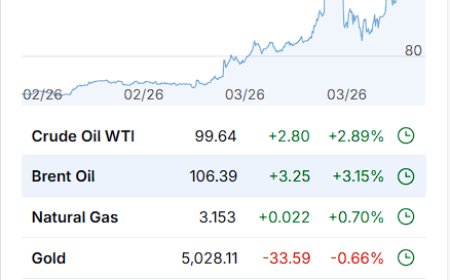
This week’s geopolitical overlay is not abstract. Iran headlines have been feeding directly into oil pricing, and oil pricing feeds directly into inflation expectations. When the market is already hypersensitive to the Fed’s credibility, oil is gasoline on the narrative.
The Strait of Hormuz is the macro choke point. A material share of global oil flows through it, and alternative routing capacity is limited. That does not mean “closure.” It means risk premia can expand fast when traders feel forced to price tail risk.
Iran tension → oil risk premium → inflation expectations → yields → Fed narrative stress. If the Fed is “holding” while oil is rising and the dollar is weak, markets can interpret that as delayed tightening or credibility erosion.
What to watch
- Oil reaction to headlines: if price responds to “talk” more than “events,” risk premium is already fragile.
- Energy equities vs crude: divergence can signal whether the market believes the move is durable.
- Shipping/insurance tone: rising “risk language” often appears before actual disruption.
- Fed messaging sensitivity: Powell’s tone may matter more if oil is rising into PPI.
Markets Dashboard: What to Watch Across Assets
This is the quick “screen” that tells you whether the week is stable or breaking. The point is not precision. It’s early detection.
| Asset / Channel | What to watch | Why it matters this week |
|---|---|---|
| Rates (2Y/10Y + curve) | Auction tails, WI levels, curve steepening/flattening | Funding credibility test into FOMC + mega-cap guidance |
| Equities (SPX/Nasdaq breadth) | Breadth, leadership, gap risk after earnings | Top-heavy index = a few calls decide the tape |
| Credit (IG/HY spreads) | Spread widening vs equity resilience | Credit cracks first when “risk” becomes real |
| Dollar/FX (DXY, USDJPY) | Dollar bounce failure; USDJPY speed; intervention talk | FX disorder can become policy-adjacent |
| Metals (gold/silver) | Volatility regime, pullback depth, physical tightness signals | Credibility and liquidity vote; silver is leverage indicator |
| Energy (WTI/Brent) | Headline sensitivity; risk premium persistence into PPI | Energy is the fastest path back into inflation expectations |
Pattern Nexus Lens
This week is a clean example of why “policy” is not just rate settings. It’s communications, plumbing, and enforcement. The Fed’s words shape the discount rate. Treasury auctions reveal whether the market will fund duration at the implied price. Mega-cap earnings determine whether the private sector can outgrow the cost of capital. Gold and silver are the market’s confidence instruments. Iran headlines are the external shock channel that can reprice inflation psychology without permission.
Watch the order of operations. If auctions weaken first, you’ll see it in yields and risk pricing before the Fed speaks. If earnings break first, you’ll see it in multiples and leadership breadth before macro prints matter. If FX disorder appears, it can force the narrative to shift from “growth vs inflation” to “stability vs disorder.” If oil risk premium rises while the dollar is weak, “hold” can feel like “behind the curve” in real time.
The week is not about the rate. It’s about whether the system can keep conditions stable while the market audits narratives: Fed credibility, earnings credibility, funding credibility, and currency credibility.
FAQ
Why can a “hold” meeting still move markets so much?
Because the market trades the implied path, not the current decision. When the decision is priced, small language changes alter expectations for the next two meetings, and that reprices the front end of the curve and the discount rate used for equities.
What matters more: the statement or the press conference?
The statement sets the legal framework. The press conference sets the emotional framework. If Powell refuses to validate a timeline, markets can tighten conditions even with unchanged rates. If he signals comfort, markets can loosen conditions even without cuts.
How should I read Treasury auctions this week?
Focus on demand quality: tails versus when-issued levels, bid-to-cover, and the split between indirect bidders (often foreign/official) and direct bidders (real money). Weak demand into a Fed week is rarely “nothing.” It’s often the early warning that price must adjust.
Why is silver so much crazier than gold?
Silver is smaller, more industrially entangled, and more susceptible to squeeze narratives and positioning leverage. Gold is a reserve-asset credibility vote. Silver is the credibility vote plus a microstructure stress test.
How should I treat the $100B Saudi silver rumor?
As an unconfirmed flow narrative until proven. Size it (it’s enormous relative to annual supply), then watch for footprints: filings, custody changes, inventory drawdowns, backwardation, and persistent tightness signals. If it’s real, markets tend to telegraph it before the story gets “official.”
Sources
These sources support the schedule, event timing, and the metals/FX/geopolitics context referenced above.
- Federal Reserve: January 2026 calendar (FOMC statement and press conference timing)
- U.S. Treasury: Tentative Auction Schedule (2Y/5Y/2Y FRN/7Y and bills)
- BLS: Producer Price Index release schedule
- Bank of Canada: Upcoming events (rate decision timing)
- Reuters: Global markets week-ahead framing (FX, rates, risk tone)
- Reuters: Poll framing for Fed hold expectations
- Reuters: Gold/silver extend record-setting rally
- Reuters: What is the Strait of Hormuz and why it matters
- Reuters: U.S. targets Iran “shadow fleet” (sanctions/escalation context)
- Silver Institute: Silver supply and demand (sizing and market structure context)
Care este reacția ta?
 Îmi place
0
Îmi place
0
 Dezaprobat
0
Dezaprobat
0
 Iubire
0
Iubire
0
 Amuzant
0
Amuzant
0
 Wow
0
Wow
0
 Tristețe
0
Tristețe
0
 Înfuriați
0
Înfuriați
0

Founder of Pattern Nexus. I research markets, macro, geopolitics, AI, history, ancient systems, and the patterns most people overlook. I’m also building Market Radar, a trading scanner designed to read pressure, risk, confirmation, and setup quality before chasing a move. Pattern Nexus is where I connect the dots between data, history, technology, and the bigger system playing out around us.


















Comentarii (0)