
AI’s Nuclear Backstop: Trump Admin to Lend “Hundreds of Billions” for Nuclear Power Plants to Meet AI Demand
The Trump administration is preparing massive federal lending for new nuclear reactors to meet accelerating AI-era power demand. Here’s the full breakdown.
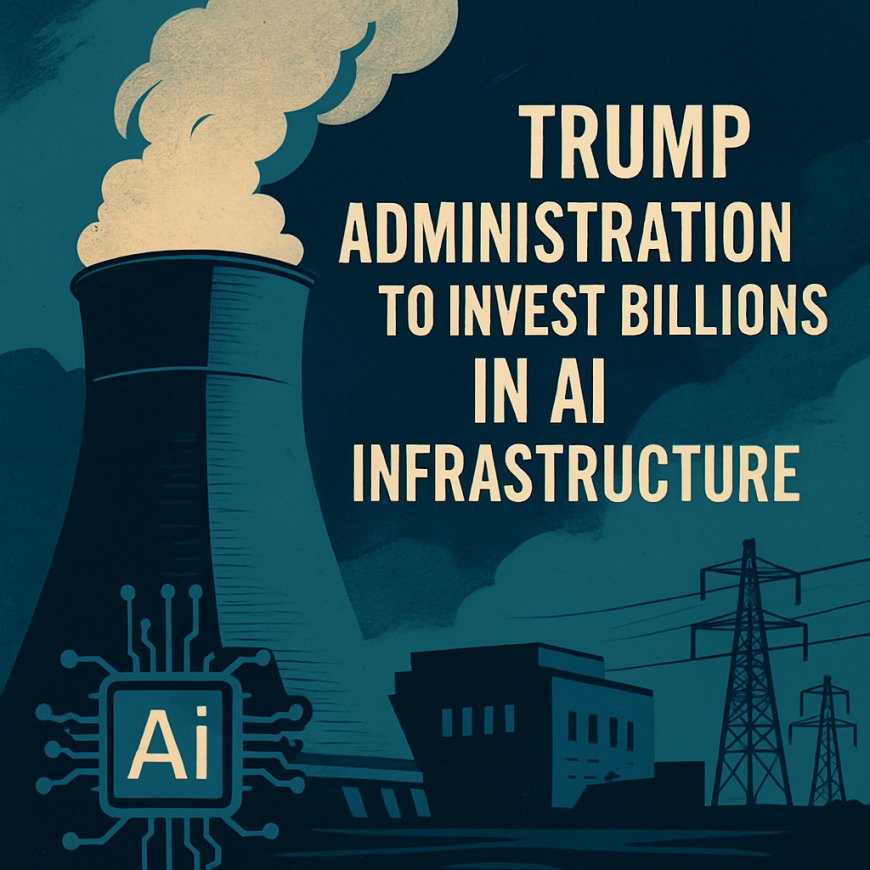
AI’s Nuclear Backstop: Trump Admin Signals “Hundreds of Billions” in Federal Lending for Reactors
The Department of Energy’s Loan Programs Office is being steered directly toward nuclear to meet AI-driven electricity demand — unlocking federal financing pathways that can lever private capital 3–4×, accelerate reactor deployment, and reshape U.S. industrial policy.
1) What Just Changed
In the past 48 hours, U.S. Energy Secretary Chris Wright stated that the Department of Energy’s Loan Programs Office (LPO) would allocate its single largest block of federal financing capacity toward nuclear power plants, citing rapidly accelerating AI/data-center electricity demand.
This was confirmed by multiple sources, including:
- Reuters: “U.S. Energy Secretary says most LPO funding will go to nuclear”
- OEDigital recap: Industry briefings on “hundreds of billions” in nuclear lending capacity
- DOE LPO official site: DOE Loan Programs Office
This is the first time a U.S. administration has openly tied **massive federal nuclear financing** to the **power consumption curve of AI**, confirming what Pattern Nexus has been forecasting: AI is no longer a tech story — it is an energy, industrial, and national power story.
How the LPO Financing Stack Works
Title 17 & Capital Leverage
- LPO provides low-cost federal debt and loan guarantees under Title 17
- Private equity can be levered 3–4× using federal credit tranches
- Longer tenors reduce WACC and make megaprojects bankable
- Federal credit continues even during recessionary cycles
Why Nuclear Is the Centerpiece
- 24/7 baseload for AI compute campuses
- Price stability vs. gas price volatility
- Compatible with DOE-owned land and existing licensed nuclear communities
- Fits decarbonization targets + bipartisan industrial policy goals
As the LPO scales, the mechanism feeds into Treasury demand (a key part of the Tokenized Reserve Era thesis): **utilities, infra funds, pension funds, and sovereign buyers must accumulate long-duration U.S. assets** to match nuclear build-outs.
Pipeline: Westinghouse, DOE Sites, Private AI + Nuclear Projects
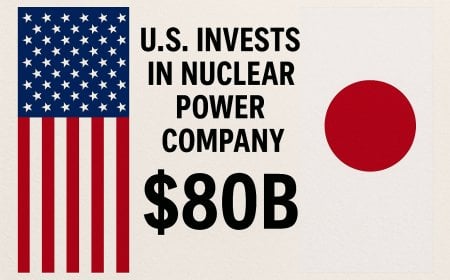
- Westinghouse AP1000 agreement (~$80B): Confirmed by Bloomberg and WaPo. Fleet-standardized AP1000s dramatically reduce costs. Bloomberg: “Westinghouse lands multi-reactor U.S. deployment pact”
- DOE federal lands for AI + energy: DOE selected INL, ORNL, Paducah, Savannah River for colocated data centers + generation. DOE program page: DOE AI Siting Initiative (INL, ORNL, Paducah, SRS)
- Private AI-nuclear platforms (e.g., Fermi America): Pursuing multi-reactor campuses integrated with hyperscale compute. Washington Post: “Fermi America pitches nuclear-powered AI towns”
Wall Street is already assigning premium valuations to developers with site control, interconnection rights, and PPA-ready reactor blueprints.
Regulatory Path & Timeline Reality
NRC Chairman Christopher Hanson stated at the ANS Winter Conference: “We are going to need large reactors, small reactors, all reactors.”
Source: ANS Conference NotesTwo tracks are forming:
- AP1000-class large reactors: More mature supply chain, fewer FOAK risks, faster scaling for large-capacity campuses.
- SMRs: Modular, flexible siting, ideal for distributed AI workloads or regional grids.
Earliest realistic CODs for new units: 2030–2035. Near-term options include:
- Life extensions of existing reactors
- Power uprates (+5% to +15% capacity)
- Restarting previously-mothballed nuclear assets
Grid, Markets & the AI Load Wave
Why Nuclear is AI’s Natural Backbone
- AI load growth is now outpacing grid expansion by **5–8×**
- Transformers, switchgear, and transmission lines have multi-year shortages
- Compute campuses must colocate near generation
- Stable nuclear PPAs allow predictable model economics
Liquidity & Treasury Demand Feedback Loop
- LPO credit → utility capex → Treasury issuance → global USD absorption
- Tokenized U.S. Treasuries reduce settlement friction (Tokenized Reserve Era)
- AI Industrial Flywheel: energy → compute → productivity → GDP → revenue → more energy investment (AI Industrial Flywheel)
How This Fits Into the Pattern Nexus System Map
This policy is not isolated — it’s the logical extension of three massive structural shifts:
📌 1. AI Industrial Flywheel
AI is driving the fastest industrial build-out since WWII. Compute → power → metals → grids → construction → more compute. Nuclear becomes the stabilizer and rate anchor.
📌 2. Tokenized Reserve Era
Nuclear megaprojects require decades-long financing and predictable settlement rails. Tokenized Treasuries and real-time settlement systems lower friction and allow global capital pools to plug directly into U.S. infrastructure.
📌 3. Systemic Realignment
As global multipolar politics fragment supply chains, the U.S. must onshore energy security and compute sovereignty. Nuclear is the point where **industrial policy, national security, and macro liquidity unify**.
Risks & Failure Modes
- EPC execution: AP1000 “lessons learned” still matter
- NRC complexity: licensing delays can reprice entire projects
- Rate risk: sustained high yields could constrain financing windows
- Supply chain bottlenecks: forgings, skilled labor, transformers
- Political whiplash: nuclear requires multi-administration continuity
Positioning: Who Wins
- OEMs & EPCs: Westinghouse, BWXT, heavy forgings, controls vendors
- Utilities: NEE, SO, DUK, EXC — life extensions, uprates, PPAs
- Grid infrastructure: transformer firms, switchgear, HV equipment
- Metals: uranium, copper, nickel, steel, electrical alloys
- Capital allocators: infra funds, insurance portfolios, pension funds
Sources & Further Reading
Kakva je vaša reakcija?
 Sviđa mi se
0
Sviđa mi se
0
 Dislike
0
Dislike
0
 Ljubav
0
Ljubav
0
 Smešno
0
Smešno
0
 Vau
0
Vau
0
 Žalostan
0
Žalostan
0
 Besan
0
Besan
0

Founder of Pattern Nexus. I research markets, macro, geopolitics, AI, history, ancient systems, and the patterns most people overlook. I’m also building Market Radar, a trading scanner designed to read pressure, risk, confirmation, and setup quality before chasing a move. Pattern Nexus is where I connect the dots between data, history, technology, and the bigger system playing out around us.







Komentari (0)