
The Quiet War for Critical Minerals: How Resource Control Defines the Next Century
The next great battles won’t be fought over oil fields — they’ll be fought over rocks. As the energy transition accelerates and technology demands expand, critical minerals (lithium, cobalt, rare earths) have become the hidden strategic battlegrounds of global power. This long-form piece unpacks how control of supply chains has shifted from geopolitics of territory to geopolitics of elements — and why that matters for business, nation states, and you.
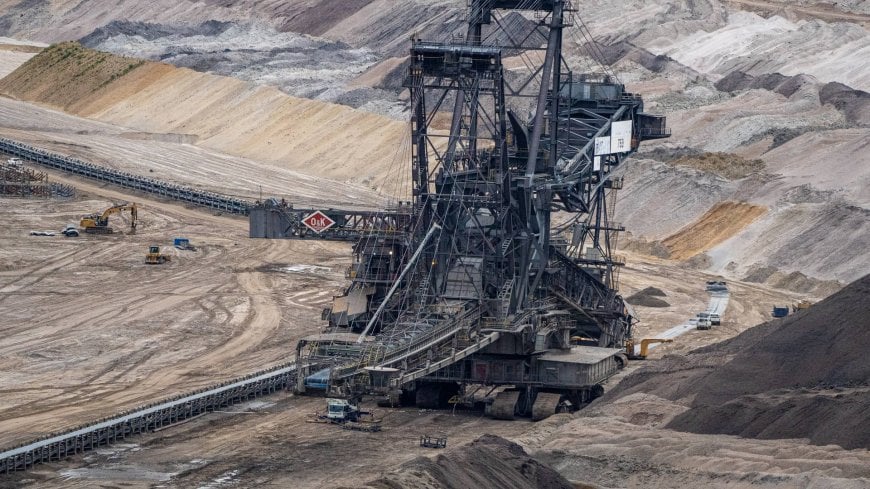
The Quiet War for Critical Minerals: How Resource Control Defines the Next Century
The next century will not be defined by oil wells or grain silos — it will be defined by the elements beneath our feet. Lithium, cobalt, nickel, rare earths — these aren’t household names, but they’ve quietly become the new backbone of civilization. They are the invisible arteries of the digital and green revolutions. Every EV battery, every wind turbine, every guidance system in modern defense depends on them. And control over these materials is quietly becoming the most important form of power on Earth.
For decades, global influence was measured in barrels of oil and GDP growth. But in an era of electrification, automation, and artificial intelligence, the definition of “strategic resource” has changed. The modern economy runs not just on energy, but on conductivity — on the ability to channel and store it. Whoever controls the minerals that make that possible doesn’t just control technology; they control the pace of civilization itself.
The World Economic Forum called it “the trilemma of progress”: the need to balance access, sustainability, and sovereignty. It’s a polite way of saying that no nation can industrialize, decarbonize, or digitize without first securing its supply chain — and that those who fail to do so will become dependent on those who did.
In 2008, as the world focused on financial collapse, another quiet shift began beneath the surface. China — watching the Western financial system unravel — doubled down on industrial strategy. While the U.S. and Europe debated stimulus, Beijing bought mines. It invested in lithium fields in Chile, cobalt operations in the Democratic Republic of Congo, and the refining infrastructure that would turn raw ore into global leverage. Within a decade, China controlled roughly 60% of global rare earth mining and 85% of its refining capacity, according to the Council on Foreign Relations.
That wasn’t a coincidence. It was a doctrine — an understanding that in the 21st century, supply chains are the new borders. Control the inputs, and you don’t need to invade. You simply adjust the flow.
When the U.S. passed its first Inflation Reduction Act, most people focused on tax credits and EV subsidies. But buried in the legislation was a national security clause requiring that certain percentages of battery minerals come from “friendly nations.” It wasn’t about jobs or climate — it was about containment. The West finally realized it had built its green revolution on a foundation controlled by its biggest rival.
In this light, the “quiet war” is not fought with tanks but with contracts, partnerships, and export controls. Each time China restricts the export of gallium, graphite, or germanium — all key components for semiconductors and batteries — it’s a calculated move in the new power game. These are not arbitrary sanctions; they are strategic chess moves in a slow-motion economic encirclement.
Meanwhile, the United States and its allies are scrambling to respond. The U.S. Department of Defense has committed billions toward building domestic refining capacity, while Canada and Australia form what many analysts are calling a “lithium alliance.” Yet, the math doesn’t lie: even with accelerated production, the West remains years behind in processing capability. The mines may exist on friendly soil, but the infrastructure to turn ore into usable materials does not.
To understand how critical this is, consider the battery supply chain. Every modern EV depends on lithium for its energy density, nickel and manganese for stability, and cobalt for longevity. Most lithium is mined in the “Lithium Triangle” of Chile, Argentina, and Bolivia. Yet, despite being mined in the Americas, over 70% of that lithium is shipped to Asia for processing — primarily China — before it ever reaches an American assembly line. The value capture happens overseas. Ownership is local; control is foreign.
That same dynamic echoes through other industries: semiconductors depend on rare earths mined in Myanmar, medical imaging devices rely on gadolinium from China, and even U.S. military fighter jets require magnets made from dysprosium and neodymium refined abroad. This is not coincidence — it’s dependency by design.
The Stockholm International Peace Research Institute warns that “supply-chain chokepoints have replaced territorial chokepoints.” Where empires once fought over canals, today they fight over refining hubs.
This shift carries profound implications for wealth, stability, and strategy. In the 20th century, control over oil fields gave nations the ability to shape economies. In the 21st, control over mineral flows gives them the ability to shape realities — digital, economic, and political. If you can choke off a country’s access to lithium or rare earths, you can slow its industrial output, stifle its technology, and weaken its currency — all without firing a shot.
But this isn’t just about governments. It’s about markets, companies, and individuals operating in a system that now trades in scarcity as a feature, not a flaw. The rise of ESG mandates, decarbonization targets, and electric vehicle quotas means mineral demand will outstrip supply for decades.
According to the International Energy Agency, global demand for lithium is projected to increase by over 400% by 2030, cobalt by 200%, and nickel by 100%. These aren’t abstract numbers — they are future fault lines. And just as OPEC once dictated the tempo of global growth, a new cartel of mineral control is forming, though without the formal structure or transparency.
What’s unfolding is a global scramble not for ownership, but for optionality. Nations want the ability to pivot — to maintain strategic redundancy. That means stockpiling, bilateral trade deals, and partnerships with nations previously ignored. We’re watching Africa, South America, and Central Asia become the new frontiers of geopolitical courtship.
Take the Democratic Republic of the Congo. For decades, its cobalt mines were exploited with little international oversight. Today, they are the centerpiece of a global tug-of-war. China holds the refining contracts. The U.S. wants to “diversify supply.” Local governments see leverage — and for the first time in history, Africa holds a trump card the world can’t function without.
This new reality flips the economic script. Instead of the West extracting value from developing nations, developing nations now have the leverage to dictate terms — provided they can resist corruption, instability, and external manipulation. It’s a delicate balance: sovereignty versus dependency, national benefit versus global demand.
For investors and entrepreneurs, this is more than geopolitics — it’s opportunity wrapped in volatility. The companies that will thrive in this new landscape are not necessarily those that mine the materials, but those that build systems around them — logistics, recycling, synthetic substitutes, and circular production models. Control the flow, not just the source.
The same principle applies to individuals. Understanding this resource realignment isn’t just about markets — it’s about adaptation. The modern economy rewards those who recognize that scarcity and liquidity now exist on parallel tracks. The liquidity of money is mirrored by the scarcity of matter. As currencies inflate and digital capital multiplies, the tangible assets that underpin that value — land, minerals, energy — become exponentially more important.
What we’re witnessing is a slow shift from an economy based on *abundance* to one based on *control*. Ownership without production used to be the problem. Now, production without control is the new vulnerability.
Every nation, corporation, and individual navigating this landscape must decide: are you the producer, the refiner, or the dependent? In a world defined by scarcity, those are the only three roles left.
This isn’t fear-mongering — it’s an acknowledgment of structure. Power is concentrating in the hands of those who understand the feedback loops of supply and liquidity. The new world order isn’t built through conquest; it’s built through contracts, logistics, and patents.
That’s the real quiet war — and it’s already underway.
Sources and References
- World Economic Forum – The Trilemma of Critical Minerals (2024)
- Council on Foreign Relations – Geopolitics of Critical Minerals
- Stockholm International Peace Research Institute – Mineral Security and Weaponized Supply Chains (2024)
- International Energy Agency – Critical Minerals and the Clean Energy Transition (2024)
- U.S. Department of Defense – Strategic Investments in Mineral Processing (2025)
- Global Witness – Transition Minerals and Conflict Economics
#Geopolitics #Resources #CriticalMinerals #SupplyChain #China #US #PatternNexus
Vad är din reaktion?
 Gilla
0
Gilla
0
 Ogilla
0
Ogilla
0
 Kärlek
0
Kärlek
0
 Rolig
0
Rolig
0
 Wow
0
Wow
0
 Ledsen
0
Ledsen
0
 Arg
0
Arg
0

Founder of Pattern Nexus. I research markets, macro, geopolitics, AI, history, ancient systems, and the patterns most people overlook. I’m also building Market Radar, a trading scanner designed to read pressure, risk, confirmation, and setup quality before chasing a move. Pattern Nexus is where I connect the dots between data, history, technology, and the bigger system playing out around us.













Kommentarer (0)