
The Age of Algorithmic Influence: How Technology Rewired Human Behavior
Algorithms no longer just deliver content—they shape human behavior, attention, and even identity. In this long analysis, we explore how the digital architecture of the modern world has rewired the human mind, redefined truth, and created a civilization built on data-driven persuasion.
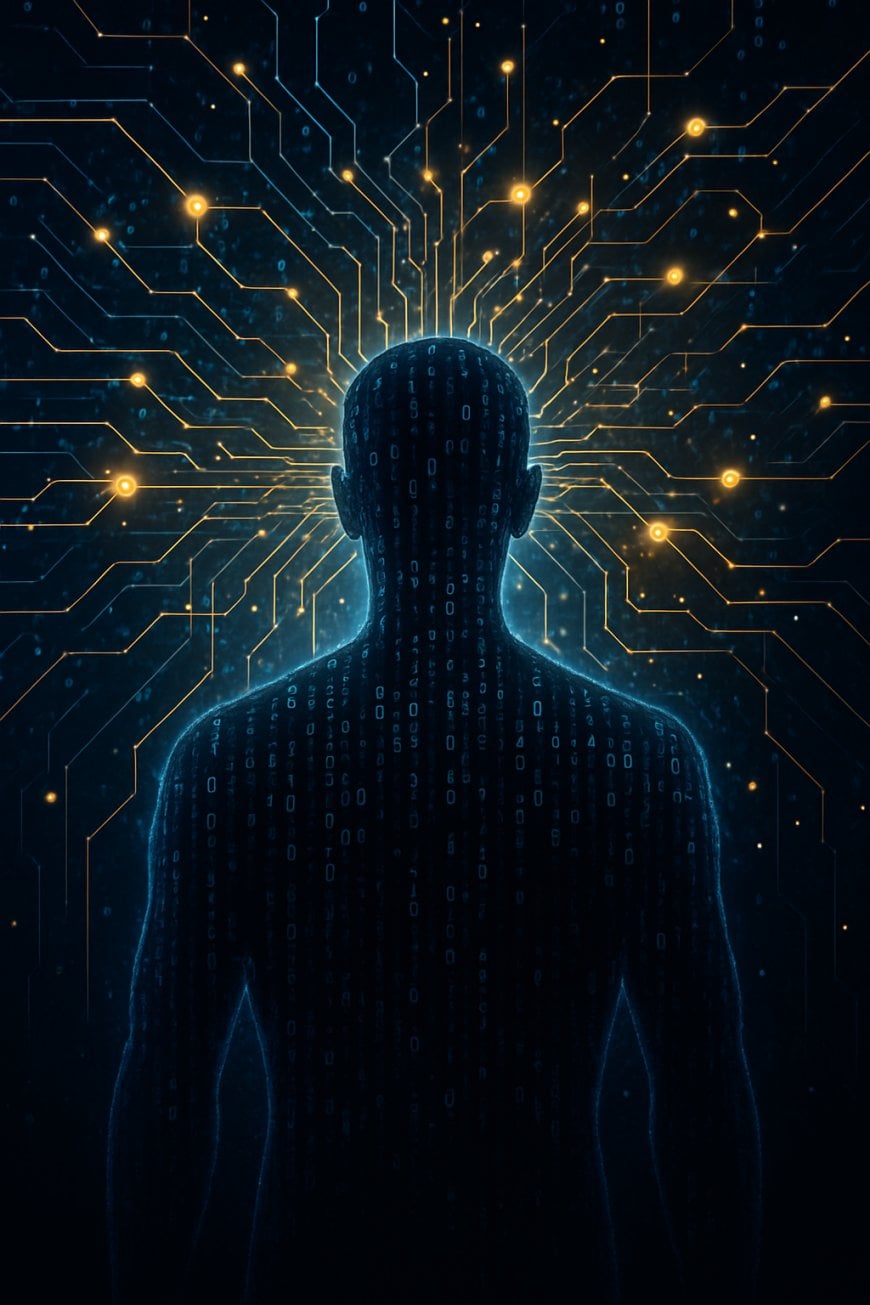
The Age of Algorithmic Influence
Every generation thinks it’s immune to manipulation—until the system that manipulates it becomes invisible. Today, most people believe their thoughts are their own, their choices freely made. Yet behind every search result, every recommendation, every notification is an algorithm quietly shaping what they see, when they see it, and how they feel about it.
The rise of the algorithmic world didn’t begin with AI—it began with data. When attention became measurable, it became monetizable. Once it became monetizable, it became engineered.
From there, the transformation was inevitable. The global attention economy reprogrammed humanity itself. The dopamine systems that once helped us survive in scarcity are now hijacked by abundance. We’ve moved from living in a world of limited information to one of infinite stimulation—and that has consequences not just for behavior, but for civilization itself.
The Invisible Feedback Loop
Every social platform and search engine runs on a core principle: engagement equals profit. The longer your eyes stay on the screen, the more valuable you become. This is the foundation of the digital economy—and it’s also the architecture of psychological conditioning.
Algorithms track what captures your attention, what triggers emotion, what makes you pause. Then they feed you more of it. Over time, this feedback loop sculpts your preferences, your beliefs, even your sense of reality. It’s not censorship that distorts perception—it’s personalization.
And because outrage, novelty, and fear produce stronger engagement than calm reflection, the algorithm naturally learns to amplify extremes. Division isn’t a bug in the system—it’s a business model.
The Economics of Attention
Information has always had value, but never has it been so precisely monetized. The attention economy converts human focus into data, data into predictive models, and predictions into profit. Your attention becomes the raw material from which value is extracted.
This system doesn’t care whether what you see is true—it only cares whether you stay. It doesn’t measure accuracy, only duration. As a result, we now inhabit an informational ecosystem optimized for addiction, not enlightenment.
That’s why outrage pays better than understanding. Outrage holds attention longer. And when attention becomes currency, emotion becomes commodity.
Social Architecture and Manufactured Identity
Humans evolved to find identity through shared experience—family, tribe, geography. The algorithm replaced that with curated belonging. You don’t join a community anymore; it’s assigned to you by data correlation. You become part of a digital tribe, not because you sought it, but because the machine learned that people like you engage longer when surrounded by others who think the same.
This is why polarization feels organic but behaves engineered. Each feed is a mirror that flatters the ego and confirms the bias. It isn’t a conspiracy; it’s optimization.
And when billions of mirrors reflect only the self, society fragments. The illusion of community replaces the substance of connection.
Cognitive Overload and the Shortened Mind
The human brain evolved for scarcity—for hunting, pattern recognition, and brief bursts of novelty. It was never designed to process thousands of stimuli per hour.
Now, we exist in a hyperstimulated environment where the reward loop never resets. Every ping, every scroll, every click delivers a micro-dose of novelty. It’s digital sugar: abundant, empty, addictive.
The result is systemic attention deficit. Focus becomes expensive. Patience becomes rare. And wisdom—the slow digestion of information—becomes nearly extinct.
The Rise of Persuasive Machines
AI marks the next phase of influence: not just predicting behavior, but shaping it in real time.
Unlike traditional media, AI doesn’t broadcast—it converses. It learns tone, rhythm, bias, and preference. It can mirror empathy, simulate intellect, and adapt persuasion strategies on the fly.
This transforms power itself. Influence becomes interactive. The message no longer seeks mass approval; it targets individual psychology. Each person receives a customized narrative—one that feels personal because it literally is.
The danger isn’t that AI will deceive us. It’s that it will understand us too well.
The Fracturing of Shared Reality
In the analog world, facts acted as anchors. People could debate interpretations, but the evidence was shared. In the digital era, every user occupies a different informational landscape. Two people can witness the same event and receive entirely different versions of what happened.
Truth no longer spreads through credibility—it spreads through virality. And virality is indifferent to truth.
That’s why the modern world feels incoherent. The foundation of shared reality has dissolved into competing simulations of truth, each one algorithmically reinforced.
The Path Back to Conscious Use
We can’t undo the digital world, but we can learn to navigate it consciously. Awareness itself becomes a form of resistance. When you understand the incentive structures shaping your information, you begin to separate what serves you from what manipulates you.
Conscious digital use means setting intention before interaction: using tools for creation rather than consumption, measuring quality of thought over quantity of input, and curating your feed the way you’d curate your environment.
The algorithm isn’t evil—it’s amoral. It reflects the will of whoever controls the metric. If we shift the metric from engagement to meaning, we can rebuild an internet that serves cognition instead of consuming it.
Reclaiming Humanity in the System
Technology was meant to augment human intelligence, not replace it. The future depends on whether we design systems that reward awareness, empathy, and coherence—or systems that exploit our cognitive blind spots for profit.
The answer isn’t to abandon technology; it’s to reassert authorship. To remind the machine that it was built to serve a species capable of imagination, not just imitation.
When humans become conscious users of unconscious systems, civilization stabilizes.
That is the real meaning of progress—not faster computation, but wiser computation.
Sources & References
- Tristan Harris – The Social Dilemma (Netflix, 2020)
- Harvard Kennedy School – The Future of Attention Economy (2023)
- MIT Technology Review – How Algorithms Shape Our Lives (2024)
- Center for Humane Technology – Ledger of Harms
- World Economic Forum – AI and the Future of Trust (2025)
#Technology #Society #AI #Psychology #HumanBehavior #PatternNexus
What's Your Reaction?
 Like
0
Like
0
 Dislike
0
Dislike
0
 Love
0
Love
0
 Funny
0
Funny
0
 Wow
0
Wow
0
 Sad
0
Sad
0
 Angry
0
Angry
0

Founder of Pattern Nexus. I research markets, macro, geopolitics, AI, history, ancient systems, and the patterns most people overlook. I’m also building Market Radar, a trading scanner designed to read pressure, risk, confirmation, and setup quality before chasing a move. Pattern Nexus is where I connect the dots between data, history, technology, and the bigger system playing out around us.














Comments (0)