
Energy Control- Grid Interdependence, Fuel Corridors, and Blackout Leverage
Energy is the original control system. Grid synchronization, fuel corridors, dispatch priority, and failure modes now function as continuous enforcement mechanisms, determining what stays online, what shuts down, and where sovereignty becomes conditional.
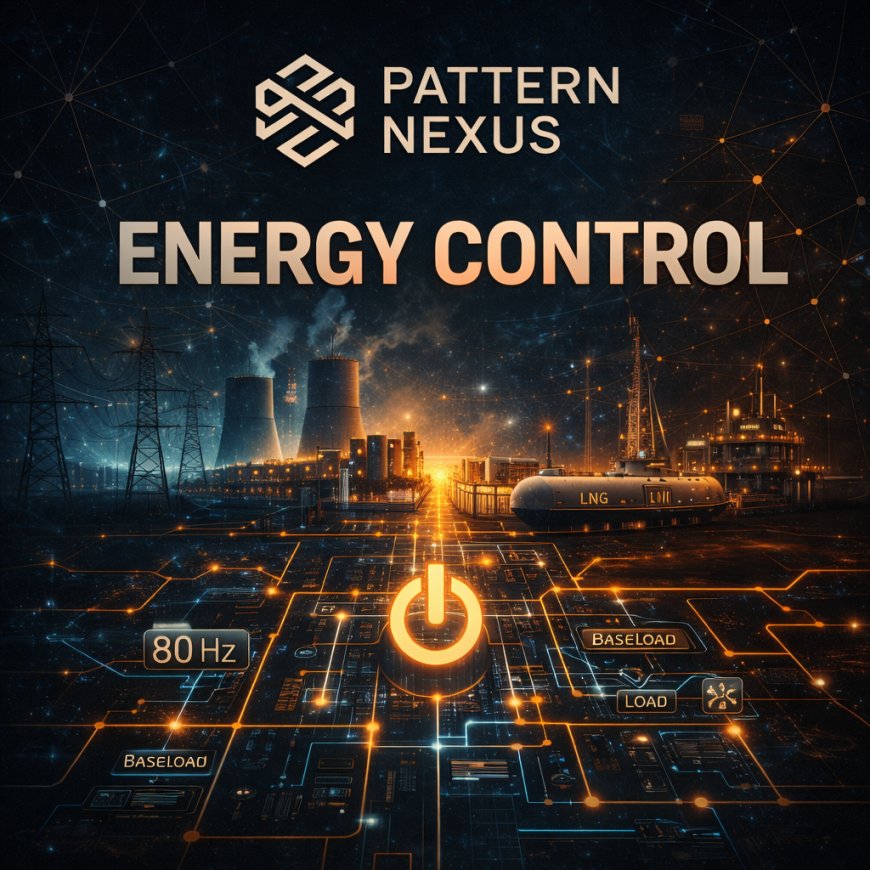
Energy Control
Energy is the original control system. Long before data, finance, or algorithms governed civilization, power flowed through fuel, grids, and physical throughput. In the modern world, energy no longer merely enables growth—it determines what can remain online, what must shut down, and which societies retain real strategic autonomy. Grid interdependence, fuel corridors, dispatch priority, and load constraints now function as continuous enforcement mechanisms.
Executive Summary
Energy is the most unforgiving control system because it does not negotiate. Laws, markets, ideologies, and financial systems all operate downstream of electrons, molecules, thermal limits, and load curves. When energy becomes unavailable, unstable, or misaligned with demand, every higher-order system collapses into contingency mode.
Modern energy control does not primarily operate through price alone. It operates through synchronization requirements, dispatch priority, fuel routing, infrastructure timing, and failure hierarchies. These mechanisms determine which activities are allowed to continue functioning during stress and which are silently curtailed.
In the control-systems era, energy power is not defined by who produces fuel, but by who controls grids, routing logic, baseload stability, inertia, and the order of shutdown.
System Reality: If energy is constrained, every other system negotiates downward.
Energy as the Foundational Control Layer
Every modern control system depends on energy. Finance requires continuously powered data centers. Data platforms require uninterrupted electricity. Logistics require liquid fuel. Industry requires predictable baseload. AI systems require massive, stable, high-density power.
Unlike money or standards, energy cannot be deferred, cached indefinitely, or abstracted away. It must be generated and consumed in real time. This makes energy uniquely powerful as a control mechanism: there is no appeal process when supply and demand fall out of balance.
Historically, energy control was territorial—coal seams, oil fields, rivers. In the modern era, energy control is infrastructural. It resides in grid topology, dispatch rules, storage scarcity, fuel routing, and synchronization physics.
Hidden Constraint: Energy systems do not enforce policy. They enforce physics.
Grid Interdependence and Synchronization
Modern electrical grids are synchronized machines. Frequency, phase alignment, and load balance must be maintained continuously. This requirement transforms grids into shared fate systems.
Interconnection improves efficiency and redundancy—until it creates systemic fragility. Once grids are synchronized, disturbances propagate non-linearly. A fault does not remain local; it cascades faster than political coordination can respond.
Grid control emerges from several non-obvious factors:
- Frequency stability determines survival
- Inertia is unevenly distributed
- Black-start capability is rare and centralized
- Dispatch authority concentrates decision power
Once grids are integrated, exit becomes destabilizing. Decoupling risks frequency collapse, load imbalance, and cascading outages. Grid architecture becomes an enforcement layer without needing intent.
System Reality: A synchronized grid is a machine that enforces cooperation.
Text Diagram:
Generation → Transmission → Synchronization → Dispatch → Load
Failure at synchronization propagates system-wide.
Fuel Corridors and Chokepoints
Electricity reliability is inseparable from fuel routing. Pipelines, LNG terminals, shipping lanes, rail hubs, and processing facilities function as upstream control nodes.
Modern fuel systems are optimized for cost efficiency, not resilience. Centralization, just-in-time delivery, and long-distance transport reduce redundancy while increasing leverage.
Control emerges not from ownership alone, but from routing logic:
- Which corridors exist
- Which terminals can accept rerouting
- Where redundancy does not exist
- How long disruption can persist before cascading failure
Energy leverage rarely requires permanent damage. Temporary constraints, maintenance delays, or capacity limits are often sufficient to reshape behavior.
Second-Order Effect: Efficiency converts infrastructure into leverage.
Reliability, Load, and Blackout Power
Blackouts reveal the real hierarchy of society. Hospitals, data centers, military assets, and financial infrastructure receive priority. Residential consumption is expendable. Industry is selectively curtailed.
Load shedding is governance. It determines which economic activities are permitted to continue and which are temporarily illegal in practice.
Crucially, blackout power does not require centralized intent. A grid designed with insufficient redundancy will enforce rationing automatically.
Myth vs Mechanism: Myth: blackouts are accidents. Mechanism: blackouts are structural enforcement events.
Energy Markets as Governance
Energy markets are governance engines disguised as pricing mechanisms. Market design determines dispatch order, scarcity pricing, volatility propagation, and investment incentives.
Market rules decide:
- Which generation clears first
- Who absorbs volatility
- Which assets become stranded
- Which investments survive politically
Once embedded, market rules enforce policy without legislation. Algorithms allocate scarcity faster than political processes can intervene.
Hidden Constraint: Price is permission encoded numerically.
The Energy Transition Trap
Energy transitions are not replacements. They are overlays. New systems are layered onto old ones, increasing complexity before resilience is rebuilt.
Intermittent generation stresses grids designed for inertia. Storage lags deployment. Transmission expansion faces political resistance. Load growth accelerates due to electrification and AI.
This creates a transition trap: dependency increases before autonomy materializes.
Second-Order Effect: Transitions amplify control leverage before they reduce it.
Energy Leverage in Geopolitics
Energy leverage operates continuously. It does not need escalation. Pricing, access, routing, and infrastructure investment shape behavior across political cycles.
Because energy infrastructure is slow to replace, dependency becomes durable. Once embedded, it shapes strategic behavior even without explicit coercion.
System Reality: Energy dependency behaves like gravity—constant, directional, and difficult to escape.
Why Energy Independence Is So Hard
True energy independence requires redundancy, storage, dispatch flexibility, and excess capacity. These characteristics are expensive, politically unpopular, and inefficient by design.
Most systems optimize for cost and uptime under normal conditions—not survivability under stress. Rebuilding resilience requires accepting visible tradeoffs.
Myth vs Mechanism: Myth: energy independence is a policy decision. Mechanism: energy independence is a physical rebuild.
Pattern Nexus Lens
Energy exposes the truth behind all control systems: governance is constraint, not command.
As civilization electrifies, digitizes, and automates, energy leverage increases. Control migrates from fuel ownership to grid topology, dispatch authority, and reliability management.
In the control-systems era, energy is not merely power. It is permission encoded in physics.
System Reality: When energy fails, every abstraction collapses.
FAQ
Does renewable energy reduce control risk?
Only with sufficient storage, redundancy, and grid redesign. Intermittency increases leverage without buffering.
Are blackouts always political?
No. Structure alone can enforce outcomes.
Can microgrids break control?
Only if they can island reliably under stress.
Sources
- International Energy Agency (IEA)
- U.S. Energy Information Administration (EIA)
- ENTSO-E grid stability publications
- Academic literature on grid inertia and synchronization
- Energy market design research
Tepkiniz Nedir?
 Beğen
0
Beğen
0
 Beğenmiyorum
0
Beğenmiyorum
0
 Aşk
0
Aşk
0
 Komik
0
Komik
0
 Vay
0
Vay
0
 Üzgün
0
Üzgün
0
 Öfkeli
0
Öfkeli
0

Founder of Pattern Nexus. I research markets, macro, geopolitics, AI, history, ancient systems, and the patterns most people overlook. I’m also building Market Radar, a trading scanner designed to read pressure, risk, confirmation, and setup quality before chasing a move. Pattern Nexus is where I connect the dots between data, history, technology, and the bigger system playing out around us.


















Yorumlar (0)