

Firefly Already Landed on the Moon. Now NASA Is Paying for Repeat Access.
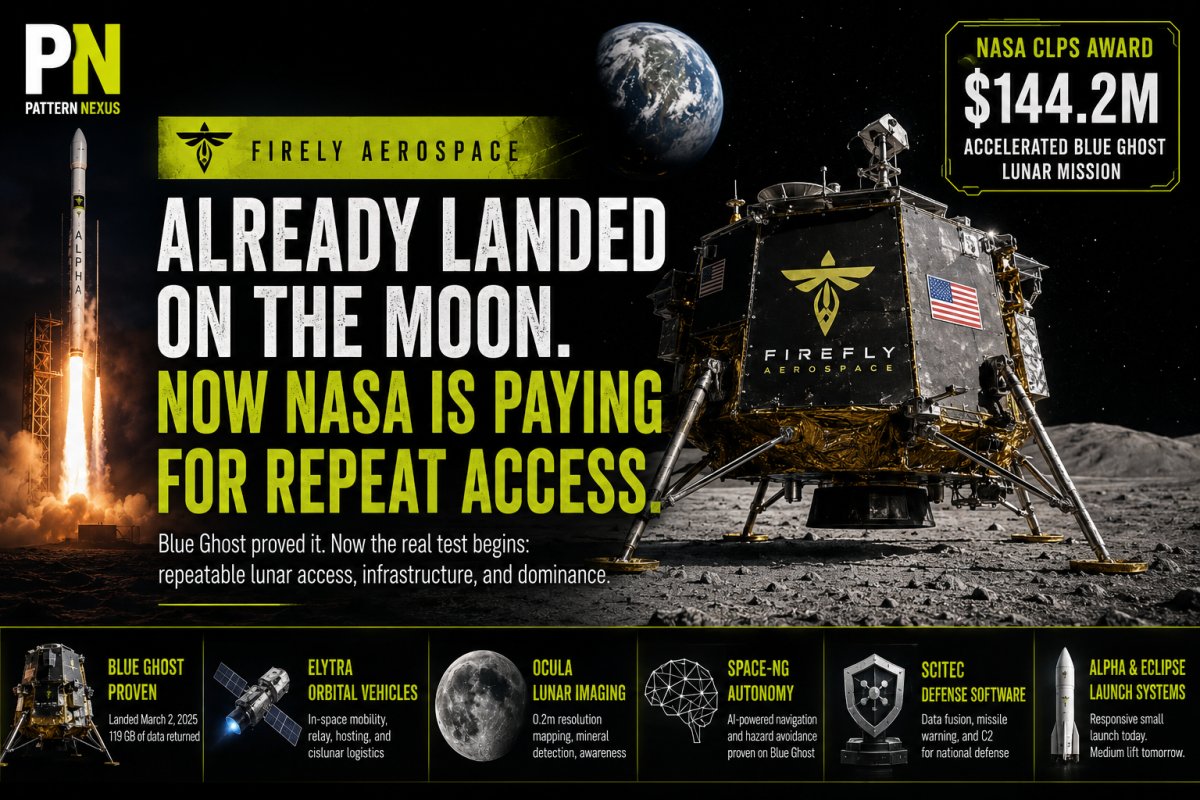
Summary & Description: Firefly Aerospace is no longer just a risky small-launch story. Blue Ghost already landed on the Moon, operated for more than 14 days, returned 119 GB of data, and now NASA has awarded Firefly another accelerated CLPS lunar mission. The deeper story is launch, landers, Elytra orbital vehicles,…
Summary & Description: Firefly Aerospace is no longer just a risky small-launch story. Blue Ghost already landed on the Moon, operated for more than 14 days, returned 119 GB of data, and now NASA has awarded Firefly another accelerated CLPS lunar mission. The deeper story is launch, landers, Elytra orbital vehicles,…
Jump to a section
Firefly Already Landed on the Moon. Now NASA Is Paying for Repeat Access.
Firefly Aerospace is not just a rocket story anymore. That is the piece people keep missing. Firefly already landed Blue Ghost on the Moon, operated through the lunar day, returned a massive data package, and proved it could do the one thing the entire private lunar market has been trying to prove: land upright, operate, and finish the mission.
Now NASA has come back with another accelerated lunar contract. That changes the read. This is no longer just “can Firefly touch the Moon?” The new question is whether Firefly can turn one successful landing into repeatable lunar access, repeatable lunar access into infrastructure, and infrastructure into a real space-defense platform.
Quick Read
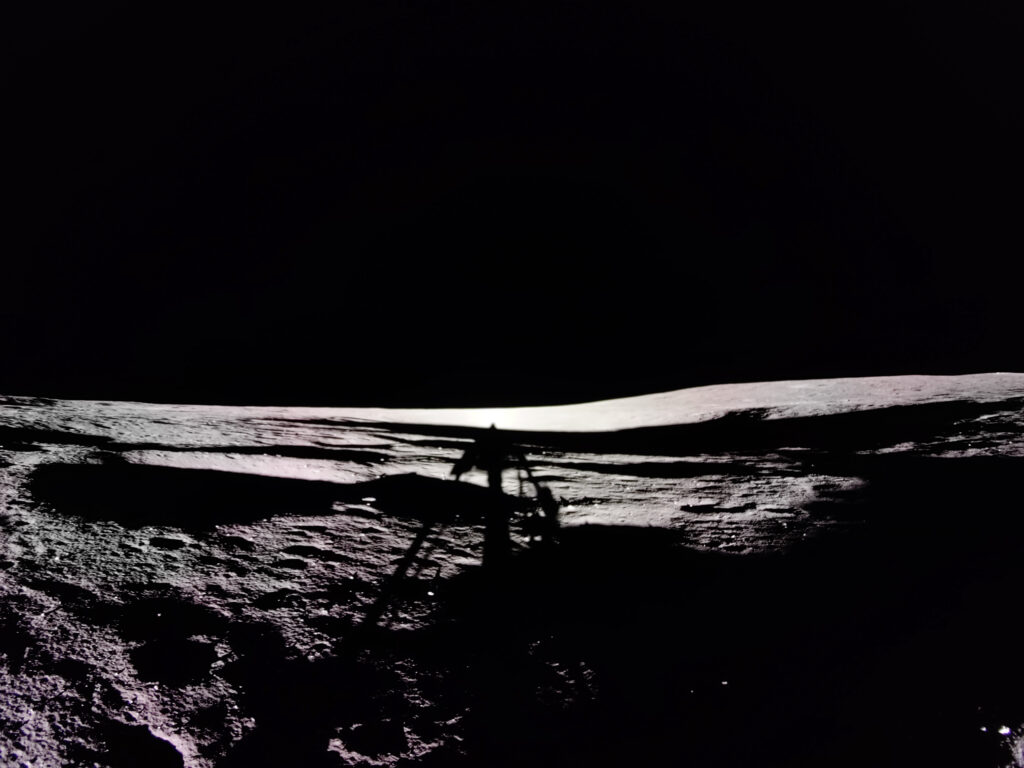
Firefly Aerospace already crossed the hardest proof point. Blue Ghost Mission 1 launched January 15, 2025, landed on March 2, 2025 in Mare Crisium, operated for more than 14 days on the lunar surface, and transmitted 119 GB of data back to Earth, including 51 GB of NASA science and technology data.[1][2]
On June 30, 2026, Firefly announced a new $144 million NASA CLPS contract for an accelerated Blue Ghost lunar mission. NASA’s release listed the award at $144.2 million. Firefly says this marks its sixth contracted lunar mission and is aimed at demonstrating repeatable access to the lunar surface on an accelerated timeline.[4][5]
That is the signal. NASA is not just rewarding a past headline. NASA is pushing repeat access. In plain English: Firefly landed. Now NASA wants to know if Firefly can do it again, faster, cleaner, and as part of a larger Moon-base infrastructure path.
The company now sits across several layers: Blue Ghost lunar landers, Alpha responsive launch, Elytra orbital vehicles, Ocula lunar imaging, Space-ng autonomous navigation, SciTec defense software, Esrange European launch expansion, and Eclipse medium lift with Northrop Grumman.
The Core Thesis
Firefly Aerospace is attempting to become a full-stack space infrastructure company. Not just a launch company. Not just a Moon lander. Not just a software contractor. The company is trying to connect launch, lunar delivery, orbital transfer, lunar imaging, autonomous landing software, and defense data fusion into one operating platform.
That matters because the space economy is shifting. The old model was simple: build a rocket, launch a payload, collect a contract. The new model is more layered. Launch the payload. Move the payload. Host the payload. Land the payload. Image the surface. Relay the data. Detect changes. Process the sensor feeds. Support defense response. Then do it again.
That is why Firefly is interesting. The company is not sitting in one narrow lane. It is trying to sit in the middle of the new space stack: launch, land, orbit, see, relay, decide, and respond.
They Already Landed on the Moon
Blue Ghost Mission 1 is the base of this entire story. Without that landing, Firefly is just another public space name trying to sell the future. With that landing, the story becomes different.
Firefly’s Blue Ghost Mission 1 launched on January 15, 2025 and landed on March 2, 2025 near Mons Latreille in the Mare Crisium basin on the Moon’s near side. NASA said the mission delivered 10 NASA science and technology instruments to the lunar surface. Firefly said it met 100% of mission objectives after completing more than 14 days of surface operations, including 346 hours of daylight operations and just over five hours into lunar night.[1][3]

NASA said all 10 NASA payloads successfully activated, collected data, and performed operations on the Moon. Blue Ghost transmitted 119 GB of data back to Earth, including 51 GB of science and technology data. NASA also said the mission lasted about one lunar day and continued multiple hours into the lunar night before coming to an end.[2]
That is not a press release victory lap. That is an operational milestone. A lander does not matter just because it touches the Moon. It matters if it lands upright, powers up, runs payloads, survives the thermal environment, communicates, and returns useful data. Firefly did that.
Firefly later received a $10 million NASA contract addendum for additional data from Blue Ghost Mission 1, including images and operational data from transit, landing, and lunar surface operations. That matters because it shows the mission did not just meet the base requirement; NASA wanted more of the data Firefly collected.[25]
The June 30 NASA Award: Repeat Access Is the Signal
On June 30, 2026, Firefly announced a $144 million NASA CLPS contract for an accelerated Blue Ghost mission to the Moon. NASA’s own announcement listed Firefly’s award at $144.2 million. The new mission is part of NASA’s wider effort to send more commercial robotic landers to the Moon ahead of higher-value lunar operations and long-term lunar infrastructure.[4][5]
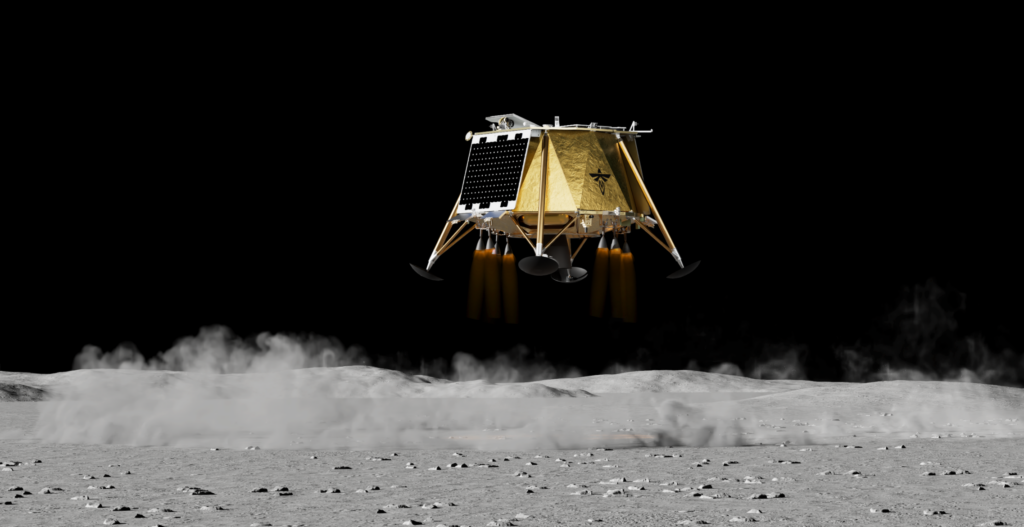
Reuters reported that NASA awarded roughly $590 million total to Astrobotic, Firefly, and Intuitive Machines for more uncrewed lunar lander missions, with Firefly receiving $144.2 million for one mission. Reuters also noted the important comparison point: among the recent private lander attempts, Firefly’s Blue Ghost was the one that successfully touched down intact and upright in March 2025.[6]
That comparison is the market signal. Astrobotic’s Peregrine failed before landing. Intuitive Machines reached the surface, but its landers tipped over in both 2024 and 2025 attempts, hurting mission objectives. Firefly stuck the landing and completed the mission. So when NASA comes back with another award, the read is not random. NASA is testing repeatability.
This is where the article starts. The first landing was the credential. The new award is the question: can Firefly turn one Moon landing into cadence?
Why Repeat Lunar Access Matters
A single Moon landing is historic, but a single landing does not build infrastructure. Infrastructure requires cadence. Cadence means repeated landings, repeated payload delivery, repeated communications, repeated imaging, repeated data returns, and repeated customer confidence.
That is what NASA is really buying through CLPS. It is not just buying landers. It is buying the commercial muscle memory needed before more expensive and more complex Artemis missions. Every robotic lander reduces unknowns: terrain risk, dust behavior, payload thermal performance, communication reliability, navigation accuracy, landing-site planning, and surface operations.
Firefly now has a proof point no one can talk around. The company landed. The next test is whether that landing can become boring. In space, boring is the win. Boring means repeatable. Repeatable means bankable. Bankable means infrastructure.
The Blue Ghost Pipeline
Firefly’s lunar plan is not just Blue Ghost Mission 1 and then another copy-paste lander. The pipeline now includes multiple mission profiles: near-side lunar delivery, far-side delivery, lunar orbit deployment, communications relay, South Pole resource work, rovers, surface instruments, Ocula imaging, and long-duration Elytra support.
Blue Ghost Mission 1: Completed
Mission 1 is the proof layer. Firefly landed, operated, returned data, and met mission objectives. This is the layer that changed the company from “potential Moon company” to “company that already did it.”
Blue Ghost Mission 2: Far Side + Elytra Dark
Blue Ghost Mission 2 is the next major architecture test. It is not just a lander. It is a dual-spacecraft stack using Blue Ghost and Firefly’s Elytra Dark orbital vehicle. Firefly says the stack is 22 feet tall, more than three times the height of the Mission 1 lander. The mission is designed to deliver payloads to lunar orbit and the far side of the Moon, including NASA’s LuSEE-Night, Lunar Pathfinder, the UAE Rashid 2 rover, Fleet Space’s SPIDER payload, and Volta Space’s LightPort wireless power receiver.[13]
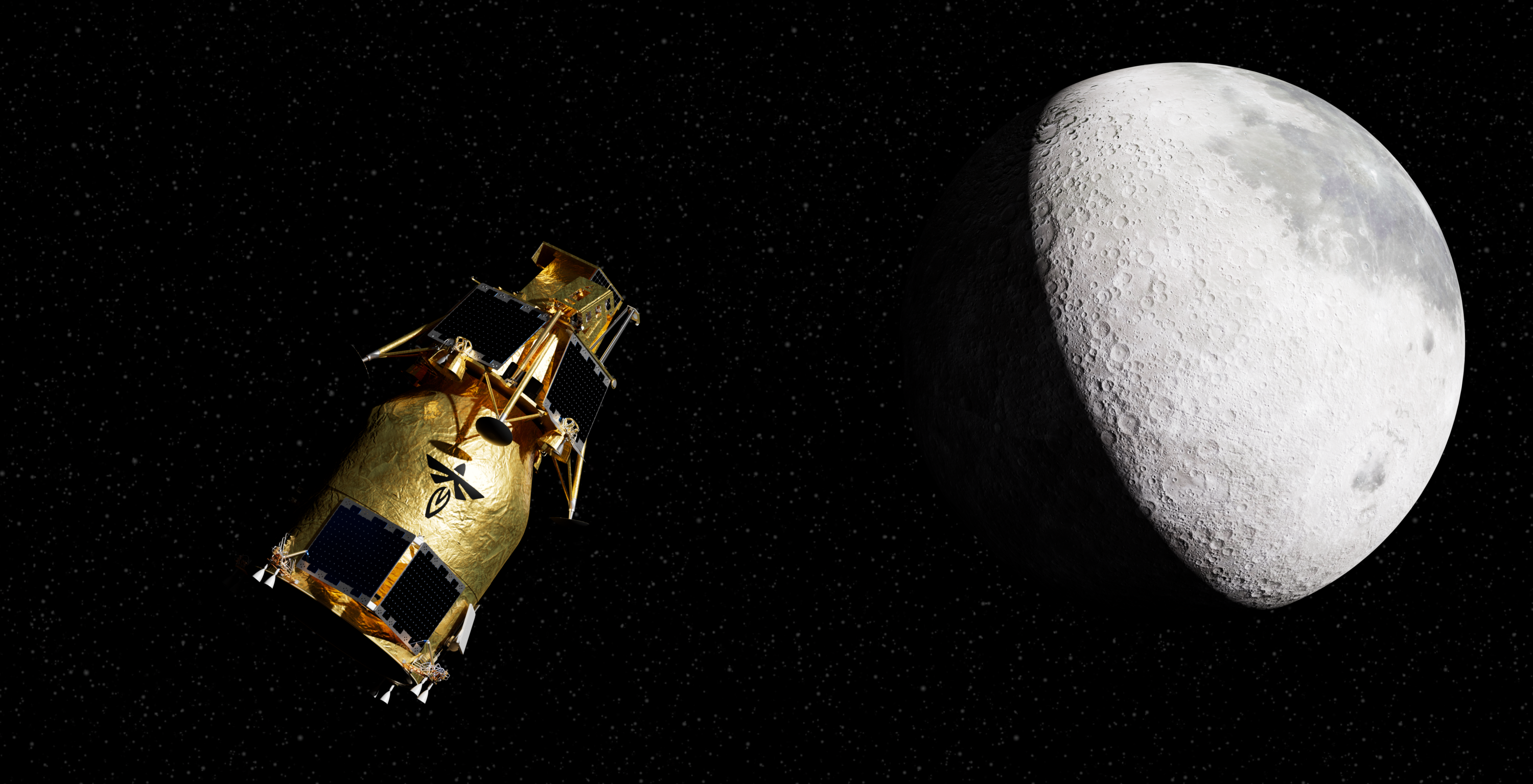
The far side matters because it is radio quiet. Earth’s radio noise is blocked by the Moon itself. That makes the far side valuable for certain radio astronomy work and for testing infrastructure that cannot be done the same way on the near side. If Mission 1 proved Firefly can land, Mission 2 tests whether Firefly can handle a more complex Moon stack.
Blue Ghost Mission 3: Gruithuisen Domes
Firefly says Blue Ghost Mission 3 targets the Gruithuisen Domes on the Moon’s near side. That region is geologically unusual because it may help answer questions about silica-rich lunar volcanism and the history of the lunar crust. This matters because future lunar work is not only about landing. It is about mapping, sampling, interpreting, and building a better operating model for where resources and scientific targets actually are.
Blue Ghost Mission 4: South Pole
In July 2025, NASA awarded Firefly $176.7 million for a 2029 Moon South Pole mission. Firefly says Blue Ghost Mission 4 will use Elytra and Blue Ghost to deliver and operate two rovers and three scientific instruments. The mission is designed to evaluate resources such as hydrogen, water, and other minerals, while also studying radiation and thermal conditions that could affect future astronauts and lunar infrastructure.[17][18]
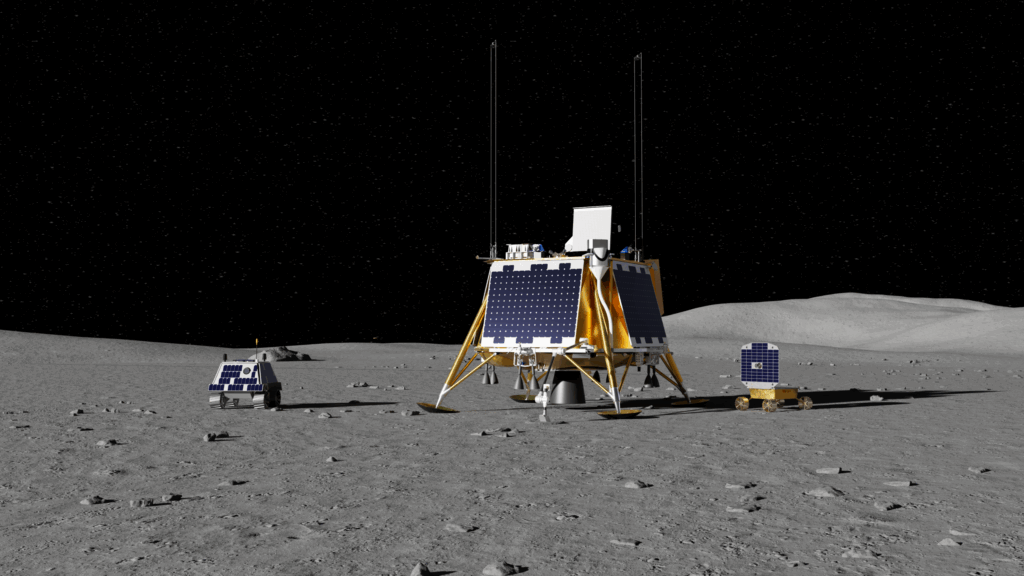
The South Pole is the real lunar infrastructure zone. That is where the water-ice and permanently shadowed region discussion lives. That is where sunlight access, terrain, thermal swings, power planning, surface mobility, and resource detection matter. If anyone is serious about a long-term Moon presence, the South Pole becomes a core operating theater.
Elytra: The Orbital Layer Most Traders Will Miss
Elytra may end up being one of the most important pieces of Firefly’s platform, because it moves the company beyond “launch” and “land.” Firefly describes Elytra as a family of multi-mission orbital vehicles that can provide payload delivery, imaging, long-haul communications, maneuverability, and domain awareness across cislunar space. The three named versions are Elytra Dawn, Elytra Dusk, and Elytra Dark.[14]
The difference matters. A rocket gets a payload off Earth. A lander gets a payload onto the Moon. Elytra supports the space between those two events. That means transfer, hosting, relay, imaging, communications, domain awareness, and post-launch services.
Firefly says Elytra Dark can support payload capacity up to 3,300 kg and operate from low Earth orbit to lunar orbit and beyond. In the Blue Ghost architecture, Elytra Dark is not just a bus. It can deploy, relay, support, and later stay in lunar orbit. That is the infrastructure layer.
This is the part of the business that should not be ignored. Launch is visible. Landings are dramatic. But orbital vehicles are what turn isolated missions into a network.
Ocula: Lunar Imaging Becomes an Infrastructure Product
Firefly’s Ocula service is planned as a commercial lunar imaging service through Elytra vehicles in lunar orbit. Firefly says Ocula will provide ultraviolet and visible-spectrum imaging for surface mapping, mineral detection, landing-site planning, and cislunar situational awareness. Firefly also says the Lawrence Livermore National Laboratory-built telescope system onboard Elytra can capture 0.2-meter resolution imagery from a 50 km lunar orbit.[15][16]
This sounds small until you think about what a working Moon economy actually needs. You need updated surface maps. You need to know where landers are. You need to know where rovers moved. You need to know what hazards changed. You need to know where dust and plume effects matter. You need to identify resource signatures. You need landing-site intelligence. You need cislunar awareness.
In other words, Ocula is not “pretty Moon pictures.” It is lunar reconnaissance, surface mapping, mineral detection, infrastructure monitoring, and mission planning. If the Moon becomes an operating zone, imaging becomes a recurring data product.
Space-ng: Firefly Bought the Landing Brain
On June 25, 2026, Firefly announced the acquisition of Space-ng, a company focused on AI-powered vision navigation and autonomous guidance systems. Firefly said Space-ng’s vision navigation software was used during Blue Ghost Mission 1 to determine position and attitude, detect hazardous lunar terrain, and autonomously redirect Blue Ghost in real time. Firefly’s CEO said the system helped Blue Ghost perform two hazard-avoidance maneuvers before touchdown.[7]
This is not a small bolt-on. This is core. Landing on the Moon is not only a propulsion problem. It is perception, guidance, navigation, hazard avoidance, terrain interpretation, lighting, camera hardware, onboard compute, and split-second autonomy.
The Moon does not give you a clean runway. It gives you rocks, slopes, shadows, dust, thermal problems, navigation uncertainty, and communication delay. If the vehicle sees a hazard during descent, it has to make decisions fast. That is what Firefly is bringing in-house.
So the Space-ng acquisition should be read as Firefly buying the landing brain. If Firefly wants repeat Moon landings, repeat Mars-type autonomy, docking, proximity operations, and GPS-denied spacecraft navigation, the autonomy layer becomes as important as the lander body.
Alpha Rocket: The Launch Side Is Still the Risk Side
Alpha is Firefly’s small launch vehicle. Firefly lists Alpha at about 1,030 kg to low Earth orbit and 630 kg to sun-synchronous orbit, using LOX/RP-1 propulsion, four Reaver engines on the first stage, and one Lightning engine on the second stage.[10]
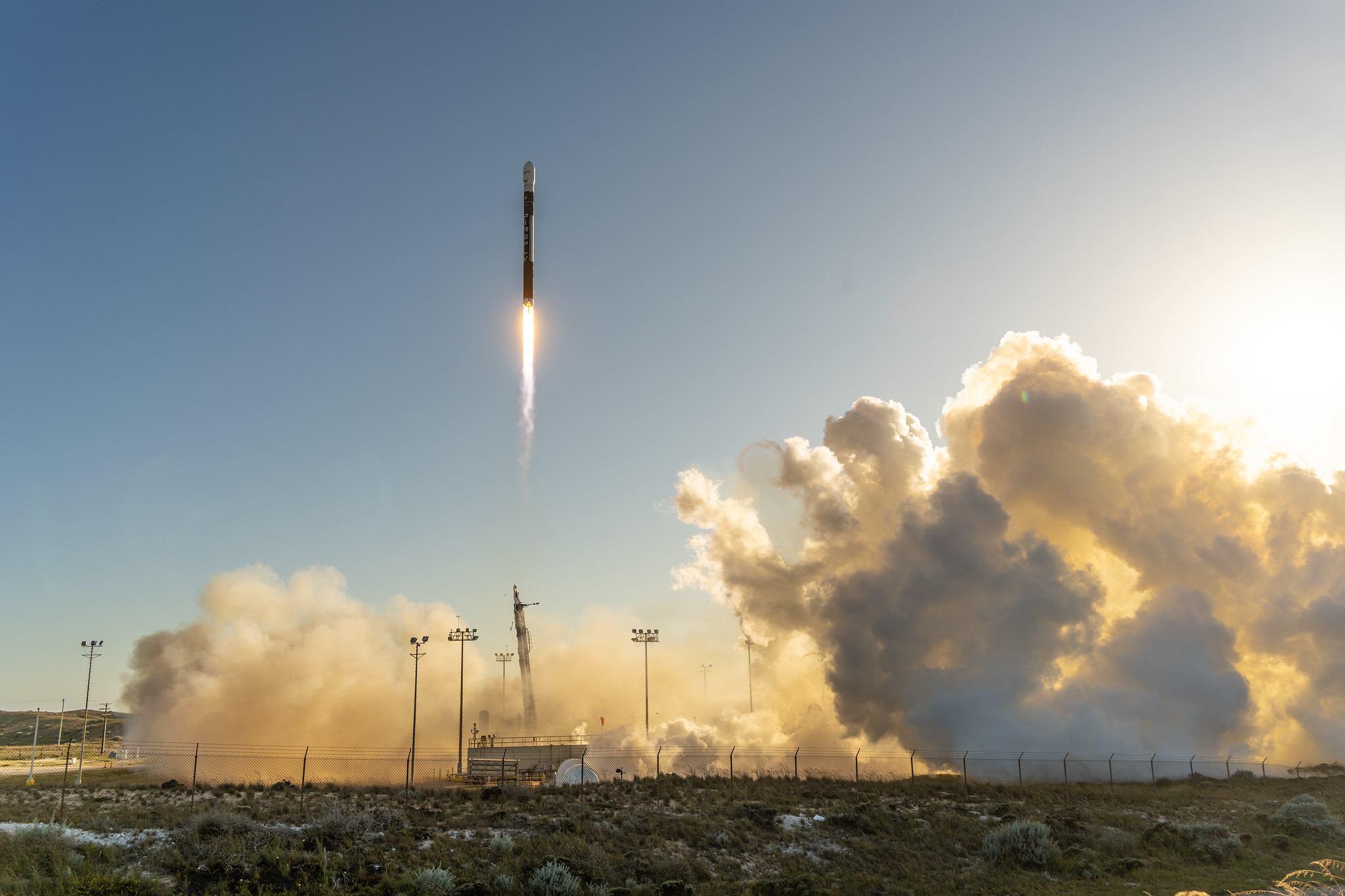
This is also where the risk is most obvious. Alpha Flight 6 failed in April 2025. Reuters reported that the flight failed to reach its intended orbit, resulting in the loss of a Lockheed Martin satellite. Reuters also reported that the FAA later cleared Firefly to resume Alpha launches after the investigation and corrective steps.[11]
Alpha Flight 7, called Stairway to Seven, successfully launched on March 11, 2026 from Vandenberg Space Force Base. Firefly said the mission completed orbital insertion, delivered a Lockheed Martin demonstrator payload, performed a stage-two engine relight, and validated key Alpha Block II upgrades ahead of Flight 8.[12]
That is the clean read. Firefly has a real launch vehicle, but it does not yet have the kind of mature cadence that removes the risk premium. Alpha needs boring repetition. One good return-to-flight launch matters, but the market will not fully trust the launch business until Alpha can fly again and again without resetting confidence.
Responsive Space: Why the Military Cares
Firefly is not only trying to sell launch capacity. It is selling response time. That is a very different military use case. Firefly has previously promoted its VICTUS NOX responsive launch demonstration, where the company launched a satellite with roughly 24-hour notice. That type of capability matters because space is now an active military domain.
If satellites are jammed, blinded, shadowed, disabled, or destroyed, then replacement and response timelines become strategic. A launch provider that can move quickly has a different value than a provider that only operates on long commercial planning cycles.
This is why Alpha still matters even with its risk. If Firefly can make Alpha reliable, it becomes a responsive-space rail for national security, commercial urgency, and allied space resilience.
Esrange Sweden: Launch Site Diversification
On June 30, 2026, Firefly and SSC Space announced they had completed key milestones toward orbital Alpha launches from Esrange Space Center in northern Sweden. Firefly said the work includes initial infrastructure, transatlantic regulatory frameworks, and an agreement with the Swedish Defense Materiel Administration. Final pad construction is underway at Launch Complex 3C, with the first launch targeted for 2028.[8][9]
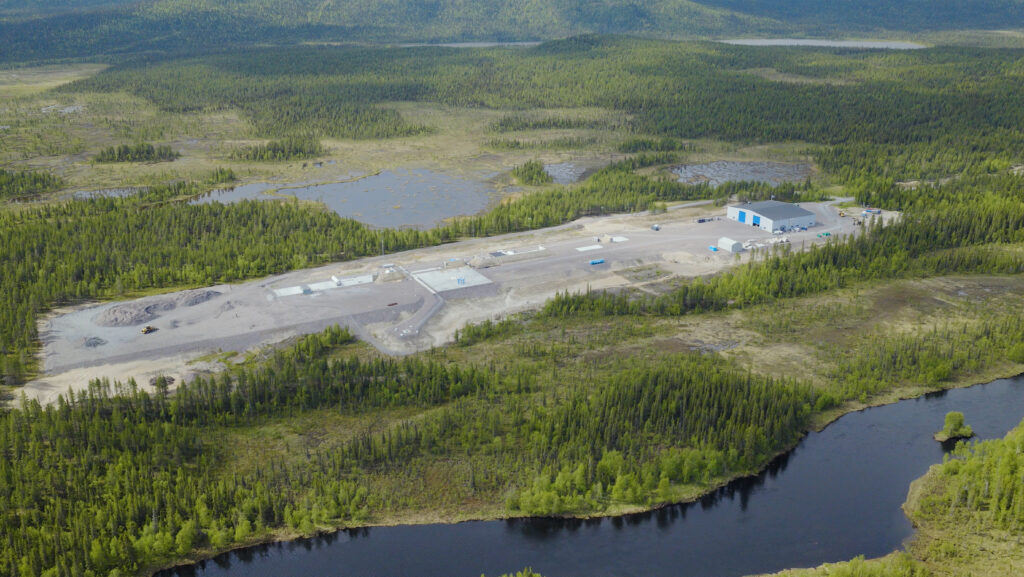
Esrange sits about 200 km north of the Arctic Circle and is useful for polar and sun-synchronous orbit access. Those orbits matter for Earth observation, weather, reconnaissance, commercial sensing, and national security missions.
Firefly calls this a “launch as a franchise” model. The phrase matters because it implies launch-site replication. If Firefly can operate Alpha from multiple locations, it becomes less dependent on one range and more useful to allies and defense customers.
One launch site is a choke point. Multiple launch sites are a network. For national security space, that distinction matters.
Eclipse With Northrop: The Medium-Lift Bridge
Alpha gives Firefly responsive small launch. Eclipse is the medium-lift bridge. Northrop Grumman invested $50 million into Firefly in 2025 to advance production of Eclipse, the companies’ co-developed medium launch vehicle. Firefly said Eclipse builds on Northrop’s Antares heritage and Firefly’s Alpha technology.[19]
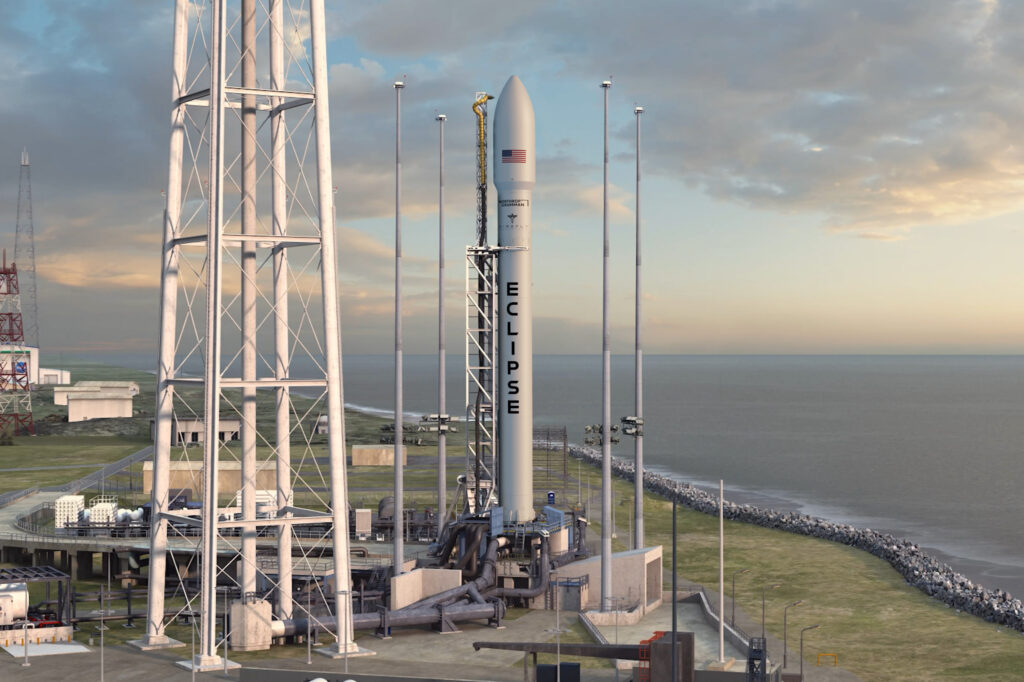
Northrop describes Eclipse as an evolutionary successor to Antares, combining flight-proven technologies and mission experience from Northrop and Firefly. Northrop says Eclipse is intended to serve commercial, civil, national security, and international launch markets.[20]
This is important because small launch alone is a hard business. The highest-value government, defense, station-resupply, and larger commercial payload markets often need more lift. Eclipse gives Firefly a path out of the small-launch box.
The risk is obvious: medium-lift development is expensive, hard, and schedule-sensitive. But the opportunity is also obvious. If Eclipse works, Firefly becomes a more serious national-security and civil-space launch provider, not just a niche Alpha operator.
SciTec: Defense Software, Data Fusion, and Command-and-Control
Firefly also owns SciTec, which gives the company a defense software and data-fusion layer. On June 2, 2026, Firefly announced that SciTec was selected by the U.S. Department of the Air Force to deliver the operational data-fusion system for the Cloud-Based Command and Control program. The $5.5 million option was executed under an initial $24 million ABMS IDIQ award.[21]

SciTec matters because it moves Firefly into missile warning, sensor fusion, remote sensing, space domain awareness, and command-and-control software. That is a different business profile than launch hardware alone.
Launch and lunar missions are lumpy. Defense software can potentially become stickier if programs scale. That does not mean guaranteed profits. It means Firefly is trying to pair high-risk space hardware with defense software that could become a more durable revenue layer.
The deeper read is that Firefly is trying to connect hardware and software: rockets, landers, orbiters, imaging, autonomy, and defense data fusion. That is not a normal rocket-company model. That is a space-defense infrastructure model.
Q1 2026 Financial Snapshot
Firefly’s Q1 2026 results show the same tension as the business itself: momentum and losses at the same time. Firefly reported record revenue of $80.9 million, up 40% from the prior quarter. The company also highlighted Alpha Flight 7, Blue Ghost mission progress, SciTec’s Golden Dome-related support, and a $109 million engineering change proposal under the Space Force’s FORGE Enterprise OPIR Services contract.[22]
But the company is still losing money. That matters. Space companies can have real contracts, real missions, and real technical progress while still burning cash. Investors have to separate mission success from business-model maturity.
Firefly went public in August 2025 under ticker FLY. The company priced an upsized IPO and said proceeds would be used for debt repayment, preferred-stock dividends, and general corporate purposes.[23]
In May 2026, Firefly also announced a proposed public offering that included 4 million shares from the company and 8 million shares from selling stockholders, with an underwriter option for additional shares from selling stockholders. Firefly said it would not receive proceeds from shares sold by selling stockholders.[24]
That is the capital-structure side of the story. The technology may be exciting, but dilution, secondary selling, cash burn, and execution risk still matter. Firefly is not a safe stock just because it landed on the Moon. It is a high-execution-risk company with very real strategic assets.
What the Market Is Really Pricing
Firefly is not priced like a normal aerospace contractor. It is priced like a volatile public space platform with a major future narrative and heavy execution risk.
The upside is that Firefly has one of the clearest public-company exposures to the privatized Moon buildout, responsive military launch, cislunar logistics, lunar imaging, autonomous landing software, and defense data fusion.
The downside is that each part of that stack can fail. Alpha can fail. Lunar missions can fail. Elytra can be delayed. Ocula can take longer to monetize. SciTec contracts can stay smaller than expected. Eclipse can slip. NASA budgets can change. Government priorities can shift. The company can need more capital.
That is the correct read: not safe, not fake, not simple.
The Bull Case
The bull case is that Firefly becomes one of the only public pure-play ways to invest in the new lunar-defense-space infrastructure stack. Not SpaceX. Not a legacy prime. Not just a speculative lander. Firefly is trying to combine the layers:
- Blue Ghost for lunar surface delivery and payload operations.
- Alpha for responsive small launch.
- Eclipse for future medium-lift launch with Northrop Grumman.
- Elytra for in-space maneuvering, transfer, communications, and payload hosting.
- Ocula for lunar imaging, mapping, mineral detection, and cislunar awareness.
- Space-ng for autonomous navigation, hazard avoidance, and GPS-denied landing software.
- SciTec for defense software, missile warning, data fusion, and command-and-control.
- Esrange for European launch-site expansion and allied launch resilience.
If that stack works, Firefly is not just selling launches. It is selling access, movement, data, autonomy, and defense response.
The Bear Case
The bear case is also clear. Firefly has not yet proven mature launch cadence. Alpha has had failures. Lunar missions are extremely hard. Eclipse is still a development path. Ocula has to become an actual commercial data product. SciTec has to convert defense relevance into durable revenue. The company is still losing money. Stock offerings can pressure investors.
Firefly is trying to do many hard things at once. That can create a powerful platform, but it can also create execution overload. The company has to prove that the stack is integrated, repeatable, and economically scalable.
A Moon landing gave Firefly credibility. It did not remove risk.
What I Would Watch Next
- Alpha Flight 8 / Block II: Does the upgraded vehicle improve reliability and cadence?
- Blue Ghost Mission 2: Can Firefly repeat lunar success with a more complex far-side/Elytra stack?
- Ocula activation: Does lunar imaging become a real data product?
- Space-ng integration: Does Firefly turn autonomy into repeatable landing precision?
- SciTec scaling: Does defense software become a durable revenue floor?
- Eclipse progress: Does the Northrop partnership move into real hardware cadence?
- Backlog conversion: Do contracts become recognized revenue without margin damage?
- Dilution and cash burn: Does the company need more capital before the model scales?
- NASA CLPS cadence: Does NASA continue treating Firefly as a repeat lunar vendor?
Pattern Nexus Read
Firefly Aerospace is now one of the cleaner public test cases for the next phase of commercial space. It already landed on the Moon. That matters. But the landing was not the finish line. It was the credential.
The new NASA award is the real signal. NASA is not just paying for a dream. NASA is paying Firefly to prove repeat access. That means the market should stop looking at Firefly as only a rocket stock. It is a lunar access, orbital services, autonomous navigation, imaging, and defense-software stack.
That does not make it safe. It makes it important.
Firefly can still fail in execution. Alpha can fail. Landers can fail. Margins can fail. Schedules can slip. Dilution can hit the stock. But the strategic direction is now obvious.
Firefly already proved it can touch the Moon. Now it has to prove it can build the road back.
Sources
- Firefly Aerospace — Blue Ghost Mission 1: Ghost Riders in the Sky
- NASA — NASA Science Continues After Firefly’s First Moon Mission Concludes
- Firefly Aerospace — Firefly Successfully Completes 14 Days of Surface Operations on the Moon
- Firefly Aerospace — Firefly Awarded $144 Million NASA CLPS Contract for Accelerated Blue Ghost Lunar Mission
- NASA — NASA Awards More Moon Base Science, Previews New Opportunities
- Reuters — Astrobotic, Firefly, Intuitive Machines Win More NASA Moon Lander Missions
- Firefly Aerospace — Firefly Acquires Space-ng to Advance Future of Autonomous Space Operations
- Firefly Aerospace — Firefly and SSC Space Meet Next Critical Milestone for Orbital Launch From Esrange Space Center
- SSC Space — SSC Space and Firefly Meet Next Critical Milestone for Orbital Launch From Esrange
- Firefly Aerospace — Alpha Launch Vehicle
- Reuters — Firefly Granted FAA Clearance to Resume Alpha Rocket Launches
- Firefly Aerospace — Firefly Successfully Launches Alpha Flight 7
- Firefly Aerospace — Blue Ghost Mission 2: Riders 2 the Dark
- Firefly Aerospace — Elytra Orbital Vehicles
- Firefly Aerospace — Ocula Lunar Imaging Service
- Lawrence Livermore National Laboratory — LLNL Optics System Set to Fly to Moon With Firefly Aerospace Ocula Imaging Service
- Firefly Aerospace — Firefly Awarded $177 Million NASA Contract for Mission to the Moon’s South Pole
- NASA — NASA Selects Firefly for New Artemis Science and Technology Delivery to Moon
- Firefly Aerospace — Northrop Grumman Invests $50 Million in Firefly to Advance Eclipse
- Northrop Grumman — Eclipse Medium Launch Vehicle
- Firefly Aerospace / SciTec — U.S. Air Force CBC2 Data Fusion Contract Option
- Firefly Aerospace Investor Relations — Q1 2026 Financial Results
- Firefly Aerospace — Pricing of Upsized Initial Public Offering
- Firefly Aerospace — Proposed Public Offering of Common Stock
- Firefly Aerospace — $10 Million NASA Contract Addendum for Blue Ghost Mission 1 Lunar Data
What's Your Reaction?
 Like
0
Like
0
 Dislike
0
Dislike
0
 Love
0
Love
0
 Funny
0
Funny
0
 Wow
0
Wow
0
 Sad
0
Sad
0
 Angry
0
Angry
0

Nexus (Christopher)
Founder of Pattern Nexus. I research markets, macro, geopolitics, AI, history, ancient systems, and the patterns most people overlook. I’m also building Market Radar, a trading scanner designed to read pressure, risk, confirmation, and setup quality before ch…
Related research
NASA’s Moon Base, MoonFall, Nuclear Missions, and the Drone Layer of Mars
A Pattern Nexus analysis of NASA’s 2026 surface-first lunar architecture, MoonFall hopper drones, lunar nuclear power, nuclear-electric Mar…
4 shared topics, same research avenue.
NASA Confirms a Private U.S. Spacecraft Landed on the Moon — Why Blue Ghost Matters
Firefly’s Blue Ghost Mission 1 stuck the landing in Mare Crisium with 10 NASA payloads. The milestone is bigger than a touchdown: it’s abou…
4 shared topics, same research avenue.
Moon Base Alpha: Why the Moon Is Becoming Infrastructure
Moon Base Alpha isn’t sci-fi anymore. Starship, Artemis, power constraints, and south-pole logistics are converging into real lunar infrast…
4 shared topics, same research avenue.
Artemis II (2026): The Reboot of the Deep-Space Logistics Chain
2026 marks humanity’s first return to the Moon’s vicinity in 54 years. Artemis II reopens cislunar space, restoring deep-space logistics an…
3 shared topics, same research avenue.
SpaceX’s Booster Failure & the South Texas Industrial Surge: A Structural Look at the Week
SpaceX’s upgraded Starship booster failed in testing, but the company’s Texas industrial expansion surged—revealing the deeper structure be…
3 shared topics, same research avenue.
New Glenn 9×4: Blue Origin’s Super-Heavy Engine for the Coming AI Space Economy
Blue Origin’s New Glenn 9×4 upgrades heavy-lift launch, space logistics, and habitats—laying the foundation for the first AI-driven industr…
3 shared topics, same research avenue.
Robot Builders of Artemis: How NASA’s Autonomous Construction Fleet Will Build the First Moon Base
NASA is preparing a robotic construction corps to build humanity’s first real Moon base — 3D-printing habitats from lunar regolith, deployi…
3 shared topics.
The Space Infrastructure Race Has Entered Its Next Phase: Weapons, Orbital AI, Sovereign Networks, and the Moon
From September 4–23, space infrastructure accelerated on almost every front. Isar Aerospace reached orbit from continental Europe. India po…
2 shared topics, same research avenue.
Comments (0)
Security Check
Please complete the captcha to verify you are human.