

The GENIUS Act and the Stablecoin State: How Private Dollars Become a Treasury Demand Engine
The GENIUS Act didn’t just “regulate crypto.” It formalized a new payments rail where private dollars can scale—and where reserve rules turn stablecoins into an indirect Treasury demand vector.
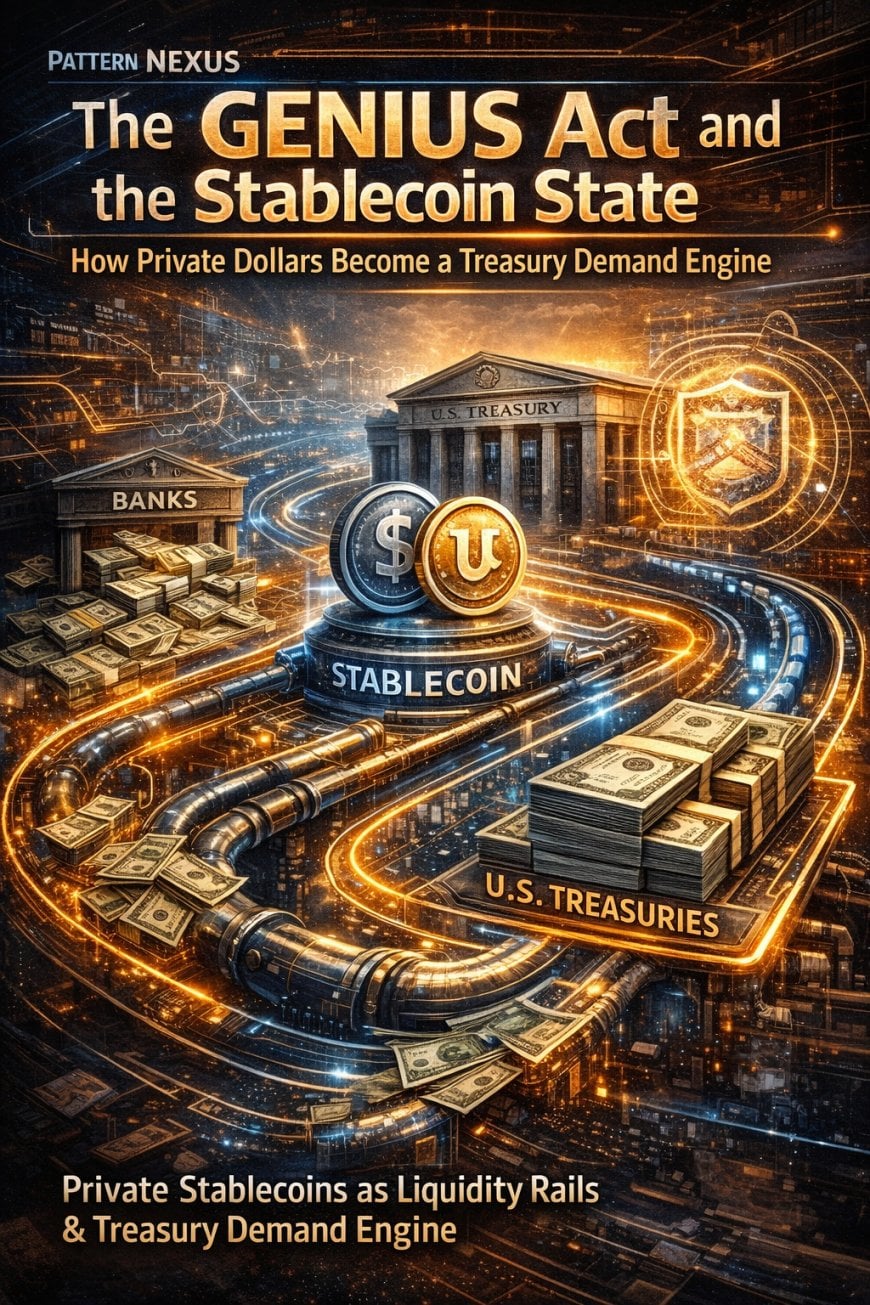
The GENIUS Act didn’t just “regulate crypto.” It formalized a new payments rail where private dollars can scale—and where reserve rules turn stablecoins into an indirect Treasury demand vector.
Jump to a section


The GENIUS Act created a regulatory framework for “payment stablecoins.” That sounds like compliance. The real story is plumbing: the U.S. is formalizing a parallel settlement layer that looks like dollars, clears like software, and scales globally.
If stablecoins grow, two things happen at once: bank deposits face a new competitor, and the reserve assets backing stablecoins become a structural buyer of short-duration government paper. That’s deposit competition on one side, Treasury demand on the other.
Implementation is where the power sits. Treasury and regulators decide what counts as “safe reserves,” what redemption promises must look like, and what rails issuers can plug into without becoming banks.
This article maps the control layers: law → regulators → reserve rules → settlement rails → dollar reach. Same empire, new interface.
What the GENIUS Act Actually Does
The GENIUS Act establishes a federal framework for “payment stablecoins” and formalizes who can issue them, under what approvals, and under what redemption obligations. That sounds like a lawyer’s topic. In practice, it’s a perimeter decision: which dollar-like tokens are allowed to scale and which are treated as outside-the-fence instruments.
The crucial design choice is this: payment stablecoins are framed as redeemable digital instruments (meant to behave like money) rather than as speculative securities. That classification pushes stablecoins toward payments infrastructure and away from the “casino narrative.” The law is the handshake between blockchain rails and regulated finance.
Implementation Is the Real Battlefield
A law defines boundaries. Regulators define reality. Treasury’s implementation posture matters because the system lives or dies on reserve definitions, redemption mechanics, and how issuers are supervised. Treasury has already signaled that implementation is about balancing innovation with consumer protection, illicit finance mitigation, and financial stability risk management.
This is also where the inter-agency politics shows up: Treasury, FSOC, and the banking regulators shape whether stablecoin issuers get narrow permissions (payments only) or evolve into shadow banks with money-like liabilities and quasi-bank economics.
Deposits vs Stablecoins: The “Yield” Fight
Banks aren’t terrified of “crypto.” They’re terrified of a new container for dollars. If a stablecoin is easy to hold, easy to move, and can pay something that looks like interest, then deposits become less sticky. That doesn’t destroy lending overnight, but it changes who pays up for funding and who loses margin.
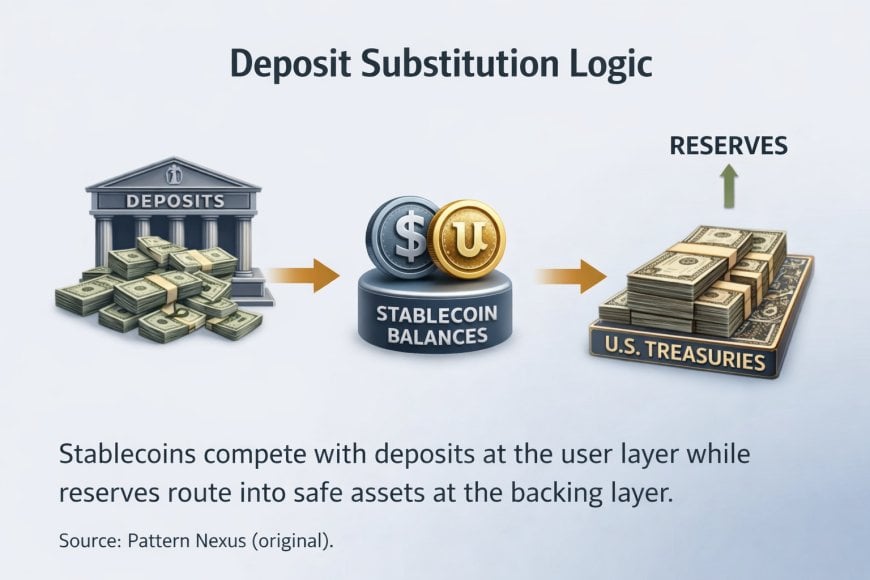
- Yield is the wedge issue: whether stablecoin structures can distribute yield directly or indirectly without being treated like deposit-taking.
- Deposit substitution risk concentrates in weaker banks that rely on low-yield funding and can’t compete without compressing margins.
- The market argument: even if dollars move from deposits to stablecoins, those dollars still sit in the financial system via reserves and backing assets.
Why This Reinforces Dollar Reach
Here’s the geopolitics that most people miss: stablecoins are dollar distribution technology. If the U.S. allows regulated dollar tokens to scale globally, then dollar usage can expand without physically exporting bank accounts. The dollar becomes software, and the enforcement layer becomes compliance + issuer supervision rather than SWIFT alone.
This is not altruism. It’s systems engineering. If the world wants dollar-like settlement, the U.S. can either let offshore/grey tokens dominate or formalize a regulated path where the dollar remains the unit of account and Treasuries remain the backing gravity.
The Tells: What to Watch Next
If you want to track where this goes, don’t watch Twitter fights. Watch the implementation artifacts and the incentives.
- Reserve composition rules: what qualifies, what haircuts exist, what liquidity tests are required.
- Redemption mechanics: timing, disclosures, and whether there are emergency gates that effectively create a “run switch.”
- Bank regulator posture: whether issuers can access limited payment infrastructure without becoming full banks.
- Yield policy: explicit bans, loophole closures, or tolerated wrappers will decide deposit-competition intensity.
- Institutional adoption: once major payment processors and large enterprises use stablecoins for settlement, the rail becomes “normal.”
Pattern Nexus Lens
FAQ
Sources
- Congress.gov: S.394 — GENIUS Act of 2025 (summary)
- White House: Fact Sheet on signing the GENIUS Act (Jul 2025)
- U.S. Treasury: Public comment on GENIUS Act implementation (Sep 2025)
- St. Louis Fed: Regulated payment stablecoins overview (Dec 2025)
- Reuters Breakingviews: Banks vs stablecoins deposit fears (Feb 2026)
Menene Martaninka?
 Kamar
0
Kamar
0
 Karya
0
Karya
0
 Kauna
0
Kauna
0
 Ban dari
0
Ban dari
0
 Wao
0
Wao
0
 Bacin rai
0
Bacin rai
0
 Fushin
0
Fushin
0

Nexus (Christopher)
Founder of Pattern Nexus. I research markets, macro, geopolitics, AI, history, ancient systems, and the patterns most people overlook. I’m also building Market Radar, a trading scanner designed to read pressure, risk, confirmation, and setup quality before ch…
Related research
The Regime Reset Stack: Yield Curve Strategy, Dollar Rails, Metals Convexity, and the AI-Fiscal Endgame
A Pattern Nexus control-systems read tying the yield curve, dollar regime, metals, crypto, and equities into one machine: why inversions le…
5 shared topics.
Stablecoins Are Becoming the Dollar’s New Control Layer
Stanley Druckenmiller’s stablecoin call matters because it points to something bigger: stablecoins are evolving into a new dollar distribut…
4 shared topics.
The Fed’s Long-End Trap: Why a 4.65% 10-Year Is Already Doing the Tightening
A full July 2026 data reconstruction of the Federal Reserve’s next policy path, showing how a 4.65% nominal 10-year, 2.44% real 10-year, Tr…
3 shared topics, same research avenue.
The New Fed Chair Does Not Inherit an Economy. He Inherits the Permission Stack.
Kevin Warsh is not simply inheriting the Federal Reserve. He is inheriting the control layer where inflation, debt service, Treasury fundin…
3 shared topics, same research avenue.
BCRED Redemptions Spike: The Private Credit “Liquidity Mismatch” Goes Live
Blackstone’s BCRED saw redemption requests jump to 7.9% versus a typical 5% quarterly cap, forcing a higher repurchase capacity and a $400M…
3 shared topics, same research avenue.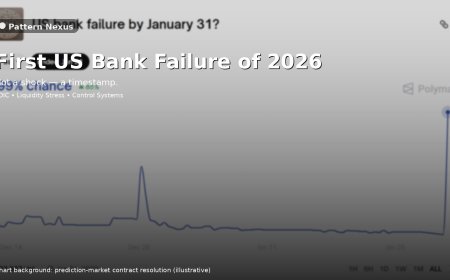
The First US Bank Failure of 2026 — Not a Shock, a Timestamp
The FDIC confirmed the first U.S. bank failure of 2026 on Jan 30. This wasn’t a surprise — it was a timestamp. In the Pattern Nexus framewo…
3 shared topics, same research avenue.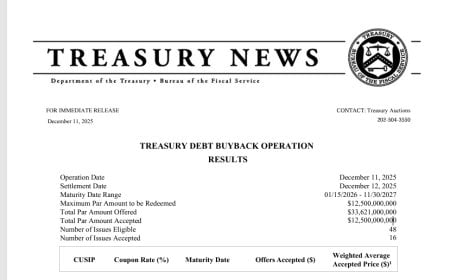
Treasury Buyback Confirms the New Liquidity Regime
Treasury retires $12.5B in debt in a single buyback operation, confirming the shift into a post-QT, Treasury-driven liquidity regime.
3 shared topics, same research avenue.
Mar 2, 2026 Market Wrap (8:52 PM): Oil Risk Premium, VIX Wake-Up, and De-Escalation Getting Priced Too Early
Equities held together, but VIX jumped, oil stayed bid, and metals kept acting like uncertainty hedges. My read: the market is pricing fast…
2 shared topics, same research avenue.
Sharhu (0)
Security Check
Please complete the captcha to verify you are human.