

The Housing Collateral Engine: How Shadow Banking, China, and the Fed Turned Mortgages Into Global Money (2001–2008)
After the dot-com crash, the world didn’t deleverage — it rewired. Between 2001 and 2008, China’s WTO entry, Asian reserve accumulation, low Fed rates, and an explosive securitization boom turned U.S. housing into the core collateral engine of the global dollar system. When that engine failed, shadow banking imploded…
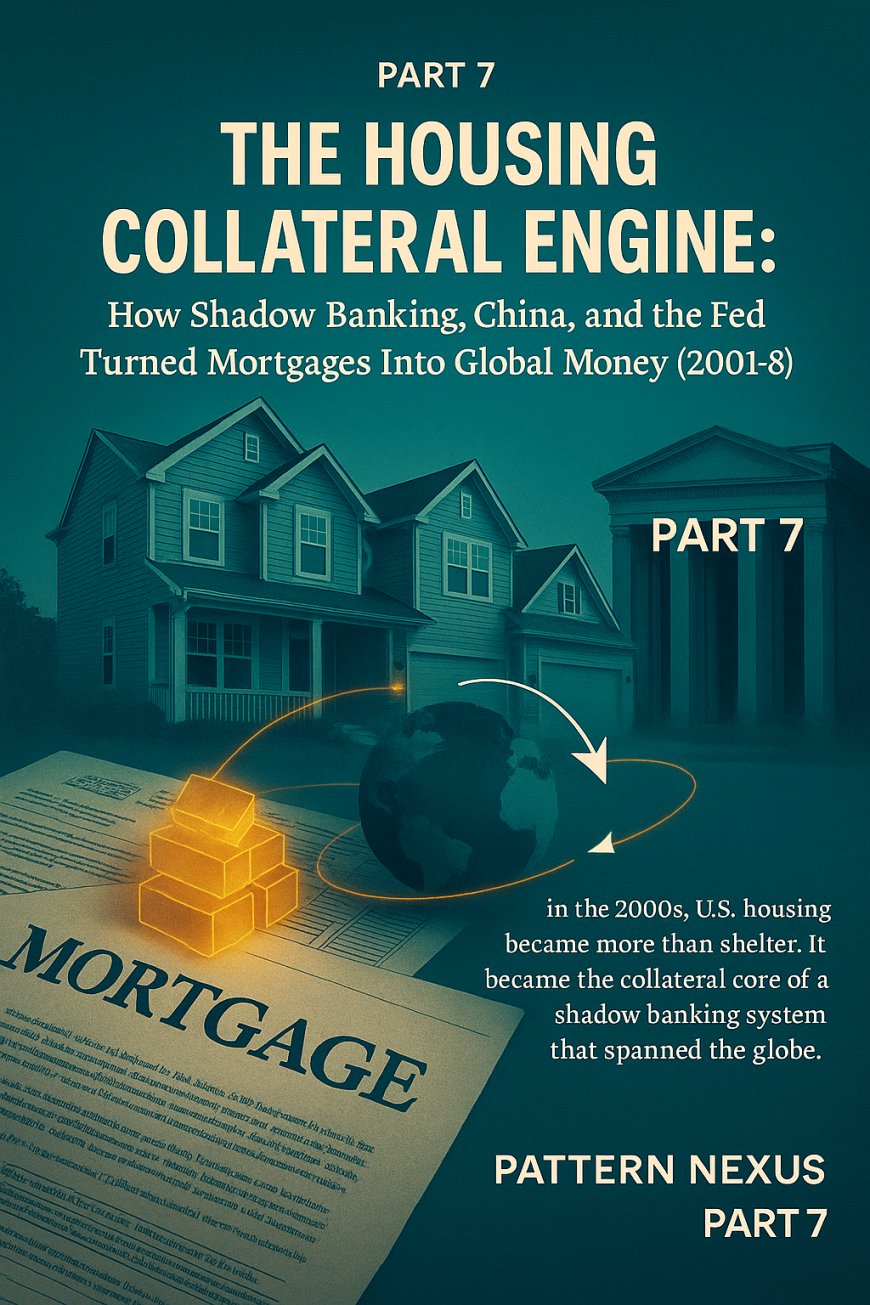
After the dot-com crash, the world didn’t deleverage — it rewired. Between 2001 and 2008, China’s WTO entry, Asian reserve accumulation, low Fed rates, and an explosive securitization boom turned U.S. housing into the core collateral engine of the global dollar system. When that engine failed, shadow banking imploded…
Jump to a section
The Setup: After Dot-Com, Before Disaster
The story of 2001–2008 does not begin with a reckless mortgage broker in California. It begins with the collapse of the dot-com bubble and a question: how do you keep a leverage-based financial system growing when our flagship equity mania has just imploded?
In 2000–2001, the NASDAQ lost roughly four-fifths of its value. Many internet startups failed. Business investment fell. Then the September 11 attacks layered geopolitical shock onto already weak confidence. The Federal Reserve responded with an aggressive rate-cutting cycle, taking the federal funds rate down to levels that looked extraordinary at the time.
The logic was straightforward:
- prevent a deeper recession
- support asset prices and household wealth
- encourage borrowing and risk-taking to restart growth
At the same time, something else was happening on the other side of the world. China was preparing to join the World Trade Organization. Asian economies scarred by the 1997–1998 crisis were rebuilding their balance sheets and reserves. The seeds of a new global imbalance were being planted just as the Fed turned the domestic firehose on.
The combination would prove explosive: cheap money at the core, export-driven surplus at the periphery, and a financial system that had discovered how to turn virtually any cash flow — especially mortgage payments — into tradable securities.
China’s WTO Moment and the Inflation Mirage
In 2001, China joined the WTO. On paper, this was a trade story: a large, rapidly industrializing country gaining formal access to global markets under agreed rules. In practice, it was a structural shock to the global price and wage system.
China brought:
- a vast pool of low-cost labor
- aggressive export-led industrial policy
- state-supported infrastructure build-out
- a willingness to run large trade surpluses to sustain growth
For advanced economies, particularly the United States, this meant:
- consumer goods prices stayed low or fell, even as volumes surged
- domestic manufacturing jobs faced intense competition and offshoring pressure
- headline inflation readings looked benign, despite booming credit and asset prices
Central bankers saw a world where inflation appeared contained. The message was: you can run low interest rates without igniting price spirals. What those metrics missed was the way inflation had been re-routed:
- into housing and land prices
- into equities and credit spreads
- into the cost of financial assets, not the goods tracked in CPI baskets
China’s entry also came with a capital-flow implication. To maintain a competitive exchange rate and support export growth, Chinese authorities intervened in currency markets, accumulating foreign reserves, largely in dollars. Those reserves needed a home. U.S. Treasuries and agency securities became that home.
The result was a strange loop: cheap imported goods helped keep measured inflation low, which justified low interest rates, which fueled housing and credit booms, which were funded in part by the very export economies benefiting from the arrangement.
Housing as Collateral Engine: How a House Becomes Global Money
In this environment, U.S. housing emerged as the perfect asset to sit at the center of the system.
Politically, homeownership was sacred. Economically, mortgages offered:
- long-term, predictable cash flows
- collateral tied to real assets in a relatively stable legal environment
- the illusion that “house prices always go up” at least in aggregate
Financially, the key innovation was not the 30-year mortgage itself, but what could be done with it:
- A lender originated a mortgage to a household.
- That mortgage was pooled with thousands of others into a mortgage-backed security (MBS).
- The cash flows from the pool were sliced into tranches with different priorities and risk profiles.
- Those tranches could be sold to investors around the world: banks, insurers, pension funds, hedge funds.
- Higher-risk slices could be repackaged again into collateralized debt obligations (CDOs).
At each step, leverage could be added:
- through repo financing against the securities
- through derivatives like credit default swaps
- through off-balance-sheet vehicles funded with short-term paper
To a household, a mortgage looked like a loan to buy a home. To the system, it was raw material for money-like instruments. A single monthly payment in Ohio or Florida could be part of the cash flow backing a security held by a bank in Germany, a money-market fund in the United States, or a sovereign wealth fund in the Middle East.
That is what it means to say housing became a collateral engine. It was not just an asset class; it was the primary feedstock for a vast web of credit creation, funding, and leverage.
Shadow Banking: The Invisible Balance Sheet
Traditional banking is simple to describe: take deposits, make loans, hold capital against risks, and rely on central bank backstops and deposit insurance. Shadow banking is harder to see because it performs similar functions without the same labels or safeguards.
In the 2000s, shadow banking included:
- securitization conduits that bought loans and financed them with asset-backed commercial paper
- structured investment vehicles that held long-term securities funded by short-term borrowing
- money-market funds that offered deposit-like claims without formal guarantees
- broker-dealers that relied on overnight repo markets to fund large inventories of securities
- hedge funds using derivatives and repo to layer leverage on top of credit exposures
What made this “shadow” was not secrecy but structure:
- no retail deposits, so no deposit insurance
- reliance on wholesale funding that could disappear in days
- complex legal wrappers that made it difficult to see where risks ultimately sat
- regulatory frameworks geared toward traditional banks, not these new entities
Crucially, shadow banking created money-like claims:
- investors treated certain short-term instruments as safe and cash-equivalent
- financial institutions treated high-rated structured products as near-cash collateral
As long as housing collateral looked solid and markets were liquid, this system functioned smoothly. The shadow money it created lubricated global trade, investment, and speculation. Very little of it appeared in the simple measures of “money supply” that policymakers were used to watching.
Greenspan, Low Rates, and the Liquidity Doctrine
Monetary policy in the early 2000s was shaped by a few core beliefs:
- inflation, as measured by consumer price indices, was the primary risk to guard against
- asset bubbles were hard to identify and harder to prick gently
- central banks could clean up after a bubble burst by supplying liquidity and cutting rates
After the dot-com bust and 9/11, the Federal Reserve cut rates and held them low for an extended period. This was not the sole cause of the housing boom, but it provided an extremely favorable backdrop for leverage tied to long-duration assets.
At the same time, the idea of a “Fed put” gained strength:
- market participants believed that severe asset price declines would be met with policy support
- this belief encouraged risk-taking and the assumption that tail risks would be socialized
In effect, the central bank’s role shifted from merely setting overnight rates to implicitly underwriting a certain level of market confidence. Shadow banking structures were built in the shadow of that confidence.
The problem was not simply that rates were low, but that monetary policy was calibrated to a narrow view of inflation while credit, leverage, and shadow money expanded far beyond the boundaries of traditional metrics.
Global Savings Glut and Bretton Woods II
After living through the trauma of the 1997–1998 crisis, many emerging markets — especially in Asia — changed strategy. Instead of relying on volatile capital inflows, they aimed to:
- run current-account surpluses
- build large foreign-exchange reserves
- limit exposure to short-term foreign-currency debt
Practically, this meant:
- exporting more than they imported
- recycling surplus dollars into U.S. government and agency bonds
- accumulating massive stocks of dollar assets as a self-insurance buffer
Economists called this configuration Bretton Woods II:
surplus countries in Asia and the oil-exporting world supplied savings to deficit countries, primarily the United States, which in turn supplied demand for their exports and safe assets for their reserves.
For U.S. housing and shadow banking, this arrangement delivered:
- persistently low long-term interest rates, even when the Fed nudged short-term rates higher
- strong demand for highly rated debt, including mortgage-backed securities and agency bonds
- a global investor base eager to hold instruments backed by U.S. mortgages
Put bluntly, the world was willing to lend cheaply against American houses. The housing collateral engine did not run on domestic greed alone; it ran on global portfolio choices shaped by the last crisis.
Cracks in the Engine: Subprime, Resets, and the First Failures
With cheap funding and strong investor appetite, mortgage lending standards deteriorated. Subprime and “Alt-A” products expanded:
- loans with minimal income verification
- high loan-to-value ratios
- teaser rates that would reset higher after a few years
- structures designed more for immediate securitization than long-term performance
From the surface, defaults remained low as long as house prices rose. If borrowers struggled, they could refinance or sell at a higher price. Rising collateral values papered over growing fragility.
Around 2006, the first serious cracks appeared:
- house price growth slowed and began to reverse in some regions
- adjustable-rate mortgages reset to higher payments that borrowers could not afford
- delinquencies and defaults began rising, especially in subprime segments
Initially, market participants framed this as a contained problem: a rough patch in a small, higher-risk corner of the mortgage universe. But the logic of securitization and shadow banking meant that those “corners” were embedded everywhere:
- in CDO tranches held by banks and funds globally
- in collateral pools backing short-term funding
- in synthetic exposures via credit default swaps
When rating downgrades hit structured products, it was not just a matter of accounting; it struck at the value of the collateral underpinning repo loans and money-like instruments. The cracks in subprime were cracks in the collateral engine itself.
The Unraveling: 2007–2008 and the Shadow Banking Heart Attack
Between 2007 and 2008, the situation shifted from stress to systemic failure.
Key milestones included:
- the failure or bailout of mortgage lenders heavily exposed to subprime
- hedge funds blowing up inside major financial institutions after losses on structured credit
- widening interbank funding spreads as trust eroded
- runs on structured investment vehicles and asset-backed commercial paper conduits
- the near-collapse and rescue of Bear Stearns
- the bankruptcy of Lehman Brothers
- the emergency support of AIG due to its derivatives exposures
What made this episode uniquely dangerous was the structure of shadow banking:
- institutions funded long-term assets with very short-term borrowing, often overnight
- that borrowing was secured by collateral whose value was suddenly in question
- as doubts grew, lenders demanded more collateral or refused to roll funding
- forced asset sales pushed prices down further, triggering more margin calls
Traditional banking crises are about deposits fleeing. This crisis was about wholesale funding freezing. Shadow banking created money-like liabilities that could disappear at high speed when confidence broke.
The result was a global scramble for dollars:
- banks in Europe and elsewhere, having borrowed in dollars to buy U.S. securities, struggled to refinance
- trade finance seized up as banks hoarded liquidity
- emerging markets saw capital outflows and currency pressure
The housing collateral engine had not only stalled; it had thrown shrapnel through the entire dollar funding network.
The Birth of Unlimited Liquidity: QE, Swap Lines, and the New Regime
Faced with a collapsing shadow banking system and a global dollar shortage, central banks responded with tools that would have been unthinkable in earlier eras.
The Federal Reserve and other major central banks:
- cut policy rates rapidly toward zero
- created extraordinary lending facilities to backstop money markets, commercial paper, and key credit channels
- expanded their balance sheets by purchasing large quantities of government bonds and mortgage-backed securities — quantitative easing
- established and expanded dollar swap lines with other central banks to provide dollar funding globally
In effect, central banks:
- replaced collapsed private shadow money with public money
- socialized credit risk to stabilize asset prices and funding markets
- accepted that they would be permanent fixtures in long-duration asset markets, not just short-rate setters
The 2008 crisis was therefore not just an endpoint; it was a transition. A privately engineered, housing-centric collateral system failed. In its place, a new regime emerged where central bank balance sheets would play a central role in sustaining liquidity.
That regime — the QE era — is the subject of later parts in this series. But its origin lies in the collapse of the housing collateral engine between 2007 and 2008.
Why 2001–2008 Rhymes With the AI–Energy–Collateral World
At first glance, a story about adjustable-rate mortgages and CDOs may seem far removed from AI models, data centers, and energy-constrained grids. Structurally, the rhyme is obvious.
Collateral Concentration Around a Single Theme
Then, housing collateral sat at the center of the system. Now, we are watching the emergence of new collateral clusters around:
- long-dated infrastructure (data centers, transmission lines, energy projects)
- intangible assets linked to AI and software
- tokenized and structured claims on these underlying flows
Global Imbalances Funding Domestic Asset Booms
Then, Asian surpluses and oil revenues were recycled into U.S. housing-linked securities. Now, surplus savings, institutional mandates, and sovereign capital are being steered toward technology, energy transition, and digital infrastructure. The pattern — external savings feeding domestic asset inflation — is familiar.
Shadow Systems Growing in the Gaps
Then, shadow banking filled the space between traditional regulation and market demand for leverage. Now, new structures — from private credit funds to tokenized collateral pools — are doing the same. The names change; the impulse to build parallel funding channels does not.
Crisis as a Gateway to Deeper Central-Bank Involvement
Then, the collapse of 2008 justified QE, swap lines, and a permanently expanded central-bank role. In future stress events — whether triggered by AI, energy, or something stranger — the playbook of “stabilize everything with the balance sheet” is already on the shelf.
The Pattern Nexus point is not that the next crisis will look identical. It is that the combination of:
- global imbalances
- collateral concentration
- shadow leverage
- and central-bank backstops
tends to produce similar arcs: long benign phases where risks are mispriced, followed by sudden recognition that the collateral at the center is not as bulletproof as everyone assumed.
Pattern Nexus Framework: From Liquidity Supercycle to Collateral Crisis
In the Pattern Nexus megaseries, each chapter is a phase change in the same underlying machine:
- Part 1: build the industrial hardware.
- Part 2: lock it inside a dollar fortress.
- Part 3: wire the command line — the compute–defense complex.
- Part 4: break the gold rules and shift to oil and Eurodollars.
- Part 5: discipline the system with Volcker, deregulation, and leverage.
- Part 6: push that leverage into a fully global liquidity supercycle.
- Part 7: concentrate the system around a single collateral engine — U.S. housing — and watch it fail.
The core Pattern Nexus takeaways from Part 7:
- Collateral is destiny. When a complex funding system relies heavily on one collateral type, the health of that asset class becomes the health of the system.
- Shadow money matters. Credit instruments and funding structures that behave like money in good times can vanish in bad times, creating crises that traditional money metrics never flagged.
- Global imbalances are not abstract. The decision of surplus countries to park savings in U.S. bonds directly powered the housing boom and the expansion of structured credit.
- Central banks crossed a line in 2008. By stepping in to buy large quantities of long-duration assets and backstopping global dollar funding at scale, they established a new regime of balance-sheet activism.
- Every crisis writes the rulebook for the next expansion. The lessons policymakers and markets drew from 2001–2008 — rightly or wrongly — shaped the QE decade, the post-2020 fusion of fiscal and monetary policy, and the way we will likely handle the coming AI–energy shock.
Part 8 will follow how the QE era institutionalized unlimited liquidity. For now, Part 7 is the hinge where a privately built collateral empire collapses and a public, central-bank-centered regime begins.
FAQ: Quick Answers and “So What?”
Did low interest rates cause the housing bubble?
Low rates were a powerful accelerant, but not the sole cause. The bubble required a combination of factors: permissive regulation, demand for highly rated securities, global savings flows, optimistic beliefs about house prices, and a securitization infrastructure ready to turn mortgages into leverage at scale. Higher rates would have changed the timing and magnitude, but the structural incentives would still have pushed toward using housing as collateral.
Was the crisis a failure of markets or regulation?
It was a failure of the interaction between markets and regulation. Market participants responded rationally to the incentives and information they had, pruning obvious risks but underestimating systemic ones. Regulators focused heavily on traditional banks and simple capital ratios while much of the real risk migrated into shadow structures and off-balance-sheet vehicles. The system evolved faster than the rulebook.
Why did problems in U.S. subprime mortgages hurt banks in Europe and elsewhere?
Because U.S. housing collateral sat inside securities held worldwide. Many European institutions bought AAA-rated tranches of U.S. mortgage-backed products, funded them with dollar borrowing, and used them as collateral in repo markets. When those securities fell in value and liquidity, the damage showed up on balance sheets that looked geographically distant but were structurally intertwined.
Did quantitative easing “print money” in a way that inevitably causes inflation?
QE created central-bank reserves and removed long-duration assets from private hands, but its inflationary impact depended on who received the new liquidity, how banks and investors responded, and what fiscal policy did in parallel. In the post-2008 era, much of the effect showed up in asset prices and yield compression rather than runaway consumer-price inflation. The post-2020 fusion of fiscal spending and QE is a different configuration.
What should investors and builders take away from this period?
That collateral choice matters more than rhetoric. Whenever you see one asset class becoming the de facto foundation for funding markets, structured products, and political narratives, you are looking at a potential replay of the 2001–2008 story. The surface script will talk about innovation, access, and stability. The underlying code will be leverage density and concentration risk.
Sources
- Analyses of the global savings glut, Bretton Woods II, and external imbalances in the 2000s. IMF – Global Savings and Investment Imbalances
- Historical material on the growth of securitization, subprime lending, and structured credit products. BIS – The Role of Securitisation in the 2008 Crisis
- Overviews of the 2007–2008 financial crisis, shadow banking, and policy responses. Federal Reserve History – The Global Financial Crisis
- Discussions of China’s WTO accession, export-led growth, and reserve accumulation. Studies on China and the WTO
- Material on QE, swap lines, and the evolution of central-bank balance sheets after 2008. BIS – Global Liquidity and Central Bank Policies
Menene Martaninka?
 Kamar
0
Kamar
0
 Karya
0
Karya
0
 Kauna
0
Kauna
0
 Ban dari
0
Ban dari
0
 Wao
0
Wao
0
 Bacin rai
0
Bacin rai
0
 Fushin
0
Fushin
0

Nexus (Christopher)
Founder of Pattern Nexus. I research markets, macro, geopolitics, AI, history, ancient systems, and the patterns most people overlook. I’m also building Market Radar, a trading scanner designed to read pressure, risk, confirmation, and setup quality before ch…
Related research
Housing QE by Proxy: How Weaponizing Fannie and Freddie’s Buffers Turns the GSEs into Political Liquidity Machines
Floating the idea of using Fannie Mae and Freddie Mac’s capital buffers to buy mortgages is more than a housing tweak. It’s an attempt to r…
6 shared topics.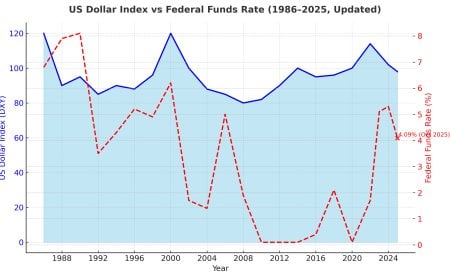
Why the Dollar Isn’t Weaker: The Shift from Store of Value to System Utility
Even as Fed rates fall below 4%, the dollar remains firm. Here’s why its strength no longer depends on yields — and how tokenization, trade…
3 shared topics, 2 shared assets.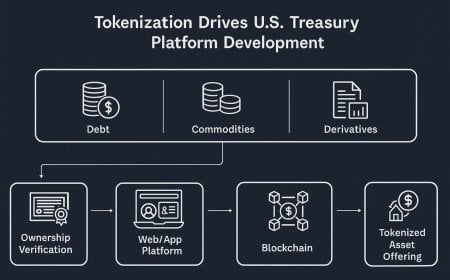
The Dollar Isn’t Collapsing — It’s Evolving
The dollar isn’t dying — it’s upgrading. The U.S. converts liabilities into globally demanded collateral (Treasuries), backstopped by the w…
5 shared topics, 1 shared asset, same research avenue.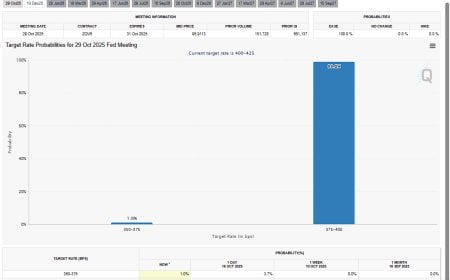
Fed’s October Pivot: Liquidity Cycles, History, and the Digital Dollar Frontier
Markets now expect another 25 bps rate cut at the Fed’s Oct 28–29 meeting as unemployment rises and repo-market strains flicker. Powell sig…
6 shared topics, same research avenue.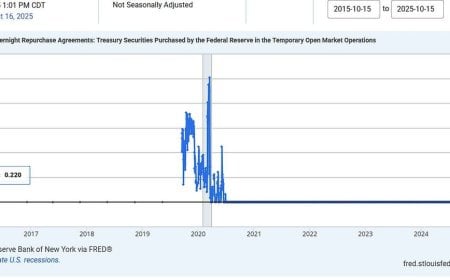
The Calm Before the Liquidity Storm: QE 2026 and the Digital Evolution of Money
Federal Reserve Chair Jerome Powell’s recent comments on ending Quantitative Tightening signal that the liquidity cycle is turning again. W…
6 shared topics, 1 shared asset, same research avenue.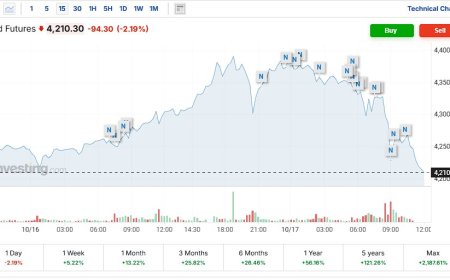
Gold’s Rough Day Doesn’t Change the Bigger Picture: A Natural Correction in a Structural Bull Market
Gold is pulling back to $4,210 after its record-breaking rally above $4,400, but this retracement is part of the natural rhythm of the mark…
4 shared topics, 1 shared asset.
The Liquidity Crunch Nobody’s Talking About: How Repo Stress, Bank Failures, and a “False Surplus” Are Fueling Gold’s Breakout
A hidden liquidity crisis is forming under the surface of global markets. Repo markets are flashing stress, regional banks are reporting fr…
5 shared topics, 1 shared asset.
Do You Understand Bank Reserves — or Just the Headline Version?
Most people think banks lend deposits. That’s not how the system works. Test your understanding of reserves, collateral, and Grade-A assets.
4 shared topics.
Sharhu (0)
Security Check
Please complete the captcha to verify you are human.