

Second Bomber Demo Near Venezuela: The Signal, Not the Show
Two USAF B-1B Lancers staged a second bomber demonstration in the Caribbean, flying within ~6 miles of Venezuela’s Los Testigos. This isn’t routine—it’s signaling. Here’s the pattern and why it matters.
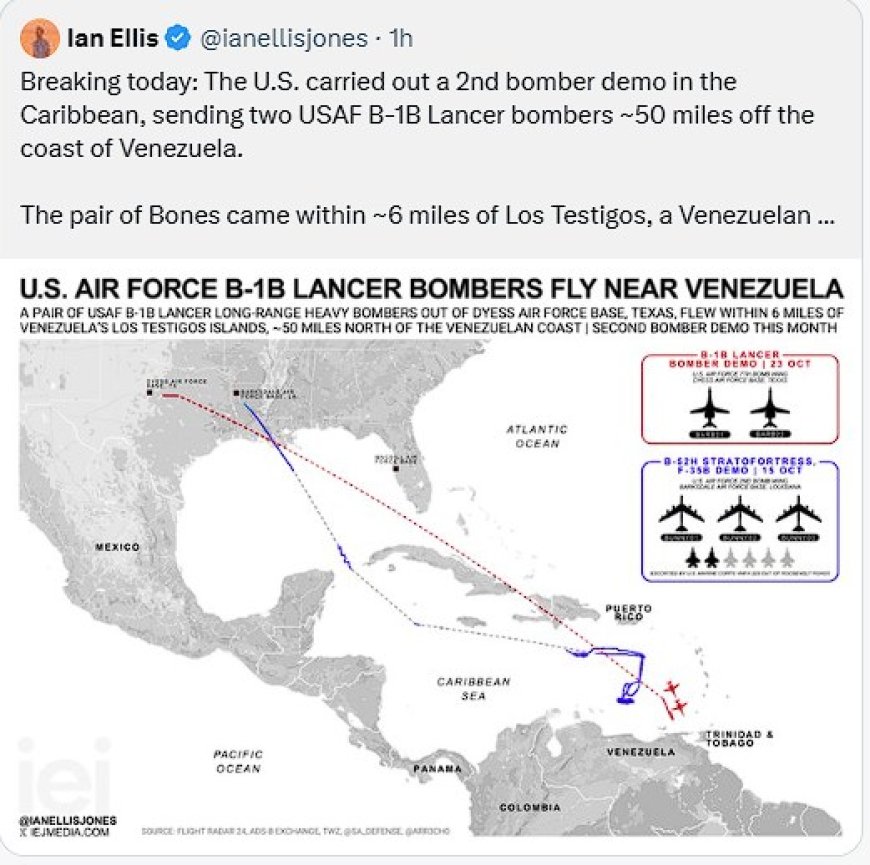
Two USAF B-1B Lancers staged a second bomber demonstration in the Caribbean, flying within ~6 miles of Venezuela’s Los Testigos. This isn’t routine—it’s signaling. Here’s the pattern and why it matters.
Jump to a section
Second Bomber Demo Near Venezuela: The Signal, Not the Show
Published October 23, 2025 | by Pattern Nexus
This was likely a a well choreographed probing of Venezuelan air defenses in preparation for *possible* future action.
— TheIntelFrog (@TheIntelFrog) October 24, 2025
The B-1s were not the only US military aircraft in the region today. https://t.co/kF1AZdGSPi
Something moved again in the Caribbean—and this time it wasn’t subtle. The United States ran a second bomber demonstration in the region, sending two USAF B-1B Lancers from Dyess AFB on a track that pushed to within roughly six miles of Los Testigos, off Venezuela’s coast. That’s not routine maritime air patrol range. That’s a deliberate signal.
Read the move in context, not in isolation. Over the past several weeks we’ve tracked a steady consolidation: amphibious ready forces sliding under SOUTHCOM, Tomahawk-capable destroyers rotating through key lanes, and special operations logistics pre-positioned for flexibility. Add long-range heavy bombers skimming the edge of Venezuelan airspace and you have a playbook that looks less like exercises and more like contingency staging.
Why bring B-1Bs this close?
The B-1B is about volume and reach. It can surge conventional strike packages fast, project pressure across wide maritime and littoral targets, and pair with sea-based assets to create layered options. Bringing “Bones” this close to Venezuelan territory advertises two things: command-and-control confidence and rapid escalation capacity if political leadership decides to move beyond messaging.
The pattern: consolidation first, options second
When you step back, the Caribbean looks like a flex node. Carrier groups reposition to create redundancy. Amphibious groups seed the theater with lift, logistics, and Marines. Bombers demonstrate runway-to-target timelines. None of this requires a decision on regime change today—it just ensures that if a decision drops tomorrow, dwell-to-action is measured in hours, not weeks.
Signals to multiple audiences
Moves like this talk to three audiences at once:
- Regional governments: We can shape your decision space quickly; align now rather than after the fact.
- Domestic politics: Options are prepared. If policy shifts, the military instrument is already staged.
- Adversaries and spoilers: Escalation ladders are built. Test the perimeter and you’ll get a fast answer.
What this likely means next
I don’t treat a single flight as destiny. I treat it as a marker on a trend line. If the pattern holds, expect: more joint evolutions in and around the Lesser Antilles; ISR saturation over key corridors; and tighter air–sea pairing that rehearses land-adjacent strike timelines. Whether this ends at signaling, coercive diplomacy, or something sharper depends on decisions outside the cockpit—but the infrastructure for speed is clearly being built.
Bottom line
Two B-1Bs brushing Venezuela’s coastline isn’t “posturing” in the casual sense. It’s an instrumental message inside a broader posture shift: consolidate the theater, shorten the fuse, and keep every option executable on short notice. That’s the system view—and the system is moving.
What's Your Reaction?
 Like
0
Like
0
 Dislike
0
Dislike
0
 Love
0
Love
0
 Funny
0
Funny
0
 Wow
0
Wow
0
 Sad
0
Sad
0
 Angry
0
Angry
0

Nexus (Christopher)
Founder of Pattern Nexus. I research markets, macro, geopolitics, AI, history, ancient systems, and the patterns most people overlook. I’m also building Market Radar, a trading scanner designed to read pressure, risk, confirmation, and setup quality before ch…
Related research
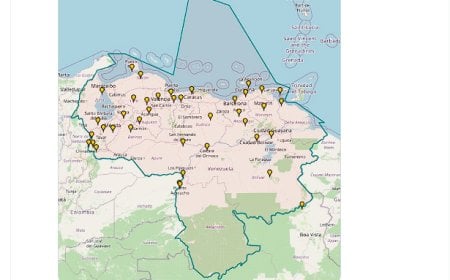
Red-Lit Airspace: What the U.S. NOTAM Over Venezuela Really Signals
U.S. Issues Full NOTAM Over Venezuela — What’s Really Moving Beneath the Surface
3 shared topics, same research avenue.
Imminent Escalation Watch: Venezuela — Markets, Signals, and the Playbook (Pattern Nexus Situation Update)
description" content="Pattern Nexus Situation Update: Carrier posture, bomber signaling, maritime strikes, and GPS interference point to el…
3 shared topics, same research avenue.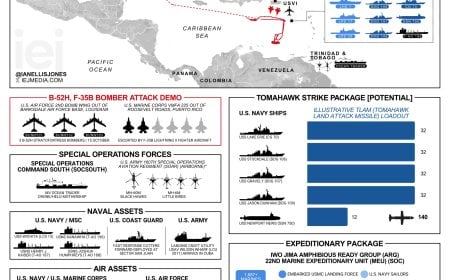
Caribbean Surge: From Sea-Strikes to Land Options — What the U.S. Is Building
As U.S. Southern Command ramps up its Caribbean deployment, amphibious ships, Tomahawk destroyers, and special operations units signal a sh…
3 shared topics, same research avenue.
The Regime Change Question: Has Washington Crossed the Line in Venezuela?
Despite a string of U.S. naval strikes and CIA authorizations inside Venezuela, no public confirmation has been made that the U.S. formally…
3 shared topics, same research avenue.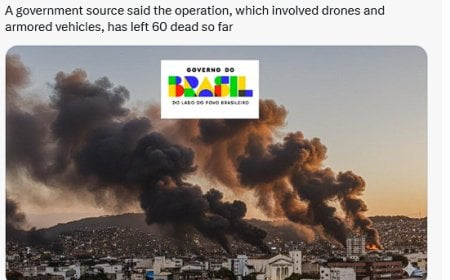
Brazilian Police Mega-Operation: Rio’s Deadliest Raid Leaves 60+ Dead | Pattern Nexus<
More than 2,500 Brazilian officers stormed Rio’s favelas in a massive raid against the Comando Vermelho gang — over 60 dead, 80 arrests, an…
2 shared topics, same research avenue.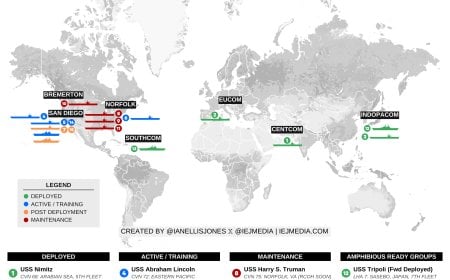
Consolidating Power: The Global Carrier Pattern and the Caribbean Surge
U.S. carrier strike groups are on the move — from the Ford in the Mediterranean to the Iwo Jima Amphibious Ready Group now under SOUTHCOM i…
2 shared topics, same research avenue.
Trump Signals Possible Military Strikes on Drug Cartels Beyond U.S. Borders
Trump says he will notify Congress before launching U.S. military strikes on foreign soil targeting drug traffickers — a move signaling a s…
2 shared topics, same research avenue.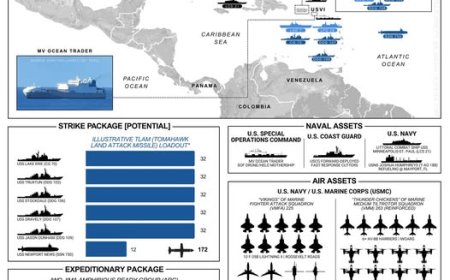
SOUTHCOM’s Caribbean Buildup: Warships, Marines, and Regime Change Speculation
The U.S. Southern Command (SOUTHCOM) has deployed a powerful task force to the Caribbean in late 2025. This analysis explores its military …
2 shared topics, same research avenue.
Comments (0)
Security Check
Please complete the captcha to verify you are human.