
2026 Landlord Outlook: Cautious Optimism, Multifamily Strength, and the New Housing Map
A Pattern Nexus breakdown of Innago’s 2026 landlord survey showing cautious optimism, portfolio expansion plans, multifamily dominance, Midwest and South rotation, and rising AI adoption in rental ownership.

The report shows a market that is not collapsing, but it is not loose and easy anymore either. Most landlords are neutral-to-optimistic, not because conditions are clean, but because the asset class still works if the math works. Half of respondents plan to buy at least one property in 2026, only 6% plan to sell, multifamily is the clear favorite opportunity, and the Midwest and South are drawing attention as investors move away from cost-heavy coastal markets. At the same time, interest rates and affordability remain the two macro variables sitting over everything, and AI is quickly moving from curiosity into workflow. The broader Pattern Nexus takeaway is simple: housing is now a tighter, more selective system where cash flow, density, efficiency, and geography matter more than narrative.
This is not a fear report. It is a positioning report. Landlords are still in the market, but they are more selective, more macro-aware, and more cash-flow focused than before.
The danger is not just rates. It is the combination of rates, affordability compression, insurance, taxes, and tenant stress all hitting the same balance sheet at once.
Multifamily strength, Midwest/South rotation, and rising AI use all point to the same deeper shift: operators are optimizing for efficiency, survivability, and scale, not just appreciation stories.
Cautious Optimism Is Not the Same Thing as Comfort
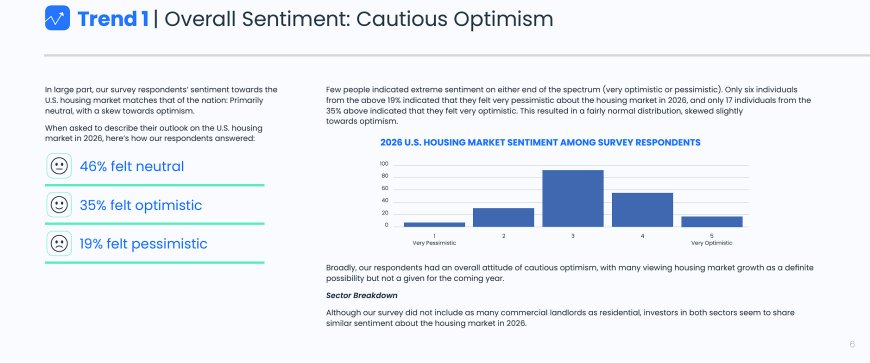
One of the biggest mistakes people make when they talk about housing is assuming the market is either strong or weak, bullish or bearish, healthy or broken. That is not how real systems actually behave. Most of the time, especially in late-cycle or transition environments, the market sits in a mixed state. That is exactly what this report shows.
Innago’s survey of 400 respondents managing a combined 5,693 units found that 46% of landlords feel neutral about the housing market in 2026, 35% feel optimistic, and 19% feel pessimistic. That distribution matters. It tells you landlords are not operating from broad fear, but they are also not entering 2026 with blind confidence. The right phrase for it is the same phrase the report uses: cautious optimism.
That tone makes sense. Investors are looking at a market where rates still matter, affordability is broken in a lot of places, insurance and taxes keep climbing, and tenant strain is becoming more visible. At the same time, the rental model itself is still intact. Demand has not disappeared. In many regions, it is probably more structurally supported than it was when homeownership felt more attainable to the average household.
The report also shows that 48% of respondents expect housing prices to stay the same in 2026, 38% expect prices to rise, and only 15% expect them to decline. That is another important signal. Landlords are not looking for some giant boom. They are expecting a market that holds together, grinds forward, and stays uneven. For actual operators, that is often enough. A real estate portfolio does not need media-level excitement to work. It needs stable rents, survivable costs, and workable financing.
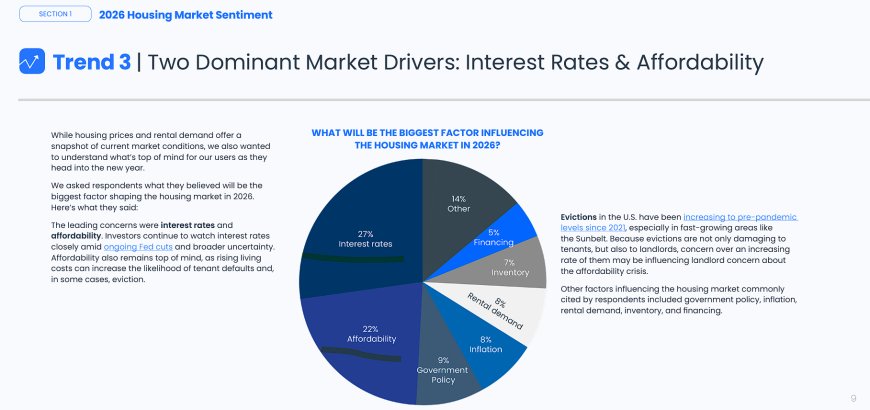
When landlords were asked what will shape the market most in 2026, the answer was not mysterious. Interest rates came in first and affordability came in second. That should not surprise anyone paying attention. Rates determine leverage. Affordability determines how much pressure tenants and buyers can absorb. Those two variables sit over everything else. They affect demand, defaults, turnover, expansion plans, and local pricing power. That is why the report reads less like a sentiment poll and more like a stress map of the housing system.
Landlords are still engaged, but the optimism is conditional. It depends on rates easing enough, affordability not deteriorating further, and operating costs staying within a range the rent base can still support.
Why Multifamily, Cash Flow, and Regional Rotation Are Leading
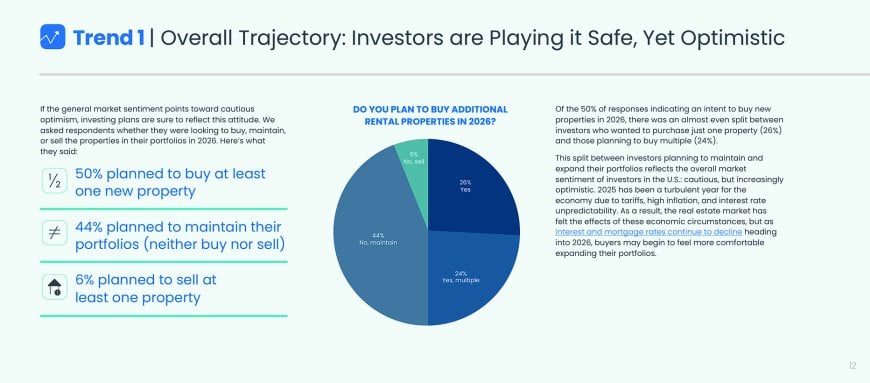
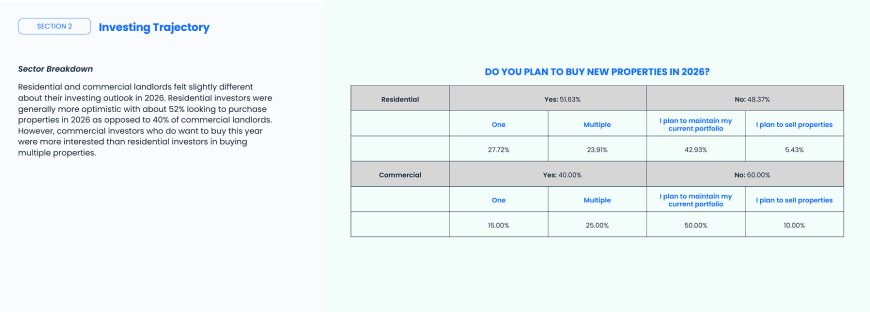
The second major signal in the report is that landlords are not exiting in size. They are still positioning. Fifty percent of respondents plan to buy at least one new property in 2026. Forty-four percent plan to maintain their current portfolios. Only 6% plan to sell at least one property. That is not the behavior of an investor base expecting imminent collapse. It is the behavior of a market that still sees opportunity, but only in more selective lanes.
Even the split inside the buyers is revealing. Twenty-six percent plan to buy one property and 24% plan to buy multiple. That tells you confidence is not concentrated only in the aggressive players. Expansion interest exists across the base. It is just more measured than before. People are still willing to deploy capital, but they want the purchase to make sense on day one, not just someday in a theoretical appreciation cycle.
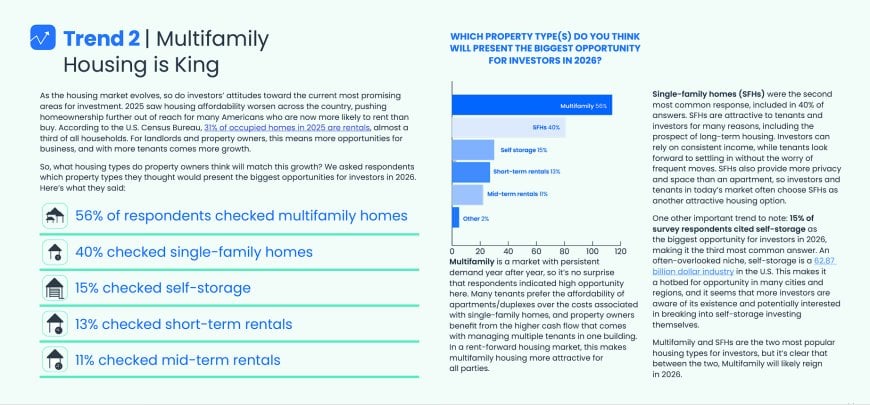
That is exactly why multifamily came in as the dominant opportunity. Fifty-six percent of respondents chose multifamily housing as the biggest opportunity in 2026, compared with 40% for single-family homes. Self-storage, short-term rentals, and mid-term rentals followed behind. The reason is not complicated. In a rent-forward environment where ownership affordability remains difficult, density matters. Multifamily gives operators more income streams per asset, better resilience to single-tenant disruption, and a structure that aligns with a more financially constrained renter base.
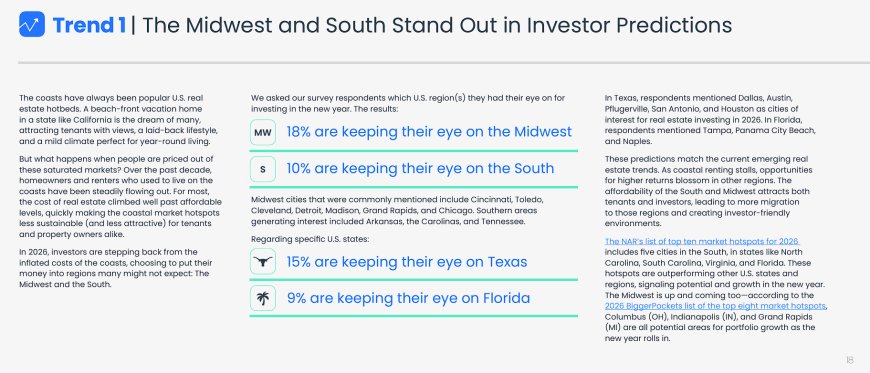
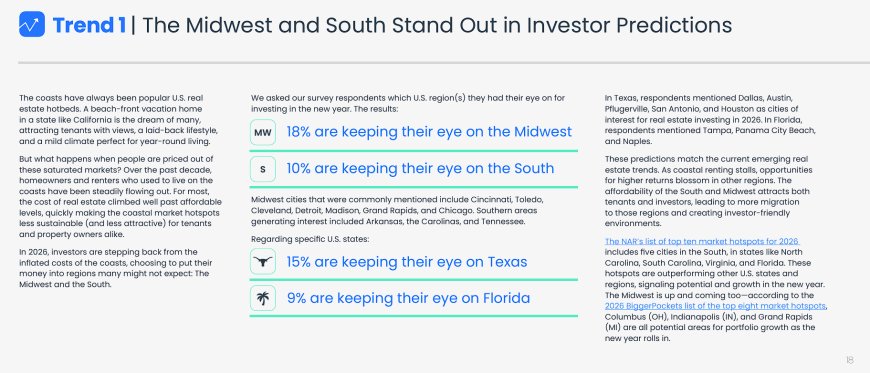
The report also highlights a regional shift that fits what many operators have been seeing in real time. The Midwest and South stood out as the most attractive regions for investment opportunity. Eighteen percent of respondents said they are watching the Midwest. Ten percent said the South. At the state level, 15% are eyeing Texas and 9% Florida. This is not random. It reflects a rotation toward places where the math still works better.
The coasts may still dominate attention culturally, but attention does not pay the mortgage. Cash flow does. When respondents were asked which market characteristics matter most when choosing where to invest, 63% chose cash flow, 43% chose affordability, and 42% chose appreciation. That ordering says everything. The modern landlord is not simply chasing story, prestige, or legacy hot spots. The landlord is following income durability first, then the cost basis that supports it, then the upside if everything else holds together.
This is also why the Midwest and South are so important in the report. These regions offer a better blend of price, rent support, migration, and investor survivability than many overextended coastal markets. In a looser era, coastal appreciation alone could paper over weak cash-flow logic. In a tighter era, that gets harder. As financing costs stay elevated and operating expenses remain unstable, the regions with the cleanest spread between acquisition cost and rent potential become structurally more attractive.
- Investors are still buying, but they are doing it more selectively and with tighter math.
- Multifamily leads because density and rental demand support stronger operating logic.
- Midwest and South rotation reflects a move toward affordability, cash flow, and less saturated price structures.

AI, Operating Pressure, and the New Landlord Stack
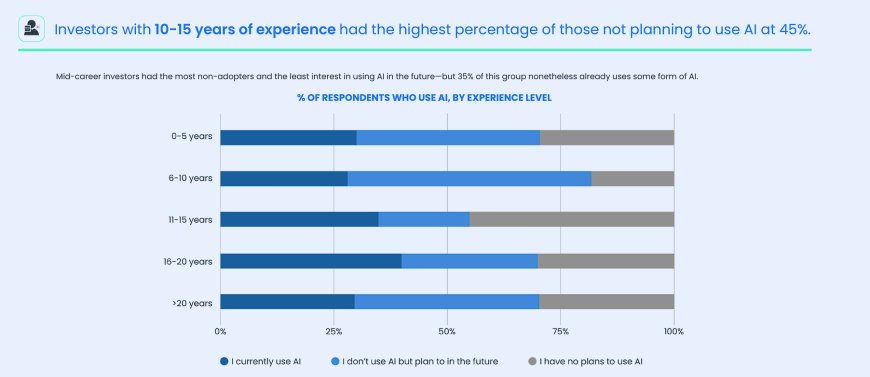
One of the most important sections in the report is not about region or property type. It is about operations. That matters because the next stage of housing will likely be decided just as much by operating efficiency as by acquisition strategy. According to the report, 32% of respondents already use AI in their rental business, 40% do not use it yet but plan to, and 27% have no plans to use it. In other words, 72% are already in the adoption lane or moving toward it.
That is a meaningful number. It means AI is no longer some side conversation detached from real estate. It is moving directly into the landlord workflow. The report shows the most common uses are listings and advertisements, deal analysis, tenant communication, and financial reporting. That is exactly where you would expect adoption to show up first: repetitive tasks, time-heavy admin, and decision support.
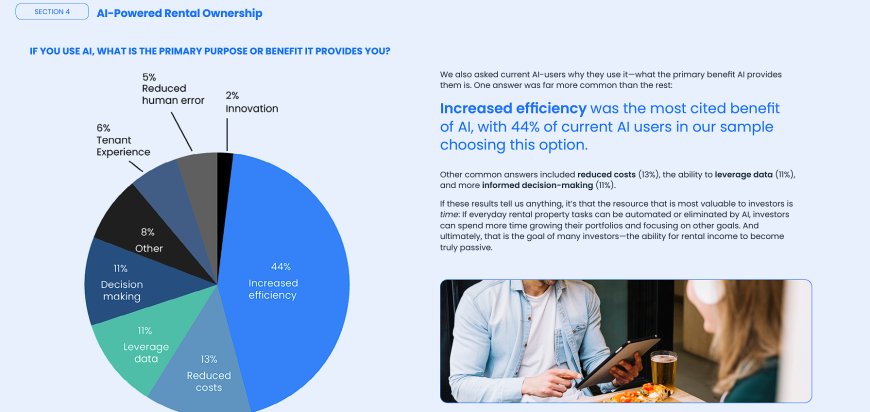
More importantly, the dominant benefit respondents cited was increased efficiency. That matters because it connects AI directly back to the rest of the report. Housing in 2026 is not getting easier operationally. Insurance costs are rising. Taxes are rising. Tenant stress is higher. Defaults, turnover, and eviction risk remain part of the threat map. If the external environment is becoming more difficult, then operators naturally search for internal efficiency gains. AI becomes one of the only levers they can still control on their own side of the system.
The role breakdown inside the report is also revealing. Property managers were the most AI-positive group, which makes sense because they are closest to the daily friction of the business. Full-time landlords showed strong future adoption interest. Short-term and mid-term rental owners were especially AI-positive, likely because their businesses already involve higher communication volume, more frequent turnover, and more dynamic pricing or workflow demands.
At the same time, there is still resistance. Some landlords do not trust the tools. Some do not yet know how to use them. Some simply do not feel enough pressure to change. That hesitation is real, but the directional trend is still obvious. If efficiency keeps becoming more valuable and if margins stay tighter, the non-adopters will eventually feel more pressure to move than they do today.
The report also outlines the bigger threat stack landlords see heading into 2026: general economic downturn, rising taxes and insurance costs, nonpayment, eviction, turnover, and financing stress. That threat map matters because it explains why neutral sentiment still coexists with willingness to buy. Landlords are not pretending risk is low. They are acknowledging risk and still deciding there is opportunity where the structure is right.
Pattern Nexus Lens
The cleanest way to read this report is not as a simple housing survey, but as a control-layer snapshot. Rates sit at the financing layer. Affordability sits at the household demand layer. Insurance and taxes sit at the operating margin layer. Geography sits at the migration and opportunity layer. AI now sits at the efficiency layer. Once you see those layers stacked together, the findings stop looking random and start looking structural.
That is why multifamily leads. That is why cash flow outranks abstract excitement. That is why investors are rotating toward the Midwest and South. That is why AI is moving into actual workflows. Each of those is a rational adaptation to a tighter system. Cheap money covered up a lot of inefficiency for a long time. As that era fades, asset quality, operating discipline, and region selection matter more again.
So the real signal in this report is not just that landlords feel cautiously optimistic. The real signal is that landlords are adapting. They are still looking for growth, but they are doing it through more density, more selectivity, better math, and better process. That is what a market transition actually looks like from the operator level.
Housing in 2026 is less about broad enthusiasm and more about strategic survivability. The operators most likely to win are the ones combining cash-flow discipline, region selection, multifamily logic, and efficiency tools inside a still-stressed macro environment.
FAQ
What is the main landlord mood going into 2026?
Mostly neutral, with a clear lean toward optimism. The important distinction is that this is not comfortable optimism. It is conditional optimism tied to rates, affordability, and operating costs.
Why is multifamily leading the opportunity rankings?
Because it fits the current structure better. It offers denser income streams, aligns with a more rent-dependent population, and often makes more sense when acquisition costs and tenant affordability are both under pressure.
Why are the Midwest and South getting more attention?
Because investors are following the math. Those regions still offer better combinations of affordability, demand, migration support, and cash-flow potential than many higher-cost coastal markets.
Sources
Survey data, charts, respondent breakdowns, and trend summaries supporting this article.
Aká je vaša reakcia?
 Páči sa mi to
0
Páči sa mi to
0
 Nehodnotiť
0
Nehodnotiť
0
 Láska
0
Láska
0
 Zábavné
0
Zábavné
0
 Wow
0
Wow
0
 Smútiť
0
Smútiť
0
 Rozhněvaný
0
Rozhněvaný
0

Founder of Pattern Nexus. I research markets, macro, geopolitics, AI, history, ancient systems, and the patterns most people overlook. I’m also building Market Radar, a trading scanner designed to read pressure, risk, confirmation, and setup quality before chasing a move. Pattern Nexus is where I connect the dots between data, history, technology, and the bigger system playing out around us.














Komentáre (0)