
Daily Market Wrap-Up – December 9, 2025
Markets pushed through a cautious session as the first full day of the Fed meeting began. Treasury yields climbed, equities wobbled, crypto rallied, and the structural stress in long-term rates continues to loom over risk assets.
December 9, 2025
Market overview
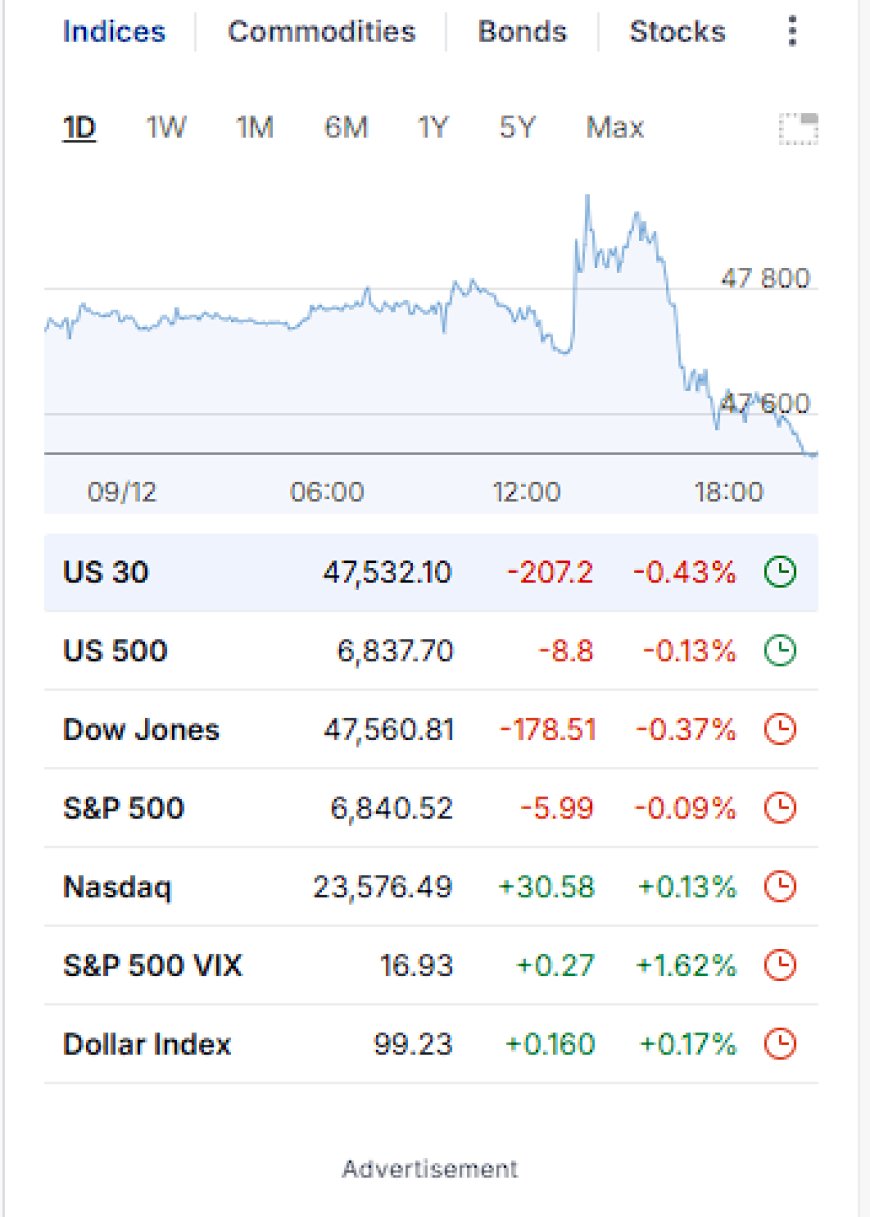
On “almost Fed day,” the tape looked calm at a distance but messy up close. The US 30 finished down about 0.4%, the broad US 500 slipped roughly 0.1%, while the Nasdaq managed a small gain of about 0.1%. The S&P 500 VIX popped more than 1.5%, and the Dollar Index drifted higher toward 99.2.
The pattern was classic pre-FOMC positioning: an early attempt to push higher, a sharp intraday reversal, and a heavy fade into the close as traders cleared risk ahead of tomorrow’s decision. Underneath the index-level chop, the real signal came from the bond market and from the way crypto and metals traded into the event.
Bonds: the 10-year as main event
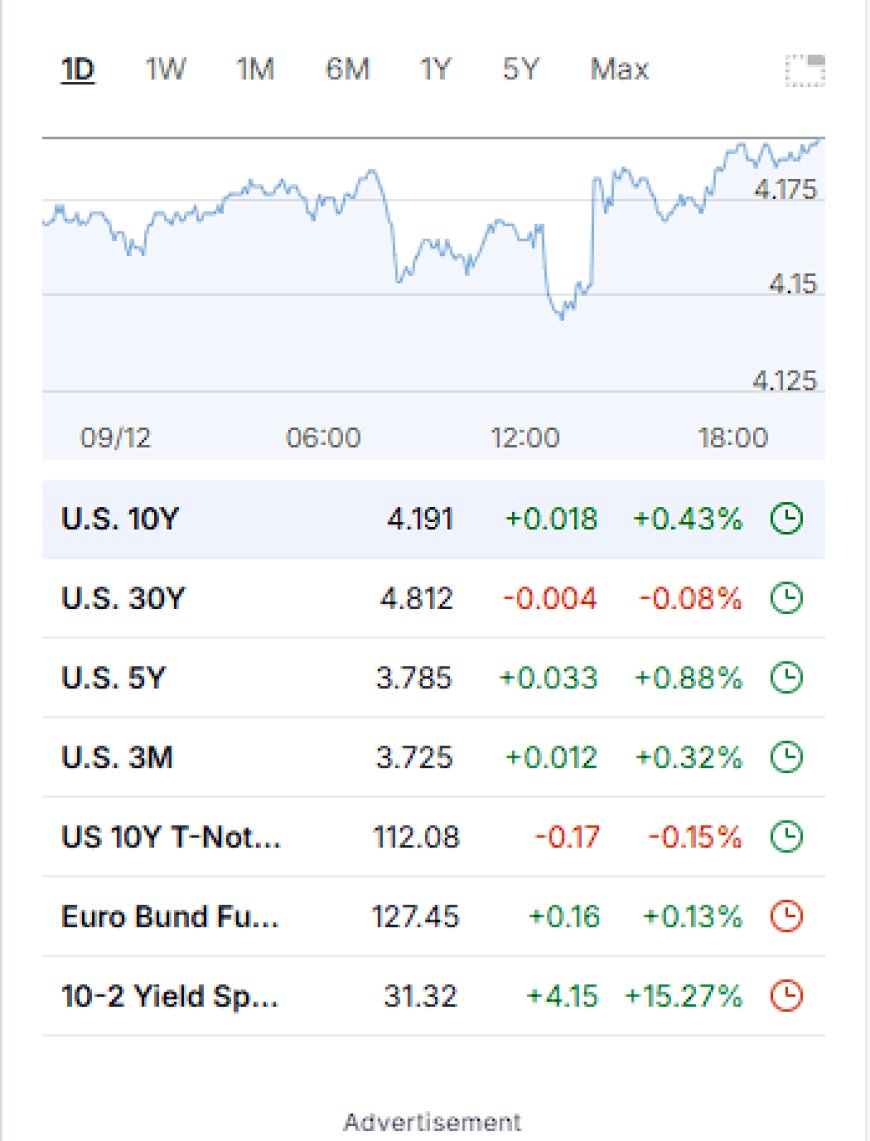
The 10-year Treasury closed near 4.19%, up a couple of basis points on the day and sitting right back near the upper edge of the gravity band we have been mapping (~3.8–4.2%). The 5-year pushed toward 3.79%, while the 30-year yield hovered around 4.81%. Short bills ticked only slightly higher, leaving the front end essentially pinned near the policy rate.
The curve is crawling out of its deep inversion not because growth is booming, but because the long end refuses to follow the Fed’s dovish pivot.
All of this is happening with markets pricing roughly an 85–90% chance of a 25 bp cut tomorrow and with QT over. In theory, that combination should be easing financial conditions. In practice, the long end is quietly tightening them instead. Global bond headlines underscored that this is not just a U.S. quirk; sovereign yields across developed markets are grinding higher into the decision, fueled by heavy supply, record global debt levels, and uncertainty about how far easing will actually go in 2026.
Equities and volatility
U.S. equities spent most of the day range-bound before fading late. The Dow and S&P 500 finished in the red, while the Nasdaq clung to a small gain thanks to selective strength in tech and AI-adjacent names. The intraday pattern was classic “weak hands clearing out ahead of the Fed”: a midday pop, followed by systematic selling as yields stayed firm and the dollar inched higher.
Under the hood, cyclicals and rate-sensitive pockets underperformed, while some quality growth and defensives held up better. Volatility edged higher but stayed contained; this was not a panic day, more of a controlled de-risking ahead of new information.
Commodities and metals
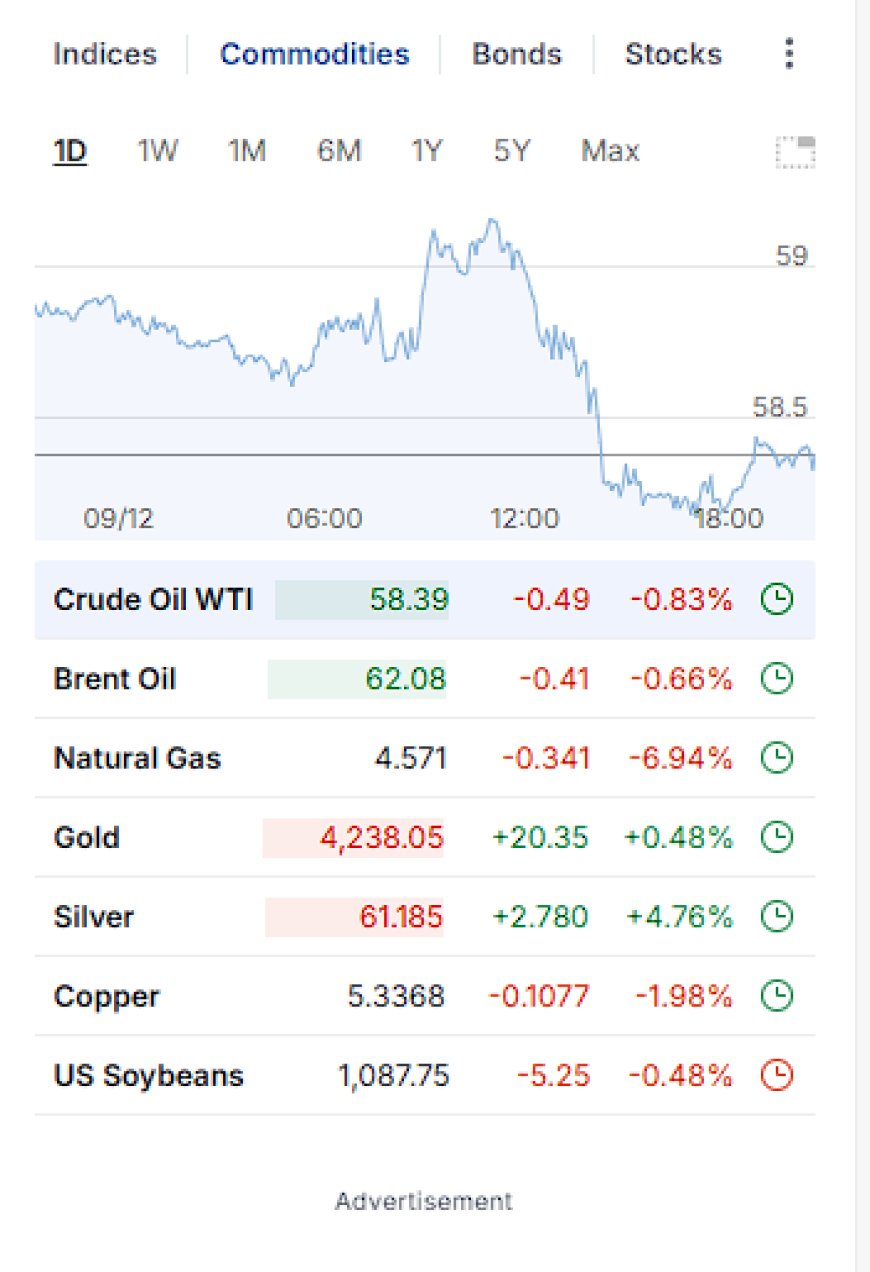
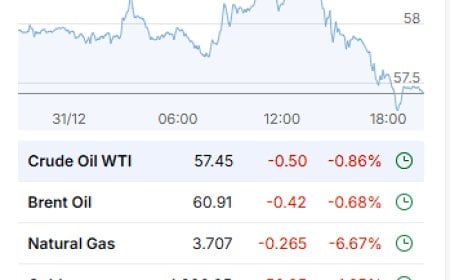
Energy stayed soft. WTI crude slipped just under 1% to the high-$58s, and natural gas was hit again, down nearly 7% on the day. Copper also traded heavy, off about 2%, signaling continued caution around global industrial demand and manufacturing momentum.
The interesting action was in precious metals. Gold added roughly 0.5%, but silver stole the show with a surge of nearly 5%. Headlines pointed to rate-cut expectations and signs of supply tightness as drivers of fresh speculative and hedging flows into silver, with some commentators flagging this as a potential breakout move if the Fed delivers a dovish tone tomorrow.
The combination of soft energy, strong silver, and firm yields is a weird mix: it suggests markets are not trading a simple “inflation scare.” Instead, they are pricing a more complex stew of policy easing, structural supply issues, and longer-term concern about the value of fiat claims in a world of record sovereign debt.
Crypto majors
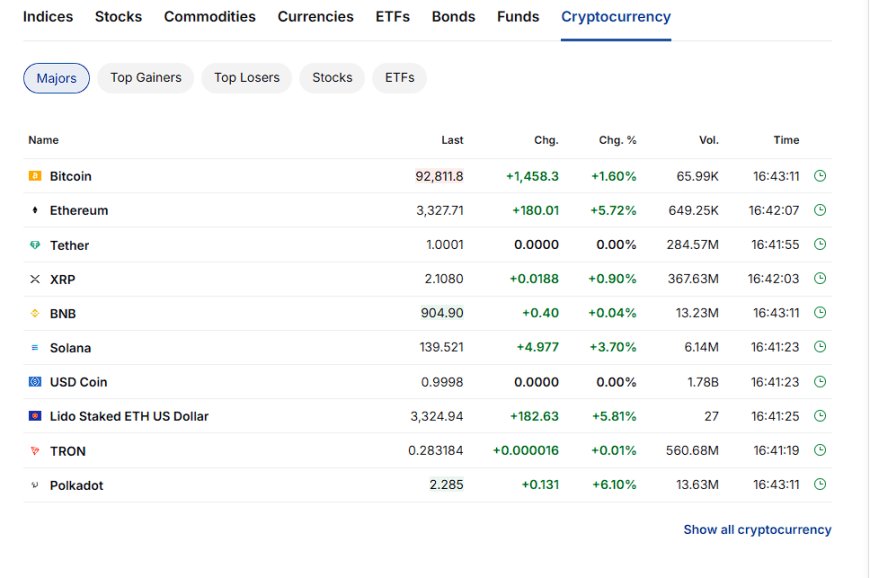
Crypto traded like it already knows tomorrow’s script. Bitcoin pushed toward $93k with a gain around 1.6%, but the real strength was in the high-beta names: Ethereum jumped more than 5%, Solana gained nearly 4%, Lido Staked ETH rallied almost 6%, and Polkadot tacked on more than 6%.
Stablecoins remained glued to their pegs with massive volume, underscoring how much of the crypto complex is now simply shadow dollar plumbing — the “digital monetary base” layer for speculative and hedging flows. The message from this tape is clear: the market expects easier policy and is using crypto as a levered bet on future liquidity, not current conditions.
Dollar and FX majors
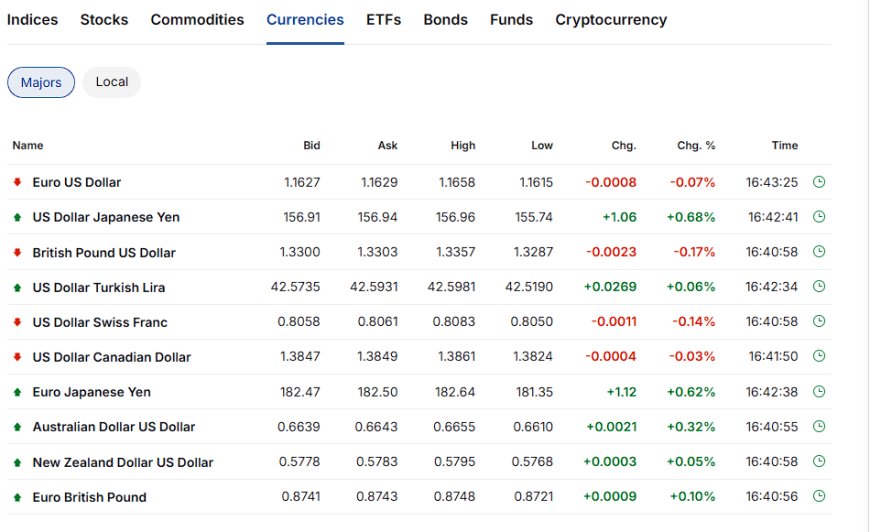
The Dollar Index climbed modestly, up about 0.2% on the day. The dollar gained against the euro and Swiss franc and strengthened notably versus the yen, while commodity currencies like AUD and NZD posted small gains against the greenback.
FX is basically in “waiting room” mode. Positioning is lightening up, but there is no decisive shift until the market sees whether tomorrow’s Fed message leans toward more cuts in 2026 or toward a shorter, shallower easing cycle with a higher terminal rate.
Single stocks and bank stress
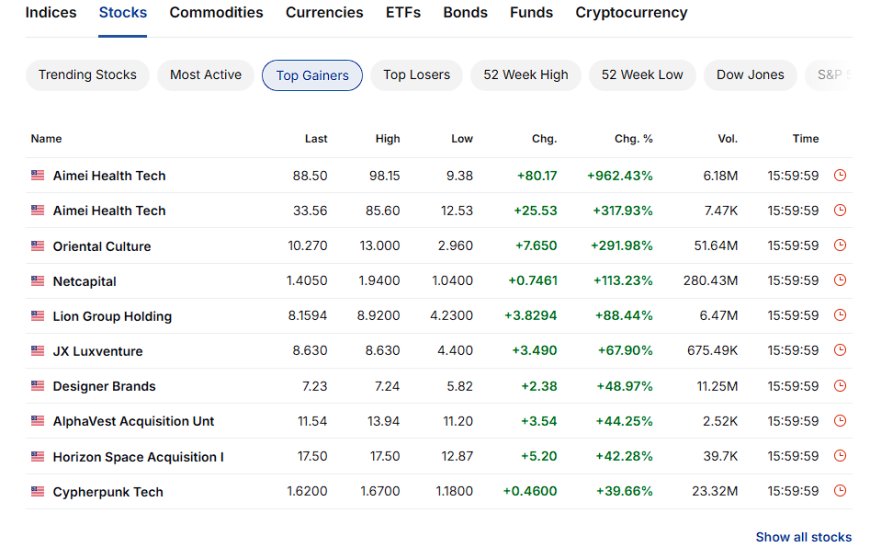
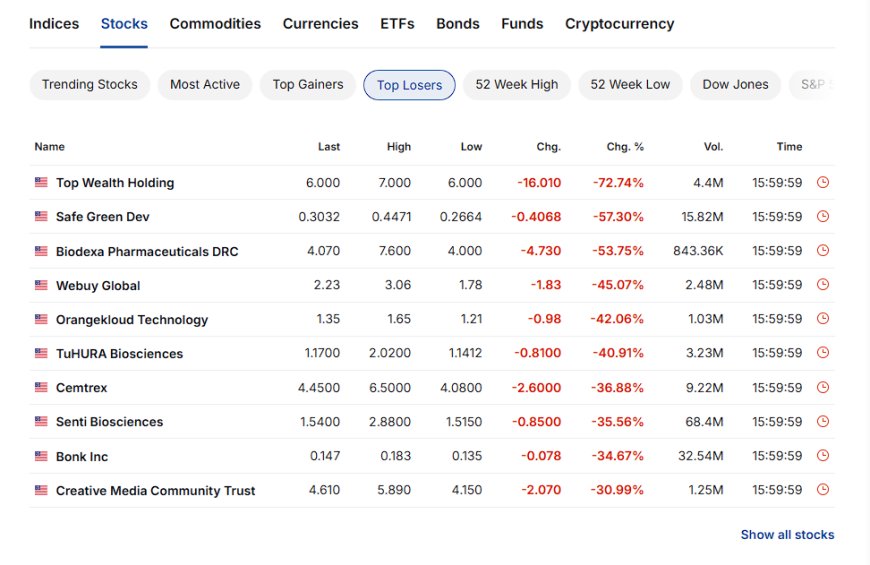
The extreme movers list was once again dominated by microcaps and thinly traded stories: triple-digit percentage moves in a handful of biotech, small-cap China, and speculative tech names clustered on the gainer side, while other biosciences, regional names, and special situations populated the loser column with 30–70% intraday drawdowns.
More interesting than the lottery tickets was the tone around financials and credit. Headlines today highlighted how consumer and private-credit exposures are getting harder to track as more lending migrates to nonbank channels. That theme fed into an undercurrent of “credit opacity” worries at the same time as global debt hit a new record near $346 trillion. For banks and traditional lenders, the message is simple: their balance sheets are no longer the only place risk lives, but they are still the first place stress tends to show up when funding conditions tighten.
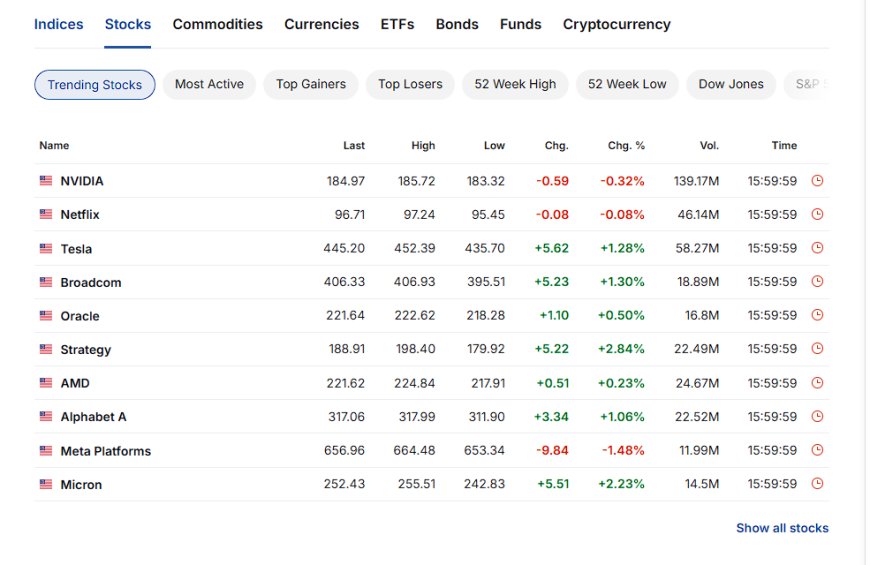
On the megacap side, Nvidia and other AI-linked names traded choppy but held up, Tesla and Micron posted solid gains, and Meta lagged with a notable pullback. The picture there is one of selective risk, not broad panic.
Big-picture read-through
If you strip away the intraday noise, December 9 looks like a very clean “positioning into the event” day:
- Long-end yields inch higher and sit near the top of the post-QT gravity band.
- Equities sag into the close, with a modest volatility bid and sector-level defensiveness.
- Energy and copper stay soft, while silver rips on rate-cut and supply narratives.
- Crypto trades like a forward contract on future liquidity, not today’s credit conditions.
- Credit and bank-risk stories percolate in the background as global debt prints another record.
Tomorrow’s 25 bp cut is almost an afterthought. The real decision is about the path: how many cuts in 2026, how fast the Fed wants to move toward “neutral,” and whether they’re willing to let the balance grow again. Markets are already gaming that second layer, which is why the 10-year, silver, and crypto are moving more than the S&P on the eve of a policy meeting.
Pattern Nexus Lens
From a Pattern Nexus perspective, today’s tape is almost textbook for this phase of the cycle: QT has effectively ended, rate cuts are underway, but the system is still behaving like liquidity is scarce where it matters most — in duration, in collateral, and in the plumbing of credit.
1. The 10-year as structural stress gauge
A 10-year pinned near 4.2% into a widely expected cut is the system saying: “Overnight money might be cheaper, but term risk isn’t.” Record global debt, heavy Treasury issuance, and tepid duration demand mean the long end refuses to validate the Fed’s easing narrative. Until that changes, financial conditions will not feel “easy” to households or corporates, no matter how many cuts show up in the dot plot.
2. Post-QT doesn’t mean post-stress
The December 1 balance-sheet pivot removed one source of tightening, but it didn’t reverse the damage done by three years of QT. Reserves are still scarcer than they were in the last cycle, private credit has ballooned, and the sovereign funding calendar is relentless. The market understands that ending QT is a necessary condition for the next liquidity wave, not a sufficient one.
3. The $6.5+ trillion question: balance sheet path
More attention is quietly shifting away from “Will they cut 25 or 50?” and toward “What happens to the $6.5+ trillion balance sheet next?” If growth slows while long-end yields stay elevated, the pressure for yield-curve management, expanded T-bill purchases, or outright QE-style operations in 2026 will build. Today’s action in silver and crypto is already sniffing around that possibility.
4. Crypto and metals as forward liquidity trades
The fact that ETH, SOL, and DOT are ripping while silver prints one of its biggest daily moves of the quarter is not random. Both complexes are effectively leveraged bets on the combination of easier policy and structural debasement. They don’t care that funding is still tight today; they care whether 2026 looks like “liquidity plateau” or “liquidity wave.” The stronger they trade into this meeting, the clearer the market’s vote.
5. Bank and credit stories as slow-burn risk
Headlines about opaque consumer loans, off-balance-sheet credit, and private markets “cracks” are not yet front-page panic. But they are exactly what you would expect to see in the early stages of a regime where long-end yields stay stubborn, funding costs drift higher, and real-economy borrowers rely on more complex credit pipes to keep rolling over their obligations. In this framework, bank stress is a lagging indicator of plumbing stress, not the cause of it.
Put simply: December 9 is not a crisis day. It is a calibration day. The system is lining up its bets for a world where the Fed cuts, QT is over, global debt is at a record, and the long end refuses to play along. Tomorrow’s statement will tell us whether policy is ready to acknowledge that reality — or keep pretending the fed funds rate alone can carry the load.
FAQ
Why do you keep focusing on the 10-year instead of the Fed funds rate?
Because the 10-year sets the reference price for mortgages, corporate bonds, and a huge slice of global risk assets. In a high-debt world, the cost of rolling duration matters more than the overnight rate. When the Fed cuts but the 10-year stays high, financial conditions don’t meaningfully loosen.
Is today’s crypto strength just speculation, or is it actually telling us something?
It’s both. Speculators are clearly piling into high-beta tokens ahead of a likely cut, but the pattern of crypto leading liquidity pivots has repeated enough times to treat it as a forward-looking indicator. When crypto rallies while equities stall and yields stay firm, it usually means the market is betting on future policy support even if current conditions remain tight.
How worried should we be about bank and credit stress right now?
We’re not in acute crisis territory, but the direction of travel matters. Rising global debt, opaque consumer-loan structures, and private credit leverage all amplify the impact of higher long-end yields. If the Fed delivers cuts without a credible plan for the balance sheet and curve, those slow-burn risks will keep building under the surface.
What’s the main thing to watch in tomorrow’s Fed decision?
The 25 bp cut is already priced. The real tells will be: how divided the committee looks, how many cuts they signal for 2026, and whether there is any shift in language around balance-sheet policy, term premium, or “financial conditions” at the long end. The market will trade the path, not the print.
Sources
- Reuters – Global markets view: Fed anxiety and rising yields, Dec 9, 2025
- Reuters – Stocks, dollar inch higher ahead of Fed announcement, Dec 9, 2025
- Yahoo Finance – Stock Market News for Dec 9, 2025
- Wall Street Journal – Silver hits fresh record on U.S. rate-cut bets and supply tightness, Dec 9, 2025
- Reuters – Global debt nears $346 trillion, says IIF, Dec 9, 2025
- Morningstar / Dow Jones – An unusually divided Fed is expected to deliver a rate cut, Dec 9, 2025
- Forbes – Traders focus on Fed balance sheet and potential $6.5T “surprise”, Dec 9, 2025
- Morningstar – Consumer loans are getting harder to tally and risks harder to gauge, Dec 9, 2025
Aká je vaša reakcia?
 Páči sa mi to
0
Páči sa mi to
0
 Nehodnotiť
0
Nehodnotiť
0
 Láska
0
Láska
0
 Zábavné
0
Zábavné
0
 Wow
0
Wow
0
 Smútiť
0
Smútiť
0
 Rozhněvaný
0
Rozhněvaný
0

Founder of Pattern Nexus. I research markets, macro, geopolitics, AI, history, ancient systems, and the patterns most people overlook. I’m also building Market Radar, a trading scanner designed to read pressure, risk, confirmation, and setup quality before chasing a move. Pattern Nexus is where I connect the dots between data, history, technology, and the bigger system playing out around us.











Komentáre (0)