
Echoes of the Builder: What We Leave Behind
This piece explores the architecture of legacy — not as wealth or fame, but as continuity of thought, creation, and impact. It examines how every system we build, from homes to ideas to businesses, becomes a mirror of our values and a container for future lives. It ties construction, resilience, and philosophy into one continuum — how a person’s blueprint extends beyond their lifetime through what they shape and the principles they leave embedded in their work.
Echoes of the Builder: What We Leave Behind
The most powerful thing a human can build is something they’ll never get to finish.
That’s the paradox of legacy — it isn’t completion that defines it, but continuation. The truest mark of a builder isn’t that they saw the structure rise, but that they laid a foundation others could stand on. Whether it’s a home, a company, or an idea, legacy begins where ownership ends.
We live in an age that measures life in metrics — views, valuations, quarterly returns — yet the most meaningful contributions can’t be counted. Legacy isn’t captured in numbers; it’s encoded in influence. It’s in the unseen frameworks that guide behavior long after the name behind them is forgotten.
The craftsman who builds a house never truly owns it. The architect who designs a skyline doesn’t live in it. The writer who captures an age rarely sees how their words reshape the one that follows. But each of them leaves behind something invisible — a structural resonance that keeps echoing, carrying their intention into generations they’ll never meet.
That’s what legacy is: momentum disguised as memory.
We often confuse legacy with reputation, but they’re opposites. Reputation is the story others tell about you; legacy is the story reality tells because of you. The former fades when the spotlight moves; the latter endures in the systems that remain.
Every civilization, from Mesopotamia to Silicon Valley, was built by people who understood that permanence isn’t about immortality — it’s about contribution. The pyramid wasn’t built to last thousands of years; it lasted thousands because it was aligned with purpose, geometry, and belief.
Modern people build fast, but not deep. We prioritize visibility over durability, replication over craftsmanship. We’ve traded slow mastery for fast replication, forgetting that legacy can’t exist without intention.
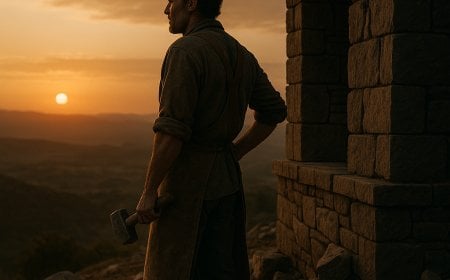
The builders of cathedrals knew they would never see their ceilings complete. They built anyway — because the act itself was sacred. It was a contract between present labor and future meaning. In a world of instant gratification, that kind of patience feels radical.
I’ve spent years watching how structures — both physical and conceptual — evolve after their creators are gone. In real estate, a home is a living archive. You can feel the character of the hands that built it. The framing, the angles, the precision — it all tells a story of someone who cared about more than profit.
In business, the same rule applies. The companies that survive founders are the ones that inherit principles, not just processes. Values become the hidden rebar that keeps everything standing when the market shifts.
In science, too, every discovery is a form of inheritance. Einstein didn’t invent relativity in a vacuum — he extended the unfinished equations of Newton, who in turn stood on the shoulders of Galileo. The continuity of thought *is* civilization.
That’s why the question isn’t “What will I leave behind?” — it’s “What will continue because of me?”
Legacy is often misinterpreted as permanence, but permanence is a myth. Everything decays — the materials, the memories, even the myths. What doesn’t decay is pattern.
The pattern of curiosity. The pattern of resilience. The pattern of empathy. These are the invisible frameworks that endure, traveling across generations as cultural DNA.
Historians sometimes treat architecture and philosophy as separate disciplines, but they’re the same. Both are about structure. Both ask: what holds this together? Both are blueprints for meaning. And when you think about your life through that lens, everything you build becomes a reflection of how you think time should behave.
We don’t just build for ourselves; we build for the unknown. Every system, house, or belief we construct is a letter to the future — a message written in materials and motion.
Legacy also asks a harder question: what happens when we stop building?
Societies decline not because they run out of resources, but because they run out of vision. When people stop believing their work matters beyond their lifetime, craftsmanship dies. The moment legacy is replaced with lifestyle, civilization begins its slow collapse.
Philosophers like Viktor Frankl argued that meaning is the only true motivator that survives suffering. Without it, consumption replaces creation, and survival replaces purpose. A civilization that forgets how to build for the future eventually becomes one that can’t even maintain the present.
That’s what makes the act of building sacred — it’s a rebellion against entropy. Every hammer strike, every line of code, every lesson passed on is a small act of defiance against forgetting.
But legacy doesn’t have to be grand. Most of it happens quietly — in mentorship, in conversation, in example. You can build an empire without ever buying land. You can build a future by shaping minds, by keeping promises, by living in a way that adds structure to others’ chaos.
Because in the end, every life is architecture. Some people leave monuments; others leave balance. Both matter. The measure of a person isn’t what they accumulate, but what they stabilize.
I’ve come to think of legacy like gravity. You don’t see it, but you feel its pull in everything it keeps together.
When your work — your structures, your principles, your actions — continues to hold others in orbit, you’ve already built something eternal.
The world will forget your name, but not your pattern.
#Legacy #Reflection #Philosophy #Time #Creation #Humanity #PatternNexus
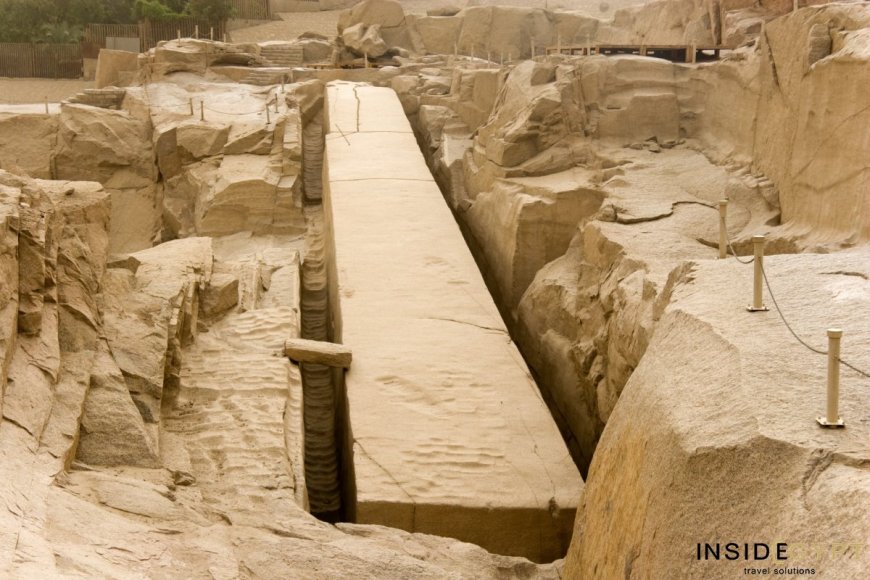
mage credit: Inside Egypt – Luxury Tours (inside-egypt.com)
Aká je vaša reakcia?
 Páči sa mi to
0
Páči sa mi to
0
 Nehodnotiť
0
Nehodnotiť
0
 Láska
0
Láska
0
 Zábavné
0
Zábavné
0
 Wow
0
Wow
0
 Smútiť
0
Smútiť
0
 Rozhněvaný
0
Rozhněvaný
0

Founder of Pattern Nexus. I research markets, macro, geopolitics, AI, history, ancient systems, and the patterns most people overlook. I’m also building Market Radar, a trading scanner designed to read pressure, risk, confirmation, and setup quality before chasing a move. Pattern Nexus is where I connect the dots between data, history, technology, and the bigger system playing out around us.











Komentáre (0)