
A 4.21% Day Is Not Normal — Gold Just Repriced the System
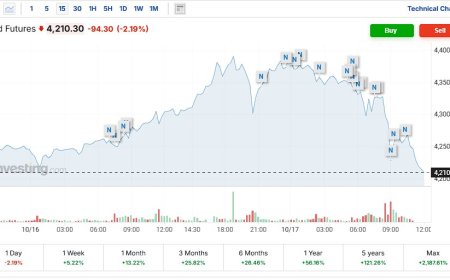
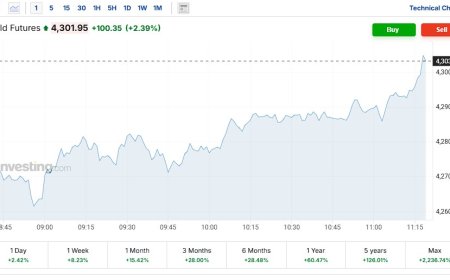
Gold printed a +4.21% session at record nominal prices. That is not a “trade.” It’s a credibility repricing across the claims stack: FX, rates, collateral, and settlement confidence.

![[HERO_IMAGE_ALT: gold repricing / claims stack]](https://patternnexus.com/uploads/images/202601/image_870x_697a59885bcbf.jpg)

Clarified the core question (“biggest % ever?”) and expanded what actually matters: notional repricing, claims hierarchy, and the control-systems layer. Added a regime map table (1971, 1980, 2008, 2020, today) and expanded the Pattern Nexus Lens framing around permission, settlement, and credibility.
A 4.21% day in gold at record nominal prices is not a “move.” It’s a system probe. When bonds don’t absorb fear and equities don’t crash, the signal is not panic. The signal is confidence fragmentation. Capital bids cleaner claims when the rule-set feels noisy.
Not financial advice. Educational only. I’m sharing my own process and interpretation.
Why +4.21% matters now

You can find bigger one-day percentage gains in gold history. 2008 printed an after-hours surge around +11.6% in futures. 2020 printed +5–6% days during the COVID liquidation and re-stabilization. That means today is not “the biggest percent move ever.”
The reason this is still insane is the base. Gold is repricing off a completely different notional scale now. The same percentage today reprices vastly more total value than it did in the 1970s, 1980s, 2008, or even 2020. This is why it feels like a regime event even if the percent number looks “small” compared to a crisis chart you remember.
The notional repricing problem
World Gold Council data puts total above-ground stock at 216,265 tonnes (end-2024). Convert that to ounces (1 tonne ≈ 32,150.7466 troy oz) and you get roughly 6.95 billion troy ounces. At the current price regime, you’re not talking about a “market cap” in the billions. You’re talking about a reference asset measured in tens of trillions.
Above-ground gold: ~216,265 tonnes → ~6.95B oz
If gold is ~5,257/oz, implied above-ground value is ~36.55T
A +4.21% session implies ~1.54T of repriced value
You don’t need to treat that as literal “money that changed hands.” You treat it as a confidence signal: the clearing price for the cleanest claim just moved hard, at scale.
This was claims repricing, not sentiment
“Risk-on / risk-off” language fails on days like this because it assumes a single axis: growth optimism versus fear. Today wasn’t one axis. It was multiple rails interfering with each other.
When policy is noisy, FX intervention chatter rises, and the Fed is a live variable, capital is not reacting to headlines. It’s reacting to rule uncertainty. This is the difference between “the market is scared” and “the market is re-scoring which promises still price cleanly.”
Gold is the “clean claim” when the system can’t agree on the ranking of other claims. It’s not that gold is magic. It’s that gold has fewer moving parts: less counterparty exposure, less policy-dependence, less narrative fragility. When rules feel unstable, the market pays a premium for fewer dependencies.
The claims stack: clean claims vs conditional claims
The fastest way to understand a day like this is to stop thinking in “assets” and start thinking in claims. Every financial instrument is a claim on something else. Some claims settle cleanly. Some claims settle only if the rules remain friendly.
Clean claim: physical gold (no issuer, no maturity)
Cleaner claims: cash, very short sovereign bills (when credibility holds)
Conditional claims: bank deposits, money-market structures, longer duration sovereigns (policy-sensitive)
Highly conditional claims: credit, equities (discount-rate + earnings + governance assumptions)
Meta-claims: derivatives, levered structures, rehypothecated collateral chains (settlement + margin regime dependent)
On “normal days,” this stack behaves politely. On days when credibility gets noisy, the stack stops behaving politely. You see capital bid the top of the stack even while other areas appear stable on the surface. That’s how you get: gold vertical, silver vertical, equities not crashing, bonds not giving you the classic safety response. It’s not contradictory. It’s hierarchy stress.
The pipe map: what was actually moving
The clean way to read this is “pipes,” not sectors. The system routes capital through pipes: FX, rates, equities, commodities, collateral, settlement. When several pipes flex at the same time, you get behavior that looks contradictory if you’re stuck in one-index thinking.
FX instability without a clean bond bid
Equities holding up in aggregates but breaking internally (index masking by weight)
Hard-asset verticality (gold, silver) as a “clean claim” bid
Elevated narrative uncertainty: tariffs, intervention, legitimacy language, policy reversals
A subtle shift: “risk” becomes a wrapper for governance actions
The big tell is when the dollar weakens and bonds don’t behave like the automatic shock absorber. That’s when the market quietly admits it is repricing US-asset credibility, not just global growth. It’s not “the end.” It’s an audit.
Why silver went harder
Silver is the high-beta expression of the same stress. When the signal is real, silver tends to amplify it because it sits at a weird intersection: monetary metal behavior layered onto industrial demand behavior layered onto thinner liquidity.
In other words: when the market is paying for “cleaner claims,” it often buys the anchor (gold) and then it buys the amplifier (silver). That does not mean silver is “safer.” It means silver is the louder version of the same vote.
Historical comparison table: 1971, 1980, 2008, 2020, today
This is not a nostalgia list. It’s a regime map. Each row is a moment when the claims stack was renegotiated. The percent move matters, but the mechanism matters more: price discovery, forced selling, policy decree, or credibility shock.
| Era | Regime trigger | Representative 1D move | Instrument | Mechanism | What it revealed |
|---|---|---|---|---|---|
| 1971 | Gold window closes, Bretton Woods breaks | N/A (administered peg at $35/oz; repricing occurs via regime change) | Policy decree | Price discovery is suspended, then reintroduced over time | When the system can’t honor convertibility, it changes the rules |
| 1980 | Inflation crisis, geopolitics, confidence shock | ~+8.05% (Jan 28 → Jan 29, London fix proxy) | Physical-linked benchmark | Violent repricing in an inflation/credibility rupture | Gold becomes the referendum on policy credibility |
| 2008 | GFC panic, solvency fear, deleveraging | +11.6% (Sep 17, futures after-hours spike) | Futures | Volatility + dislocation; “safe haven” competes with margin calls | When leverage breaks, everything becomes collateral first |
| 2020 | COVID liquidation, forced selling, Fed backstop | +5.61% (Mar 24, daily close) | Spot benchmark (daily close) | System re-stabilization: cash shortage resolves, pricing normalizes | Liquidity is not money, it’s settlement capacity |
| Today | Policy noise, FX chatter, Fed week, credibility stress | +4.21% session print | [Spot/Futures] | Claims repricing without a classic crash signature | Confidence fragmentation: capital bids “clean claim” while the hierarchy wobbles |
Notice the progression: 1971 is a rule-change by decree. 1980 is inflation credibility rupture. 2008 is leverage failure. 2020 is settlement freeze then backstop. Today rhymes with all of them in one specific way: it’s about the hierarchy of claims, not the mood of traders.
Pattern Nexus Lens
The more the system hardens into a permission era, the more it needs legitimacy language to justify hardening. When that language expands and intervention chatter rises, gold tends to move not because “inflation,” but because the market is re-scoring what claims are least dependent on rules staying stable.
This is why stablecoin rails, tokenized collateral, and settlement layers matter. If the future is a denser claims graph, then clean collateral becomes more valuable, not less. Gold is the old rail that still clears when new rails are noisy.
In plain terms: when the system can’t keep its promises straight, the market bids the asset that needs the fewest promises.
What to watch next
The next tells won’t come from gold alone. Gold already voted. The next chapter is whether the system accepts that vote or tries to suppress it via narrative, policy, or intervention.
- Bond behavior: do Treasuries regain “shock absorber” status, or do they stay politically noisy?
- Dollar stability: does USD stabilize organically, or does it require force and messaging?
- Equity internals: index-level green with internal fracture is a late-cycle tell in disguise.
- Silver follow-through: silver is the amplifier; if it stays bid, the signal wasn’t a one-day headline.
- Collateral stress signals: haircuts, spreads, basis behavior, any hint that settlement preference is changing.
If you keep seeing “dollar weakness” + “no clean bond bid” + “gold vertical,” that’s not a normal regime. That’s the system debating which safety claim is still uncontested.
FAQ
No. There are larger percent spikes on record, especially during 2008 and the 2020 liquidity break. What’s different is the notional base: the implied repricing today is far larger in total value terms.
Big days can include thin liquidity and mechanical flow, but the higher-order question is why the system is allowing the signal. Extreme gold days generally coincide with credibility stress somewhere else.
Not automatically. This is a repricing of confidence, not an obituary. The real question is whether credibility can be re-anchored without changing the rules again.
Tokenization multiplies claims. Multiplying claims increases the importance of collateral hierarchy. If the future is more claims, the market will pay more for “clean settlement” assets, not less.
Sources
- World Gold Council: “How much gold” (above-ground stock end-2024: 216,265 tonnes)
- Federal Reserve History: end of dollar convertibility to gold (1971)
- U.S. State Department (Office of the Historian): Bretton Woods $35/oz peg and breakdown
- IMF Blog: the “gold window” and the end of Bretton Woods (1971)
- SFGate (AP): Sep 18, 2008 — gold for Dec delivery rose as much as $90.40 (11.6%) in after-hours trading
- GoldPrice.org: Mar 24, 2020 — daily close change (+5.61%)
- SDBullion: daily gold price fixes for January 1980 (Jan 28–29 levels)
Don’t treat this as a headline. Treat it as a probe result. Gold doesn’t need to “predict” anything to matter. It only needs to show you when the system is renegotiating credibility.
Aká je vaša reakcia?
 Páči sa mi to
0
Páči sa mi to
0
 Nehodnotiť
0
Nehodnotiť
0
 Láska
0
Láska
0
 Zábavné
0
Zábavné
0
 Wow
0
Wow
0
 Smútiť
0
Smútiť
0
 Rozhněvaný
0
Rozhněvaný
0

Founder of Pattern Nexus. I research markets, macro, geopolitics, AI, history, ancient systems, and the patterns most people overlook. I’m also building Market Radar, a trading scanner designed to read pressure, risk, confirmation, and setup quality before chasing a move. Pattern Nexus is where I connect the dots between data, history, technology, and the bigger system playing out around us.













Komentáre (0)