
High-Tech, High Complexity: How AI’s Rapid Rise Is Leaving Society Behind
AI is reshaping industries, economies, and everyday life faster than humans can comprehend — creating a world of dazzling innovation and dangerous complexity. AI’s explosive growth is transforming everything — work, money, creativity, and identity — at a pace humanity can barely follow. This in-depth analysis explores how automation, virtual life, and systemic complexity are outpacing our ability to adapt.
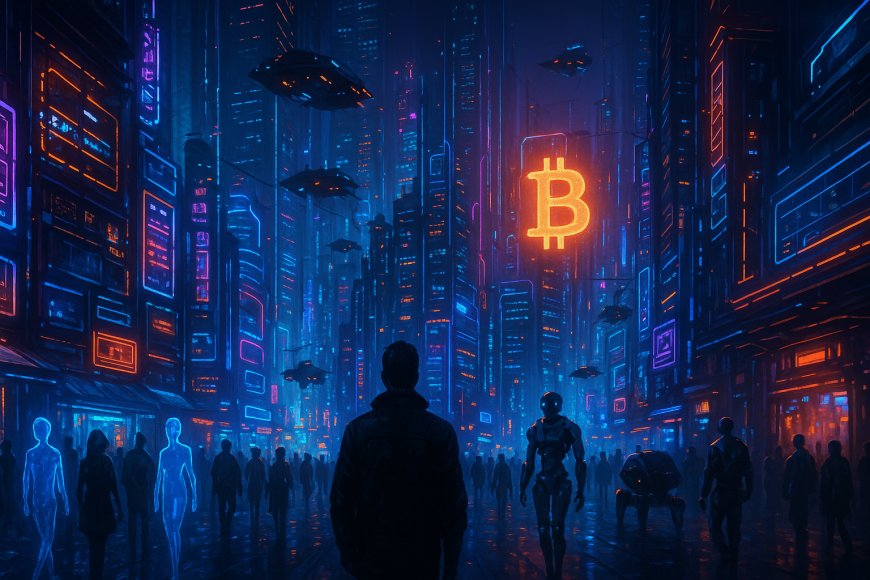
High-Tech, High Complexity: How AI’s Rapid Rise Is Leaving Society Behind
By Christopher Grenke, Oct. 21, 2025
Artificial intelligence is no longer a far-off fantasy – it’s here, everywhere, and it’s accelerating. In the span of a few short years, AI has gone from a niche tool to a driving force reshaping the global economy. Optimists herald a productivity boom and GDP windfall, but even top economists warn that this revolution comes with deep risks. As IMF Managing Director Kristalina Georgieva put it, we’re on the brink of a tech revolution that could “jumpstart productivity” but “could also replace jobs and deepen inequality” (IMF). The unsettling truth is that modern life – from our money and jobs to our identities – is digitizing and complexifying faster than most people can comprehend. With a speculative cyberpunk edge becoming our reality, this article explores how AI’s breakneck growth is transforming industries and pushing societal complexity beyond the average person’s ability to adapt.
AI’s Exponential Growth and Disruption
When OpenAI’s ChatGPT burst onto the scene in late 2022, it reached 100 million users in just two months – a rate of adoption “making it the fastest-growing consumer application in history” (Reuters). This viral debut of generative AI was a wake-up call. Suddenly, every industry leader felt the ground shift. By 2025, we have AI systems writing code, drafting legal briefs, designing advertisements, and conversing with customers. Goldman Sachs analysts estimate that generative AI advances could boost global GDP by $7 trillion over a decade (Goldman Sachs), and yet also expose “the equivalent of 300 million full-time jobs to automation” worldwide (Goldman Sachs). In other words, AI promises astonishing productivity – but on a scale that may upend labor markets. Two-thirds of U.S. occupations could see a significant chunk of their tasks automated (Goldman Sachs), and almost 40% of jobs globally are considered “exposed” to AI’s reach (IMF).
Unlike past tech shifts that mostly affected routine work, today’s AI encroaches on creative and decision-making roles once thought immune. For example, ChatGPT and its kin can draft essays or computer code, blurring the line between human and machine skills. Advanced economies actually face greater disruption than developing ones, since a stunning 60% of jobs in rich countries could be impacted by AI (versus ~26% in the poorest countries) (IMF). Those able to harness AI may thrive, while others risk being left behind – a dynamic already visible as younger, digitally native workers adapt more easily, and older workers struggle to keep up (IMF). In short, AI is not just another productivity tool; it’s a general-purpose technology racing forward at an inhuman pace. Below, we examine how this AI upheaval is playing out across key sectors – and what it means for society at large.
Finance and Digital Money: Algorithms Take Over
Perhaps nowhere is the collision of AI and complexity more evident than in finance. Today, a significant share of stock trades and asset allocations are executed not by humans on a trading floor, but by algorithms zipping across fiber-optic lines. Financial markets have effectively become a battleground of trading bots operating at speeds and intricacies no person can match. In fact, researchers observed a “machine ecology beyond human response time” in modern markets – stocks being traded in eyeblinks, with mini-crashes and spikes occurring faster than any human can react (Aeon). These high-frequency trading AIs sniff out market signals and arbitrage opportunities in microseconds, interacting with one another in unpredictable ways. For the average investor, and even many professionals, the stock market has turned into an opaque, lightning-fast automaton. We have already seen “flash crashes” where billions in value vanish and rebound in minutes – events so complex that even experts struggle to fully explain them. This is finance in the AI era: ultra-efficient, but also so complex that it’s often indecipherable (Aeon).
It’s not only Wall Street feeling the AI effect – it’s your wallet, too. Money itself is going digital at a breakneck pace, raising new opportunities and concerns. Cash is rapidly disappearing in many countries. In Sweden and Norway, for instance, over 90% of point-of-sale transactions are now cashless, and cash use is so rare that many businesses simply don’t accept physical currency (Stripe). Across Asia, mobile payments via smartphone apps have become the norm: in China, nearly 88% of mobile internet users used mobile payment methods in 2023 (Stripe). From Apple Pay to Alipay, digital payments offer great convenience – but they also funnel everyday economic life into centralized networks controlled by tech firms and banks. At the same time, central banks are experimenting with central bank digital currencies (CBDCs) that could replace paper money with government-issued digital cash. A fully cashless economy, once the stuff of sci-fi, is now a foreseeable reality.
Yet a cashless, AI-driven financial system comes with trade-offs that feel ripped from a cyberpunk novel. On one hand, transactions get faster and easier, and AI can personalize financial services – think robo-advisors managing your investments or AI chatbots handling customer service. On the other, people have to trust (or surrender to) black-box algorithms deciding everything from loan approvals to stock trades. Financial literacy is hard enough when dealing with banks and budgets; it’s exponentially harder when dealing with opaque algorithms that even their creators barely understand. And digital money means digital surveillance: every transaction leaves a data trail. The complexity and opacity of this AI-managed financial world risk alienating citizens who find they must simply trust systems they cannot follow. It’s a far cry from stuffing cash in a mattress – and it raises profound questions about control and understanding in the economy.
Automation at Scale: Robots on the Move
Automated robots zoom through an Amazon fulfillment center, guided by AI software, as human workers supervise from the sidelines. In warehouses, factories, and across the logistics sector, AI-driven automation is replacing repetitive manual jobs and turbocharging efficiency. Nowhere is this more visible than in e-commerce giants like Amazon, which has quietly deployed a robot army. In 2025 Amazon surpassed 1 million robotic units working in its fulfillment centers, putting its robot workforce nearly on par with its 1.5 million human employees (GeekWire). These robots – from shelf-carrying autonomous carts to sorting arms – work with tireless precision, orchestrated by AI systems (like Amazon’s new “DeepFleet” traffic control AI GeekWire) that direct their every movement. The results are staggering: the average Amazon warehouse now has only ~670 human employees, the lowest in decades, while each employee oversees the shipment of nearly 3,870 packages a year – up from just 175 packages a year a decade ago (GeekWire). Automation has multiplied productivity twenty-fold in some fulfillment tasks, fundamentally changing the nature of warehouse work.
Similar stories abound in manufacturing plants using AI-powered robotics for assembly, mining operations running autonomous haul trucks, and ports where AI cranes unload containers with minimal human input. The efficiency gains are undeniable – AI logistics deliver goods faster and cheaper – but the human cost is job displacement and a need for constant retraining. Truck drivers warily watch the progress of self-driving AI trucks in pilot programs, and warehouse pickers retrain to become robot maintenance techs or data analysts. The promise that automation will augment rather than replace human workers is only partly true so far: many low-skill roles do disappear, while new specialized roles (robot technician, AI supervisor) emerge. For the average worker, adapting to this shift isn’t trivial. One warehouse employee may marvel at their robotic colleagues; another might feel like a supervisor of machines, with the machine setting an unforgiving pace. This is the factory floor of the AI age – one where humans and robots work side by side, but not always as equals.
Beyond the workplace, AI logistics are rendering supply chains hyper-efficient yet brittle in new ways. Retailers rely on AI to predict consumer demand and automatically restock inventory just in time. Trucking companies use AI route optimizers to shave miles and minutes, saving fuel. But these gains in efficiency can come at the cost of resilience and simplicity. When an AI-optimized supply chain encounters an unexpected shock (say, a pandemic or a geopolitical conflict), there may be few humans left with the holistic know-how to troubleshoot. In a less extreme sense, even a small technical glitch in an automated warehouse can halt operations if no one remembers how to do things manually. Society gains incredible convenience – same-day deliveries, custom products on demand – yet becomes deeply dependent on an incomprehensibly complex web of automation. As with finance, the logistics systems that keep our economy running are becoming too complex for any single person to grasp, let alone an average consumer. It works, until it doesn’t.
Education: Teaching and Learning in the AI Age
When high school junior Samantha got stuck on her calculus homework last week, she didn’t text a friend or wait to ask her teacher – she quietly opened ChatGPT on her laptop. She’s not alone. A 2024 survey found 26% of U.S. teens have used ChatGPT for schoolwork, double the share from just a year prior (Pew Research Center). In classrooms and dorm rooms around the world, AI has entered the scene as both a study buddy and a shortcut to easy answers. The education sector is grappling with a wave of change: AI can act as a personalized tutor 24/7, but it can also act as an automated cheating service. Students are using tools like ChatGPT to generate essay drafts, solve math problems, or summarize reading assignments – often faster than they could do on their own. The result is an upheaval in how learning is done and assessed. Teachers are now faced with grading assignments that may have been auto-generated. In one telling statistic, 63% of K-12 teachers reported catching students using generative AI to complete schoolwork in the 2023–24 year, up from 48% the year before (Education Week). Academic integrity has turned into a high-tech arms race, with teachers deploying AI-detection software and rethinking assignments to discourage copy-paste solutions.
But beyond the cheating fears lies a great opportunity – and challenge – to reimagine education. AI tutors like the one Khan Academy is piloting (powered by GPT-4) can provide individualized explanations to students at any time, in any subject. Imagine a student struggling in a large, underfunded classroom suddenly having access to a personal AI teaching assistant that never gets impatient. This is the upside educators see: AI as a tool to augment human teachers, personalize learning, and fill gaps. Indeed, some schools have started integrating AI writing assistants to help students draft and revise essays, treating it as the next-generation calculator for writing. However, making effective use of AI in education requires a digital literacy that many schools and families lack, exacerbating inequality. Well-resourced students can leverage AI to leap ahead (or at least not fall behind), while those without access or guidance might misuse it or miss out entirely. The situation is fluid – some districts have banned AI tools outright until policies catch up, even as others cautiously embrace them with strict guidelines.
The broader question is: what should students learn in an age of AI? Do traditional skills like writing an essay or doing long division matter as much when a machine can do it in seconds? Many educators argue that critical thinking, creativity, and the human touch become even more important – students must learn how to ask the right questions of AI and verify its outputs, rather than simply produce facts. The risk, as some observers put it, is a “Ready Player One generation of empty minds,” if we allow AI to do all the thinking. But done right, AI could free teachers and students from drudgery (like grading basic worksheets or rote memorization) and allow them to focus on deeper learning and interpersonal growth. This transition is far from smooth: teachers worry about job security and parents about screen time and privacy. Yet the genie is out of the bottle – the next generation will be educated alongside AI, for better and worse. We must now teach children not just reading, writing, and arithmetic, but also prompt-engineering, discernment of AI-generated content, and the ethics of using such powerful tools.
Healthcare: AI Diagnosticians and Digital Doctors
Walk into a modern hospital, and you might find that your radiologist has an AI assistant peering at your X-rays, or that your first “consultation” is with a chatbot nurse triaging your symptoms. AI is making inroads in healthcare in remarkable ways – diagnosing diseases from images, predicting patient deterioration, even helping discover new drug molecules. In a recent breakthrough trial in Sweden, an AI system was used to assist mammography screenings for breast cancer. The results were striking: AI-supported screening caught 29% more cancers than traditional screening by radiologists alone (ecancer.org), all while reducing the workload on overburdened specialists. In other words, the AI found tumors that doctors missed, and did so without a surge in false positives. For women, this could mean earlier detection and treatment; for health systems, it hints at a future where AI significantly boosts capacity and accuracy in preventative care.
AI diagnostic tools aren’t limited to radiology. Algorithms are now as good as dermatologists at identifying suspicious skin lesions from photos, and better than many junior doctors at interpreting ECG heart readings. Hospitals use AI to predict which ICU patients are at highest risk of complications, so staff can prioritize them. During the COVID-19 pandemic, researchers deployed machine learning to analyze vast datasets of drug compounds, dramatically speeding up the identification of potential treatments. One AI-discovered antibiotic (halicin) was found to kill several drug-resistant bacteria (Nature), showcasing how machine learning can sift through chemical space far faster than traditional labs. The promise here is lifesaving: AI can crunch millions of medical records to find patterns no human would notice, leading to more personalized and preventive care.
Yet for all these wonders, healthcare might also illustrate the limits and risks of complexity. Medical professionals now have to interpret not only a patient’s symptoms, but also the “black box” recommendations of an AI. If an algorithm flags a patient as high-risk, a doctor might act on that – but understanding why the AI said so can be difficult if the model is opaque. Misdiagnoses or biases embedded in training data are real concerns; an AI might perform excellently on average but still systematically underrate certain symptoms in women or minority populations if not carefully monitored (National Center for Biotechnology Information; Harvard Medical School). There’s also the human element: patients often need empathy and ethical judgment, things no algorithm can provide. Telehealth bots can answer basic questions, but they can’t hold a patient’s hand or make a nuanced ethical call about end-of-life care. Doctors find themselves in a dual role – caregivers and tech interpreters. They must trust the AI when appropriate and override it when needed, a skill that medical schools are only beginning to teach. For patients, the healthcare experience is becoming a mix of human and machine. One may get a diagnosis via app, then confirmation from a physician, followed by an AI-personalized treatment plan. It’s more efficient and data-driven, yes; but to many it feels less personal. As healthcare dives deeper into AI, society must grapple with balancing innovation with compassion, and data-driven protocols with the art of medicine.
Creative Work: When Machines Imagine
In April 2023, Hollywood writers went on strike – not only over pay, but over existential fears of being replaced by algorithms. Scriptwriters saw studio executives salivating over AI that could churn out screenplays at the push of a button, and actors fretted that their digital likeness could be cloned indefinitely without compensation. The Writers Guild of America (WGA) pushed back hard, ultimately winning unprecedented protections against AI in their new contract. Their strike ended with a “historic victory” securing guardrails on AI use in writing (Brookings Institution). Specifically, the studios agreed that AI cannot be credited as an author and that writers can’t be forced to adapt AI-generated material, among other safeguards. This high-profile showdown underscored just how deeply AI had penetrated even the creative industries – realms once assumed to be exclusively human domains of imagination and artistry.
From art and music to journalism and design, generative AI is both an amazing tool and a disruptive force. On one hand, it democratizes creation: a lone indie game developer can use AI-generated graphics and code assistants to produce content that previously required a whole studio. Copywriters can have AI draft multiple ad slogans in seconds. Visual artists use tools like DALL-E or Midjourney to brainstorm concepts on a digital canvas. Even in music, AI can now generate melodies or mimic famous artists’ voices, raising tantalizing possibilities (the “new” Beatles song assembled partly via AI made headlines) and thorny ethical issues. On the other hand, these same tools threaten to commodify and displace creative labor. Why hire a junior illustrator for storyboard drafts when an AI can spit out 100 variants overnight? Why pay a voice actor for background dialogue when a synthetic voice can do it cheaper? These questions are forcing creative professionals to redefine their value. Many are embracing AI as a collaborator – a smart brush or a co-writer that handles grunt work – rather than a competitor. But others see the writing on the wall: if companies decide they can do without human creatives entirely for certain tasks, they likely will.
This tension is leading to some novel arrangements. We see artists signing “no AI” clauses for their work, or new legislation (still nascent) being proposed to protect human creative copyrights against AI plagiarism. We also see a blossoming of AI-assisted creativity: architects generating 3D building models from sketches, novelists using AI to map complex plots or even to write in the style of Jane Austen. The philosophical debate rages: can an AI be truly creative, or is it merely remixing human creations? Regardless of the answer, the outputs can be convincing enough that audiences often can’t tell the difference. In one experiment, almost half of readers couldn’t distinguish between a human-written short story and an AI-written one – raising the prospect of a flood of mediocre but passable content overwhelming media channels. This is the “drowning in drivel” scenario some fear: a world where human voices struggle to be heard amidst AI-generated text, imagery, and sound that is just good enough. For society, the challenge will be cultivating appreciation for authentic human creativity as something distinct and valuable, perhaps akin to the resurgence of artisan crafts in an age of mass industrial production. We may come to prize the human touch in art and media precisely because AI can do so much. But getting there will require conscious choices by consumers and creators alike to prevent a creative flattening where everything is algorithmically optimized and nothing genuinely surprises.
Virtual Lives and the ‘Ready Player One’ Society
In the dystopian sci-fi novel/film Ready Player One, the year 2045 depicts a world where the real economy and environment have collapsed, and people escape into a vast virtual reality called The Oasis. “The film is set in a world where humanity is in real crisis... society as we know it has collapsed. And what is humanity’s response? Escapism. Much of human life is spent in a virtual simulation” (Scientific American). While our reality in 2025 isn’t as dire, the trajectory of life going digital is unmistakable. The COVID-19 pandemic accelerated a shift toward remote work and online everything – a shift that never fully reversed. Today, millions of people work from home via telepresence, conduct relationships through dating and social apps, and socialize in online game worlds or virtual meeting spaces. We aren’t living in the Oasis, but the blend of physical and virtual life is growing ever tighter. Economists talk of a “dematerialization” of society: many of our daily activities (shopping, banking, socializing) have moved into the invisible realm of apps and cloud servers. Even the concept of “place” is eroding – a startup team might collaborate in real-time via a virtual office despite being on different continents, each member represented by a little avatar on a screen.
The implications of this virtualization are profound. For one, geography is less destiny than it used to be. A teenager in a rural town with a broadband connection can access the same online courses and communities as a peer in Silicon Valley. But digital life also brings digital divides: those without reliable internet or savvy to navigate online spaces are increasingly isolated from economic and social opportunities. We also see a psychological impact. People, especially youth, now spend a staggering proportion of their waking hours in digital environments – on social media, streaming, or gaming. A recent study found that the average American teen was spending more than 8 hours a day on screens; globally, billions use Facebook, TikTok, or similar platforms daily. Social media has, in effect, become a proto-metaverse where digital identity can matter as much as one’s real-world identity. It’s easy to imagine this trend extending: as VR and AR (augmented reality) technologies improve, more immersive digital experiences will compete with the physical world for our attention.
Already, virtual economies are booming. People spend real money on virtual goods – from character skins in games to NFT art and virtual real estate. It’s not unheard of for someone to pay millions for a plot of land that exists only in an online metaverse (Scientific American). Critics dub this the “Ready Player One-ization” of society: where a slice of the population, disillusioned by stagnant wages or unaffordable real housing, retreats into a digital playground where they can at least feel a sense of progress or status. Meanwhile, the physical world’s wealth concentrates among a tech-savvy elite who own the platforms everyone else uses. In some ways, this is already visible – consider that a handful of Big Tech companies control the social platforms, app stores, and digital marketplaces that structure modern life. The fear is a self-reinforcing cycle: as real-world prospects dim for the average person, the more attractive the virtual escape becomes; and the more people sink into digital dependence, the more power accrues to those who own the servers and algorithms.
Of course, the virtual shift isn’t all dystopian. It holds promise for sustainability (less commuting and concrete if more work and play is online) and for connection (finding communities across the globe). But it also raises new concerns about mental health, authenticity of relationships, and societal cohesion. What happens when large swaths of the population essentially “live” in different realities – some in the physical community around them, others primarily in an online world tailored to their preferences? In the cyberpunk genre, one recurring theme is extreme escapism: the masses distract themselves in virtual pleasure domes while corporations or oligarchs run the real world. We’re not there yet, but the ingredients are coming into place. The challenge ahead will be integrating our digital lives with our human needs – ensuring that virtual advancement doesn’t mean abandoning the real-world problems of climate change, infrastructure, and inequality. In the end, even the Oasis in Ready Player One couldn’t solve the crises outside; the lesson for us might be that balancing our two realities will be critical for our humanity.
Complexity and the Comprehension Gap
The common thread running through all these developments is complexity – layers upon layers of it, to the point where even experts struggle to understand the systems we’ve built. Our forebears a century ago could grasp how a car worked by popping the hood. Today’s cars contain dozens of microchips and millions of lines of code, often indecipherable except to the AI systems that help design them. As one technology writer observed, “Technology continues its fantastic pace of accelerating complexity... but many of these systems are actually no longer completely understandable,” even to their creators (Aeon). We have reached a threshold where we routinely depend on machines and code that operate in ways no human mind can fully track (Aeon). This isn’t a hypothetical scenario – it’s already reality in cases like the financial trading algorithms and supply chain optimizers discussed earlier. Society is, in a sense, running on autopilot, with human beings as passengers who occasionally grab the controls when something goes wrong.
The dangers of this situation are subtle but serious. One immediate issue is that when failures occur in hyper-complex systems, diagnosing and fixing them can be exceedingly difficult. Recall the 2010 “Flash Crash” on Wall Street, when the Dow Jones index plunged nearly 1,000 points in minutes and then mostly recovered – it took regulators months to piece together the contributing factors, and even then parts of the event remained mysterious. In 2022, airlines around the world suffered cascading flight delays when their scheduling software (optimized to a razor’s edge by AI) couldn’t accommodate a sudden disruption, and no human could manually untangle the mess in time. As we integrate AI into critical infrastructure (power grids, traffic control, healthcare records), we risk creating systems that are wonderfully efficient under normal conditions but terrifyingly fragile under stress. A small glitch or a malicious cyberattack in one part of a tightly-coupled network can propagate in ways nobody anticipated, as nearly happened in 2017 when an Amazon Web Services outage briefly took down large chunks of the internet economy.
Another problem is the loss of human agency and understanding. Individuals increasingly face opaque algorithmic decisions – why were you denied a loan? The bank’s AI knows, but it can’t fully explain its reasoning. Why did the GPS route you through a dangerous neighborhood? It optimized travel time, not your comfort. This opaqueness can breed frustration, mistrust, and even exploitation. Predatory actors might use AI to create financial products so complex that consumers can’t tell they’re being misled. Political operatives can deploy AI-driven misinformation campaigns at scale, exploiting the average person’s inability to discern the real from the artificially generated. We already live in a time of information overload; with AI in the mix, quality of information becomes a concern alongside quantity. For example, deepfake videos and AI-generated news articles can mimic reality perfectly, leaving citizens unsure what to trust. It creates a kind of societal vertigo – a sense that the world is too complicated and fast-changing to get a grip on.
Historically, humans have faced complexity by developing institutions, norms, and education to tame it. But the speed of AI evolution is testing our adaptive capacity. By the time new laws or curricula are in place to handle one wave of technology, the next wave has arrived. Some thinkers have warned that we’re reaching a point of “entanglement,” where our systems are so intertwined and intricate that complete understanding is impossible (Aeon). It’s a scenario that worries even the tech elite – many of whom have publicly called for slowing down AI development until we can better manage it. The nightmare scenario, as one essay put it, “is not Skynet – a self-aware AI declaring war – but messy systems so convoluted that nearly any glitch can happen” (Aeon). If we don’t address this complexity gap, we risk living in a perpetual state of surprise and reaction, rather than understanding and control.
Navigating an Unknowable Future
AI is not just another technology; it is a force multiplier of human intellect and automation that is challenging the very structures of society – how we work, how we relate to each other, how wealth is created and shared, and what is real versus virtual. The changes discussed here carry a sense of gravity because they touch on what it means to be human in a digitizing world. When complexity soars beyond our understanding, when wealth pools in rarefied heights, and when everyday life gains a virtual shadow, we have to ask: are we in control of this transformation, or is it controlling us?
There is both urgency and agency in this moment. We are not the first generation to face disruptive technological change, but we may be the first to face it at such dizzying speed and global scale. As in past upheavals, adaptation will be key – but adaptation must be guided by wisdom and values. Experts urge that AI’s trajectory is not predetermined; with thoughtful policy, we can guide AI to augment human workers and distribute its gains widely (Brookings Institution). This means investing in education (AI literacy for all ages), modernizing our social safety nets (perhaps decoupling income from traditional employment), and updating regulations (from antitrust to digital rights) for the AI age. It also means an ethical awakening in the tech industry – building AI systems that are transparent, fair, and aligned with societal goals, rather than solely maximizing profit or efficiency. Some of the very designers of AI are calling for “slow AI” or pauses in development to ensure safety and alignment; others are working on technical solutions to make AI explainable. Civil society too has a role: workers banding together to negotiate the terms of AI integration, as Hollywood writers did, or communities experimenting with local data trusts to reclaim some control.
Ultimately, successfully navigating this era will require us to remember what should remain firmly in human hands. Creativity, compassion, critical thinking, democratic decision-making – these are qualities and processes that no machine should supersede. If AI can help free our time and resources to focus on these human essentials, the future can be bright. If instead we cede everything to AI’s opaque logic, the future could be one of disempowerment and division. The stakes are that high.
In the cyberpunk classic Neuromancer, the protagonists live in a world dominated by inscrutable AI and corporations, yet they scrape by on human cleverness and grit. Our world is teetering on that edge of fiction and reality. But unlike a novel, our story’s ending isn’t written yet. We have the ability – and responsibility – to shape how AI will transform our industries and lives. By acknowledging the gravity of these changes and actively steering them, we just might ensure that the new complexity enriches humanity, rather than leaving it behind. The race is on, and it’s one we all need to run – not against the machines, but with our own future at stake.
Sources
- Brookings Institution – Policy frameworks for AI and economic inequality
- Aeon – The Age of Incomprehensible Technology
- Aeon – Entanglement and the Limits of Understanding
- Scientific American – Ready Player One and Escapist Tech
- Scientific American – The Rise of Virtual Economies
- NCBI – Bias and Performance in Medical AI
- Harvard Medical School – Ethics and AI in Medicine
- Brookings Institution – WGA Strike and Generative AI
- IMF – How AI Could Widen Inequality
- Reuters – ChatGPT’s Historic Adoption Rate
- Goldman Sachs – The Potential Economic Impact of Generative AI
- Aeon – Machine Ecology Beyond Human Response Time
- Stripe – Cashless Future and Digital Payments
- GeekWire – Amazon’s Robot Workforce Milestone
- Pew Research – Teens’ Use of ChatGPT in School
- Education Week – Teachers Battle Student AI Cheating
- ecancer – AI-Assisted Mammography Trial Results
- Nature – Discovery of Halicin Using AI
Aká je vaša reakcia?
 Páči sa mi to
0
Páči sa mi to
0
 Nehodnotiť
0
Nehodnotiť
0
 Láska
0
Láska
0
 Zábavné
0
Zábavné
0
 Wow
0
Wow
0
 Smútiť
0
Smútiť
0
 Rozhněvaný
0
Rozhněvaný
0

Founder of Pattern Nexus. I research markets, macro, geopolitics, AI, history, ancient systems, and the patterns most people overlook. I’m also building Market Radar, a trading scanner designed to read pressure, risk, confirmation, and setup quality before chasing a move. Pattern Nexus is where I connect the dots between data, history, technology, and the bigger system playing out around us.











Komentáre (0)