
Did Jerome Powell Plan a $45 Billion T-Bill Buying Program? A Pattern Nexus Investigation
A fully sourced investigation into whether the Federal Reserve planned a $45B monthly Treasury-bill purchase program in December 2025. This Pattern Nexus breakdown differentiates analyst forecasts from official policy, clarifies what Reserve Management Purchases are, and examines whether this amounts to QE in function.
Analyst forecasts, media interpretation, and the facts about what the Federal Reserve actually signaled in early December 2025.
Context: Where the $45B Claim Came From
On December 6, 2025, a headline circulated online claiming that Federal Reserve Chair Jerome Powell would soon announce a massive $45 billion per month Treasury-bill purchase program. This implied a “stealth restart of QE.”
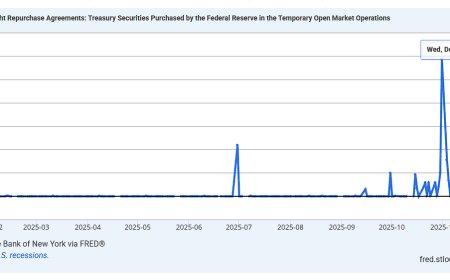
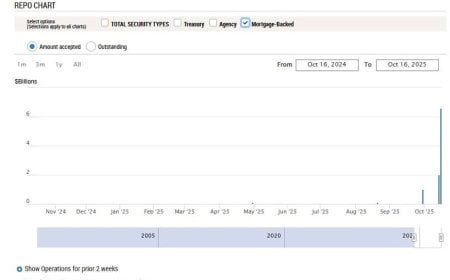
Verifying the claim required looking at mainstream economic reporting. The Federal Reserve had just ended quantitative tightening (QT2), money-market reserves were tightening, and analysts were debating the Fed’s next steps.
Critically: the Fed had not announced any such program. All references to $45B trace back to a Bank of America analyst forecast, not official policy.
Mainstream Evidence and Analyst Estimates
1. MarketWatch / Morningstar (Dec 6, 2025)
MarketWatch (republished via Morningstar) cited Mark Cabana and the Bank of America rates team. Their model projected:
- $20B/month to accommodate natural balance-sheet growth;
- $25B/month to rebuild reserves drained during QT;
- Total: ≈$45B/month in Treasury-bill Reserve Management Purchases (RMP).
This was a forecast—not a Fed plan. The same article also quoted Vanguard’s Roger Hallam, who expected just $15–20B/month.
2. Other Analyst Estimates (Dec 2–4, 2025)
Coverage from EconReporter and Bitget/Foresight News included a wide dispersion of estimates:
- Evercore ISI: ≈$3.5B/month + one-time $10–15B operation;
- Goldman Sachs: ≈$2B/month net purchases;
- JPMorgan: ≈$800M/month.
These were dramatically lower than Bank of America’s forecast.
Federal Reserve Communications: What Was Actually Said
1. New York Fed Statement (Oct 29, 2025)
The NY Fed committed only to:
- reinvest principal payments from agency MBS into T-bills;
- release a purchase schedule on December 11, 2025;
- continue publishing monthly schedules going forward.
No purchase amounts were discussed.
2. NY Fed FAQ: Mechanics of RMP
RMP reinvestment amounts depend on:
- principal paydowns;
- reserve conditions;
- Desk assessments.
3. FOMC Minutes
The minutes confirm:
- discussion of modest bill purchases;
- focus on reserve stability;
- intent to avoid signaling monetary easing.
Nothing in the official record suggests a $45B program.
Historical Context: Why $45B Sounds Like QE
During the 2019–2020 repo turmoil, the Fed initiated RMP at roughly $60B/month in T-bills to rebuild reserves. Analysts often anchor their models to this precedent.
Forecast anchoring from 2019 is why $45B felt like a “reasonable” projection to some desks. But the 2025 plumbing conditions are not those of 2019.
Pattern Nexus Framework: Why the System Forces Balance-Sheet Expansion
The Pattern Nexus framework views monetary policy not as a toggling of the Fed funds rate, but as a dynamic negotiation between liquidity plumbing, Treasury issuance, global dollar demand, and structural deficits. Under this lens, the $45B conversation misses the larger mechanism driving Fed behavior:
1. Reserve Floor Theory
In an “ample reserves” regime, the Fed must maintain a baseline level of reserves to prevent:
- repo volatility;
- funding stress;
- MMF collateral scarcity;
- breakdown in short-term rate control;
- volatility in the dollar hierarchy.
By late 2025, the system was brushing against the operational reserve floor—not crisis levels, but tight enough to constrain policy freedom.
2. Treasury Plumbing Model
QT2 drained reserves while Treasury issuance remained heavy. Money-market funds migrated out of ON RRP and back into bills. Banks grew more balance-sheet constrained. Repo demand became stickier.
In this environment, RMP becomes a structural necessity. The system is too large, too levered, and too collateral-dependent to operate without periodic balance-sheet expansion.
3. Dollar Hierarchy & Global Liquidity Rails
The emerging dollar hierarchy—bank dollars, Treasury dollars, stablecoin dollars, tokenized dollars—requires:
- high-quality collateral availability;
- bill issuance consistency;
- predictable reserve flows.
RMP plays a stabilizing role across all three rails.
4. AI-Industrial Capital Intensity
The AI buildout functions like a modern railroads-steel-electricity cycle: massively capital-intensive, deeply Treasury-funded, and dependent on low-cost funding at scale.
Liquidity stability is the foundation of AI-infrastructure financing.
Pattern Nexus Analysis: Can the $45B Claim Be Supported?
Below is a consolidated breakdown.
| Source | Estimate | Evidence |
|---|---|---|
| Bank of America (Cabana) | ≈$45B/month | Analyst model—no Fed confirmation. |
| Vanguard (Hallam) | $15–20B/month | Technical operations only. |
| Evercore ISI | $3.5B/month + one-time $10–15B | Very modest compared to $45B. |
| Goldman Sachs | ≈$2B/month | Minimal operations expected. |
| JPMorgan | ≈$0.8B/month | Token-level purchases. |
| New York Fed (official) | No amount given | Only reinvestment procedure announced. |
| FOMC Minutes | No amount given | Only “modest” discussed. |
Final Determination
Looking Ahead: The 2026–2030 Liquidity Supercycle
Through the Pattern Nexus lens, the $45B conversation is less important than the structural forces leading the Fed toward inevitable balance-sheet expansion between 2026–2030. These forces include:
- the AI-industrial buildout;
- the Treasury funding wall;
- diminishing bank balance-sheet intermediation;
- the rise of tokenized and stablecoin dollar rails;
- global demand for short-term dollar assets;
- the operational reserve floor.
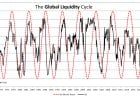
These dynamics form the basis of what Pattern Nexus has defined as the Liquidity Supercycle—a structural period where the Fed oscillates between QE-lite interventions and liquidity-stabilizing purchases, regardless of the political or narrative framing.
FAQ
📌 Did Powell (or the Fed) ever say “$45B/month”?
No. Not in any press release, minutes, speech, or NY Fed operational note.
📌 So where did the number come from?
Bank of America’s Mark Cabana modelled $45B as a possible need to restore reserves. It was a forecast, not policy.
📌 Are Reserve Management Purchases the same as QE?
Functionally: both expand the balance sheet. Politically/operationally: RMP targets T-bills only and is not intended to ease financial conditions.
📌 Could RMP eventually scale up to something like $45B?
Possible—but depends on reserve pressures in early 2026. Most analysts expected much smaller operations.
📌 When would the real numbers be revealed?
December 11, 2025—the NY Fed’s release of the actual T-bill reinvestment schedule.
Sources
- Morningstar / MarketWatch – Analyst expectations for December FOMC Link
- EconReporter – Analyst survey on reserve management purchases Link
- Bitget / Foresight News – Evercore, Goldman, JPMorgan expectations Link
- New York Fed – Reinvestment operations announcement (Oct 29, 2025) Link
- NY Fed – FAQ on Treasury purchase operations Link
- Reuters – FOMC consideration of modest RMP purchases Link
- SVB – QT2 and reserve commentary Link
Aká je vaša reakcia?
 Páči sa mi to
0
Páči sa mi to
0
 Nehodnotiť
0
Nehodnotiť
0
 Láska
0
Láska
0
 Zábavné
0
Zábavné
0
 Wow
0
Wow
0
 Smútiť
0
Smútiť
0
 Rozhněvaný
0
Rozhněvaný
0

Founder of Pattern Nexus. I research markets, macro, geopolitics, AI, history, ancient systems, and the patterns most people overlook. I’m also building Market Radar, a trading scanner designed to read pressure, risk, confirmation, and setup quality before chasing a move. Pattern Nexus is where I connect the dots between data, history, technology, and the bigger system playing out around us.












Komentáre (0)