
Money as Software
An in-depth systems analysis of how money evolved from a sovereign instrument into programmable infrastructure, where payment rails, compliance stacks, and settlement systems now function as primary …
Read article →Your major thesis pieces — multi-chapter reports laying out structural trends, new operating systems, and long-range pattern mapping.

An in-depth systems analysis of how money evolved from a sovereign instrument into programmable infrastructure, where payment rails, compliance stacks, and settlement systems now function as primary …
Read article →
An in-depth systems analysis of how modern power shifted from laws, borders, and coercion to invisible control systems—payment rails, standards bodies, energy flows, compliance regimes, and algorithm…
Read article →
The last 150 years built an industrial machine, a dollar fortress, offshore dollar webs, a global leverage cycle, and a QE-driven digital dollar stack. Part 10 of the Pattern Nexus megaseries ties th…
Read article →
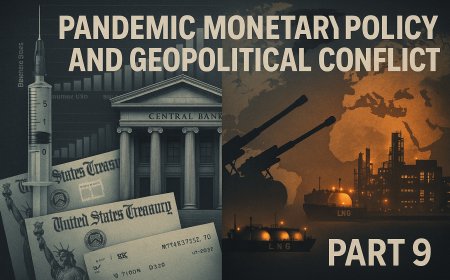
COVID didn’t just trigger stimulus — it fused fiscal and monetary policy into a single war machine. Between 2020 and 2025, governments and central banks ran coordinated mega-deficits, bought their ow…
Read article →
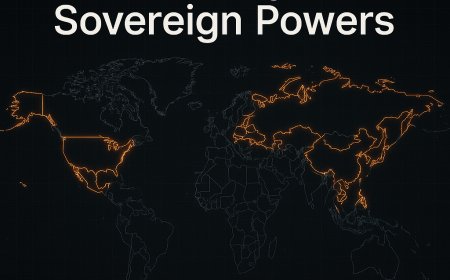
On paper there are almost 200 sovereign states. In practice, a handful of “real countries” write the rules while everyone else lives inside their system. This Pattern Nexus long-form builds a soverei…
Read article →
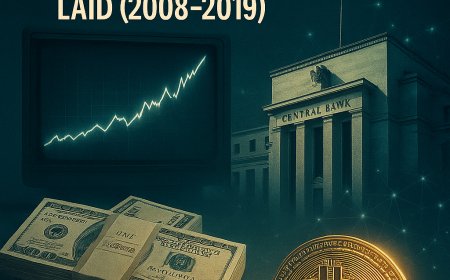
After the 2008 crisis, the global system didn’t deleverage — it migrated. Between 2008 and 2019, QE, ZIRP, swap lines, and new regulations turned central banks into the core liquidity engine, inflate…
Read article →
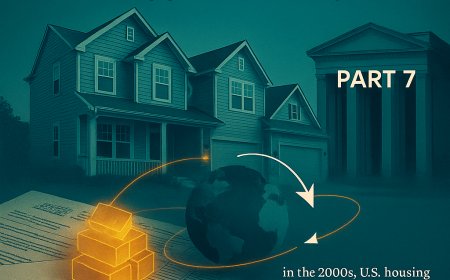
After the dot-com crash, the world didn’t deleverage — it rewired. Between 2001 and 2008, China’s WTO entry, Asian reserve accumulation, low Fed rates, and an explosive securitization boom turned U.S…
Read article →
From the Dartmouth AI workshop and the invention of the integrated circuit to ARPA, SAGE, and Fairchild Semiconductor, the late 1950s and 1960s quietly birthed the first compute–military–industry com…
Read article →
Between 1994 and 2001, the world entered a new liquidity regime driven by capital account liberalization, dollar-denominated borrowing, export surpluses, and the explosive rise of technology markets.…
Read article →
After the 1970s inflation and the end of Bretton Woods, the global system didn’t normalize — it hardened and then financialized. Between 1979 and 1994, Volcker’s shock therapy, Reagan–Thatcher deregu…
Read article →
Between 1968 and 1979, the collapse of the gold window, the rise of the Eurodollar, and the Petrodollar shift transformed the global monetary system. Nixon’s 1971 shock, oil crises, offshore dollar e…
Read article →
After World War II, the Bretton Woods system, the Marshall Plan, and the 1951 Treasury–Fed Accord fused into a single architecture: the dollar anchored to gold, capital controls, and state-directed c…
Read article →