

The Calm Before the Liquidity Storm
After Powell’s quiet remarks in Philadelphia about ending Quantitative Tightening (QT), subtle tremors are building across the repo and collateral markets. The system is whispering before it screams — and all signs suggest the next liquidity cycle is approaching.
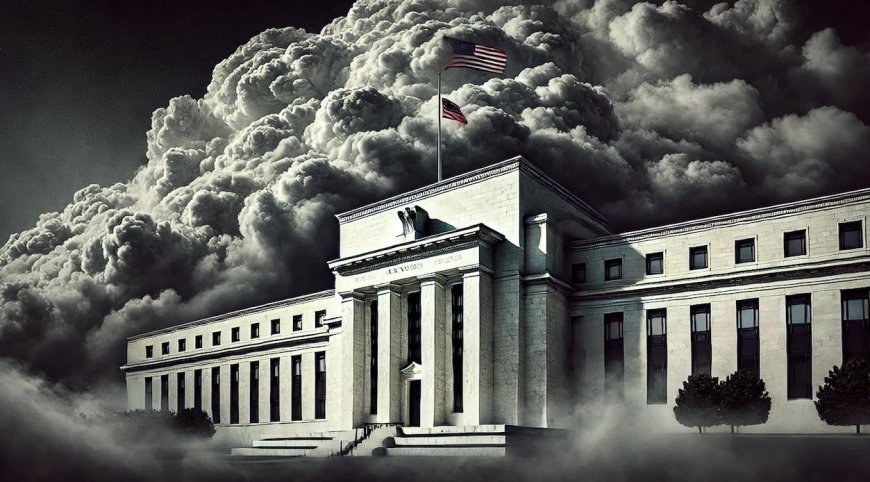
After Powell’s quiet remarks in Philadelphia about ending Quantitative Tightening (QT), subtle tremors are building across the repo and collateral markets. The system is whispering before it screams — and all signs suggest the next liquidity cycle is approaching.
Jump to a section
The Calm Before the Liquidity Storm
After Jerome Powell’s recent remarks in Philadelphia about ending Quantitative Tightening (QT), the outlines of the next cycle are beginning to appear. A surge in overnight repo activity suggests the same quiet stress that emerged before the 2019 crisis. Every liquidity drought in the modern era has ended the same way — not with stability, but with intervention.
The New York Fed’s repo data shows a spike in short-term borrowing from the Standing Repo Facility (SRF), where banks exchange Treasuries for overnight liquidity. These operations are not random—they are signals. Each time the repo market tightens, the Federal Reserve quietly intervenes to preserve collateral flow before the public notices cracks in credit markets. Liquidity stress is a pulse, and right now that pulse is quickening.
The Liquidity Loop — Why Tightening Always Ends in Easing
Since 2008, the Fed’s tightening cycles have all shared a familiar arc: rates rise → liquidity dries → funding cracks → markets wobble → easing returns. This rhythm isn’t superstition; it’s structural necessity. The system’s leverage is now self-reinforcing — global debt exceeds $320 trillion, and even small liquidity shocks ripple through the entire network of derivatives, repo loans, and collateral chains.
The pattern looks like this:
- 2008: Lehman collapses → QE1 launched → $1.7T liquidity added.
- 2011: Eurozone stress → QE2 + Operation Twist.
- 2019: Repo market freezes → Fed restarts QE under “balance sheet management.”
- 2020: Pandemic → $5T expansion in 12 months.
The modern banking system isn’t built to handle scarcity. Every time liquidity is withdrawn, it exposes the limits of synthetic credit creation. Eventually, the Fed must pivot back toward easing. That’s not policy failure — it’s systemic design.
The Quiet Warning: Repo Stress Returns
In October 2025, SRF usage jumped to $15.3 billion — the largest spike since 2020. For context, SRF volumes had been near zero for months. When those numbers move sharply higher, it means private banks can’t source collateral or cash without Fed help. As FT analysts observed during the 2019 repo event, this is “the market’s first line of surrender.”
The SRF was created after the 2019 liquidity freeze, when overnight repo rates spiked to 10%—a breakdown that forced the Fed to inject billions overnight. Back then, the fix was temporary; within months, QE4 was quietly announced. Today’s setup is eerily similar: elevated Treasury issuance, declining bank reserves, and tightening collateral availability.
If history rhymes, the surge we’re seeing now is the spark before QE 2026.
Powell’s Philadelphia Speech — “Approaching the End Phase”
At the Philadelphia Economic Forum, Powell noted that balance sheet runoff is “approaching its end phase.” That phrasing is textbook Fedspeak for a soft pivot. It mirrors Bernanke’s 2013 taper warning and Powell’s 2019 U-turn. The implication: the Fed recognizes that tightening much further risks collateral scarcity.
Research from the Brookings Institution highlights that QT eventually self-terminates because the Fed drains the reserves needed for financial plumbing. You can’t run a complex, debt-saturated economy on a shrinking balance sheet for long.
Digital Liquidity — How the Next QE Will Work
When QE returns, it won’t look like the old “print-and-purchase” model. This time, it’ll run through digital rails. Tokenized Treasuries, stablecoins, and central bank digital currencies (CBDCs) are already laying the foundation for programmable liquidity.
- Tokenized Treasuries: BlackRock and Circle launched tokenized U.S. Treasury ETFs offering instant settlement and on-chain yield.
- Stablecoins: Each stablecoin minted (USDC, USDT) is backed by short-term Treasuries, effectively converting public debt into global digital reserves.
- CBDCs & BIS Networks: Projects like BIS Guardian and Mariana are testing cross-border clearing of tokenized reserves.
This next cycle of QE won’t require helicopters of cash — just code and collateral.
The Strategy Behind “Digital Easing”
When analysts ask, “Will the Fed print more money?” the real answer is yes — but not with ink. Through tokenized debt, the U.S. is exporting its monetary system across global digital infrastructure. Every time a private company issues a stablecoin, it must buy Treasuries to back it, creating constant dollar demand.
This isn’t just domestic policy; it’s geopolitical strategy. By turning U.S. debt into the collateral backbone of digital finance, the Fed ensures that dollar liquidity — and American regulatory reach — remain embedded in the architecture of global payments.
Attempts by blocs like BRICS+ to launch gold- or commodity-backed alternatives will struggle to decouple because global trade remains dollar-priced. Even “de-dollarized” systems still require dollar benchmarks for pricing settlement.
QE 2026 — What to Expect
When QE 2026 officially arrives (or unofficially, as “liquidity support”), expect the following:
- Fed balance sheet expansion through tokenized Treasury purchases.
- Reactivation of global dollar swap lines with the ECB and BoJ.
- Integration of BIS digital settlement layers for cross-border flow.
- Resurgence of gold, Bitcoin, and hard-collateral assets.
The method will change — the effect won’t. Inflationary liquidity and asset price reflation will resume, just through digital pipes.
The Endgame: Liquidity Always Wins
Markets love to declare that “this time is different.” It rarely is. Each tightening cycle eventually ends the same way: liquidity contraction begets systemic stress, forcing policymakers to reverse course. What’s new this time is that the liquidity mechanism itself is evolving. Once QE merges with tokenization, liquidity becomes programmable — and permanent.
The dollar isn’t dying; it’s mutating into a digital organism — a self-reinforcing network where every Treasury-backed token or stablecoin strengthens its gravitational pull.
The quiet we feel now isn’t stability — it’s the stillness before the next storm.
Sources & Further Reading
- FRED — Overnight Repo Operations (2025 Data)
- Brookings Institution — How the Fed Will End QT
- CoinTelegraph — BlackRock’s Tokenized Treasury Launch
- Bank for International Settlements — Project Guardian
- Reuters — BRICS Alternative Payment System (2025)
- Financial Times — Repo Market Stress Analysis
#QE2026 #QuantitativeEasing #FederalReserve #LiquidityCycle #Tokenization #CBDC #PatternNexus
Menene Martaninka?
 Kamar
0
Kamar
0
 Karya
0
Karya
0
 Kauna
0
Kauna
0
 Ban dari
0
Ban dari
0
 Wao
0
Wao
0
 Bacin rai
0
Bacin rai
0
 Fushin
0
Fushin
0

Nexus (Christopher)
Founder of Pattern Nexus. I research markets, macro, geopolitics, AI, history, ancient systems, and the patterns most people overlook. I’m also building Market Radar, a trading scanner designed to read pressure, risk, confirmation, and setup quality before ch…
Related research

Pattern Nexus Macro Archive: 328 Timestamped Articles, October 2025–July 2026
A guided public index of 328 timestamped Pattern Nexus articles covering Federal Reserve liquidity, interest rates, the dollar, gold and si…
2 shared topics, 2 shared assets.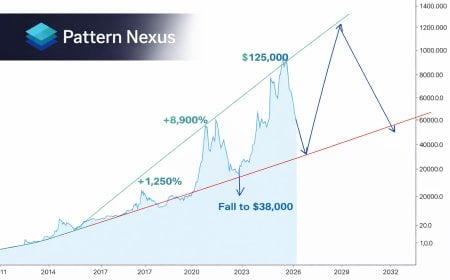
Bitcoin’s Structural Halving Cycle: Energy, Miner Economics, and the $38K Reset
A Pattern Nexus structural breakdown of Bitcoin’s halving cycle, miner energy economics, difficulty adjustment, cycle-to-cycle drawdown mat…
2 shared topics, 2 shared assets, same research avenue.
Market Wrap-Up 12/29/2025: Commodity Unwind, Yield Signals, and Year-End Rotation
A holiday-shortened week saw stocks slip while commodities faced intense volatility, metals plunged, and crypto fell. This is the full Patt…
3 shared topics, 2 shared assets, same research avenue.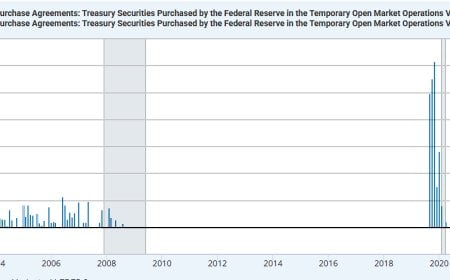
The 10-Year Treasury Pattern and the Return of Repo Operations
The 10-Year Treasury has repeatedly stalled near long-cycle resistance while overnight repo operations have quietly returned after QT. This…
5 shared topics, same research avenue.
Market Wrap – December 18, 2025: Equities Higher, Bonds Bid, Metals Volatile, Crypto Lags
U.S. markets closed higher on December 18, 2025, led by tech and AI names, while bonds were bid, gold and silver saw sharp intraday swings,…
2 shared topics, 2 shared assets, same research avenue.
Market Wrap – December 11, 2025: Post-Cut Melt-Up, Oracle Shock, and a Stubborn Front End
Daily Pattern Nexus market wrap for December 11, 2025: index melt-up after the Fed’s first asset-purchase move, Oracle’s AI-spend shock, ra…
3 shared topics, 2 shared assets, same research avenue.
Daily Market Wrap-Up – December 9, 2025
Markets pushed through a cautious session as the first full day of the Fed meeting began. Treasury yields climbed, equities wobbled, crypto…
3 shared topics, 2 shared assets, same research avenue.
Daily Market Wrap-Up – December 8, 2025
Daily cross-asset wrap for December 8, 2025. Equities faded into the close while the 10-year Treasury pushed higher toward 4.2% even as mar…
3 shared topics, 2 shared assets, same research avenue.
Sharhu (0)
Security Check
Please complete the captcha to verify you are human.