
Why the Dollar Isn’t Weaker: The Shift from Store of Value to System Utility
Even as Fed rates fall below 4%, the dollar remains firm. Here’s why its strength no longer depends on yields — and how tokenization, trade settlement, and real assets have redefined the dollar’s role in the global system.

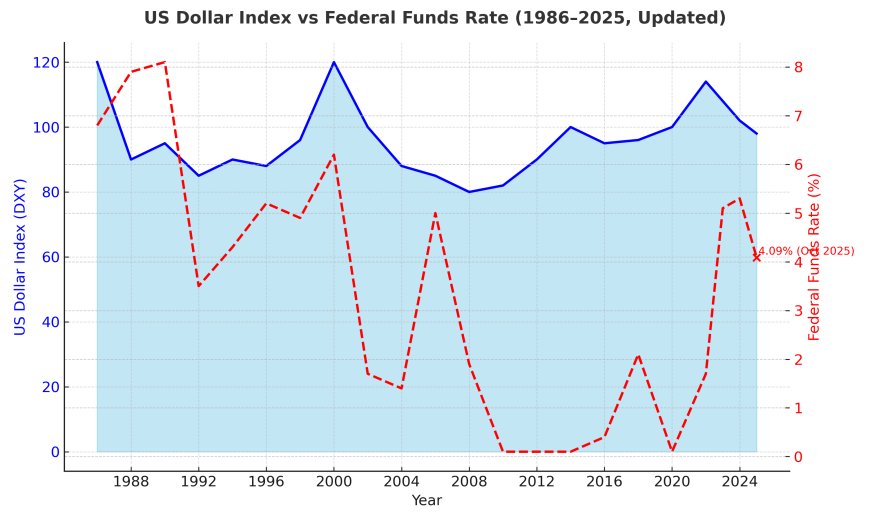
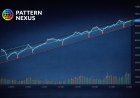
Overlay of U.S. Dollar Index (DXY) and Federal Funds Rate through October 25, 2025 — showing the breakdown of historical correlation and the structural shift in the dollar’s behavior.
My View | October 25, 2025 | by Pattern Nexus
Look at the chart. For decades, the U.S. dollar moved almost lockstep with the Federal Funds Rate. When the Fed hiked, the dollar rose. When it cut, the dollar fell. That relationship was simple — until it wasn’t.
Today, the dollar behaves differently. Despite rate cuts pushing the Fed range toward 4%, the U.S. Dollar Index (DXY) is still holding around 98–99 — levels that, in previous cycles, would’ve collapsed with easing. So what changed?
The Dollar Is No Longer Just About Yields
In the old system, yield differentials drove capital. High U.S. rates attracted money; low rates sent it elsewhere. But the dollar’s function has shifted from being a store of value to a medium of exchange. It’s less about who wants to hold it, and more about who needs it to move things.
Every major form of global settlement still runs through the dollar — trade invoices, commodity contracts, Treasury repos, and now tokenized financial rails. That means the world needs dollars to function, regardless of how much they earn in interest.
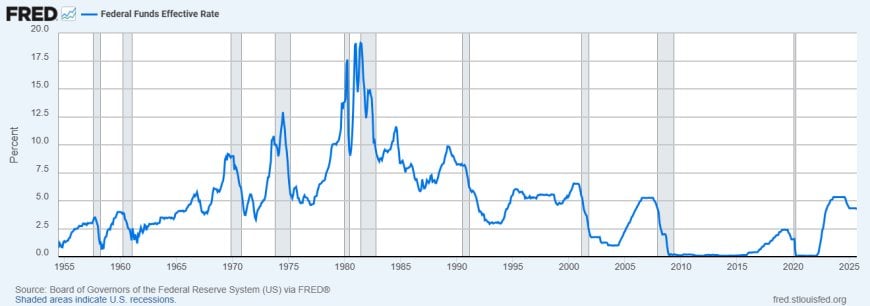
The Dollar as Utility
The dollar today acts like the plumbing of global finance. It doesn’t need to sparkle; it just has to work. The network — SWIFT, collateral markets, stablecoins, and tokenized T-bills — all depend on USD units moving through their pipes. Even if its purchasing power fades, the dollar remains the lubricant that keeps everything flowing.
Hard Assets Have Taken the Store-of-Value Role
Gold, Bitcoin, and real-world commodities have quietly absorbed the wealth-preserving function the dollar used to own. Investors don’t trust the dollar to hold value over decades, but they still need it as the transactional layer that connects these new stores of value to the global system. The result is a quiet re-wiring of finance — one where the dollar is indispensable for movement, not hoarding.
Tokenization Strengthens, Not Weakens, the Dollar
Ironically, tokenization may be reinforcing the dollar’s dominance. Every gold-backed token, stablecoin, or digitized T-bill is still denominated in USD. So even as investors diversify into alternative assets, they’re expanding dollar-based settlement volume. The form of wealth is changing, but the denominator remains the same.
The Decoupled Pattern
Look closely at the DXY vs Fed chart. Before 2008, rate cycles and dollar moves lined up. After 2008, that relationship began to unravel. Now, as rates fall again, the dollar holds firm — not because it’s stronger in a traditional sense, but because its role has evolved. It’s no longer a trophy to be held; it’s infrastructure to be used.
Bottom Line
The dollar hasn’t stayed strong because America is suddenly healthier. It’s stayed strong because the world still runs on its network. Its value today comes from utility, not trust. That’s why even as we head into rate cuts below 4%, the dollar may not weaken the way it once did — because it’s already become something different.
あなたの反応は?
 いいね
0
いいね
0
 嫌い
0
嫌い
0
 愛
0
愛
0
 面白い
0
面白い
0
 ワオ
0
ワオ
0
 悲しい
0
悲しい
0
 怒っている
0
怒っている
0













コメント (0)