The Space Infrastructure Race Has Entered Its Next Phase: Weapons, Orbital AI, Sovereign Networks, and the Moon
From September 4–23, space infrastructure accelerated on almost every front. Isar Aerospace reached orbit from continental Europe. India positioned EOS-05 for geosynchronous imaging. Stoke raised $1 billion toward fully reusable launch. China launched four rockets in roughly 45 hours and put a spacecraft with 5G, AI, and planned 100-Gbps optical communications into orbit. Europe allocated major IRIS² and OneWeb production contracts while Planet expanded satellite manufacturing in Germany. The U.S. acknowledged on-orbit space-control weapons, practiced multi-orbit maneuver operations, and funded new target-tracking architectures; Britain created a space-effects squadron. NASA and ESA delivered new lunar, planetary, and Earth-observation science while commercial downmass and crew-transport contracts extended the orbital logistics chain. The Pattern Nexus conclusion: space is becoming an industrial, computational, and contested operating system, and continuity is its critical threshold.
 Pattern Nexus Research
The Space Infrastructure Race Has Entered Its Next Phase: Weapons, Orbital AI, Sovereign Networks, and the Moon
September 4–23, 2026: Europe reaches orbit from its own soil, China builds constellation and computing capacity, commercial launch develops a return lane, and militaries begin assembling the surveillance and effects infrastructure of contested orbit. The Moon itself provides a reminder that environmental engineering is part of the cost.
The system is building capacity, control, compute and continuity all at once.
- Isar Aerospace reached orbit from Norway on September 5, deploying five CubeSats and a technology experiment on Spectrum’s second flight. Europe gained a second kind of launch capacity alongside Ariane and Vega-C. [1][2]
- India placed EOS-05 into a sub-geosynchronous transfer orbit on September 4 and completed its final raising maneuver on September 7. Its imaging mission is designed for persistent geosynchronous observations; the spacecraft was healthy after the maneuver. [3][4]
- Stoke Space announced an initial closing of a $1 billion Series E, targeting a fully reusable two-stage launch system and a larger 15-ton-to-LEO Nova Block 2 configuration. Neither orbital flight nor full reuse has been demonstrated yet. [5][6]
- China conducted four orbital launches in roughly 45 hours on September 15–16, expanding Qianfan, GuoWang and other constellations through several launch providers. [35]
- The September 9 Altair-Next Gen proposal would put onboard AI and mixed sensing on 50 satellites; on September 20 China launched PEGA-SUS1, a test vehicle integrating 5G NTN, onboard AI and planned 100-Gbps space-to-ground optical communications. [8][9][33][34]
- Europe assigned production for hundreds of IRIS² satellites and bought 229 more OneWeb spacecraft; the important difference is that Europe is now building a multi-orbit communications supply chain, not only discussing one. [11][12][13][14]
- On September 14 the U.S. Air Force secretary publicly acknowledged deployed on-orbit space-control weapons, without disclosing their type or number. Apollo Maneuvers, tracking-data fusion and GHOST-R explain the surrounding operational architecture. [17][7][26][27][28]
- Britain established No. III Space Effects Squadron on September 23 for offensive and defensive space effects, including electronic warfare. The UK publicly distinguishes its observe/warn units from its new effects unit. [39]
- Starfall gained a planned 2028 commercial customer and NASA purchased three more Dragon crew-transport missions. The mature orbital economy needs both reliable transport up and dependable return. [21][22][32]
- NASA’s new lunar crater measurements illuminate ejecta hazards far beyond the crater; IBM and NASA released a lunar foundation model; and Roman’s fuel budget could support at least 22 years of potential science, contingent on systems remaining healthy. [23][15][18]
I have been tracking these developments one by one. Together, they tell a much bigger story.
Since the last article, almost every part of the space stack has moved. Germany put a commercial rocket into orbit from Norway. China fired four rockets in roughly two days and used another launch to put AI, 5G and laser-network experiments into space. Europe assigned major constellation manufacturing contracts to actual factories. A company working on a completely reusable rocket closed an initial tranche of a billion-dollar financing round. SpaceX acquired a commercial return-cargo customer while preparing Starship to carry real broadband hardware. Meanwhile, the U.S. acknowledged weapons already operating in orbit, practiced coordinated maneuvers across orbital regimes, and described the surveillance and tracking systems it needs to support space control. Britain then stood up a dedicated unit to deliver space effects.
I don't see these as separate “space news” categories anymore. They're becoming a system. Lower-cost transportation increases the number of things in orbit. More things in orbit require communications, navigation, computing, tracking and replacement. Dependence creates strategic value; strategic value creates incentives to defend, monitor and potentially interfere with the same infrastructure. And when the network expands toward the Moon and Mars, engineering problems that were once occasional mission risks become permanent operating costs.
The important question is no longer whether humanity can put another object in space. It is whether we can keep an increasingly complex, expensive and contested system functioning as routine infrastructure.
The September 4–23 sequence
| Date | What changed | Stack layer / status |
|---|---|---|
| September 4–7 | India’s EOS-05 launches and reaches its near-geosynchronous target orbit | Persistent sensing · completed |
| September 5 | Isar Aerospace’s Spectrum deploys satellites from Andøya, Norway | Sovereign access · completed |
| September 8 | Stoke announces $1B Series E initial closing; Space Command reports Apollo Maneuvers | Future full reuse · funded; maneuver exercise · completed |
| September 9–10 | Altair-Next Gen announced; Amazon Ariane 6 order; IRIS² and OneWeb industrial awards; lunar AI model | Compute/network and manufacturing · commitments |
| September 14–16 | U.S. on-orbit weapons acknowledgment; FLEX and Sentinel-3C launch; Starfall deal; Moon impact findings; cislunar remarks | Military disclosure; science and cargo · mixed |
| September 15–16 | Four Chinese rockets in about 45 hours | Deployment cadence · completed |
| September 17–18 | IRIS² Low-LEO studies; space-tracking software prototype disclosed; GHOST-R awards; NASA Dragon mission purchase | Future network and defense layers · contracted/planned |
| September 20 | Kinetica-1 launches nine satellites including PEGA-SUS1 | Integrated orbital compute demo · in orbit; performance tests pending |
| September 21–23 | Planet details Berlin satellite factory; UK establishes No. III Space Effects Squadron | Industrial geography and allied space control · announced/formed |
| September 28 target | Starship Flight 14, with Starlink V3 payloads planned | Not completed as of Sep. 23 |
Dates refer to the event or formal disclosure, not necessarily the date a secondary news outlet reported it. The separation matters particularly for BepiColombo, whose Mercury transfer-module separation occurred on September 3 and was confirmed in later reporting. [40][41]
Europe just got another independent way into orbit
On September 5, Isar Aerospace launched its Spectrum rocket from Andøya Spaceport in Norway and deployed five CubeSats and one technology experiment. This was the second flight of a rocket built by the German company, and ESA described it as the first successful orbital launch from continental Europe by a European commercial launcher. It also satisfied the first orbital-flight milestone in ESA’s European Launcher Challenge. [1][2]
The satellite count was small. That is not why this matters. Europe has been trying to reduce dependence on a narrow set of launch options while its demand for secure communications, Earth observation and defense spacecraft rises. A commercial launcher manufacturing rockets in Germany and flying from Norway adds another path through the transportation layer. Isar says its first stage performed a controlled descent into a designated corridor; that should not be confused with a reusable-stage recovery or a demonstrated high-frequency launch system. [2]
Now watch the factory. Isar says it is building capacity for up to 40 vehicles a year. A factory's capacity is not the same thing as 40 launches, but it tells you what industrial rate the company is designing for. The space industry is moving away from asking whether one rocket can work and toward whether multiple manufacturers can sustain a queue of missions. [2]
A billion dollars for a rocket that is supposed to come back twice
Stoke Space announced the initial closing of a $1 billion Series E round on September 8, bringing its reported total capital raised to $2.3 billion. Its Nova Pathfinder is targeted for a first orbital flight in early 2027. Stoke also publicly outlined Nova Block 2, intended to deliver 15 metric tons to low Earth orbit in a fully reusable configuration, with a first launch targeted for 2029. None of these flights has happened. The milestone in this research window is financial and industrial, not technical certification. [5][6]
The important difference is the upper stage. Falcon 9 already demonstrates extreme booster reuse, but the ordinary Falcon architecture disposes of its orbital second stage. Recovering and reflying both stages would change the amount of hardware that has to be rebuilt for each mission. It could also help develop the return-and-downmass infrastructure needed for orbital manufacturing. We are not there yet, and “fully reusable” does not automatically mean low cost: refurbishment, heat-shield life, launch-site turnaround and actual flight volume still decide the economics.
There is a reason the capital is moving. Satellite networks need continuous deployment and replenishment, military customers want responsive launch, and commercial operators do not want a single provider to decide the schedule for every payload. The September reporting that SpaceX is pulling back from new Falcon rideshare commitments as it shifts toward Starship should be read as a reported market signal, not a declaration that Falcon 9 has already been retired. The existing backlog and future Starship performance still matter. [5][6]
Four rockets in roughly 45 hours: this is constellation production, not a stunt
China conducted four orbital launches over about 45 hours on September 15–16. Reporting identifies a LandSpace Zhuque-2E flight and an Orienspace Gravity-1 flight deploying Qianfan broadband satellites, a Long March 12 adding GuoWang/SatNet spacecraft, and a Kuaizhou-11 mission for Earth observation. These vehicles came from state-connected and commercial operators and included a sea-based launch. The four launches were not reusable-stage demonstrations; they demonstrate transport-system diversity and payload demand. [35]
Put this next to PALLAS-1 and Zhuque-3 from the previous article. Those vehicles are the potential future price-and-reuse architecture. The mid-September flights show the existing deployment machine filling the sky while that reuse system is still being developed. China's launch providers are not waiting for a perfect reusable rocket before building the constellations that would make reusability economically valuable.
GuoWang and Qianfan should not be treated as one program. They are separate constellation projects, and their published long-term targets remain plans rather than hardware already in orbit. What is observable today is an accelerating flow of spacecraft and more than one available launch route. That is the important operating signal.
India is adding persistence to its observation architecture
India's GSLV-F17 launched EOS-05 on September 4 into sub-geosynchronous transfer orbit. ISRO then reported that the third and final raising maneuver succeeded on September 7, leaving an estimated orbit of 34,903 by 35,884 kilometers and the spacecraft in normal health. The satellite is described by ISRO as India’s first imaging satellite designed to operate from geosynchronous orbit. [3][4]
A geosynchronous observer changes the problem compared with a low-orbit imager. A LEO spacecraft gets repeated close passes and can achieve high spatial resolution, but cannot look at the same wide region continuously. A geosynchronous system trades the geometry of those close passes for persistent coverage of a huge Earth-facing region. It does not make one instrument a replacement for all LEO reconnaissance or weather satellites. It adds a different kind of sensing layer.
The launch and orbit-raising milestones are completed. That is not the same as saying the full instrument performance and operational service have already been demonstrated. The significance at this cutoff is India placing another persistent observation asset into the orbital architecture.
Europe’s secure communications plans are finally becoming factory orders
The first week of September was important for launches. The second was important for what those launches will eventually carry. On September 10, Aerospacelab announced a roughly €2.4 billion contract to build 264 LEO spacecraft for IRIS². Airbus started initial work on at least 66 first-layer LEO platforms, and Thales Alenia Space announced an agreement for secure governmental payloads across 330 LEO satellites, with an initial tranche worth around €500 million. IRIS²’s current advertised system totals 348 spacecraft: 330 in LEO and 18 in MEO. [11][12][13]
Those numbers describe different pieces of the same architecture, not 264 plus 66 plus 330 separate satellites. The 264 and 66 add up to 330 LEO platforms; Thales's secure payloads go on those spacecraft. The MEO segment was already assigned to OHB before this article's cutoff, so I treat that as background rather than a fresh September 4–23 award.
The point is industrial distribution: multiple factories, standard satellite platforms, active secure payloads, inter-satellite links, communications services, and the ground architecture required to run them. It is also explicitly dual-use. Government emergency services, commercial customers and defense networks will draw from overlapping infrastructure, though not necessarily identical service or security layers.
At the same summit, Eutelsat ordered 229 more OneWeb satellites from Airbus, in addition to 440 already procured, bringing that next-generation/replenishment order book to 669 satellites. The September 10 Airbus statement calls the new 229 an authorization to proceed covering initial industrial activities. These new satellites are not already deployed; they secure continued production and future network replenishment. [14]
In the meantime, Amazon bought six more Ariane 6 missions, bringing the announced total to 24 through 2031. The same system is pulling from both sides: satellite manufacturers need launch capacity, and launch manufacturers need enough spacecraft to keep production lines alive. [10]
You cannot solve orbital capacity with rockets alone
The FCC released a September 9 fact sheet laying out a proposed action to open more than 1,000 MHz across the 12.7–13.25 GHz and 42–42.5 GHz bands to additional satellite uses. The same package solicits comment on additional satellite allocations, including spacecraft control and inter-satellite communications. The proposal is not the same as a final allocation already in effect. [16]
Here is the less glamorous consequence of mass constellations: launches can become cheaper and satellites can become smaller, but they still need spectrum, ground gateways, interference coordination and links between spacecraft. Spectrum rights and network architecture begin functioning like shipping lanes. Adding more ships does not widen a harbor.
That is why IRIS²'s optical crosslinks, China's laser tests and Space Force's pursuit of distributed networks belong in the same discussion. The economy is not simply filling an empty sky. It is becoming an organized traffic, communications and information system with scarcity at several layers.
The satellite is beginning to process the information before the ground sees it
On September 9, Marlan Space and Loft Orbital announced Altair-Next Gen, a proposed $1 billion program initially covering 50 AI-capable satellites carrying mixed optical, radar and other sensors. Orbitworks says the first ten are already in production in Abu Dhabi and that the first AI satellite is planned to launch in October. The proposed system would use onboard analysis to transmit event alerts instead of requiring every raw image to be downloaded and interpreted on Earth first. That is a program announcement and proposed performance, not proof that a completed 50-satellite network has delivered operational alerts. [8][9]
On September 20, China supplied a complementary actual launch. Kinetica-1 delivered nine satellites, including PEGA-SUS1, the Pengcheng Laboratory / GalaxySpace test spacecraft. The laboratory says PEGA-SUS1 combines a 5G non-terrestrial-network base station, onboard core-network elements, AI image processing and a planned 100-Gbps space-to-ground laser-communications experiment. It is part of a planned nine-spacecraft Pengcheng Tianma test constellation. The launch succeeded; the full communications and AI demonstrations remain to be verified in orbit. [33][34]
This is the missing layer from my earlier space map. A conventional imager sends data down; a distributed compute node can classify, compress, compare and transmit a result. For wildfire detection, crop monitoring, shipping, search-and-rescue or military warning, the time between observation and useful information can matter more than the volume of imagery collected.
But I would not call these enormous orbital data centers. This is edge computing constrained by heat rejection, radiation, electric power, processing hardware and communications. The operating transition is real even if the promotional language gets ahead of the engineering. First orbital sensors collected data. Now some of them are being designed to make limited decisions about the data before sending it home.
Planet’s Berlin facility closes another European loop
On September 21 Planet described its expansion of satellite manufacturing in Berlin, adding production to European engineering, mission operations, data processing and ground-station functions it already runs there. The company intends to build Pelican satellites locally; independent reporting describes potential production of up to 60 per year. Planet also has an earlier agreement to fly a German-built Pelican on Isar Aerospace's German-built Spectrum system. The factory opening and the planned launch are not proof that this production rate has already been achieved. [36][37]
That gives Europe an increasingly complete chain: build the sensor, launch it, receive its data, process it and deliver intelligence to users. Some clients are commercial, some governmental and some military. The applications differ; the industrial base overlaps.
National space autonomy is not just whose flag is painted on the rocket. It is who owns the components, schedules the vehicle, controls the satellite, accesses the data and has the ability to replace a lost system without depending on a single foreign supplier.
The military layer is no longer implied by a collection of separate programs
On September 8, U.S. Space Command described Apollo Maneuvers 2026, a live-fly exercise conducted in the first week of the month. Its stated goals included coordinated maneuver across low, medium and geosynchronous orbit, testing contested logistics and developing satellite-servicing requirements. Allies and commercial participants were involved. It was an exercise, not proof that every desired servicing or combat system is already deployed. [7]
On September 14, Secretary of the Air Force Troy Meink then explicitly acknowledged that the U.S. has on-orbit space-control weapons. He did not disclose what they are, when they were deployed, how many there are, or whether they have been tested. That is a major change in the public record, but it does not justify inventing specifications or asserting that the hardware is nuclear, kinetic or specifically designed to capture satellites. [17]
Today, September 23, Britain's Ministry of Defence announced No. III Space Effects Squadron. The UK describes its No. I and No. II squadrons as observation and warning units; No. III is intended to disrupt, degrade and deny hostile space activity and support offensive as well as defensive operations. Electronic warfare is an identified capability, with others to be added over time. The unit's formation does not establish that every future capability is fielded today. [39]
This is the sequence I've been following: maneuver doctrine, acknowledged weapons or effects, dedicated units, a more explicit view of what these forces will protect, and growing demand for surveillance and logistics. Each step makes the architecture more visible.
A weapon is not a usable system without tracking, identification and command
The next development matters because it explains the engineering underneath the declarations. On September 16, Space Command commander Gen. Stephen Whiting said space targeting still lacks some of the mature tools available in other domains. The need is to find, fix, track and identify objects consistently—including spacecraft that maneuver. He also called for stronger cislunar domain awareness and communications. [24]
On September 18, the Space Force's Mission Delta 2 described a planned software prototype that would fuse commercial observations with military surveillance data more rapidly. Existing commercial observations were not being automatically integrated into all operational tracking systems. The disclosed prototype is meant to improve timeliness without degrading the precision used for critical collision-avoidance functions. Again, this is a development plan for later this fall, not a completed global targeting network. [26]
That same day, Northrop Grumman and True Anomaly were selected to develop GHOST-R prototypes: maneuverable satellites intended to observe and characterize other objects in geosynchronous orbit. The demonstrations are intended to inform the Space Force's RG-XX architecture. They are not a deployed worldwide fleet today. [27][28]
The defense architecture increasingly resembles a closed information loop: ground and commercial sensors notice a change; software correlates observations; maneuverable inspectors can close distance for higher-quality characterization; command systems decide what action is authorized; and spacecraft must retain enough propulsion, communications and support capacity to keep operating.
There is a genuine bottleneck here. The Space Development Agency publicly acknowledged schedule trouble with its planned inter-satellite mesh network. So even while concepts mature and contracts are placed, actual fielding still depends on optical links, satellite compatibility, software and procurement working together. [25]
The military discussion is reaching toward the Moon
Gen. Dan Caine, chairman of the Joint Chiefs, told the September conference that the future battlefield extends from the seabed toward cislunar space, the region between Earth and the Moon. Space Command has separately described a need for more baseline sensing and communications to operate in that environment. Those comments do not establish an imminent war around the Moon. They establish that military planners are explicitly including the region in future operational concepts. [24][29]
That matters because the Artemis and Chinese lunar programs are increasing the potential strategic value of lunar orbit, communications relays, navigation aids and eventually logistics. The Moon is not simply a landing site once you begin putting expensive permanent assets around and on it. The routes and signals connecting those assets become part of the infrastructure.
There is a difference between being prepared to protect a lunar communications relay and claiming ownership of the Moon. Those are not the same legal or operational proposition, which is why the treaty language matters.
What the 1967 Outer Space Treaty says—and what it does not
Article IV of the Outer Space Treaty prohibits placing nuclear weapons or other weapons of mass destruction in Earth orbit or otherwise stationing them in space. It also requires the Moon and other celestial bodies to be used exclusively for peaceful purposes and forbids military bases, fortifications, weapons testing and military maneuvers on celestial bodies. It does not impose a blanket prohibition on every conventional military spacecraft or all military activity in Earth orbit. Other international-law obligations still apply. [30]
Because Meink did not say what kind of weapons the U.S. has in orbit, the public acknowledgment alone is insufficient to conclude that the prohibited weapons category is involved or that the treaty has been violated. It is equally inappropriate to imply the weapons disclosure answers the legal and escalation questions surrounding future cislunar operations.
Countries disagree about the security implications. U.S. and allied officials frame some capabilities as necessary for deterrence and defense; Russian and Chinese representatives have criticized the expanding orbital military posture and warned about instability. The documented capabilities and the policy judgments made about them need to be kept separate. [17][29][30]
The missing freight lane is back down to Earth
On September 15, Reuters reported that SpaceX's Starfall return-capsule program gained its first European customer, Luxembourg-based Space Cargo Unlimited. The planned mission would fly a one-tonne BentoBox payload system aboard Starfall on a Starship launch no earlier than 2028, with microgravity research and production as intended use cases. Luxembourg's space agency subsequently confirmed the commercial arrangement. Starfall's earlier test mission and the future customer booking do not mean the 2028 Starship mission has flown. [21][22]
I've said before that cheap transportation up is not the whole economy. For some products, the entire value proposition depends on getting them back. Research samples, biological materials and manufactured components need reliable mass return, controlled reentry, customer handling and a schedule manufacturers can build around. Freight that only goes one direction is not a mature logistics system.
At the other end of the same continuity problem, NASA bought three additional SpaceX Crew Dragon missions to the ISS for $946 million, covering Crew-15 through Crew-17 and services into 2030. That is not a flashy technology demonstration; it is the purchase of continuing transport capacity. The station still needs a crew transportation system while future commercial stations are being developed. [32]
The transition from a test flight to operational payload deployment is still ahead
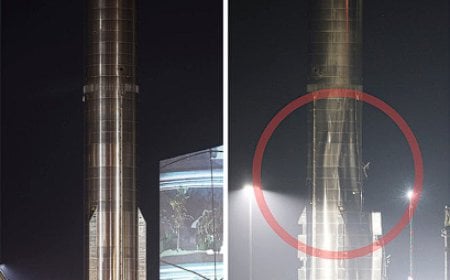
Starship Flight 14 is currently targeted for September 28 after a move from September 22. The publicly described plan calls for its first sustained orbital flight, about six Earth orbits and deployment of 26 Starlink V3 satellites, followed by an ocean reentry. Its booster is also intended to splash down rather than be caught on this mission. These are planned objectives as of September 23, not completed outcomes. [38]
If the flight works as planned, it would move Starship from predominantly test objectives toward delivery of useful infrastructure. But I would not mark routine reuse, orbital tanker logistics, crew safety or a high-frequency commercial manifest as solved by one orbital launch. The same operational issues still have to be demonstrated repeatedly.
Watch the connection to Stoke, Europe and China's launch surge. Companies are designing new rockets against an expected demand curve that assumes constellations, defense, science and logistics will keep growing. The hard part will be matching actual reliable launch capacity to that demand while launch systems transition.
Europe launched a new way to measure the health of the planet
On September 15, Vega-C launched ESA's FLEX mission alongside Copernicus Sentinel-3C. FLEX is designed to measure the faint fluorescence emitted by vegetation during photosynthesis, which can reveal plant functioning and environmental stress. Sentinel-3C adds continued monitoring of oceans, land, ice and atmosphere. This was an actual completed dual launch, not a future constellation promise. [20]
It belongs in the PN systems map because the same information infrastructure that matters for military sensing also matters for agriculture, climate research, drought monitoring and food systems. The difference is mission purpose and processing pipeline. Measuring photosynthesis from orbit adds a layer of biological activity to the existing physical map of Earth.
A satellite can tell you where a crop field is. A fluorescence instrument can help tell you how the plants are actually functioning. That is closer to an early-warning system for stressed vegetation than simply looking at its color on a photograph.
An impact, an AI model, and the engineering cost of permanent lunar infrastructure
NASA reported a striking Lunar Reconnaissance Orbiter finding on September 16: McGetchin crater, formed by an impact between April 11 and May 22, 2024, is about 222 meters wide and 43 meters deep. Researchers identified the event only after comparing images. The impact created large ejecta disturbances and a roughly four-mile-wide cooler region indicating changed regolith density. The impact itself happened in 2024; the new event in our reporting period is the scientific detection and publication. [23]
That changes how you think about a permanent base. A habitat can survive being nowhere near the impact point and still face abrasive ejecta, changed terrain, damaged solar panels or exposed systems. Engineers need environmental hazard maps, hardened equipment, protected cabling, repair capability and spare parts. Not every lunar surface installation has the same hazard profile, but a large impact is no longer just a beautiful crater image once people are trying to keep infrastructure operating there.
On September 10, IBM and NASA also released a Lunar Foundation Model trained across more than 30 data layers from nine instruments across four NASA missions, intended to support tasks such as crater mapping and identifying potentially icy areas. The reported benchmark improvements are specific to tested tasks and should not be confused with independently confirmed new water deposits. The deeper point is that decades of lunar observation are becoming a machine-readable planning layer for landing sites, terrain hazards and resource reconnaissance. [15]
These two updates fit together. One improves our understanding of environmental risk; the other aims to make the enormous existing lunar dataset easier to use. Those are basic tools for anyone trying to move from visits to sustained operations.
Roman may live much longer, while BepiColombo reaches the last major steps before Mercury orbit
Roman has made it through the early postlaunch phase with much better propellant margins than its original planning budget assumed. NASA now says the observatory could have enough fuel for at least 22 years of potential science operations, compared with a five-year primary mission plus five-year extended mission design. The phrase “potential” matters: hardware reliability, funding and successful commissioning still have to support that life. NASA also reported activation of Roman's 300-megapixel Wide Field Instrument and initial coronagraph checkout. [18][19]
ESA and JAXA's BepiColombo successfully separated its Mercury Transfer Module on September 3, with ESA publishing subsequent confirmation and a September 21 status update. The mission still has not completed Mercury orbit insertion; that remains scheduled for November 21, with the two science orbiters planned to separate in December and full science operations afterward. [40][41]
Both belong here for the same reason as reusable launch. Hardware can be valuable because it is durable. A mission that collects data for years beyond its original plan spreads fixed development and launch cost across more scientific output. A spacecraft that survives an eight-year, multi-flyby trip to Mercury also represents an entire supporting industrial and communications system.
The next version of the orbital operating system
| Operating layer | Evidence in this window | What is still missing |
|---|---|---|
| Access | Spectrum reaches orbit; four Chinese launches; EOS-05 | Repeatable rate and availability across providers |
| Reuse | Stoke funding and Nova Block 2 design; Flight 14 target | Flight-proven two-stage reuse and reliable turnaround |
| Manufacturing | IRIS² contracts, OneWeb order, Berlin Pelican facility | Factory throughput and delivered, accepted satellites |
| Bandwidth | FCC spectrum proposal; IRIS² architecture; PEGA-SUS1 optics | Approved allocations and verified network capacity |
| Compute | Altair-Next Gen commitment; PEGA-SUS1 in orbit | Validated AI performance, power/thermal economics |
| Persistent sensing | EOS-05, FLEX, Sentinel-3C, Pelican production | Operational data quality and service continuity |
| Space control | Apollo Maneuvers, acknowledged U.S. weapons, UK No. III | Public performance detail, dependable logistics and norms |
| Target custody | GHOST-R selections; data-fusion prototype | Fielded systems and robust cross-orbit awareness |
| Downmass | Starfall / BentoBox contract | Frequent, reliable mass return at commercial economics |
| Lunar operations | Crater/ejecta analysis; lunar AI model | Protection, repair, power, consumables and real resource use |
| Deep-space continuity | Roman fuel margins; BepiColombo transfer-module separation | Successful commissioning and long-term science return |
None of these developments proves that every layer is finished. The fact that they are being built simultaneously is the structural change. The fragile parts are now easier to identify: reliable launch supply, distributed network capacity, orbital data fusion, servicing cadence, disposal, and the ability to keep operating after failures.
What I am watching before I call the next stage complete
September 28 — Starship Flight 14: orbit achieved or not, V3 payload deployment or not, controlled end of mission or not. Any preflight date is subject to change.
Europe's launch cadence: another successful Spectrum flight, Ariane 6 and Vega-C factory output, and actual payload backlogs. A single orbital success is access; repetitive missions are infrastructure.
Stoke's 2027 Pathfinder: reaching orbit, surviving reentry, recovering hardware, inspecting it and flying it again. The full-reuse economics are proven only by the loop.
China's orbital compute: PEGA-SUS1's actual 5G, optical-link and AI test results; deployment rate of Qianfan and GuoWang; and the reflight record of Chinese recovered boosters.
European networks: whether the promised satellites arrive from Aerospacelab, Airbus, Thales and OHB on time; and whether OneWeb replenishment maintains service through the transition.
Military space: the scope of publicly disclosed U.S. effects; Apollo-derived servicing requirements; GHOST-R flight demonstration; actual deployment of sensor-fusion tools; and allied coordination under rules intended to limit damage to shared space services.
The Moon and deep space: revised lunar infrastructure risk models, more precise polar resource maps, Roman's commissioning, and BepiColombo's November Mercury insertion.
The story I keep seeing is not that everyone will finish these systems in the next year. It is that the bottlenecks are finally specific enough to name. The next phase will be decided by who can operate through them.
Reader questions
What has happened since the last Pattern Nexus space article?
Between September 4 and 23, Europe achieved a commercial orbital launch from Norway, China accelerated constellation deployment and launched an integrated orbital computing demonstration, major European secure-communications contracts were placed, the U.S. and UK disclosed or organized space-control capabilities, and new science and logistics milestones clarified future infrastructure requirements.
Has Starship Flight 14 already launched?
No. At the September 23 research cutoff its target was September 28, with an orbital flight and Starlink V3 payload deployment planned. A schedule is not a launch result.
Are the U.S. orbital weapons nuclear weapons?
The Air Force secretary did not disclose the type, number, orbital location or test history. There is no basis in the announcement for identifying them as nuclear or kinetic systems.
Does the Outer Space Treaty ban all military satellites?
No. Article IV prohibits nuclear weapons and other weapons of mass destruction in orbit or otherwise stationed in space, and imposes separate peaceful-use restrictions on the Moon and other celestial bodies. It is not a blanket ban on every military satellite in Earth orbit.
Are IRIS² satellites already working?
No. September announcements concern manufacturing and payload contracts for a planned constellation of 330 LEO and 18 MEO spacecraft. OneWeb is an existing separate network with replenishment spacecraft on order.
Did China prove 100-Gbps laser communications on September 20?
No. The launch successfully placed PEGA-SUS1 into orbit. Its 100-Gbps space-to-ground laser link and integrated 5G/AI functions are test objectives to be validated in orbit.
Why does the newly identified lunar crater matter for a base?
It provides unusually recent measured evidence of how large impacts disturb lunar regolith and ejecta zones beyond the crater. That helps engineers assess exposure of power, mobility, habitat and communications infrastructure.
What is the central Pattern Nexus thesis?
A permanent orbital and interplanetary economy requires repeatable access, factory production, bandwidth, onboard compute, surveillance, servicing, return cargo and resilient operations. Each development in this article fills part of that system or exposes a remaining bottleneck.
Primary documents, company statements, and independent reporting
Source dates refer to the original announcement or report. Corporate forecasts and planned launch dates are attributed to their organizations and separated from completed outcomes.
- [1] ESA — Isar Aerospace achieves first launch to orbit from continental Europe (2026-09-05).
- [2] Isar Aerospace — Spectrum mission follow-up: orbital deployment and controlled first-stage descent (2026-09-09).
- [3] ISRO — GSLV-F17/EOS-05 mission (2026-09-04).
- [4] ISRO — Third and final orbit manoeuvring of EOS-05 (2026-09-07).
- [5] Stoke Space — Scaling Nova (2026-09-08).
- [6] Stoke Space — Series E financing and Nova Block 2 (2026-09-08).
- [7] U.S. Space Command — Apollo Maneuvers 2026 live-fly exercise (2026-09-08).
- [8] Emirates News Agency / Marlan Space — Altair-Next Gen, $1 billion AI satellite program (2026-09-09).
- [9] Orbitworks / Loft Orbital — Altair-Next Gen, 50-spacecraft program and onboard analysis design (2026-09-09).
- [10] Reuters — Amazon orders six additional Ariane 6 launches (2026-09-09).
- [11] Aerospacelab — €2.4 billion mandate for 264 IRIS² satellites (2026-09-10).
- [12] Airbus — First IRIS² LEO layer: at least 66 platforms (2026-09-10).
- [13] Thales Alenia Space — Governmental secure payloads for 330 IRIS² LEO spacecraft (2026-09-10).
- [14] Airbus — Eutelsat orders 229 additional OneWeb satellites (2026-09-10).
- [15] Reuters — IBM and NASA release Lunar Foundation Model (2026-09-10).
- [16] FCC — September 9 satellite spectrum fact sheet: 12.7 GHz and 42 GHz proposal (2026-09-09).
- [17] U.S. Air & Space Forces Association — Meink acknowledges on-orbit space-control weapons (2026-09-14).
- [18] NASA — Roman potential mission life of at least 22 years (2026-09-14).
- [19] NASA — Roman activates Wide Field Instrument and checks coronagraph (2026-09-15).
- [20] ESA — FLEX and Sentinel-3C launched together aboard Vega-C (2026-09-15).
- [21] Reuters — Space Cargo contract for SpaceX Starfall reentry service (2026-09-15).
- [22] Luxembourg Space Agency — Space Cargo Unlimited and one-tonne BentoBox / Starfall contract (2026-09-16).
- [23] NASA — McGetchin lunar crater and impact ejecta / regolith changes (2026-09-16).
- [24] Breaking Defense — Space Command on targeting gaps and cislunar baseline capabilities (2026-09-16).
- [25] Breaking Defense — Space Development Agency orbital mesh-network schedule delays (2026-09-16).
- [26] Breaking Defense — Space Force commercial/military tracking data-fusion prototype (2026-09-18).
- [27] True Anomaly — GHOST-R GEO reconnaissance spacecraft announcement (2026-09-18).
- [28] Air & Space Forces Association — Northrop Grumman and True Anomaly selected for GHOST-R prototypes (2026-09-18).
- [29] Associated Press — Gen. Dan Caine’s cislunar-domain remarks and national responses (2026-09-17).
- [30] UNOOSA — Outer Space Treaty, Article IV (1967).
- [31] ESA — 18 IRIS² Low-LEO evolution study contracts (2026-09-17).
- [32] NASA — Three additional SpaceX ISS crew missions; $946 million (2026-09-18).
- [33] Pengcheng Laboratory — PEGA-SUS1: onboard 5G NTN, AI and 100-Gbps laser demonstration plan (2026-09-20).
- [34] China National Space Administration — Kinetica-1 Y18 nine-satellite launch (2026-09-20).
- [35] Space.com — China completes four orbital launches in 45 hours, Sep. 15–16 (2026-09-20).
- [36] Planet — New Pelican manufacturing facility in Berlin (2026-09-21).
- [37] Financial Times — Planet Labs Berlin satellite factory and European defense demand (2026-09-22).
- [38] Space.com — Starship Flight 14 rescheduled for Sep. 28; 26 planned V3 satellites (2026-09-18).
- [39] UK Ministry of Defence — No. III Space Effects Squadron created (2026-09-23).
- [40] ESA — BepiColombo Mercury arrival: MTM separation confirmed (2026-09-07).
- [41] ESA — BepiColombo Mercury arrival live status and planned insertion (2026-09-21).
Earlier PN coverage: PALLAS-1, Orbital Warfare, and NASA’s Mars Network · Space Is Becoming Infrastructure.
The two most important words in the space economy are no longer simply launch and landing. They are operation and continuity. Europe is building launch options and signing satellite factory orders. China is moving constellations and testing compute directly in orbit. Reusable-rocket companies are raising the capital needed to attack the next transportation bottleneck, while the return-cargo market begins connecting orbit back to Earth. NASA is building science systems that can operate for decades and converting lunar observations into usable resource and hazard maps. The military layer is becoming just as explicit: maneuver exercises, orbital weapons acknowledged in public, prototype target-tracking networks and a British space-effects unit. I do not have to pretend all of it is finished to see the direction. A collection of missions is turning into an operating environment. The challenge now is to keep it functioning when launch schedules slip, software fails, spacecraft move unexpectedly, networks get contested and real hardware has to be repaired or replaced.
What's Your Reaction?
 Like
0
Like
0
 Dislike
0
Dislike
0
 Love
0
Love
0
 Funny
0
Funny
0
 Wow
0
Wow
0
 Sad
0
Sad
0
 Angry
0
Angry
0

Founder of Pattern Nexus. I research markets, macro, geopolitics, AI, history, ancient systems, and the patterns most people overlook. I’m also building Market Radar, a trading scanner designed to read pressure, risk, confirmation, and setup quality before chasing a move. Pattern Nexus is where I connect the dots between data, history, technology, and the bigger system playing out around us.

Comments (0)