
Venezuela, tháng 12 năm 2025: Cuộc cách ly, Trò chơi từ chặn, và Giải thưởng Tài nguyên
Sự leo thang của Mỹ xung quanh Venezuela vào tháng 12 năm 2025 không phải là một sự kiện đơn lẻ. Đó là một chuỗi ép buộc: các cuộc ngăn chặn hàng hải, thực thi trừng phạt bằng vũ lực, tín hiệu không phận, sự va chạm về quyền lực chiến tranh của Quốc hội, xung đột thông điệp nội bộ của chính quyền, và một phần thưởng tài nguyên nằm dưới tất cả. Báo cáo này lập bản đồ thời gian, các tác nhân, ngưỡng pháp lý, và "điểm ổn định" mà hệ thống liên tục quay trở lại.
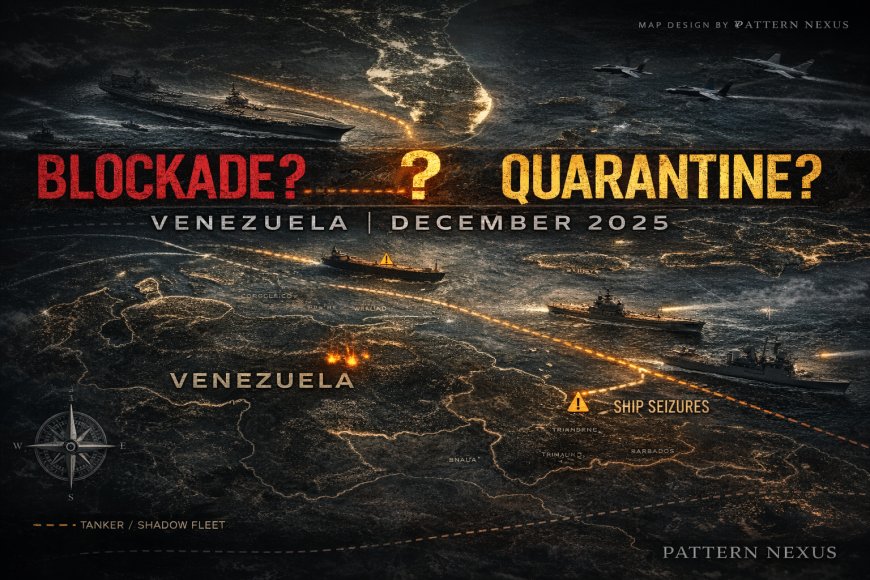
December 2025 is where the Venezuela campaign becomes explicit: ship seizures and a targeted choke on oil exports become the primary lever, with contested legal thresholds, Congress attempting to re-assert war powers, UN experts calling it illegal aggression, and an internal U.S. messaging split where Trump says “blockade” while the White House orders the military to say “quarantine.” Venezuela isn’t just a country in this framework. It is a resource node, a sanctions testbed, and a hemispheric enforcement rehearsal—and it is also a signal to global capital about what can be frozen, seized, or denied, and what cannot.
Summary
The Venezuela escalation is not primarily a land-war story. It is a control-systems story: flow restriction, legal threshold management, and selective enforcement that aims to collapse regime cashflow without tripping the clean constitutional and international-law breakers that force a formal war vote or a unified global response. In this month, “sanctions” stops being paperwork and becomes physically enforced outcomes.
- Trump says “blockade.” The White House later orders the military to say “quarantine,” because a blockade is widely treated as a war threshold under both domestic war-powers framing and international law narratives.
- Ship seizures become the headline mechanic. Two intercepted tankers become three, with seizure orders, boarding operations, and a compounding insurance/charter chilling effect that can suppress exports even when interdiction is selective.
- Congress pushes back but does not stop it. War Powers resolutions fail narrowly in the House; senators file a privileged War Powers measure in the Senate to force procedural pressure even if passage remains uncertain.
- UN experts escalate the legal framing. They warn that coercive measures affecting airspace and a maritime blockade can constitute illegal threat/use of force and “armed aggression,” raising reputational and alliance friction costs.
- Venezuela responds as a sovereignty and commerce case. Caracas calls the seizures piracy, requests UN Security Council attention, and passes a law criminalizing “piracy/blockade” collaboration to harden domestic compliance and punish leakage.
- Underneath it all is the resource substrate. Oil reserves, heavy crude flows to Asia, and mineral wealth make Venezuela a permanent strategic prize in any “control layer” framework.
- Capital reads the signal. When enforcement reach expands, allocation shifts toward assets and rails that are harder to gate—gold, Bitcoin, and non-Western settlement pathways—even before mainstream narratives acknowledge it.
December 2025 Timeline
This timeline is structured around control moves, not headlines. The point is to show how the system stepped up intensity, then snapped toward a “more legal” label while continuing the same behavior.
Early December: Legal Framing and Sovereignty Tripwires
- Dec 4: UN human rights experts warn that actions affecting Venezuela’s airspace and sovereignty may breach international law frameworks and constitute an illegal threat of force. This matters because the first contested space in gray-zone campaigns is almost always the legitimacy narrative.
Mid-December: Seizures, Cyber Stress, and the “Blockade” Word
- Dec 10–13: The first tanker seizure (Skipper) becomes the legal template for escalatory boarding operations, with allegations tied to sanctions evasion networks. This is the “test case” phase: one vessel, one warrant, one precedent.
- Dec 15: PDVSA reports a cyberattack impacting administrative systems, adding friction to exports and logistics planning during an already tightening choke. This is strategically relevant even if operationally limited: export coordination is a brittle point when interdiction risk rises.
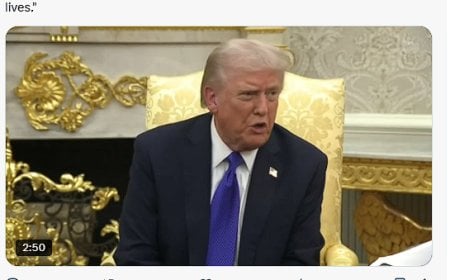
- Dec 16–17: Trump announces a “total and complete blockade” of sanctioned oil tankers entering/leaving Venezuela, with broader rhetoric about returning “stolen” assets and escalating pressure. The key effect is not the sentence itself—it is the legal and political gravity that the word “blockade” creates.
Dec 17: Congress Pushback and International Escalation Trigger
- Dec 17: The House narrowly defeats War Powers measures aimed at curbing hostilities or forcing authorization, signaling political friction without operational shutdown. Narrow margins matter because they tell institutions how much room they have to keep operating in the gray zone.
- Dec 17: Venezuela requests UN Security Council engagement over what it calls ongoing U.S. aggression. This is the standard move for weaker states under pressure: internationalize the legitimacy argument even if enforcement remains unchanged.
Dec 20–23: Interceptions, Storage Stress, and Internationalizing the Dispute
- Dec 20: U.S. intercepts another tanker (Centuries) carrying Venezuelan crude, with DHS publicly framing it as sanctions enforcement and narco-terror finance disruption. This framing is designed to keep the action inside “law enforcement” and outside “war.”
- Dec 21: U.S. pursues a third tanker; operational tempo becomes persistent rather than episodic. This is where deterrence flips from symbolic to structural: the shipping community begins pricing the risk as ongoing.
- Dec 23: Venezuela’s National Assembly passes an anti-piracy/blockade law aimed at criminalizing collaboration and asserting commercial sovereignty. In practical terms, it is a regime tool to reduce internal leakage and increase fear-based compliance.
- Dec 23: Reports indicate Venezuela begins using floating storage as export flows slow and onshore capacity binds. This is the hard constraint: storage binding forces production shut-ins and cashflow compression.
- Dec 23: The U.S. tells the UN it will enforce sanctions “to the maximum extent,” while Russia warns other regional states could be next. This is where a regional enforcement action becomes a precedent story for other sanctioned nodes.
Dec 24–25: The “Quarantine” Pivot (Label Shift, Same Choke)
- Dec 24: Reuters reports the White House orders U.S. forces to focus on a “quarantine” of Venezuelan oil exports for roughly two months, explicitly avoiding the “blockade” term, while maintaining operational pressure. This is a classic threshold snap-back: behavior continues, labeling is tightened.
- Dec 24: UN experts condemn the blockade mechanics as illegal armed aggression and call for investigation and Congressional intervention. This increases reputational cost and raises the probability of allied discomfort even if it does not change enforcement capability.
- Dec 25: Coverage highlights the legal distinction: Coast Guard boarding authority and selective interdiction are not the same thing as a declared naval blockade. That distinction is not academic. It is the legal membrane the operation is trying to preserve.
Dec 24–28: China Signals Without Escalation
- Late December: Chinese state media footage shows PLA wargaming simulations depicting conflict scenarios involving Cuba, Mexico, and the Caribbean. Treat this as posture and signaling—not imminent action. In Pattern Nexus terms: China is reminding Washington that enforcement reach is observed, modeled, and can be mirrored if thresholds keep moving.
Dec 26–28: Regime Legitimacy Theater and Regional Posture
- Dec 26: Venezuela announces releases of detainees from prior election protests, framed as a rights gesture amid pressure, while NGOs note ongoing repression and conditional releases. This is bargaining posture: small concessions paired with continued hardline control.
- Dec 23–28: Reporting describes expanding U.S. security arrangements across parts of Latin America, interpreted by critics as force posture scaffolding. In practice, it widens operational flexibility and raises perceived inevitability.
The Coercion Stack
This is not “sanctions” in the old sense. This is sanctions enforced through physical interception, with messaging engineered to remain below formal war thresholds.
Layer 1: Narrative Pretext
- Law-enforcement wrapping: “Narco-terrorism” converts a political regime target into an enforcement target, expanding discretion and narrowing domestic opposition.
- Illicit-shipping framing: “Shadow fleet” converts commercial shipping into a legitimacy problem rather than a commerce issue, making interdiction culturally easier to sell.
- Authorization expansion language: “Foreign terrorist organization” style rhetoric widens the conceptual authorization envelope even when the legal basis is contested.
Layer 2: Legal Instruments
- Vessel-by-vessel paper trail: Seizure warrants and judicial orders create a record that looks like law enforcement rather than warfare, even if the practical effect is strategic interdiction.
- Label management: “Quarantine” is a legal comfort term. It is designed to signal selectivity, time-bounding, and enforcement posture, while “blockade” signals open-ended warlike denial.
- Threshold defense strategy: Keep actions deniable as enforcement, keep objectives explicit as sanctions compliance, avoid declaratory language that collapses the gray zone.
Layer 3: Physical Enforcement
- Boarding risk as leverage: Misidentification, resistance, warning shots, casualties, or a single high-profile incident can instantly shift the campaign from enforcement to armed conflict in public perception.
- Deterrence through examples: You do not need to stop every ship. You need to demonstrate that any ship can be stopped. That changes behavior across the charter and insurance stack.
Layer 4: Economic Binding
- Storage is the hard constraint: exports slow → tanks fill → forced shut-ins → cashflow collapses.
- Cashflow is regime stability: a petrostate’s political machine is funded by exports. Bind the exports and you bind the machine.
- The center of gravity: regime cashflow collapse without a land invasion, achieved through maritime and financial plumbing.
Inside Washington: Trump vs His Own Messaging
This angle matters because it reveals the real constraint: not capability, but legitimacy management. Trump uses maximal words (“blockade,” “total and complete,” implied regime removal). The institutional layer then tries to repackage the same actions under a term that avoids triggering war-power and international-law tripwires.
The internal split (as a control problem)
- Trump posture: public threats, maximal framing, open-ended escalation language that pressures adversaries and allies simultaneously.
- Institutional posture: “quarantine,” enforcement semantics, time-boxing (two months), and deliberate classification as sanctions/counternarcotics operations rather than war.
- Why the split exists: the operational goal is coercion. The political goal is keeping initiative without handing Congress a clean “act of war” trigger.
What this signals for next steps
When leadership rhetoric outruns institutional legal comfort, you usually see one of two outcomes: either the institutions bend and thresholds move (true escalation), or rhetoric gets channeled into selective enforcement that achieves the same financial choke without the declaratory clarity of a blockade.
The deeper signal: threshold engineering is the strategy
The word game is not cosmetic. It is structural. Modern coercion stacks are built to achieve strategic outcomes while remaining just inside the language boundaries of “not war.” The “quarantine” directive is the system protecting its own operating envelope.
Congress: War Powers, Friction, and the “Act of War” Argument
Congress is the constitutional throttle. In December, the throttle was touched but not pulled. That is exactly why gray-zone campaigns proliferate: they are designed to operate inside political ambiguity and procedural inertia.
House actions
- Narrow defeats matter: War Powers resolutions aimed at limiting hostilities were narrowly defeated, signaling that the political coalition to stop this is real but not yet decisive.
- The core argument: members explicitly argue that a naval blockade is “unquestionably an act of war” and cannot be conducted without authorization. Even when that argument loses, it constrains language and forces rebranding.
Senate actions
- Privileged process as pressure: senators file a War Powers resolution designed to force a vote if the campaign expands—especially if it crosses from interdiction into strikes or land operations.
- Why this matters even if it fails: the Senate process can compel debate, split messaging, and raise the cost of escalation by making it procedurally visible.
Why Congress struggles to stop gray-zone campaigns
A “classic” war vote is triggered by obvious invasion. A quarantine and selective interdiction campaign can be framed as law enforcement plus sanctions enforcement plus counternarcotics. That framing is the whole game: keep the action real, keep the label deniable.
Military Operations: Southern Spear and the Maritime Battlespace
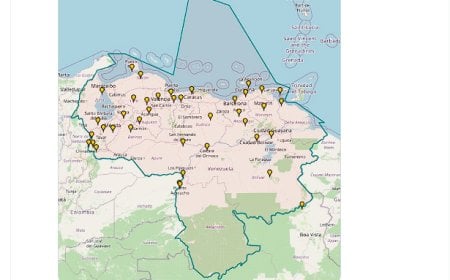
The operational theater is the Caribbean and approaches, not Caracas. The target is revenue flow and logistics confidence. In enforcement campaigns, you do not need to occupy territory if you can occupy the routes.
Force posture and escalation risk
- Presence is leverage: a substantial U.S. footprint in the region creates deterrence and rapid interdiction capability, but it also compresses decision time if incidents occur.
- The escalation ladder is short: boarding goes wrong → escort responds → shots fired → casualty event → political thresholds collapse.
- Why “quarantine” is operationally useful: it permits selective action with ambiguity, keeping adversaries uncertain about which ship is safe.
Human rights and legitimacy leakage
Reports and critics point to lethal strikes on alleged drug-trafficking boats with significant death tolls and contested evidentiary standards. Whether or not those strikes are tactically justified, they function as reputational cost and feed the UN legal narrative of disproportionate force.
Operational center of gravity
The operational center of gravity remains maritime: interdiction risk, shipping deterrence, insurance repricing, and export monetization impairment. This is how “enforcement” creates strategic outcomes without a land campaign.
The Resource Prize: Why Venezuela Is Always on the Board
Venezuela is not just an ideological dispute. It is a prize node with unusually dense resource concentration. The most important point is that the fight is over monetization and routing—not simply barrels underground.
Oil: the Orinoco cashflow machine
- Reserves concentration: Venezuela holds the world’s largest proven crude reserves, heavily concentrated in the Orinoco Belt (extra-heavy crude).
- Revenue centrality: even with degraded infrastructure and sanctions pressure, oil remains the dominant export revenue line and the patronage fuel for regime survival.
- Routing reality: when Western buyers are gated, flows tend to re-route toward buyers willing to absorb sanctions risk, often through discounting, intermediaries, and opacity.
Strategic minerals: gold as a sanctions bypass substrate
- Orinoco Mining Arc: gold and other minerals are tightly linked to governance, security forces, and illicit finance dynamics.
- Gold is not a hedge here; it is a tool: in sanctioned systems, gold functions as a settlement substitute and a portable store of value that can move through gray channels.
- Control-systems implication: minerals are not commodities; they are leverage over supply chains and enforcement vulnerability.
Geography: route control is power
- Transit junction: Venezuela sits at a hemispheric maritime junction: Caribbean approaches, Atlantic lanes, proximity to U.S. logistics nodes, adjacency to contested border zones.
- Enforcement rehearsal value: if you can enforce here, you can generalize the methods elsewhere. That is why precedent is part of the prize.
Stable Point A: The Regime-Squeeze Equilibrium
You asked for “stable point A.” Here is the clean definition in this system:
Stable Point A is the equilibrium where the U.S. sustains a targeted oil-export choke (enough to bind regime cashflow) while avoiding an overt land invasion or a formally declared blockade. It is coercion that can be described as enforcement, time-boxed in language, and defended domestically as counternarcotics plus sanctions compliance.
The “quarantine” directive is a textbook snap back toward Stable Point A: the operation continues, but the label is changed to reduce the probability of Congress cutting power or courts/UN bodies framing it as outright war.
Why Stable Point A keeps reappearing
Because it is the highest-pressure configuration that still preserves political maneuvere: maximum binding on cashflow with minimum formal war commitment. Every time rhetoric threatens to push the system into a clean war threshold, institutions attempt to snap back to the stable operating envelope.
International Response: UN, Russia, China, Regional States
UN experts and UN Security Council
- Legal escalation: UN experts warn that threats affecting airspace and a maritime blockade can breach sovereignty and constitute illegal threat/use of force.
- Threshold language: UN experts later condemn the blockade mechanics as illegal armed aggression and call for investigation and Congressional intervention.
- Diplomatic routing: Venezuela requests the UN Security Council address the campaign; the U.S. argues it is depriving Maduro of resources; Russia warns other regional states could be next.
Russia: precedent and counter-warning
Russia’s posture functions as a precedent warning: if maritime enforcement can be normalized under sanctions language in the Caribbean, it can be normalized elsewhere. Russia does not need to deploy here to extract value; it needs to amplify the legitimacy dispute.
China: the crude flow reality and the enforcement-reach signal
China’s viewpoint is mechanical. If interdictions suppress Venezuela-to-Asia flows, you get an oil-market tightening impulse and a real-time demonstration of enforcement reach over physical trade. China reads this as a lesson: not “Venezuela,” but “what can be denied.”
China’s Caribbean drill simulation: posture, not escalation
China’s late-December state-media footage showing war-game simulations involving Cuba, Mexico, and the Caribbean should be treated as posturing and signaling—an informational reminder that Washington’s hemispheric enforcement posture is observed and modeled. It is not a prediction of Chinese action. It is China reminding the region that “near abroad” thinking exists on both sides.
Regional states: alignment under pressure
Regional security arrangements and diplomatic alignment will move as a function of perceived inevitability and risk. When enforcement looks durable, neutral states quietly hedge rather than openly oppose.
Bitcoin, Gold, and Resource Allocation
Venezuela is a resource story, but it is also an allocation story. Every time enforcement reach expands, capital is forced to re-evaluate three things: what can be seized, what can be gated, and what can move without permission. That re-evaluation is where Bitcoin and gold enter the framework—not as slogans, but as mechanical responses to enforcement risk.
Gold: the “outside-the-rail” settlement substrate
- Gold rises when enforcement risk rises: not because the world is “going back” to a gold standard, but because gold is a non-liability asset with long-proven portability and no issuer.
- Sanctioned states use gold as a tool: it is a settlement substitute, a collateral substitute, and a survival asset when banking rails are restricted.
- The Orinoco implication: mineral wealth functions as a parallel liquidity engine when formal monetization is constrained.
Bitcoin: the “permissionless rail” bid
- Bitcoin is a response to gatekeeping: when shipping, insurance, correspondent banking, and settlement rails can be denied, demand rises for value transfer that is harder to block.
- This is not a Venezuela-only story: it is the general rule of enforcement: more control on legacy rails increases the attractiveness of alternative rails.
- Institutional pattern: as enforcement tools become more visible, the probability increases that private actors hold a portion of reserves in assets they perceive as harder to seize or politically gate.
Resource allocation: where the money flows next
The allocation consequences are broader than “buy gold” or “buy Bitcoin.” Enforcement shocks reprice entire categories:
- Energy security: long-duration supply control and diversified sourcing get bid as strategic, not just economic, priorities.
- Shipping and insurance: war-risk premiums and compliance costs become structural, shifting margins and routing behavior.
- Defense and surveillance: maritime domain awareness and interdiction capability become investable policy priorities.
- Neutral settlement infrastructure: non-Western payment rails, bilateral settlement, and commodity-backed trade structures gain urgency even if adoption remains slow.
China’s allocation response (the quiet one)
China’s most powerful response is not confrontation. It is allocation and infrastructure: diversify settlement exposure, accumulate strategic commodities, and build optionality for trade routing. The Caribbean drill simulation belongs in the signaling layer; the allocation shift belongs in the structural layer.
Market Plumbing: Oil Flows, Insurance, Tanker Reality
This is where “liquidity” meets “energy.” A few mechanics matter more than the politics.
The export choke is mostly an insurance problem
- Interdiction risk reprices insurance: boarding risk increases premiums and deters mainstream shippers.
- Fear-zone effect: even “legal” shipments can get caught in the fear zone if discretion looks open-ended.
- Dark-routing feedback loop: as mainstream participants withdraw, trade shifts into darker channels, which then become easier to justify targeting.
Storage binds are the hard constraint
- If exports slow, tanks fill.
- If tanks fill, PDVSA must shut production.
- If production shuts, cashflow collapses and internal political stability fractures.
Second-order macro effects (Pattern Nexus frame)
- Oil tightening → inflation persistence: a sustained crude tightening impulse pushes inflation expectations higher, even if it’s “just” a risk premium.
- Inflation persistence → rate rigidity: rate-cut narratives weaken when energy feeds headline and expectations, keeping financial conditions tighter than markets want.
- Rate rigidity → liquidity pressure: tighter conditions propagate into risk assets, credit spreads, and housing affordability.
- This is the bridge: Venezuela matters even if you never trade a barrel because it is an exogenous shock lever that touches inflation and therefore touches liquidity.
The enforcement-to-allocation transmission
When the market sees physical enforcement applied to trade, it does not only price oil. It prices the reliability of the system. That reliability premium is what leaks into gold, Bitcoin, and the broader “assets outside reach” basket.
Next 30–90 Days: Scenarios
Scenario 1: Quarantine Holds (Stable Point A Maintained)
- Selective interdictions continue with careful labeling discipline.
- Export volumes grind lower; floating storage increases; discounts widen.
- Congress complains but does not cut funding or pass binding restrictions.
- Maduro’s internal cashflow stress rises; negotiation or internal fracture probabilities increase.
- Gold and Bitcoin continue absorbing the “enforcement risk premium” as a structural allocation theme.
Scenario 2: Kinetic Incident (Boarding Goes Hot)
- A Venezuelan escort engages or a boarding escalates.
- Casualties occur; rhetoric locks in; quarantine becomes de facto blockade in reality.
- Congress is forced into a sharper vote; regional states choose sides.
- Oil reprices, insurance reprices, and the enforcement risk premium across markets spikes.
Scenario 3: Trump Overrides the Box (Strikes or Broader Attacks)
- Escalation goes beyond the enforcement envelope.
- War Powers fight becomes unavoidable and potentially binding.
- Global oil reprices; risk assets adjust; “policy mistake” risk rises across the Fed/Treasury macro complex.
- Allocation accelerates toward non-liability assets and rails perceived as harder to gate.
Scenario 4: Negotiated Off-Ramp (Valve Control)
- Caracas offers concessions to regain export breathing room.
- The U.S. rebrands success as counternarcotics victory plus sanctions compliance.
- The choke becomes a controllable valve rather than a binary switch.
- Markets partially relax the risk premium, but the precedent remains embedded.
Scenario 5: China expands signaling, not confrontation
- More wargame footage, more rhetorical messaging, more “we see your posture” signaling.
- Minimal kinetic change in the Caribbean.
- Structural change continues in allocation and settlement optionality rather than force projection.
What to Watch
- Terminology: if “quarantine” quietly becomes “blockade” again, the threshold is being crossed.
- Boarding tempo: interdictions per week, and whether targeting expands beyond clearly “sanctioned” categories.
- Insurance + charter market: mainstream withdrawal versus continued participation under higher premiums.
- Storage signals: more floating storage, forced shut-ins, refinery disruptions, widening differentials.
- Congress: binding language in defense bills, funding restrictions, or a successful War Powers vote.
- UN track: UNSC debates, UN expert statements, regional alignment shifts.
- China behavior: not rhetoric, but crude-buying posture, routing behavior, and settlement/infrastructure moves.
- Gold and Bitcoin: watch for the enforcement premium: moves that track credibility shocks, not just inflation headlines.
PN Lens
This is a control-systems story wearing a geopolitics costume.
The objective is not “a dramatic war.” The objective is flow control: choke the revenue artery, keep the action deniable as enforcement, and let internal regime stability degrade under financial binding constraints.
The “blockade vs quarantine” word game is not semantics. It is the signature of a system operating at a threshold: pushing maximum pressure while trying not to trigger the legal and political breakers that shut the campaign down.
Venezuela’s resource wealth is the constant. The method is the variable. December 2025 is the month the method became overt: sanctions are now enforced with hardware, and the global market receives a reminder that trade and settlement can be gated.
And that is why this matters beyond Venezuela. Enforcement visibility accelerates allocation toward assets and rails perceived as harder to seize, freeze, or permission. That’s the deeper signal. Not ideology. Not headlines. Plumbing.
Sources
- Reuters: Trump orders blockade of sanctioned oil tankers entering/leaving Venezuela (Dec 16, 2025)
- Reuters: White House orders military to focus on “quarantine” of Venezuela oil (Dec 24, 2025)
- Reuters: U.S. House defeats bids to rein in Trump Venezuela campaign (Dec 17, 2025)
- OHCHR: UN experts alarmed by escalating U.S. pressure on Venezuela (Dec 4, 2025)
- Reuters: U.S. intercepts oil tanker off Venezuelan coast (Dec 20, 2025)
- Reuters: Venezuela passes law against piracy/blockades amid seizures (Dec 23, 2025)
- Reuters: Venezuela requests UN Security Council meet over U.S. aggression (Dec 17, 2025)
- EIA: Venezuela country analysis (oil reserves and production context)
- CSIS: Venezuela’s Orinoco Mining Arc (gold and governance/security dynamics)
- Washington Post: U.S. pursuing third tanker off Venezuelan coast (Dec 21, 2025)
- The Guardian: U.S. security deals across Latin America amid Venezuela campaign (Dec 23, 2025)
- The Guardian: Venezuela announces release of detainees (Dec 26, 2025)
- South China Morning Post: CCTV report shows PLA simulated battles near Mexico, Cuba, and the Caribbean (Dec 24, 2025)
- Military.com: Coast Guard standoff at sea chasing Venezuela-linked tanker (Dec 24, 2025)
Phản Ứng Của Bạn Là Gì?
 Thích
0
Thích
0
 Không Thích
0
Không Thích
0
 Yêu
0
Yêu
0
 Hài hước
0
Hài hước
0
 Wow
0
Wow
0
 Buồn
0
Buồn
0
 Giận dữ
0
Giận dữ
0

Founder of Pattern Nexus. I research markets, macro, geopolitics, AI, history, ancient systems, and the patterns most people overlook. I’m also building Market Radar, a trading scanner designed to read pressure, risk, confirmation, and setup quality before chasing a move. Pattern Nexus is where I connect the dots between data, history, technology, and the bigger system playing out around us.




Các bình luận (0)