
Suy thoái bảo trì hộ gia đình: Nước Mỹ đang lặng lẽ sụp đổ
GDP quý 3 cho thấy nền kinh tế đang mạnh mẽ. Dữ liệu cho thấy các hộ gia đình đã ngừng sửa chữa ô tô, nhà cửa và thiết bị để tồn tại. Đây là cuộc suy thoái bảo trì hộ gia đình — và nó không thể hiện trong GDP.
The Household Maintenance Recession
Q3 GDP did not signal household strength. It signaled household triage. The data show Americans preserving near-term consumption by deferring maintenance, replacement, and capital upkeep across homes and vehicles. GDP records this as growth. The balance sheet records it as decay.
Executive Summary
Real GDP rose at a 4.3% annualized rate in Q3 2025. Current-dollar GDP rose 8.2%.
But inside the tables, a different economy appears. Real goods consumption weakened. Durable goods contracted. Residential investment remained negative. Services absorbed the difference.
This is not a classic demand recession. It is a maintenance recession — a phase where households preserve surface-level consumption by cannibalizing asset integrity.
The Headline vs the System
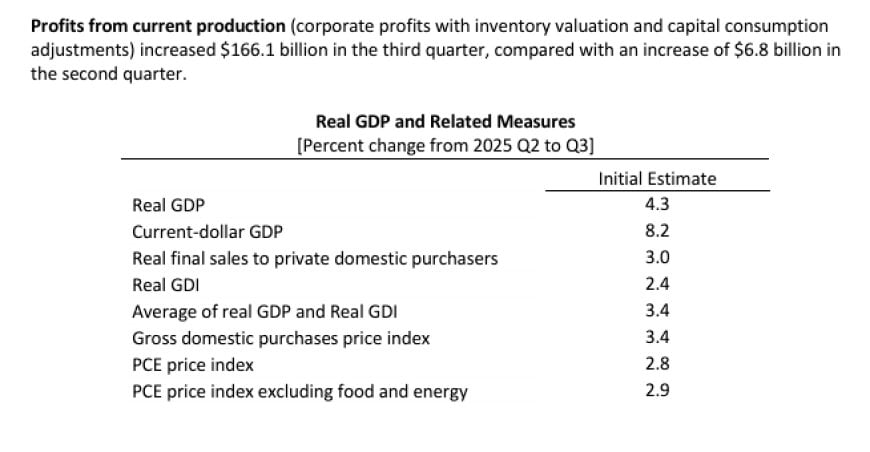
GDP accelerated after a weak Q1. Markets interpreted this as resilience.
But GDP is a flow measure. It cannot distinguish between sustainable reinforcement and deferred decay.
GDP does not ask how consumption is being sustained — only whether it occurred. A household that replaces a failing car and a household that keeps an aging vehicle running on borrowed time both register as “fine” in the aggregate. One reinforces future capacity. The other quietly liquidates it. GDP treats them as identical.
Inflation as a Hidden Amplifier
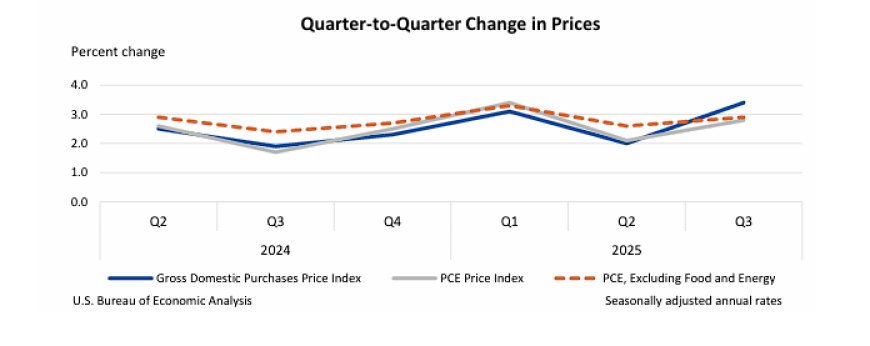
Gross domestic purchases inflation ran at 3.4%. Core PCE inflation was 2.9%.
Deferred repairs under inflation are not neutral decisions. Every postponed fix embeds a higher future liability.
Inflation does not merely raise prices — it raises the penalty for delay. A deferred repair in a low-inflation environment is inconvenient. A deferred repair in a 3–4% price regime compounds into forced expenditure later, often under weaker income conditions. This is how maintenance deferral turns from coping strategy into systemic stress.
Reading the BEA Table Correctly
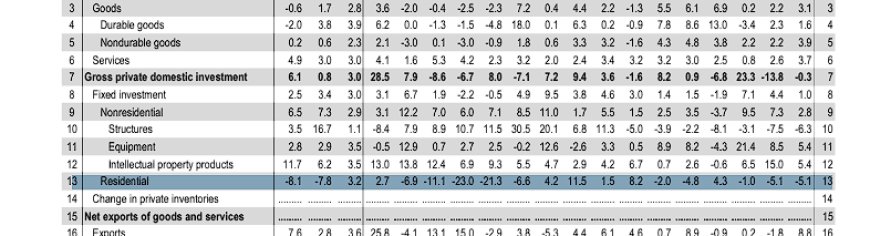
The BEA table is not a list of categories. It is a system map.
In Q3:
- Goods: weak to negative momentum
- Durable goods: contractionary
- Services: dominant contributor
- Residential investment: persistently negative
The critical point is not that services are growing — services almost always grow late-cycle. The signal is that the categories responsible for preserving household capital stock are shrinking while non-optional service costs expand. That is not a preference shift. It is a constraint signal.
The BEA table masks this because maintenance-critical spending (vehicles, furnishings, residential investment) is aggregated into broad buckets that get visually overwhelmed by healthcare, housing services, and government outlays. The system looks balanced at the top line while the reinforcement layer erodes underneath.
Goods vs Services: The Split
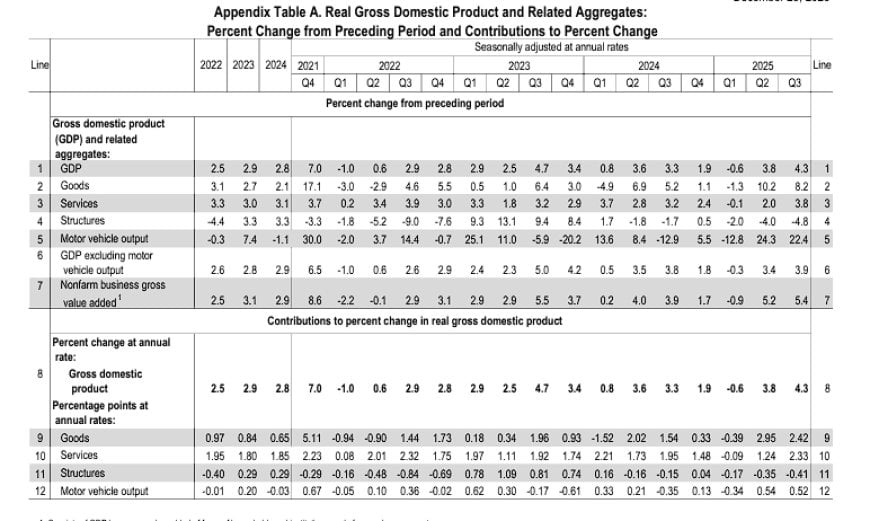
Services spending increased across healthcare, housing, insurance, and transportation.
Meanwhile:
- Motor vehicles and parts weakened
- Household durables declined
- Residential fixed investment remained a drag
This is substitution under constraint. Households cannot stop paying for services, so they stop maintaining assets.
Receipts:
Real GDP: 4.3%
Real final sales to private domestic purchasers: 3.0%
Real GDI: 2.4%
Gross domestic purchases price index: 3.4%
Core PCE inflation: 2.9%
The gap between output growth and household income growth is the space where maintenance deferral lives.
Investment, Inventories, and Illusion
Gross private domestic investment showed volatility driven by inventories — not by productive reinforcement.
Inventory drawdowns and rebounds create optical GDP strength without improving household solvency.
Inventory-led quarters flatter GDP temporarily while doing nothing to repair roofs, replace vehicles, or stabilize household systems. You cannot inventory your way into household durability.
Residential investment’s continued contraction confirms that housing is not being reinforced — it is being preserved at minimum viable levels.
Borrowing From the Future Without Debt
Households are not levering balance sheets. They are levering time.
Deferred maintenance operates as off-book borrowing:
- Accelerated depreciation
- Failure clustering
- Insurance loss escalation
- Forced future spending
GDP records the absence of spending as neutral. Physical systems do not.
The Maintenance Overhang
Deferred maintenance accumulates as a hidden overhang.
Instead of smooth replacement cycles, the economy builds:
- Aging vehicle fleets
- Housing system fragility
- Appliance failure compression
Maintenance overhangs do not resolve gradually. They resolve through failure clustering. Cars fail during cold snaps. HVAC systems fail during heat waves. Appliances fail when energy costs spike. The timing is rarely convenient — which is why maintenance recessions surface suddenly, not smoothly.
Profits Up, Households Down
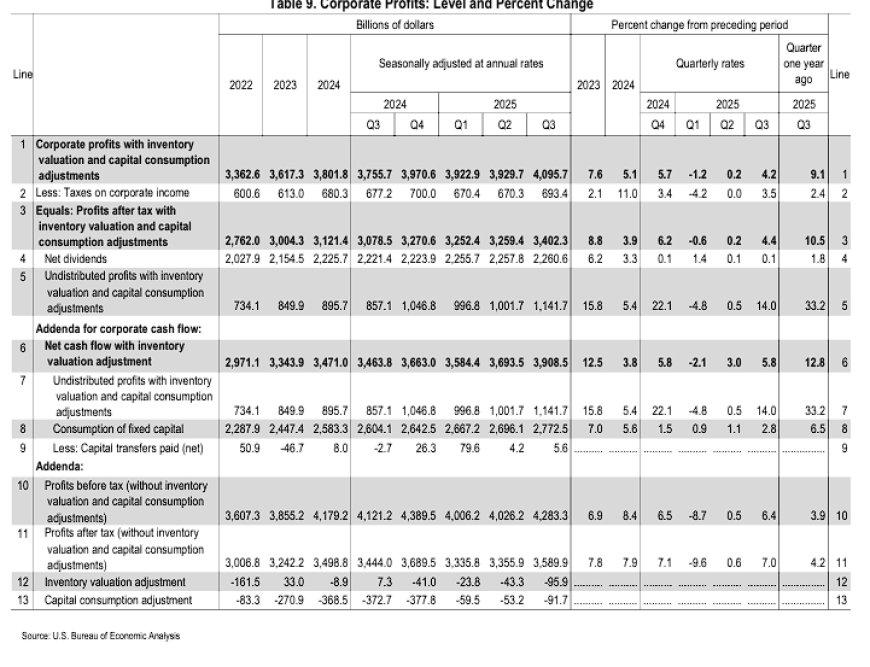
Corporate profits from current production rose by $166.1B in Q3.
This divergence reflects late-cycle cost transfer. Firms maintain margins through pricing power. Households absorb stress by liquidating asset longevity. Profits rise. Durability falls.
Pattern Nexus Lens
The household maintenance recession is not a collapse in demand. It is a collapse in reinforcement.
GDP can remain elevated while the physical backbone of the household economy weakens.
This phase ends when deferred costs surface — through failures, insurance shocks, or forced replacements — often at the worst possible moment.
By the time GDP reflects it, the regime has already changed.
Phản Ứng Của Bạn Là Gì?
 Thích
0
Thích
0
 Không Thích
0
Không Thích
0
 Yêu
0
Yêu
0
 Hài hước
0
Hài hước
0
 Wow
0
Wow
0
 Buồn
0
Buồn
0
 Giận dữ
0
Giận dữ
0

Founder of Pattern Nexus. I research markets, macro, geopolitics, AI, history, ancient systems, and the patterns most people overlook. I’m also building Market Radar, a trading scanner designed to read pressure, risk, confirmation, and setup quality before chasing a move. Pattern Nexus is where I connect the dots between data, history, technology, and the bigger system playing out around us.













Các bình luận (0)