
Mô hình Trái phiếu Kho bạc 10 năm và sự trở lại của các hoạt động Repo
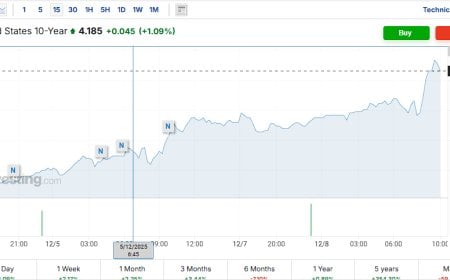
Kho bạc 10 năm đã nhiều lần dừng lại gần ngưỡng kháng cự dài hạn trong khi các hoạt động repo qua đêm đã âm thầm trở lại sau QT. Phân tích này xem xét cách mà các thị trường tài trợ, khả năng bảng cân đối kế toán và kiểm soát lãi suất tương tác dưới các câu chuyện tiêu đề.
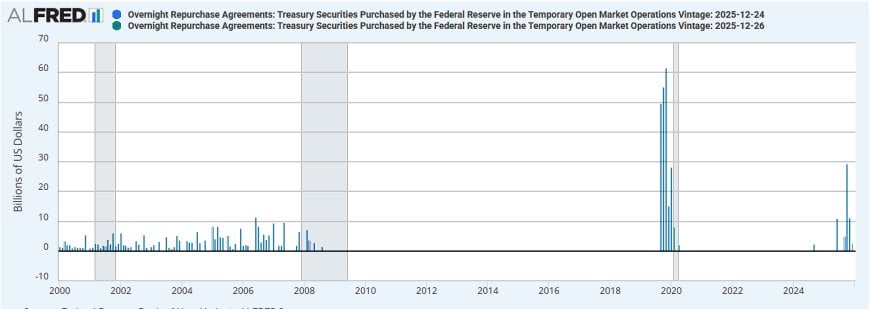
For years, the 10-Year Treasury has been flashing the same structural warning: yields stall near long-cycle resistance not because growth is strong, but because the system is binding. The quiet return of repo operations after QT is not a coincidence. It is the missing plumbing confirmation that the pattern identified long ago is now resolving in real time.
Summary
The original Pattern Nexus analysis of the 10-Year Treasury was never about predicting recessions on a calendar. It identified a structural behavior: yields repeatedly stall and distribute near long-cycle resistance because the system cannot tolerate unconstrained duration clearing.
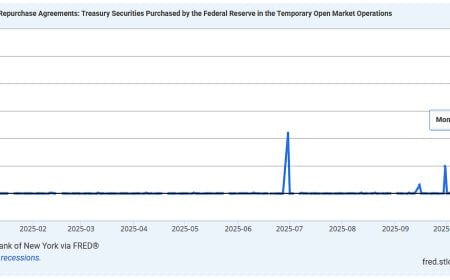
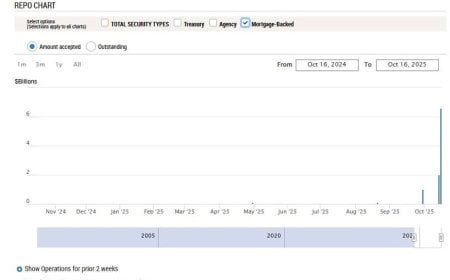
That framework is now being confirmed by something widely dismissed as “technical” — the return of overnight repo operations involving Treasury securities after quantitative tightening was effectively exhausted.
Together, these two signals describe a system that is no longer self-balancing. It is not breaking loudly. It is being actively held together.
The Long-Cycle 10-Year Treasury Pattern
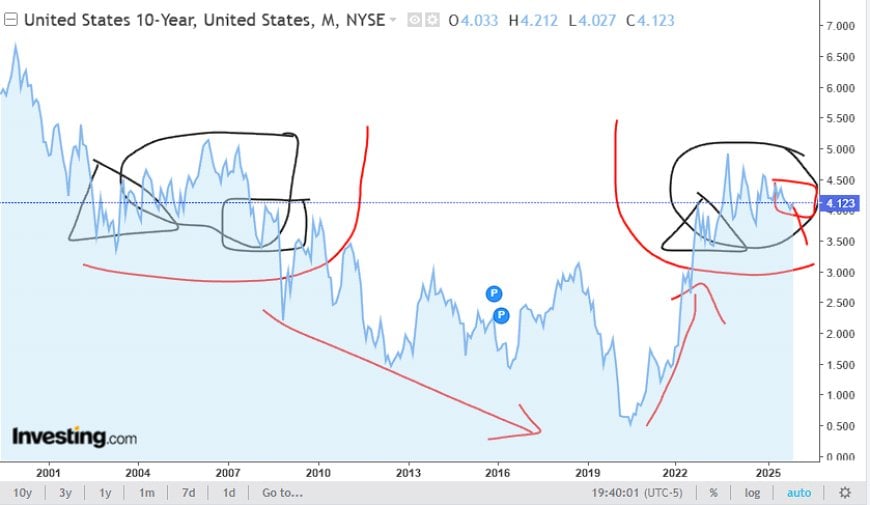
Over multiple decades, the 10-Year Treasury yield has exhibited a repeating structural behavior. When yields approach long-cycle resistance zones, they do not simply break higher on “strong growth.” They consolidate, chop, and distribute.
These zones are not confidence signals. They are stress signals. They mark the limits of balance-sheet capacity, duration absorption, and funding tolerance.
In the mid-2000s, that consolidation resolved through a violent deflationary unwind once leverage cracked. The pattern did not predict a recession — it described a system approaching an elasticity limit.
Today, the pattern is repeating, but the resolution mechanism has changed. The system cannot tolerate another uncontrolled balance-sheet liquidation.
Repo Returns After QT
Overnight repurchase agreements are where monetary theory meets operational reality. Repo exists to ensure collateral circulation, reserve distribution, and short-term rate control.
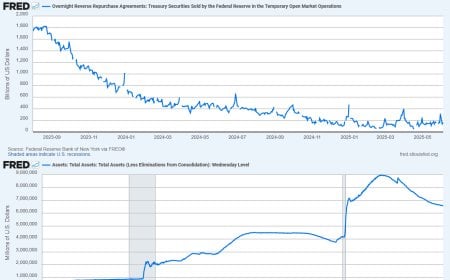
In a system with abundant reserves and elastic dealer balance sheets, repo fades into the background. When it returns after QT, it is an admission that the system can no longer equilibrate on its own.
This is not stimulus. It is not emergency action. It is structural necessity.
QT compressed reserve buffers and balance-sheet elasticity to the point where rate control now requires active intervention. That is functional QE — regardless of the label.
Where the Two Signals Meet
The 10-Year pattern and the return of repo are not separate stories. They are the same story seen from different parts of the system.
The long end reflects duration clearance limits. The short end reflects funding control limits.
When the Fed must actively defend the front end through repo, while the long end stalls near structural resistance, stress is concentrated in the middle of the system: dealer balance sheets, collateral chains, and funding markets.
This is why yields can remain elevated without breaking higher, and why repo can return without a crisis headline. The system is being managed to prevent nonlinear outcomes.
Why Most Narratives Miss This
Common explanations fail because they ignore plumbing.
- GDP does not clear funding markets.
- Asset values are not liquid buffers.
- Growth narratives do not resolve balance-sheet constraints.
When yields stall despite massive issuance and inflation rhetoric, the answer is not optimism. It is constraint.
What Phase the System Is In Now
QT as doctrine is finished. Liquidity management as necessity has begun.
The 10-Year Treasury pattern identified years ago did not “predict” this moment. It described the structural conditions that would eventually force it.
Repo is the confirmation signal. The system is not breaking. It is being held together.
Phản Ứng Của Bạn Là Gì?
 Thích
0
Thích
0
 Không Thích
0
Không Thích
0
 Yêu
0
Yêu
0
 Hài hước
0
Hài hước
0
 Wow
0
Wow
0
 Buồn
0
Buồn
0
 Giận dữ
0
Giận dữ
0

Founder of Pattern Nexus. I research markets, macro, geopolitics, AI, history, ancient systems, and the patterns most people overlook. I’m also building Market Radar, a trading scanner designed to read pressure, risk, confirmation, and setup quality before chasing a move. Pattern Nexus is where I connect the dots between data, history, technology, and the bigger system playing out around us.












Các bình luận (0)