
ADP Weakness, Dollar Break: Labour → Liquidity → Repricing (Nov 11, 2025)
ADP Weakness, Dollar Break: Labour → Liquidity → Repricing (Nov 11, 2025)
ADP’s new weekly dataset flags late-October job losses as the U.S. Dollar Index cracks a multiyear support. We map the policy path and the collateral plumbing that follows.
What Changed This Morning
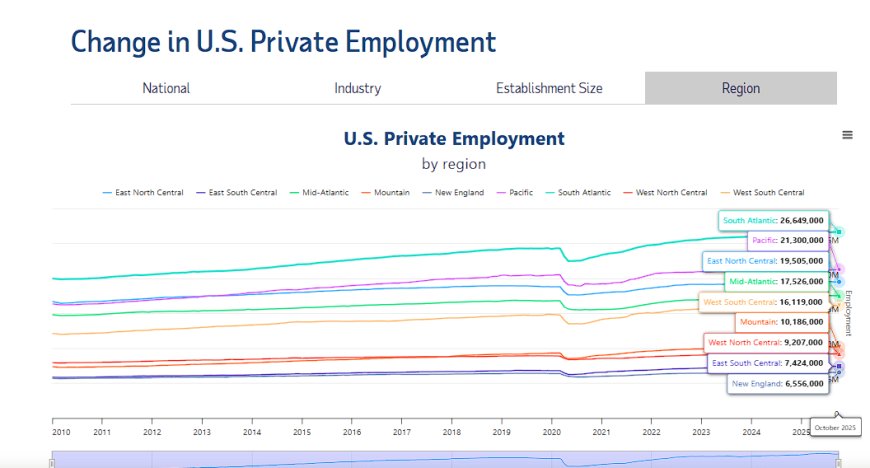
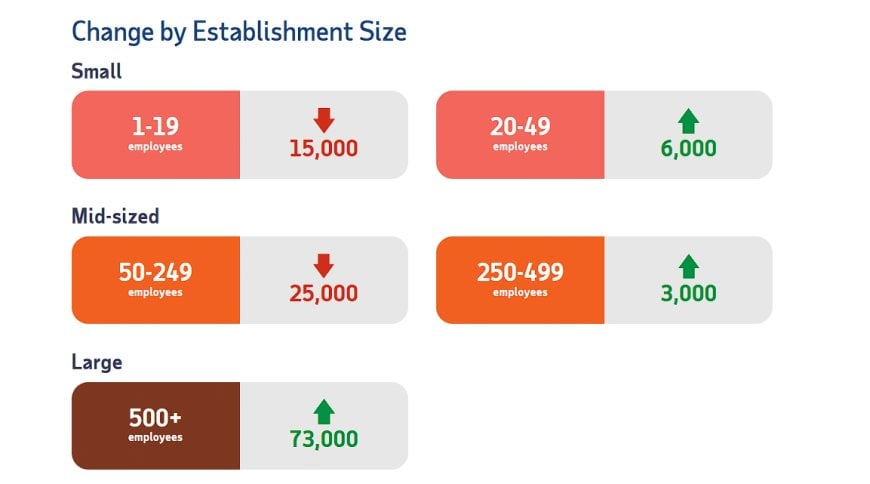
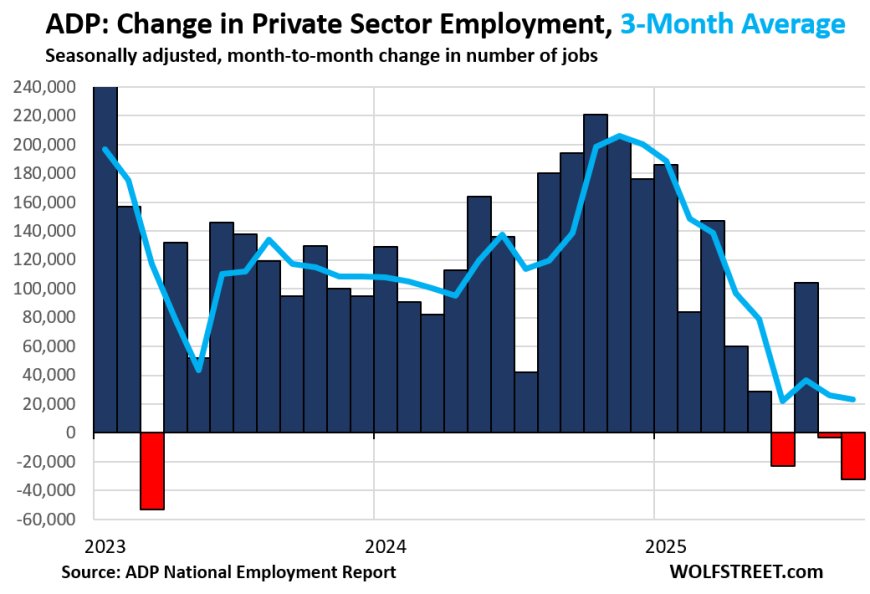
Signal 1 — ADP Weekly: Private employers lost an average of ~11,250 jobs per week in the four weeks ending Oct 25. That’s a late-month deterioration even as the monthly ADP print showed a modest +42k for October.
Signal 2 — NFIB: Small business optimism fell to 98.2, a six-month low, led by weaker earnings and softer hiring plans.
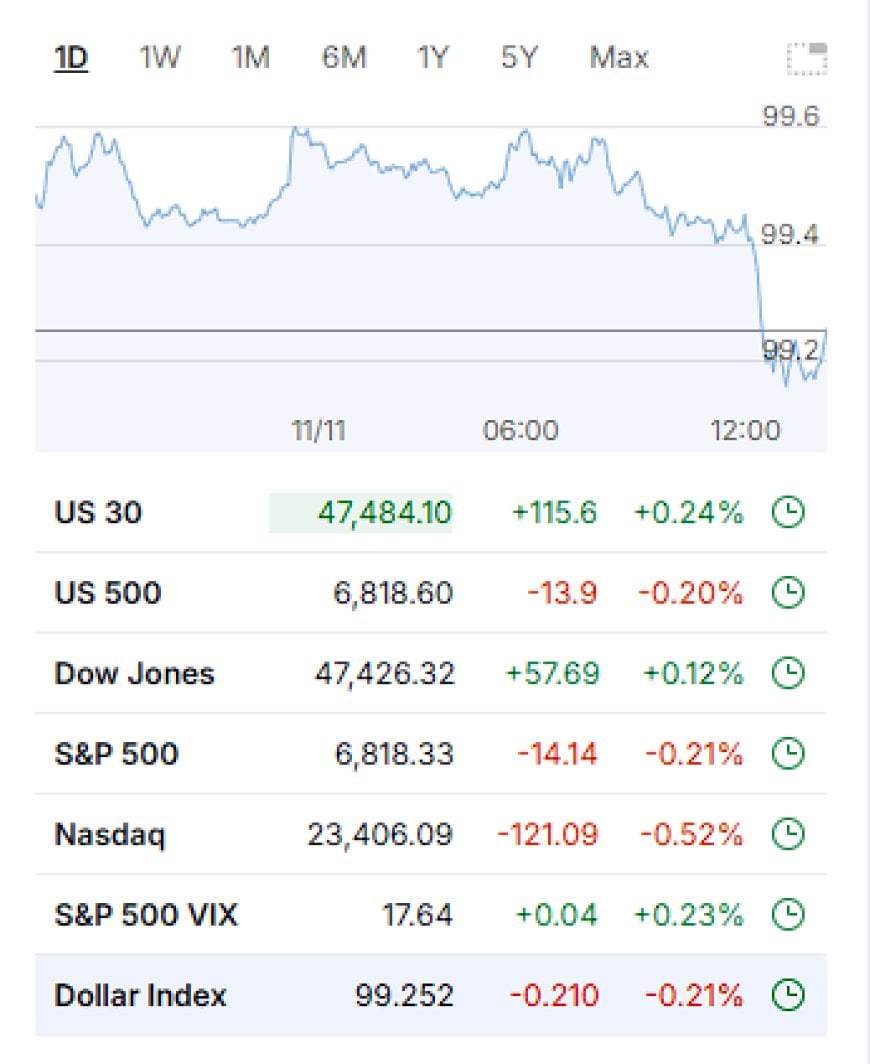
Signal 3 — Dollar: DXY broke below the ~99 shelf, slipping out of the interior channel and into a policy-sensitive zone.
Why it matters: Labour softness → cooler wage impulse → rising rate-cut odds → USD repricing → collateral mix shift across bills/notes/repo. This is the classic feedback loop we track in Tokenized Reserve Era and Everything Bubble 3 (Gold).
Labour: ADP + NFIB
The new high-frequency ADP series provides a four-week moving view with a short lag. The October pattern was uneven: gains clustered early in the month, followed by late-month losses. Layer on the NFIB’s six-month-low in optimism and a downtick in hiring plans, and you have a clean narrative: labour demand is cooling at the margins, especially in white-collar and select services, while wage heat continues to ebb.
Corporate transcripts and layoff trackers have been tilting higher through October alongside AI-driven efficiency pushes. This doesn’t imply a hard stop in employment; it implies a rotational slowdown—the kind that pressures wages first and headline jobs next.
Dollar: Structural Break & Scenarios
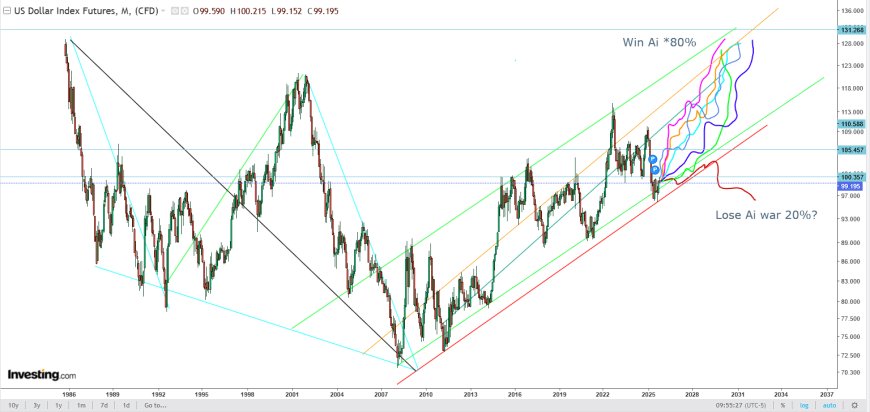
Dollar Index Breaks Support. The U.S. Dollar Index (DXY) cracked below the 99 structural support level this morning — a break that aligns with the soft ADP data and a shift in rate-cut odds.
On the long-term geometry (chart above), the dollar is slipping out of the interior green channel and brushing the underside of the secular support rail. The break occurs at a multi-decade slope intersection, where the 1987–1992 down-cycle, the 2008 recovery slope, and the 2015–2020 carry channel converge. In practical terms, this is where the dollar historically loses trend coherence before entering a policy-dependent repricing regime. The near-term path tilts toward the lower branches of the projection cloud — not a collapse scenario, but the weak-dollar liquidity cycle that reappears whenever the labour market softens faster than policy can adjust.
- Soft-Landing Weak USD: Gradual easing, bills bid, curve bull-steepens, EM/commodities catch a tailwind.
- Growth Scare: Faster cuts, USD down then up on risk-off; gold/outside-money outperform; equities chop.
- Sticky Inflation: Fed delays easing → USD bounces inside channel; rates vol rises; equities wobble.
Liquidity Plumbing & Rates
This is where the mechanics matter. A weaker USD amid labour cool-down typically coincides with: (1) richer bills and front-end collateral preference; (2) repo stability with episodic specials; (3) steady RRP drain if front-end yields drift lower; and (4) relief for global USD borrowers. If the cut-pricing advances, term premia compress and the curve bull-steepens from the front.
Net effect: risk can rally on easier USD liquidity, but cyclical earnings need confirmation. That’s why equities were flat this morning even as the dollar slipped.
Positioning Map
- Exporters & USD-earners abroad
- Real assets with USD sensitivity (gold, selective commodities)
- EM FX beta (case-by-case, dependent on local inflation & external balance)
- Front-end duration / bills in a glide-path easing scenario
- Sticky inflation that delays easing (USD snapbacks)
- Earnings downgrades if labour softness turns to demand softness
- Collateral kinks if issuance mix surprises (bill vs note supply)
Further Reading on Pattern Nexus
คุณมีปฏิกิริยาอย่างไร?
 ชอบ
0
ชอบ
0
 ไม่ชอบ
0
ไม่ชอบ
0
 รัก
0
รัก
0
 ตลก
0
ตลก
0
 ว้าว
0
ว้าว
0
 เศร้า
0
เศร้า
0
 โกรธ
0
โกรธ
0

Founder of Pattern Nexus. I research markets, macro, geopolitics, AI, history, ancient systems, and the patterns most people overlook. I’m also building Market Radar, a trading scanner designed to read pressure, risk, confirmation, and setup quality before chasing a move. Pattern Nexus is where I connect the dots between data, history, technology, and the bigger system playing out around us.













ความคิดเห็น (0)