
Repo Usage Is Expanding Again
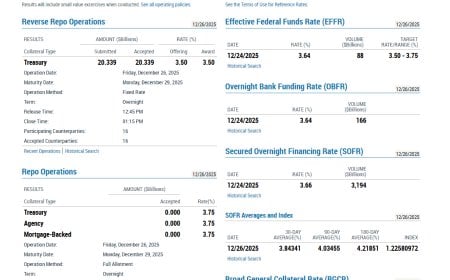
Overnight repo operations have shifted from dormant to persistent over the past several weeks. This article documents the expansion in repo usage, what it signals about short-term funding conditions, and what to watch next — without overinterpretation.
Repo Usage Is Expanding Again
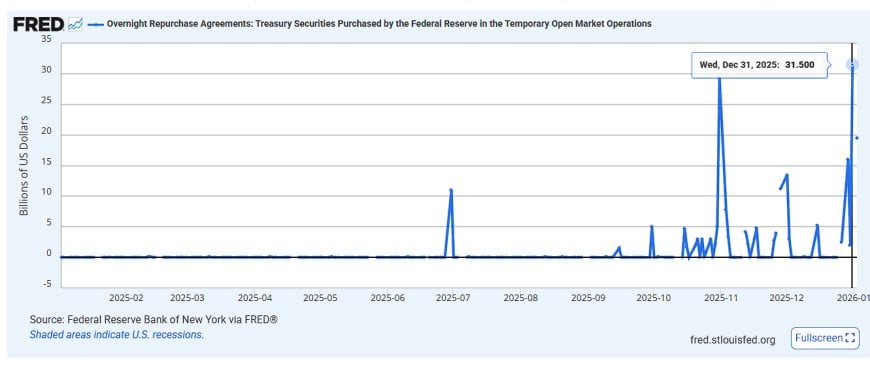
Overnight repo operations have shifted from dormant to persistent over the past several weeks. This is a plumbing signal, not a headline event, and it’s worth documenting clearly without overinterpretation.
What Changed
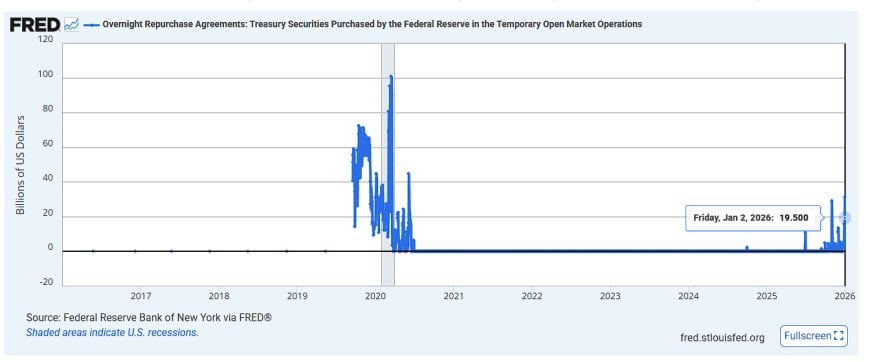
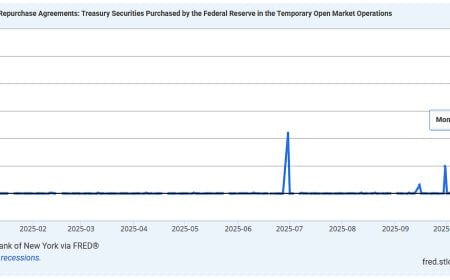
For most of 2024 and early 2025, overnight repo usage at the Federal Reserve sat near zero. That has changed. Since late November, repo operations have appeared repeatedly, with multiple days showing meaningful size rather than isolated spikes.
The increase is visible across:
- Overnight Treasury repo operations
- Total overnight repo usage
- Collateral submitted in Fed temporary open market operations
This shift matters not because of any single print, but because repo activity is no longer episodic. It is recurring.

What It Means
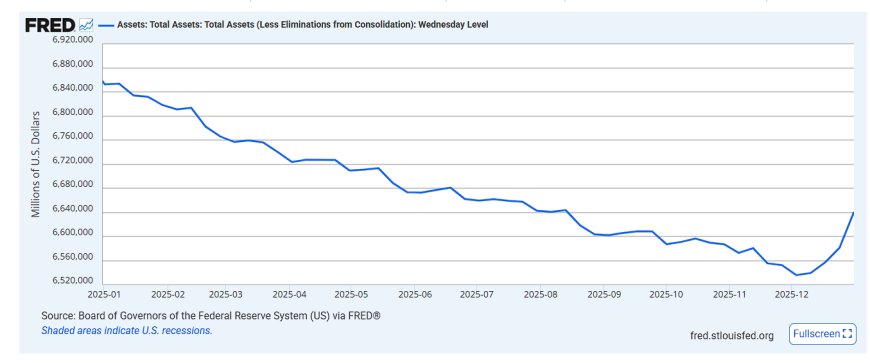
Repo operations are a funding tool. When they are inactive, it generally means private markets are clearing collateral and funding without needing Federal Reserve intermediation. When they turn back on — and stay on — it indicates tighter conditions at the margin.
Importantly, this does not imply market stress, panic, or crisis. Markets can remain orderly while plumbing becomes less elastic. Repo usage simply tells you where the constraint is showing up first.
Pattern Nexus framing: Persistent repo usage is a signal of reduced balance-sheet slack, not a forecast.
The fact that repo activity spans more than one collateral type suggests this is not a one-off settlement issue, but a broader funding preference for Fed intermediation.
What to Watch
The key question is not whether repo usage appeared — it already has. The question is whether it fades back toward zero or remains part of the operating backdrop.
- Frequency: Do operations continue appearing weekly?
- Size: Are typical operations growing or shrinking?
- Duration: Does activity remain overnight-only or expand in tenor?
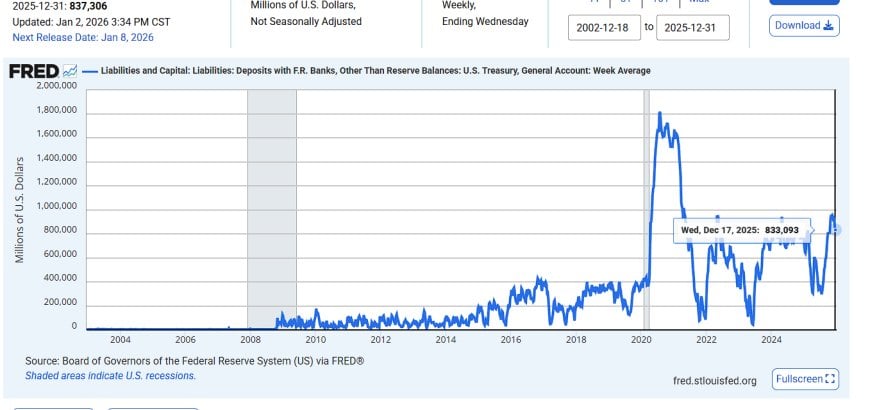
- Correlation: Does repo usage cluster around Treasury cash-management swings?
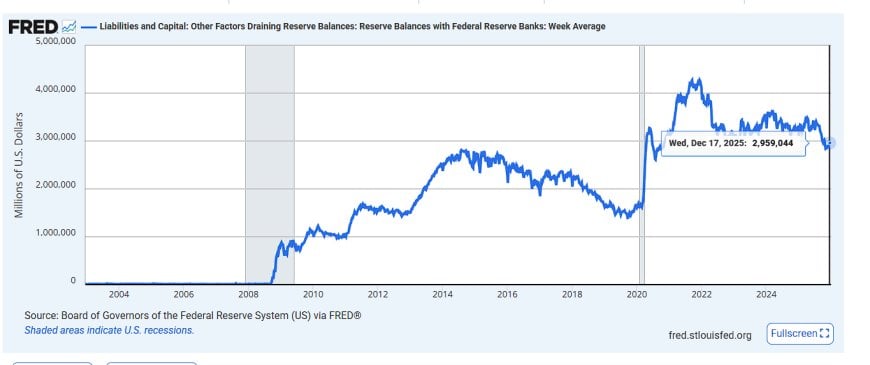
Repo is a plumbing indicator. It doesn’t need to be dramatic to be informative.
Sources
What's Your Reaction?
 Like
0
Like
0
 Dislike
0
Dislike
0
 Love
0
Love
0
 Funny
0
Funny
0
 Wow
0
Wow
0
 Sad
0
Sad
0
 Angry
0
Angry
0

Founder of Pattern Nexus. I research markets, macro, geopolitics, AI, history, ancient systems, and the patterns most people overlook. I’m also building Market Radar, a trading scanner designed to read pressure, risk, confirmation, and setup quality before chasing a move. Pattern Nexus is where I connect the dots between data, history, technology, and the bigger system playing out around us.















Comments (0)