
GoGoGadget 10-Year: Why Yields Are Rising Into Rate Cuts
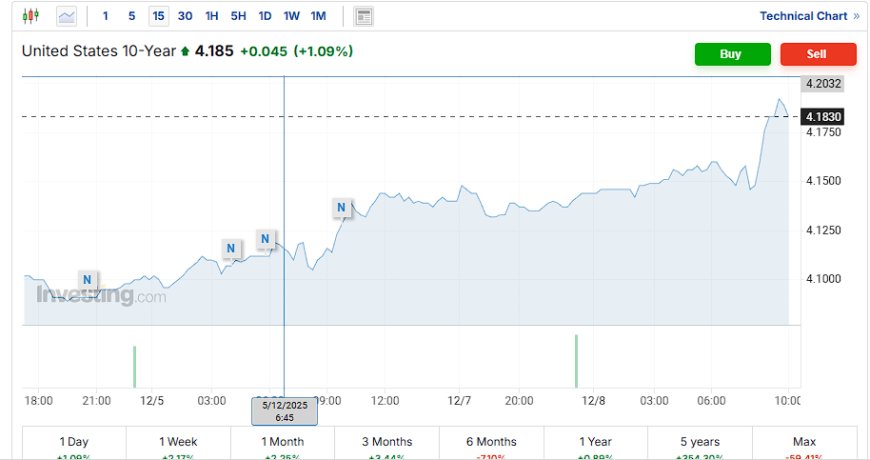
The U.S. 10-year just broke above the 4.15% zone even as futures price a near-certain Fed rate cut. This Pattern Nexus breakdown explains why long yields can rise into cuts, what the bond market is signaling about QT, term premium, and collateral stress, and how it fits the 2026 liquidity regime shift.
The Setup: 10-Year vs Fed Cut Odds
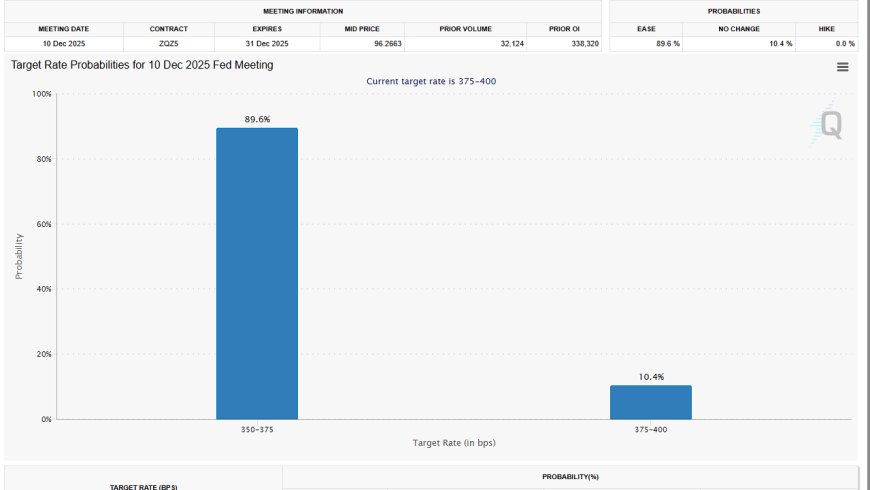
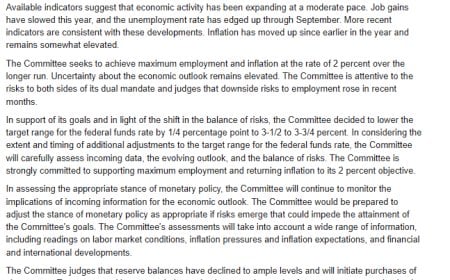
On the screen, it looks simple: the U.S. 10-year yield pops through the 4.15% zone I’ve been circling for weeks, and at the same time, the Fed funds futures strip is pricing roughly a 90% probability of a cut at the upcoming FOMC meeting.
To most people, that reads like a contradiction: “If the Fed is cutting, shouldn’t long yields be dropping?” That’s the textbook, linear mental model: central bank eases → market yields go down → soft landing confetti falls from the ceiling.
But we aren’t in textbook land. We are in the late-stage of a liquidity cycle where policy and plumbing are out of sync. When the 10-year rises into expected cuts, the market isn’t confused – it’s screaming: “Your cuts won’t fix the structural problem underneath.”
On the Surface: Why This Looks “Wrong”
Let’s spell out why the average investor sees this as nonsense:
- They think in terms of a single dial: the “interest rate” the Fed controls.
- They assume rate cuts are always bullish and always bring yields down.
- They treat the bond market as a mood ring, not a plumbing diagram.
In that world, rising 10-year yields next to rate-cut odds look like the market is “ignoring” or “disagreeing” with the Fed. The commentary then drifts into vibes: the market is “optimistic,” “pessimistic,” “confused,” or “irrational.”
My framework is different. I don’t assume the market is emotional; I assume it’s trying to solve a multi-variable equation involving collateral, reserves, issuance, and a credit system that now has AI-era capital needs layered on top.
Under the Surface: Plumbing, Not Psychology
When you strip away the narratives, three things matter for the 10-year here:
- Collateral demand and supply: how much high-quality collateral the system needs vs how much is being issued.
- Reserve scarcity: how close we are to the effective reserve “floor” where funding markets get nervous.
- Term premium repricing: how much compensation investors demand for holding longer-dated duration in a noisy, levered world.
Put differently: the 10-year isn’t reacting to the next 25–50 basis points on the policy rate. It’s reacting to the structure of the system that will exist over the next decade: a world of heavy Treasury supply, AI-driven capex, demographic drag, and an unresolved QT hangover.
Key idea: The Fed manages the front end. The system manages the back end. When those two diverge, the back end wins – because that’s where the collateral and real funding lives.
QT’s Wall, Reserves, And The Term Premium Comeback
This move in the 10-year doesn’t exist in a vacuum. It sits on top of everything I’ve been writing about:
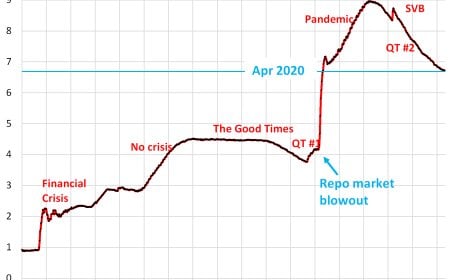
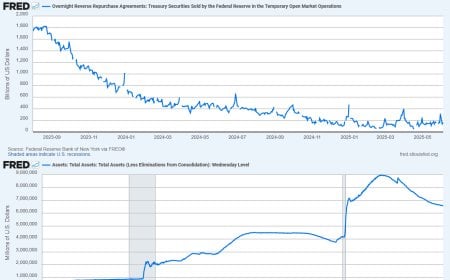
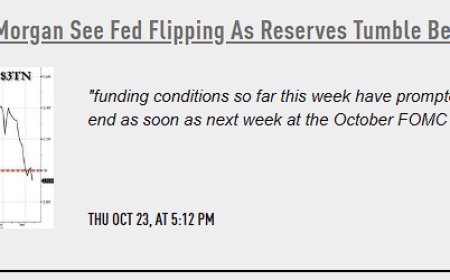
- QT is hitting its mechanical wall. As balance sheet runoff pushes reserves toward the floor, the system starts to price in a world where liquidity bottlenecks appear even if the policy rate is being nudged lower.
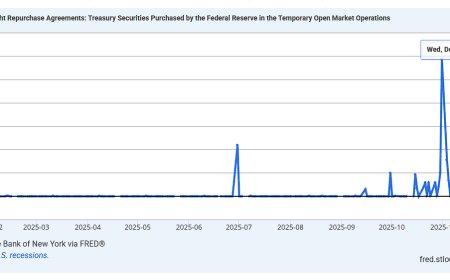
- The Standing Repo Facility (SRF) is becoming the marginal backstop. When that happens, the market understands that we’re close to the “we can’t tighten further without breaking something” boundary.
- Term premium is re-emerging. For a decade, central banks acted like a volatility-suppressing ETF at the long end; now they are trying to step back in a world that’s more levered, more geopolitically fragile, and more capex-hungry (AI, grids, data centers, energy re-wiring).
The result: the 10-year starts to trade the constraint, not the FOMC soundbite. Rising yields into cuts are the system saying: “If you’re cutting because growth and credit are softening, but you’re not re-engineering the plumbing yet, I want a higher yield to hold long duration.”
That’s exactly what you’d expect on the approach path to the 2026 liquidity regime shift – the transition from QT to some form of QE-by-another-name, likely routed through collateral, bills, and tokenized rails.
Front End vs Back End: Who Really Sets “Rates”?
One of the biggest misunderstandings in finance is the idea that “the Fed sets interest rates.” The Fed sets a band for overnight rates. Everything else is an emergent property of collateral, risk, and expectation.
In the current tape:
- The front end is anchored by the Fed and by futures markets that price a pretty smooth, politically acceptable path of cuts.
- The back end is saying: “We’re not convinced your glide path is enough to offset the supply, the structural deficits, and the risk that something breaks before you finish cutting.”
That’s why a move through the 4.15% “gravity zone” matters. It’s not magic; it’s where the market transitions from “we believe your story” to “we’re repricing term risk on our own.”
An inverted or kinked curve with a heavy long-end selloff into cuts is the bond market’s version of a vote of no confidence: it’s not panic yet, but it’s a clear statement that the era of free term suppression is over.
What This Means For Assets And The Real Economy
When you connect this to everything else I’ve been tracking, the picture gets sharper:
- Equities: multiple compression risk comes back if the market believes the “risk-free” anchor is drift
The key point: a Fed cut doesn’t automatically mean “easier conditions.” If the back end is tightening through higher yields and term premium, overall financial conditions can stay restrictive or even tighten further.
Pattern Nexus Lens: 2026 Liquidity Regime Shift
This 10-year move is one tile inside a much bigger mosaic I’ve been building: the idea that we’re heading toward a 2026 liquidity supercycle where QT quietly ends and a new, more complex version of QE emerges.
In that framework:
- The QT phase is the slow grind where the system tests how low reserves can go before the plumbing pushes back.
- The transition phase is where we are now: yields start doing things that don’t match the press conference script, repo facilities become more relevant, and stress shows up on the edges (subprime autos, weaker banks, CRE, stressed households).
- The QE-2026 phase is the pivot: some combination of reserve injections, collateral operations, and possibly tokenized rails and stablecoin plumbing designed to keep the Treasury complex liquid while pretending we’re not “doing QE” anymore.
The 10-year breaking out while cuts are priced in is a classic transition-phase signal. It’s the market front-running the idea that policy will have to move from point solutions (cuts) to structural solutions (plumbing).
Scenario Map And Playbook
You don’t need to predict every tick of the 10-year. You just need to understand what each path implies for the broader regime.
Scenario 1: Yields Spike And Then Snap Back
The 10-year rips higher, tripping stress alarms in credit and equities, and then collapses as the Fed signals a faster or deeper easing path and hints at balance sheet tweaks.
This is your “mini-accident followed by rescue” path – short, violent, and noisy, but directionally supportive of the QE-2026 thesis.
Scenario 2: Yields Grind Higher Even As Cuts Arrive
Here, the Fed follows through on cuts but stays stubborn on QT and balance sheet size. The 10-year keeps drifting higher anyway as issuance, deficits, and term premium dominate. Financial conditions stay tight despite “easing.”
This is the most dangerous path for levered players, and the one that forces some form of structural response later – possibly involving new collateral tools or digital rails.
Scenario 3: Policy Capitulation And Structural Liquidity Shift
In this version, the Fed eventually admits what the bond market is already pricing – that you can’t run this level of debt, issuance, and AI-era capex without a more supportive plumbing regime. QT ends, some new acronym facility appears, and the long end stabilizes as investors are bribed with a mix of yield and backstops.
This is the cleanest fit with the 2026 liquidity supercycle view, and the reason I keep saying: watch the 10-year, not the sound bites.
FAQ: Common Questions About Yields And Cuts
“If the Fed cuts, shouldn’t all rates go down?”
Not necessarily. The Fed controls the overnight band. Long-term yields are set by the market’s view of inflation, growth, supply, risk, and term premium. If the market thinks cuts are being forced by weakness or funding stress, it can demand a higher yield to hold long duration, especially if QT and deficits stay aggressive.
“Does a rising 10-year mean inflation is about to explode again?”
A higher 10-year can reflect inflation fears, but in this context, a big chunk of the move is about structure: collateral, issuance, reserve scarcity, and term premium. It’s less “inflation panic” and more “you’re paying me more to take this duration risk in a noisy system.”
“Isn’t this just the market ‘disagreeing’ with the Fed?”
It’s more precise to say the market is solving a different equation. The Fed is focused on the next year or two of inflation and growth. The 10-year is focused on the full decade of debt, demographics, AI-driven capex, and the sustainability of the plumbing. When those two views diverge, the long end re-prices first.
“How does this tie into your 2026 liquidity thesis?”
The entire QT-to-QE-2026 framework rests on the idea that the current balance sheet and collateral configuration is not sustainable. Rising long yields into cuts are an early signal that the market is forcing a conversation about plumbing, not just policy rates. That’s exactly what you’d expect on the road to a new liquidity regime.
“What should a normal person take away from this?”
Don’t anchor your view of “rates” on Fed press conferences alone. Watch the 10-year and the plumbing: reserves, issuance, repo, and term premium. When yields are rising while cuts are being priced in, the system is telling you that something deeper is being repriced – and that the next big move is likely to come from structural liquidity tools, not just the Fed nudging the dial at the front end.
Sources & Further Reading
- Federal Reserve communications and balance sheet data.
- Fed funds futures and market-implied policy probability tools.
- U.S. Treasury yield curve data and 10-year yield history.
- Pattern Nexus prior work on QT’s endgame, the 2026 liquidity supercycle, and the AI-era collateral engine.
What's Your Reaction?
 Like
0
Like
0
 Dislike
0
Dislike
0
 Love
0
Love
0
 Funny
0
Funny
0
 Wow
0
Wow
0
 Sad
0
Sad
0
 Angry
0
Angry
0

Founder of Pattern Nexus. I research markets, macro, geopolitics, AI, history, ancient systems, and the patterns most people overlook. I’m also building Market Radar, a trading scanner designed to read pressure, risk, confirmation, and setup quality before chasing a move. Pattern Nexus is where I connect the dots between data, history, technology, and the bigger system playing out around us.















Comments (0)