
The Stablecoin Front: Dollar Tokens, Sanctions, and Aircraft Carriers off Venezuela
A deep Pattern Nexus investigation into how Venezuela became the first live theater where U.S. military power, stablecoin adoption, sanctions, and digital-dollar rails collide. As populations dollarize from below and states turn to USDT to bypass sanctions, Washington tightens control over the rails and projects force into the same region. A groundbreaking look at the new monetary battlefield emerging across South America.
The Stablecoin Front: Dollar Tokens, Sanctions, and Aircraft Carriers off Venezuela
Everyone is watching the aircraft carrier. Almost no one is watching the digital dollars flowing through the same theater.
But in 2025, the more important invasion may be happening through digital rails – stablecoins, settlement networks, and tokenized dollars moving faster than any carrier group ever could.
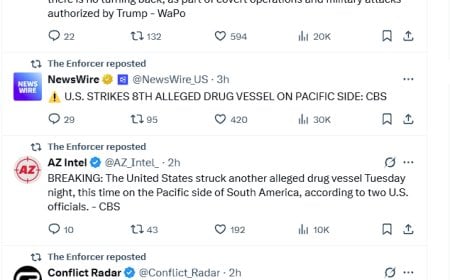
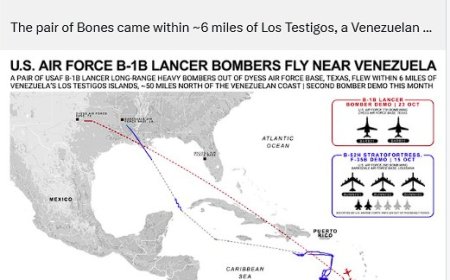
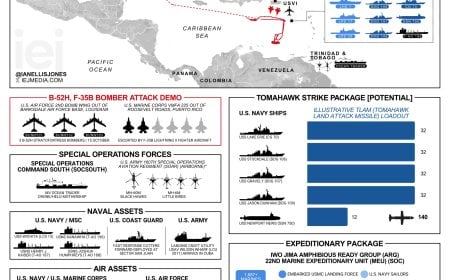
Off the coast of Venezuela, the United States has parked the USS Gerald R. Ford, its most advanced aircraft carrier, alongside a growing armada of warships, jets, and “counter-narcotics” hardware. Since September, U.S. strikes on alleged drug boats in the Caribbean and eastern Pacific have killed dozens of people and triggered international criticism.
At the same time, inside Venezuela’s financial plumbing, something very different is happening: the state oil company PDVSA and a broad swath of the population are quietly shifting into dollar stablecoins, primarily USDT, to move value, store savings, and route around a collapsed currency and an aggressive U.S. sanctions regime.
One storyline is visible: jets, carriers, and FAA warnings telling pilots to avoid Venezuelan airspace due to a “worsening security situation” and heightened military activity. Another storyline is almost invisible: a region-wide migration into digital dollars that effectively deepens U.S. monetary dominance even as countries try to escape U.S. political control.
This piece looks at that second story – not instead of the carrier group, but alongside it. If you zoom out and look at the pattern, Venezuela starts to look less like an isolated crisis and more like a prototype:
- A sanctioned petro-state turning to stablecoins to keep its export machine running.
- A population dollarizing from below through crypto rails as the local currency fails.
- A U.S. government simultaneously tightening legal control over those rails and projecting military power into the same geography.
The question isn’t, “Is the U.S. literally invading South America with crypto?” That’s too blunt and too conspiratorial. The better question is: What happens when the same country that controls the carrier group also anchors the digital money everyone in the region ends up using?
From Gunboats to Rails: How Power Actually Travels
Historically, U.S. influence in Latin America followed a simple template: gunboat diplomacy, coups, and conditional access to credit. The mechanisms changed – Marines in the early 20th century, CIA-linked operations in the Cold War, structural adjustment via the IMF and World Bank – but the core pattern stayed the same: if you want access to the global system, you eventually end up dealing in dollars and dealing with Washington.
In the analog era, that influence moved through three main channels:
- Banking rails – correspondent banking, SWIFT, and dollar-clearing in New York.
- Trade finance – letters of credit, export-import bank guarantees, and access to global capital markets.
- Security guarantees and pressure – alliances, arms sales, sanctions, and military presence.
In 2025, we’re watching those same levers migrate into a new architecture:
- Stablecoins and tokenized Treasuries as the front-end for dollar access.
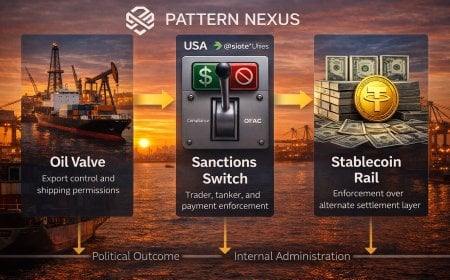
- Compliance APIs, sanctions lists, and issuer risk desks as the control layer.
- Military posture as the hard backstop when the soft levers aren’t enough.
Aircraft carriers are how you signal power.
Settlement networks are how you keep it.
If you’re a local bank in South America, the question isn’t whether you “like” the United States. The question is: Can you offer your customers a credible way to hold value that doesn’t melt? Once people have seen a functional digital dollar in their phone, it’s extremely difficult to convince them to go back to a fragile national currency – especially in a place like Venezuela, where inflation has shredded trust for over a decade.
Latin America’s Stablecoin Wave and the Quiet Dollarization
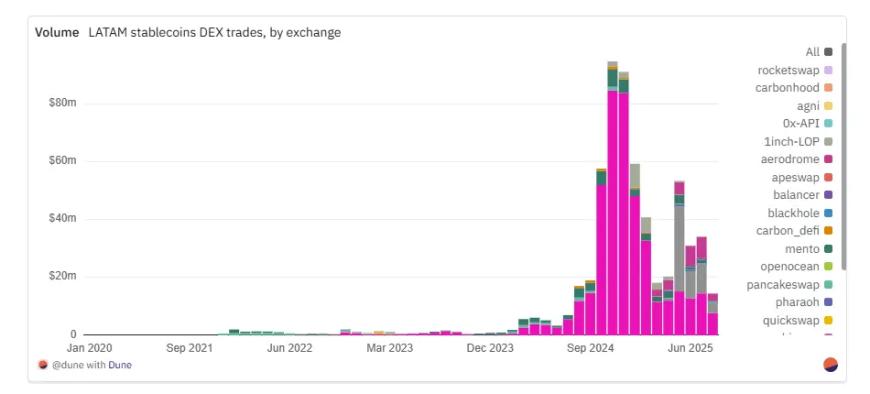
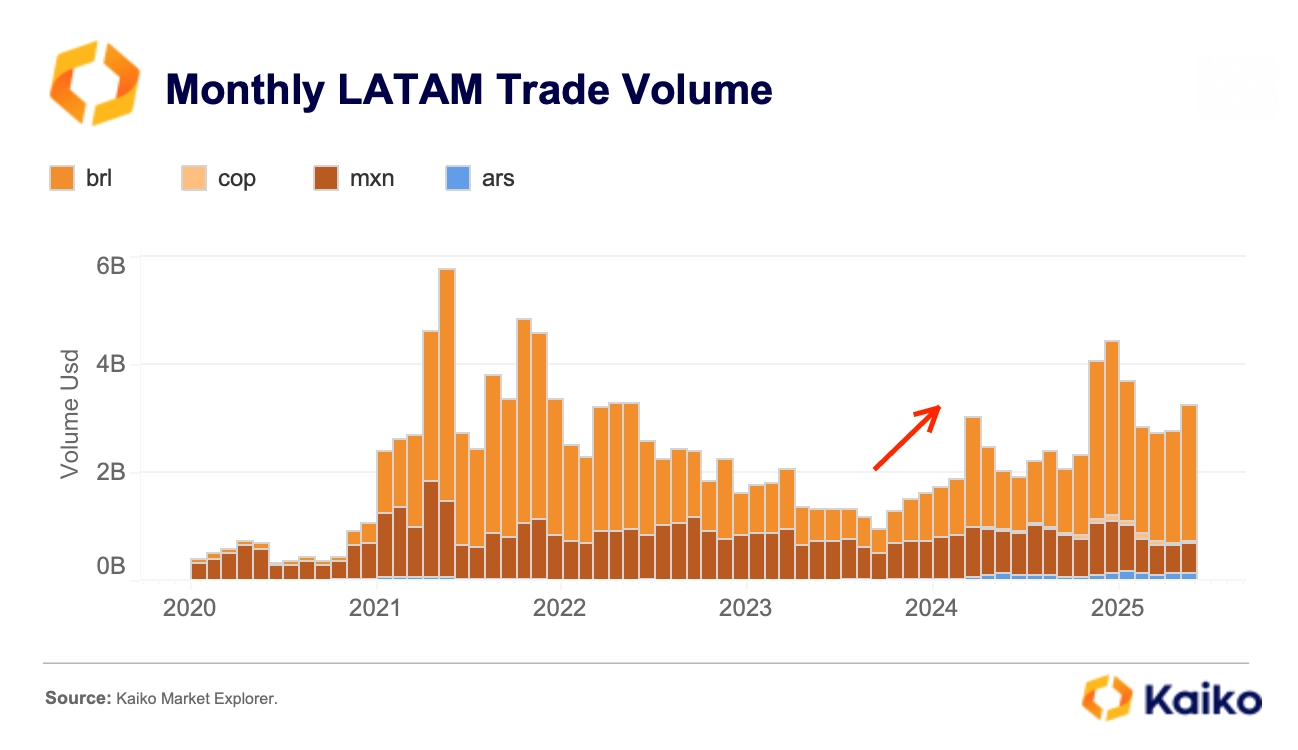
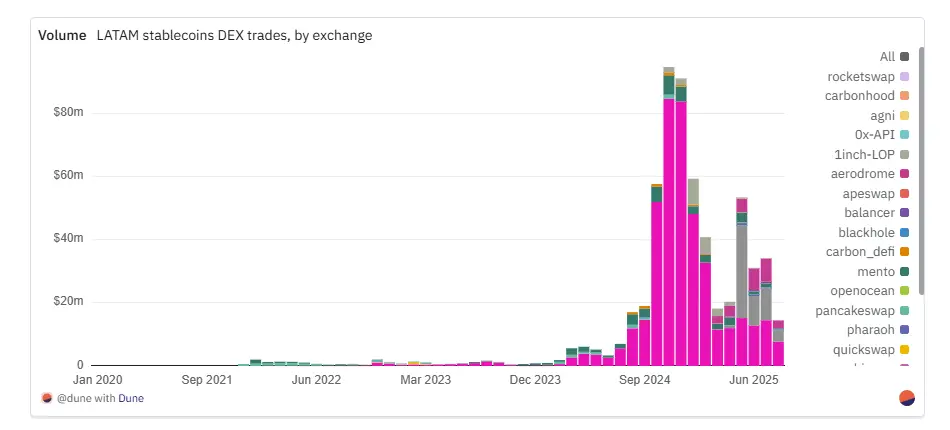
To see Venezuela clearly, you have to place it inside the broader Latin American pattern. Over the last few years, the region has become one of the most important laboratories for real-world crypto usage – not because people are speculating on dog coins, but because they’re using digital dollars as a hedge against broken monetary systems.
According to global on-chain analysis, Latin America accounted for roughly 9–10% of global crypto value received between mid-2023 and mid-2024, with an estimated $400+ billion in flows. Four of the top 20 countries in the global crypto adoption index are in the region: Brazil, Mexico, Venezuela, and Argentina. A large share of that activity is concentrated in stablecoins used for remittances, savings, and everyday payments.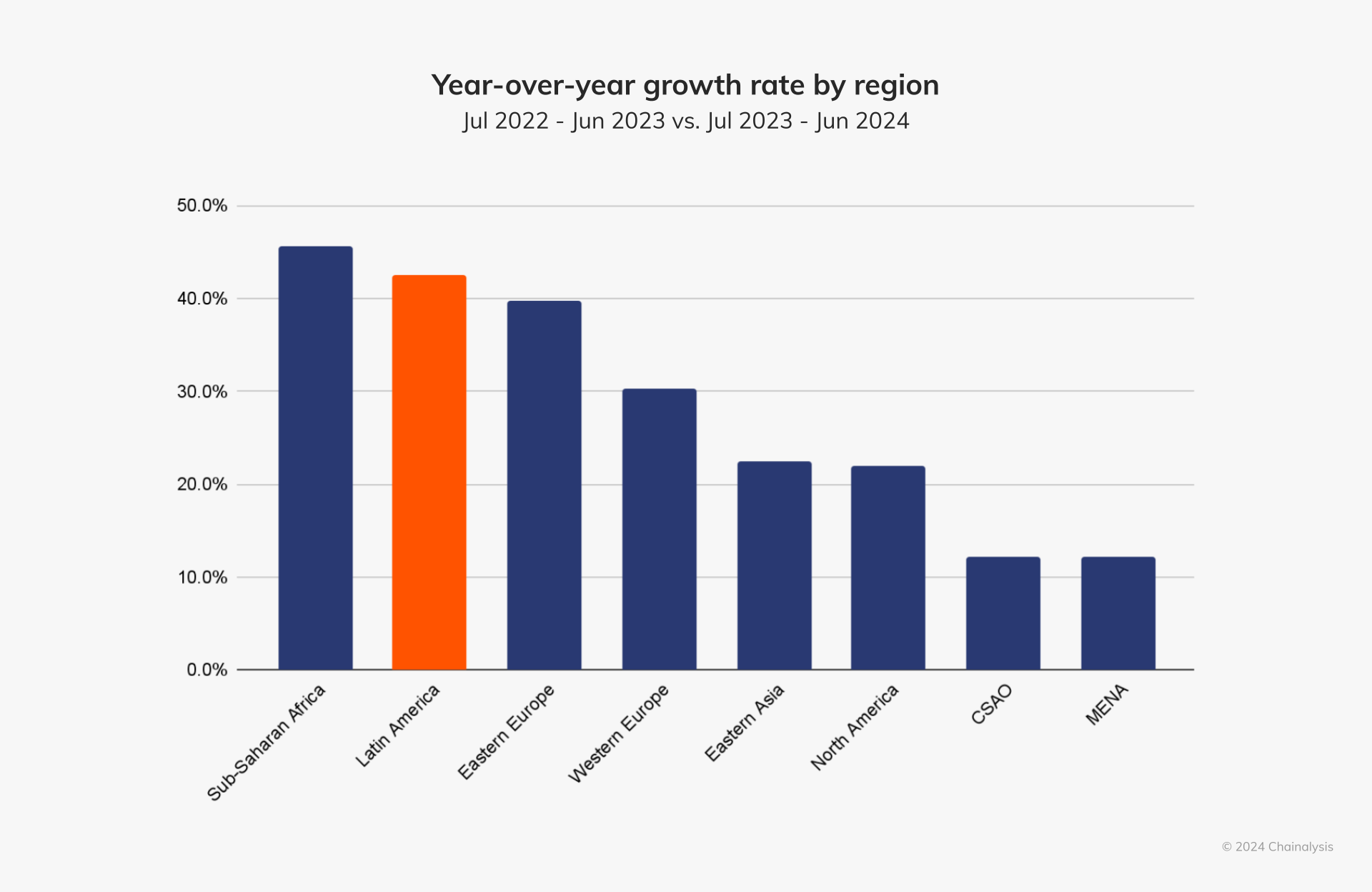
Several things are happening at once:
- Remittances – Workers abroad send money home via exchanges or P2P channels. Families receive USDT or other dollar tokens, often “cashing out” into local currency only at the point of spending.
- Informal savings – People in high-inflation economies hold a portion of their net worth in stablecoins, skipping the banking system altogether.
- Merchant acceptance – In some cities, small businesses accept stablecoins directly or via intermediaries, then decide whether to hold or convert.
- Institutional experiments – Regional fintechs and even banks start to integrate stablecoin rails into internal treasury and cross-border flows.
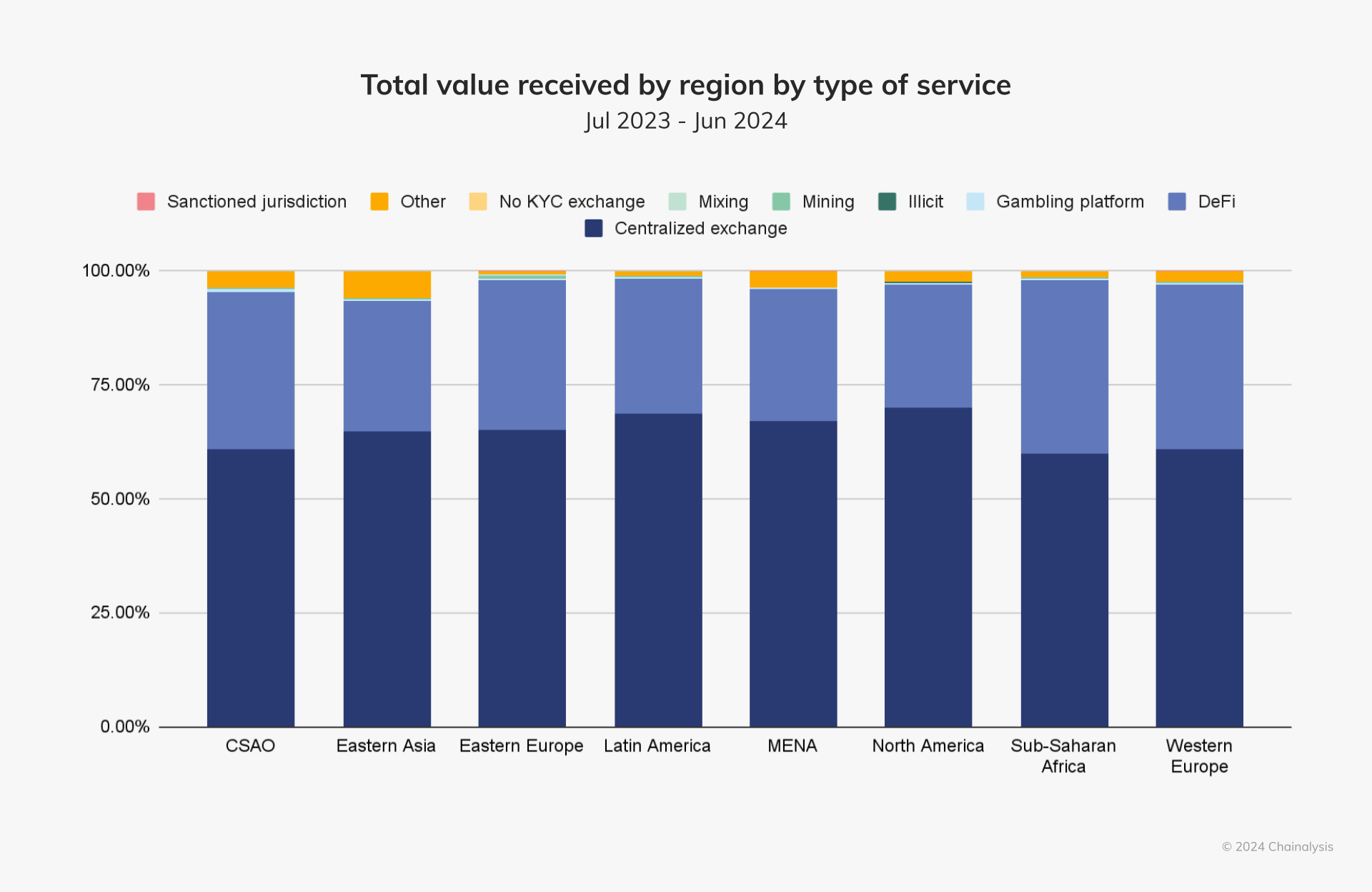
For the end user, none of this feels ideological. It’s survival. If your local currency can lose half its value in a year – or a month – the logic is simple: get into something that doesn’t melt. For now, that thing is the U.S. dollar, increasingly accessed through tokens.
That’s the quiet part: while political leaders talk about “de-dollarization,” the median household in several Latin American economies is re-dollarizing from the bottom up via stablecoins. Venezuela is one of the clearest examples of this bottom-up dollarization – and also one of the strangest, because the state itself is now partially on the same rails.
Venezuela’s Two-Sided Crypto Story
Venezuela’s relationship with crypto is schizophrenic on the surface and completely logical underneath.
The Petro Experiment and SUNACRIP Era
In 2018, the Maduro government launched the Petro – an oil-backed national cryptocurrency meant to give Venezuela access to global finance despite U.S. sanctions. It was heavily promoted, intermittently mandated for certain transactions, and widely distrusted by citizens and international markets alike. Independent observers consistently found little actual usage outside of state narratives and forced experiments.
To manage Petro and broader crypto activity, the government created a regulator, SUNACRIP, which initially licensed exchanges and encouraged mining. Officially, Venezuela was “embracing blockchain.” Unofficially, the same structures that were supposed to help dodge sanctions also opened the door to large-scale corruption.
Corruption, Crackdowns, and the Mining Ban
By 2023, the whole apparatus began to implode. A massive “PDVSA-Crypto” scandal revealed some $20+ billion in unaccounted receivables and opaque oil-for-crypto transactions involving intermediaries and politically connected actors.
In response, the government:
- Suspended SUNACRIP and arrested its head in an anti-corruption operation.
- Ordered many mining facilities shut down in 2023.
- Moved toward a full ban on crypto mining in 2024, citing both corruption and grid stress.
From the outside, it was easy to read this as, “Venezuela turned against crypto.” But that’s not what actually happened. The state cracked down on uncontrolled activity it couldn’t tax or direct – particularly energy-intensive mining and opaque flows threatening political control. At the same time, the population kept using crypto in a way that was much harder to shut down: simple dollar stablecoins as a lifeline.
Civilian Dollarization from Below
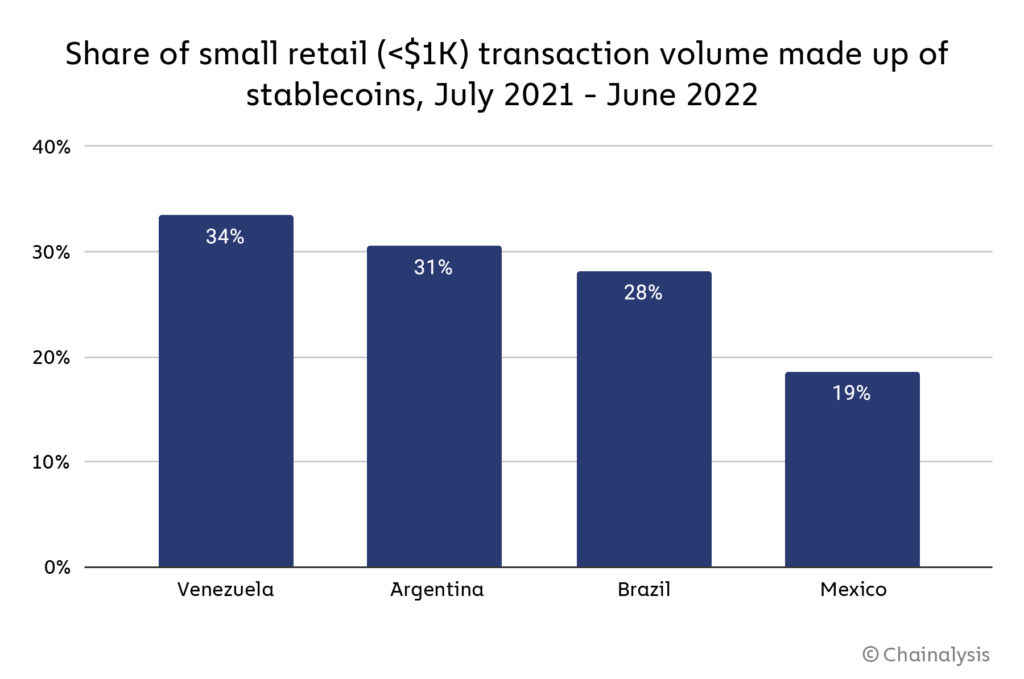
Even as the state played whack-a-mole with miners and intermediaries, Venezuelan citizens increasingly turned to stablecoins as a substitute for both local currency and traditional banking.
Analysis of on-chain activity and remittance flows shows tens of billions of dollars’ worth of crypto transactions annually involving Venezuelan users, with a significant share in dollar-pegged assets used for everyday economic needs: remittances, savings, payroll, and trade.
That’s the first “front”: a population quietly opting into the digital dollar because every other option around them has failed.
PDVSA, USDT, and the Sanctioned Dollar Loop
The second front is more surprising: the state itself moving onto stablecoin rails – especially PDVSA, the state oil company at the heart of Venezuela’s economy and the primary target of U.S. sanctions.
PDVSA’s Shift into USDT
As the U.S. tightened and then partially relaxed oil sanctions through temporary licenses, PDVSA leaned on non-traditional channels to move crude and get paid. Reporting in 2024–2025 indicates that:
- PDVSA increasingly demanded that a large share of oil cargo payments – often half or more – be settled in USDT (Tether) rather than through the formal banking system.
- Stablecoin flows were also used to inject dollars into the private sector, effectively creating a semi-official digital-dollar channel parallel to the crumbling bolívar.
On one level, this looks like a clever sanctions workaround: instead of wires that can be blocked, you use tokens that settle globally and instantly. But step back and the picture gets weirder:
Only now the access point isn’t a New York correspondent bank – it’s a stablecoin issuer whose reserves are mostly U.S. Treasuries.
The Sovereignty Trap
Stablecoins like USDT are not neutral money. They are dollar claims issued by private entities that hold their backing assets – overwhelmingly – in U.S. dollar instruments: cash, bank deposits, and short-term Treasuries. That means:
- The issuer’s ability to operate depends on relationships with U.S.-linked banking and regulatory infrastructure.
- The reserves reinforcing the stablecoin are literally the same instruments that define the traditional dollar system.
- U.S. regulators have increasing leverage over issuers via sanctions, enforcement actions, and legislation.
For a sanctioned state, using stablecoins to route around restrictions is like rerouting a river by digging a deeper channel through the same bedrock. You may change the path, but the underlying geology – the U.S. monetary base – doesn’t change. If anything, you deepen it.
That’s the paradox: the more a place like Venezuela turns to USDT to escape sanctions, the more it anchors its economy to dollar instruments that Washington ultimately regulates. The invasion isn’t military; it’s structural.
The U.S. Response: Law on the Rails, Steel in the Water
If Venezuela is climbing onto stablecoin rails, what is Washington doing? Two things, simultaneously:
- Locking down the rules of the digital-dollar system.
- Projecting military power into the same geography those rails are now serving.
Regulatory Capture of the Stablecoin Layer
Over the last few years, U.S. policy has shifted from treating crypto as a sideshow to treating it as a potential threat vector for sanctions evasion and financial stability. Guidance from the Treasury and sanctions authorities explicitly warns that virtual assets can be used to “evade sanctions and undermine U.S. foreign policy and national security interests,” and puts pressure on intermediaries to monitor and block flows involving blacklisted entities or jurisdictions.
Proposed and emerging stablecoin laws go a step further by:
- Requiring issuers to hold high-quality liquid assets (like Treasuries) in regulated structures.
- Mandating robust KYC/AML and sanctions screening on counterparties.
- Bringing dollar-pegged tokens into the perimeter of formal financial regulation rather than leaving them in a legal gray zone.
The outcome is clear: if you issue a serious dollar stablecoin at scale, you are inside the U.S.-centric compliance web whether you like it or not. The front-end may be global and permissionless; the back-end is anything but.
The Carrier Group in the Caribbean
Now overlay that legal story onto the military one. Since late 2025, the U.S. has:
- Deployed the USS Gerald R. Ford carrier group and other naval assets to waters near Venezuela under the banner of an anti-drug, anti–transnational-crime campaign.
- Conducted multiple deadly strikes on alleged smuggling vessels, with dozens of deaths raising questions from human rights groups and regional governments.
- Triggered an FAA warning advising pilots to exercise “extreme caution” when operating in or near Venezuelan airspace due to a worsening security situation and heightened military activity, prompting airlines to cancel flights.
- Escalated diplomatic and legal pressure on Maduro’s government, including terrorism designations and signals of readiness for “next phases” of operations.
Officially, this is about drugs, security, and authoritarianism. Unofficially, it reinforces a familiar message to the entire region: the same country that underwrites your financial system is willing to project force if you cross certain lines.
That combination is what makes the Venezuela case so revealing. It’s not that the U.S. is invading because of stablecoins – it’s that both the rails and the hardware are being positioned in the same strategic theater at the same time.
Development Check: Can You Opt Out of the Rails?
This brings us to the core question: Can a country like Venezuela – or any South American state – build a financial system “independent of the rest of the world” and still survive?
In theory, yes. You could imagine:
- A regional payments bloc using a non-dollar unit of account.
- Domestic settlement rails built on a local CBDC or regional stablecoin.
- Decoupling trade, credit, and energy contracts from the dollar.
In practice, several constraints hit immediately:
- Trade invoicing inertia – Commodities, especially oil and gas, are still overwhelmingly priced in dollars. Re-denominating contracts means taking pricing risk and often losing counterparties.
- Funding costs – Dollar funding is deep and liquid; alternatives are thinner and more expensive. Trying to run a parallel system can spike borrowing costs and scare away capital.
- Population preferences – Once people have experienced a relatively stable unit like the dollar (even via tokens), it is politically costly to force them back onto weaker currency rails.
- Technology asymmetry – Building competitive rails (fx, KYC, custody, liquidity networks) takes time and talent. Most emerging markets don’t have the scale to do this alone.
The result is a kind of development check: you can try to move away from the dollar, but doing so imposes short- and medium-term costs on a population that’s already under stress. Meanwhile, the tokenized dollar keeps getting easier to access on every smartphone in the country.
That’s the quiet superpower of stablecoins: they privatize access to the dollar. You no longer have to go through a local bank branch or a correspondent bank in New York; you can go through an app that sits on top of a dollar reserve pool somewhere in the global financial stack.
And because those reserves are usually sitting in U.S. Treasuries, short-term bills, and dollar cash, each additional unit of adoption deepens the same monetary base that U.S. policymakers manage. Even if some fraction of flows is being used to dodge sanctions, the system as a whole still recirculates around the same anchor assets.
South America as a Monetary Theater, Not a Map
Zoom out again from Venezuela to South America as a whole. What does a “takeover via crypto” actually look like if you strip out the dramatic language?
It looks like this:
- Households in Argentina, Brazil, Venezuela, and beyond steadily increasing their use of dollar stablecoins for savings and remittances, not out of ideology but out of necessity.
- Local banks and fintechs building on top of those rails because that’s where customer demand is.
- Sanctioned and semi-sanctioned entities experimenting with the same rails for trade and settlement.
- U.S. lawmakers and regulators moving to formalize and police the stablecoin layer, effectively treating it as an extension of the dollar system.
- U.S. military posture and diplomacy shaping the broader risk environment in which all of this happens.
Instead of thinking in terms of “U.S. vs. Latin America,” it’s more accurate to think in terms of: “Who controls the rails that everyone in Latin America increasingly depends on?”
For most South American governments, this creates a dilemma:
- If they resist stablecoin usage, they punish their own populations and push activity further into the shadows.
- If they embrace it, they integrate more tightly into a digital-dollar system whose rules they don’t write.
- If they try to build alternatives, they confront scale, trust, and liquidity problems that can destabilize their economies in the short run.
In that context, the idea of the U.S. “taking over South America via cryptocurrency” doesn’t mean Washington is secretly deploying a master plan to tokenize the continent. It means something subtler and, in some ways, more powerful: the path of least resistance for households, firms, and even states keeps bending back toward the dollar, and now that path runs through private token rails the U.S. is learning how to regulate.
Venezuela just happens to be the place where all of these forces intersect in the loudest possible way – sanctions, oil, stablecoins, carriers, and collapsing trust in the national currency – at the same time.
Venezuela as Prototype – What Comes Next
Put all of this together and Venezuela stops being just another headline about a failing state and starts looking like a preview.
- A population abandoning the local currency in favor of digital dollars.
- A government that, despite rhetoric, ends up using the same rails to keep its export machine alive.
- A global reserve architecture where stablecoins are increasingly welded onto U.S. Treasuries and U.S. law.
- A military and diplomatic apparatus willing to escalate in the same region when core interests are perceived to be at stake.
None of this means the U.S. has engineered a perfect system of control. In fact, there are real risks on the other side:
- Overextension – If too much value moves onto stablecoin rails outside of traditional bank supervision, policymakers may struggle to monitor and manage global dollar liquidity.
- Jurisdictional cracks – Competing regulatory regimes could fragment liquidity or drive key players into more opaque structures.
- Blowback – Populations and states that feel trapped by a dollar system they didn’t choose may eventually look for more radical alternatives, even at high short-term cost.
But in the near term, the direction of travel is clear: the dollar is not shrinking – it is digitizing. And as it digitizes, it learns how to flow around the fractures in the old system, including the ones caused by sanctions and political conflict.
In that sense, Venezuela is less an exception and more a concentrated signal. It shows what happens when:
- The analog system breaks.
- The population finds a way into the digital one.
- The state reluctantly follows.
- And the original issuer of the reserve currency learns how to turn that digital migration into a new, more flexible form of leverage.
The aircraft carrier off the coast is the part everyone can see. The stablecoins flowing through phones, exchanges, and shadow invoices are the part almost no one is tracking – but over the next decade, that’s the front that will matter more.
Sources
Hyperlinks are provided here only, with no in-text external linking per Pattern Nexus style.
- Reuters — US warns airlines of potential hazards when flying over Venezuela
- AP News — FAA warns all pilots of risks of flying over Venezuela
- Washington Post — FAA warns pilots to 'exercise caution' over Venezuela
- Al Jazeera — US boat strike kills 3, as aircraft carrier arrives near Venezuela
- The Guardian — US airstrike on 'drug boat' kills six as aircraft carrier sent to South AmericaNew York Post — US aircraft carrier moves into Latin America region amid tensions with Venezuela
- Reuters — Venezuela to accelerate cryptocurrency shift as oil sanctions return
- Bitcoin.com — USDT leveraged to settle crude oil sales in Venezuela
- LiveBitcoinNews — USDT sparks the change in crude oil payments in Venezuela
- AInvest — Venezuela's USDT gamble: Circumventing sanctions, forfeiting sovereignty?
- Crypto for Innovation — Crypto usage grows in Venezuela despite government mismanagement
- The Miner Mag — Venezuela cracks down on Bitcoin miners amid grid concerns
- Forbes — Bitcoin miners trapped in alleged $20 billion corruption scheme in Venezuela
- Wilson Center — Crypto in Venezuela: Two Sides of a Coin (PDF)
- Chainalysis — 2024 Latin America Crypto Adoption
- Chainalysis — 2024 Geography of Cryptocurrency Report (PDF)
- M^0 Research — Stablecoins yield generation: The next big thing in LATAM
- Inter-American Dialogue — Assessing cryptocurrency in remittances to Latin America and the Caribbean
- Milken Institute — Global digital asset adoption: Latin America
- Lightspark — Is crypto legal in Venezuela? Regulations & compliance overview
- Al Jazeera — US warns civilian flights as military activity around Venezuela increases
- Daily Voice — Major airlines cancel flights to Venezuela after FAA security warning, US military buildup
- Hellenic Shipping News — Venezuelan PDVSA’s hydrocarbon export revenues hit $17.52 bln in 2024
- Reuters — Venezuela's PDVSA oil sales abroad hit $17.5 billion as 2024 exports jump
- Al Jazeera — US warns civilian flights as military activity around Venezuela increases
What's Your Reaction?
 Like
0
Like
0
 Dislike
0
Dislike
0
 Love
0
Love
0
 Funny
0
Funny
0
 Wow
0
Wow
0
 Sad
0
Sad
0
 Angry
0
Angry
0

Founder of Pattern Nexus. I research markets, macro, geopolitics, AI, history, ancient systems, and the patterns most people overlook. I’m also building Market Radar, a trading scanner designed to read pressure, risk, confirmation, and setup quality before chasing a move. Pattern Nexus is where I connect the dots between data, history, technology, and the bigger system playing out around us.
















Comments (0)